
How to Grow Gladioli in Australia
Plant gladiolus corms 10 to 15 cm deep, flat side down and 10 to 15 cm apart, in full sun once frosts have passed. Stake tall types at planting. Water deeply each week and feed with potash as spikes form. Flowers usually follow 90 to 120 days after planting. Lift corms where winters are frosty or wet.

| Sun | Full sun, sheltered from wind |
|---|---|
| Water | Deep weekly soak in growth, dry when dormant |
| Soil | Loose, free-draining, pH 6 to 7 |
| Feed | Compost at planting, potash as spikes form |
| Spacing | 10 to 15 cm |
| Depth | 10 to 15 cm, flat side down |
| Germination | Grown from corms; shoots appear in warm soil |
| Harvest | 13 to 17 weeks from planting |
| Container | Yes, 40 cm pot for tall types |
| Frost | Plant after frost; lift where winters freeze |
| Support | Stake tall types at planting |
| Use | Summer beds, borders and cut flowers |
Gladioli (Gladiolus hybrids) are summer-flowering perennials in the iris family (Iridaceae), grown for tall spikes of funnel-shaped flowers in beds and vases. The garden hybrids come mainly from South African species. Rows of 'gladdies' are grown for their corms on a farm near Bordertown, South Australia. The usual stumbles are corms planted too shallow and soil that stays wet.
Three mistakes that matter
- Planting too shallow. A corm (a swollen underground stem base that stores food) set too shallow gives a spike that leans in wind. It also makes small corms for next year. Plant at the depth given under Planting Corms.
- Planting into soggy ground. Corms that sit in cold, wet soil rot before they shoot or soon after. Choose free-draining soil, raise the bed on heavy clay, or grow in pots.
- Cutting the leaves with the flowers. The leaves feed the new corm that forms on top of the old one. Take as little foliage as you can when picking, and let the rest yellow before lifting or tidying.
When to plant
Plant large-flowered gladioli once the risk of frost has passed, or from midwinter in frost-free gardens. Flowers usually follow 90 to 120 days after planting, sooner in warm weather. For a long run of spikes, plant a few corms every two to four weeks through the window.
| Zone | Example cities | Plant | Flowering | Notes |
|---|---|---|---|---|
| Tropical | Darwin NT; Cairns, Townsville QLD; Broome WA | Apr-Jul | Jul-Oct | Plant in the dry season, ideally in pots. Wet-season rain rots corms, so treat them as annuals. |
| Subtropical | Brisbane, Gold Coast, Bundaberg QLD; Coffs Harbour, Lismore NSW | Jun-Sep | Sep-Jan | Corms can stay in the ground. Plant baby gladioli from May to July, with afternoon shade. |
| Arid and semi-arid | Alice Springs NT; Broken Hill, Dubbo NSW; Mildura VIC | Jul-Sep | Oct-Jan | Plant after the hardest inland frosts so spikes open before peak heat. Mulch and water deeply. |
| Temperate | Sydney, Newcastle, Wollongong NSW; Melbourne, Geelong VIC | Aug-Nov | Nov-Mar | Frost-free Sydney gardens can start in June. In Melbourne, plant once frosts ease, from late August. |
| Mediterranean | Perth, Bunbury WA; Adelaide and the SA coast | Jul-Oct | Oct-Feb | Lift corms from heavy soil before wet winters. Bin spare cormlets: wild gladiolus already invades local bushland. |
| Cool and alpine | Hobart, Launceston TAS; Canberra ACT; Ballarat VIC; Orange NSW | Oct-Nov | Jan-Mar | Plant after the last frost, often around Melbourne Cup weekend. Lift corms before the ground freezes. |
Baby gladioli are the exception: plant them in autumn to early winter for flowers in late spring. In frosty districts, finish the last planting early enough for spikes to open before autumn frosts.
Site, soil and setup
Sun and drainage decide most of the result. Gladioli are not fussy about soil type, but they will not stand wet feet for long.
| Need | What to do |
|---|---|
| Sun | Full sun, at least six hours of direct light a day. Less sun gives weaker stems and fewer flowers. |
| Shelter | A spot sheltered from strong wind, because tall spikes snap or lean. |
| Soil | Loose and free-draining. Dig a spade's depth and work in compost or well-rotted manure. |
| pH | About 6.0 to 7.0. Below 6.0, dig in dolomite lime at 100 to 200 g per square metre four weeks before planting. |
| Bed preparation | Spread a 5 cm layer of compost and add blood and bone at 100 to 150 g per square metre. Keep nitrogen modest, as heavy feeding encourages corm scab. |
| Rotation | After corm rot or scab, plant in a different bed for three to four years. |
See soil pH explained before liming, and waterlogged soil if water lies on the bed after rain.
Garden gladioli or wild gladiolus?
The corms the store sells are garden hybrids. Two wild South African species have escaped gardens and now invade bushland. Wild gladiolus (Gladiolus undulatus) has creamy, wavy-tipped flowers and spreads across southern Australia. Pink gladiolus (Gladiolus caryophyllaceus) is common in Perth's banksia woodland. Both spread by tiny cormlets carried in dumped garden waste and soil.
| State or territory | What the weed lists say about the wild species |
|---|---|
| Western Australia | Not a declared pest. Both species rank as moderately high priorities in the state's Environmental Weed Strategy, and wild gladiolus invades wetlands from Perth to Albany. |
| South Australia | Not on the declared plant list. Wild gladiolus is a common environmental weed of the Adelaide region. |
| Victoria | Not on the noxious weeds list. Wild gladiolus is a significant environmental weed on several local and regional lists. |
| New South Wales | No gladiolus has a profile in the state's weed database. Wild gladiolus grows on roadsides and drains south from Kempsey. |
| Tasmania | Not on the declared weeds index. Wild gladiolus is recorded in conservation reserves. |
| Queensland | Not on the prohibited or restricted invasive plant lists. |
| Northern Territory | Not on the list of declared weeds. |
| Australian Capital Territory | Not on the declared pest plant list. |
Garden hybrids make cormlets too, so bin spent plants and spare cormlets rather than tipping them over the back fence.
Container growing
Any gladiolus grows in a pot, but the compact Glamourglad mix and baby gladioli suit pots best. Tall types need a pot at least 40 cm wide, about 27 L, to stop them toppling. Baby gladioli need a pot at least 20 cm deep, about 4.5 L for a 20 cm pot. Use premium potting mix, and set corms closer than in the ground.
- Watering. Keep the mix just damp until shoots show, then check daily in warm weather. See watering pots through summer.
- Feeding. Give fish and seaweed blend at 25 mL per 9 L every fortnight, then switch to liquid potash at the label rate once spikes appear.
- Position. Full sun, out of wind, on a level surface where a tall pot cannot blow over.
- After flowering. Keep watering until the leaves yellow, then let the pot dry off.
Planting Corms
Gladioli grow from dormant corms planted straight into their flowering spot.
Choosing a type
| Type | Store lines | Height | Plant | Staking |
|---|---|---|---|---|
| Large-flowered hybrids | 'Amber Mystique', 'Black Sea', 'Chemistry', 'Espresso', 'Green Star', 'Natan', 'Olympic Flame', 'Pink', 'Pink Event', 'Plum Tart', 'Princess Margaret Rose', 'Priscilla', the mixed packs | Usually to about 1.5 m, some taller | As the zone table shows | Stake, or plant in a sheltered spot |
| Compact hybrids | Glamourglad mix | Shorter, compact stems | As the zone table shows | Only in windy spots |
| Baby gladioli (nanus group) | 'Oriental Lady' | 30 to 60 cm | Autumn to early winter; poor in the tropics | None needed |
Planting direct
- Choose large, firm corms with no soft or discoloured patches, as bigger corms give bigger spikes.
- Set each corm flat side down, pointed tip up.
- Plant large-flowered types 10 to 15 cm deep and baby gladioli 8 to 10 cm deep. Go a little deeper in light, sandy soil.
- Space corms 10 to 15 cm apart, in clumps of six to twelve.
- Push in stakes now, beside the corms, so they never pierce one later.
- Water in well once, then keep the soil only just moist until shoots appear.
Care by growth stage
Gladioli need little feeding, because the corm carries the early growth. Steady water and a potassium feed as the spike forms do more than extra nitrogen.
| Stage | Water | Feed | Watch for |
|---|---|---|---|
| Planting to shoots | Once at planting, then only if the soil dries out | Bed preparation only, or a controlled release all-purpose granular (NPK around 14-5-10) mixed in at planting | Corms rotting in cold, wet soil; snails on new shoots |
| Leaf growth, until the spike shows | A deep soak once a week, about 25 mm, more in heatwaves | Fish and seaweed blend at 25 mL per 9 L every fortnight; nothing extra if granular went in at planting | White flecks from thrips; aphids on young leaves |
| Spike forming, until the first flower opens | Weekly deep soak; do not let the bed dry out | Sulphate of potash at 30 to 50 g per square metre, or a fruiting and flowering soluble (NPK around 15-4-26) every fortnight | Leaf sheaths thickening as the spike rises; spikes leaning |
| Flowering, about 13 to 17 weeks after planting | Keep watering steadily through flowering and picking | Liquid potash at the label rate every fortnight, or the flowering soluble | Buds that fail to open; streaked or mottled flowers |
| After flowering, about six weeks | Water while leaves stay green, then let the soil dry | None needed; the green leaves rebuild the corm | Yellow leaves, the cue to lift where needed |
Tie each stem loosely to its stake as it grows; one stake can hold three or four stems in a clump. A horizontal mesh of wire over a cutting row does the same job.
Where frosts are heavy or winters wet, lift corms once the leaves yellow. In mild, well-drained gardens they can stay in the ground for years under a 5 to 10 cm autumn mulch.
- Lift with a garden fork in dry weather, about six weeks after flowering, taking care not to stab the corms. Grey mould on the tops infects corms at digging, and damp weather favours it.
- Cut the leaves off a few centimetres above the corm, binning the tops if thrips were about.
- Dry the corms on a wire rack in an airy spot for two weeks.
- Twist off the old, shrivelled corm beneath the new one, and save cormlets if you want more plants.
- Store in net bags somewhere cool, dark and dry, at about 4 to 10°C.
- Check now and then for aphids and soft corms, and discard any that rot.
Keep stored corms out of reach of children, dogs and cats, as gladioli are toxic to pets and the corms hold the most toxin. Cormlets planted 5 cm deep usually reach flowering size in one to two years.

Companion planting
Lower, bushy plants in front hide the bare lower stems and leave the spikes the sun.
Grows well with
- Alyssum, a low edging whose flowers draw hoverflies, and hoverfly larvae eat aphids.
- Salvias, which share the full sun and fill the space around the base.
- Zinnias, sun-loving summer annuals that stay below the spikes.
Keep them apart from beans and peas, which host the bean yellow mosaic virus that aphids carry to gladioli.
Keep apart
- Beans and peas, hosts of bean yellow mosaic virus.
- Dense groundcovers, which hold damp around the corms and crowd new shoots.
Harvesting Blooms
Cut a spike when the lowest one or two flowers show colour or the first one opens; the rest open upward in the vase.
- Cut with a sharp knife or secateurs above the second to fourth leaf (see Three mistakes that matter).
- Stand stems straight into a bucket of clean water.
- Keep cut spikes upright; laid flat, the tips bend up towards the light.
- Snap off spent spikes left in the garden, which stops seed setting and builds the corm.
Cut gladioli are sensitive to ethylene, so keep the vase away from a bowl of ripening fruit.
Common problems
No flowers, only leaves. Small corms, too much shade or a crowded clump are the usual causes. Plant large corms in full sun, and lift and divide old clumps every four to five years.
Spikes leaning or falling. Shallow planting and wind are to blame (see Three mistakes that matter). Stake early and tie as the spike grows.
Corms that never come up. Cold, waterlogged soil rots them (see Three mistakes that matter). Dig one up: a firm corm is waiting for warmth, a soft one has rotted. Read more
Scorched or streaked flowers in hot spells. Extreme heat can mark petals much as thrips do. Check inside a bud for tiny insects before blaming the weather.
Pests and diseases
Thrips and aphids cause most of the trouble, and aphids spread the viruses that follow.
Gladiolus thrips (Thrips simplex). Tiny brown insects feed inside buds and on leaves, leaving white flecks, and badly hit buds fail to open. Females also lay eggs in corms, which carry the pest into the next season. Rinse leaves, undersides too, and keep stored corms below 10°C, where thrips stop breeding. Read more
Aphids (Aphididae). Small sap-suckers cluster on young leaves and also feed on stored corms. Hose off small colonies, and let hoverflies do the rest (see Companion planting). Read more
Mosaic viruses (bean yellow mosaic virus and cucumber mosaic virus). Leaves show pale yellow mottling and coloured flowers show streaks or broken colour. There is no cure, so pull and bin infected plants. Read more
Fusarium corm rot (Fusarium oxysporum). Leaves bend down, yellow and die early, and corms rot brown from the base upward. The fungus lives in soil for years and favours warm conditions, so bin infected corms.
Bacterial scab (Burkholderia gladioli). Round, sunken brown spots with a shiny, varnish-like crust mark the corms, worst in heavy, wet soil. It survives on corms and in soil, so discard marked corms and rest the bed (see Site, soil and setup).
Garden snail (Cornu aspersum). Snails and slugs chew new shoots and leaves at night, mostly in wet weather. Pick them off by torchlight after rain. Read more
Prevention first
- Plant virus-tested corms where you can, because a firm, healthy-looking corm can still carry a virus.
- Water at soil level rather than over the leaves, which helps keep fungal disease down.
- Control aphids early, because viruses travel with them.
- Keep the bed weeded and clean up spent tops, which shelter thrips and disease. See garden hygiene.
Tips
- Set the near-black 'Black Sea' or deep crimson 'Espresso' beside the lime-green 'Green Star' or white and pink 'Priscilla', so each colour stands out.
- Plant baby gladioli in an old wire hanging basket sunk into the bed, so the small corms are easy to find and lift.
- Label net bags of stored corms by variety, so colours go back where you planned them.
- Grow a short row in a spare vegie patch bed purely for cutting, and the border keeps its flowers.
Due to quarantine restrictions and our shipping policy, we cannot send gladioli corms to Western Australia or Tasmania.
Questions
When do you plant gladioli in Australia?
Plant large-flowered gladioli once frosts have passed: from midwinter in frost-free coastal gardens, late August in frosty areas and October in cold districts. In the tropics, plant in the dry season. Baby gladioli go in during autumn. Flowers usually follow 90 to 120 days after planting.
How deep do you plant gladiolus bulbs?
Plant large-flowered corms 10 to 15 cm deep, flat side down and pointed tip up, 10 to 15 cm apart. Baby gladioli go 8 to 10 cm deep. Deep planting anchors the tall spikes, while shallow planting leads to leaning stems and small corms for next year.
Do gladioli come back every year?
Yes, they are perennials. In mild, well-drained gardens the corms can stay in the ground and flower again for years. Where frosts are heavy or winters wet, lift them once the leaves yellow. Dry them for two weeks and store them cool and dry until planting time.
Do gladioli need staking?
Large-flowered types usually do, especially in windy spots. Push the stake in at planting so it never pierces the corm, then tie stems loosely as they grow. One stake can hold three or four stems. Baby gladioli, at 30 to 60 cm, need no staking.
Why are my gladioli not flowering?
Small corms, too much shade and crowded clumps are the usual causes. Plant large, firm corms in full sun, and lift and divide old clumps every four to five years. Leave the leaves to die down naturally, because they feed next year's corm.
Are gladioli poisonous to dogs and cats?
Yes. Gladioli are toxic to dogs, cats and horses, and the corms hold the highest concentration. Signs include drooling, vomiting and diarrhoea. Store corms out of reach of pets and children, and call your vet if an animal chews one.
More bulbs and tubers to sow in October
All bulbs and tubersCalla Lily
Grow coloured calla lilies from tubers: planting depth and timing for six zones, water and feeding, lifting and storing, pests, toxicity and the arum lily weed.
| Position | Full sun, hot-afternoon shade |
|---|---|
| Depth | 10 cm, rough side up |
| Spacing | 20 to 30 cm |
| First pick | 7 to 12 weeks from planting |
Canna Lily
Grow dwarf canna lilies from rhizomes: planting depth and timing for six zones, feeding for flowers, cutting back, dividing, pests, and the weed lists by state.
| Position | Full sun |
|---|---|
| Depth | 5 to 10 cm, eyes up |
| Spacing | 50 to 70 cm |
| First pick | 6 to 8 weeks from shooting |
Hippeastrum
Grow hippeastrums in any Australian zone: when to plant bulbs, why the neck sits above the soil, pots, feeding, frost, pests, toxicity and state weed status.
| Position | Full sun or dappled shade |
|---|---|
| Depth | Top third above soil |
| Spacing | 10 to 30 cm |
| First pick | 5 to 8 weeks |
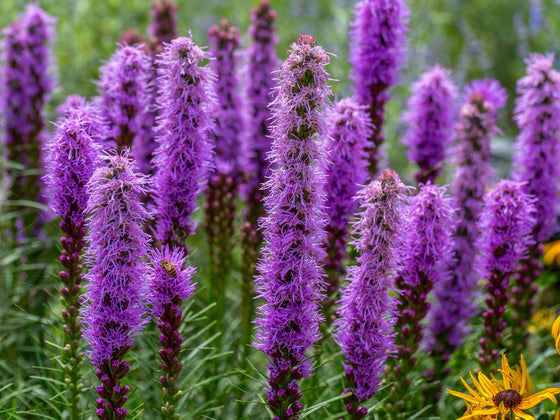
Liatris
Grow liatris corms in Australia: planting depth and months for six zones, free-draining soil, pots, cutting and drying the spikes, pests and state weed lists.
| Position | Full sun |
|---|---|
| Depth | 5 to 10 cm deep |
| Spacing | 15 to 30 cm apart |
| First pick | About 10 to 13 weeks |