
How to Grow Pineapple Lilies in Australia
Plant pineapple lily bulbs in spring once frost has passed and the soil reaches about 18°C. Set each bulb pointed end up with its tip at the soil surface, 25 to 30 cm apart, in free-draining soil and full sun. Water deeply through summer, then keep the bulbs dry while they rest in winter. Flower spikes appear from late summer into autumn.
| Sun | Full sun to light shade |
|---|---|
| Water | Moist in summer; dry while dormant |
| Soil | Humus-rich, free-draining, any pH |
| Feed | Bone meal at planting; potash at bud |
| Spacing | 25 to 30 cm apart |
| Depth | Tip at or below soil |
| Germination | Grown from bulbs, not seed; warm soil |
| Harvest | Late summer to autumn, by zone |
| Container | Very good: wide pots, one to three bulbs |
| Frost | Dormant bulbs take frost; plant deeper |
| Use | Summer borders, pots and long-lasting cut flowers |
Pineapple lily (Eucomis comosa and its hybrids) is a summer-flowering bulb from South Africa in the asparagus family (Asparagaceae). It is grown for tall spikes of starry flowers crowned with a leafy tuft, like a small pineapple. The cut stems last for weeks in a vase. Despite the name it is not a true lily: lilies (Lilium) belong to a different family, Liliaceae. It suits most Australian gardens from the subtropics to frosty tablelands. The usual mistake is leaving the dormant bulb in cold, wet soil over winter.
Three mistakes that matter
- Wet soil while dormant. The bulb rests through winter, and cold, soggy soil rots it before spring. Plant in free-draining soil, a raised bed or a pot, and keep the ground on the dry side once the leaves die down.
- A dry summer. Pineapple lilies come from summer-rainfall country, so a parched bed gives limp leaves and a poor flowering display. Water deeply whenever summer rain fails, from the first leaves until the flowers finish.
- Too much shade. Heavy shade, or taller plants smothering the leaves, cuts flowering and leaves the spikes weak and leaning. Give the bulbs at least six hours of sun, with light afternoon shade only in the hottest districts.
When to plant
Plant in spring once frost has passed and the soil has warmed to about 18°C. The bulbs will not grow in cold soil. Bulbs flower again each summer, so this is a one-off planting rather than a crop to repeat.
| Zone | Example cities | Plant | Flowering | Notes |
|---|---|---|---|---|
| Tropical | Darwin NT; Cairns, Townsville QLD; Broome WA | Aug-Oct | Jan-Mar | Less reliable than further south. Grow in pots or raised beds so wet-season downpours drain away fast. |
| Subtropical | Brisbane, Sunshine Coast, Bundaberg QLD; Coffs Harbour, Lismore NSW | Aug-Oct | Jan-Mar | Plant as soil warms in late winter to spring. Raise beds on heavy clay for drier winters. |
| Arid and semi-arid | Alice Springs NT; Broken Hill, Dubbo NSW; Mildura VIC | Sep-Oct | Jan-Mar | Plant after the last frost. Give afternoon shade, thick mulch and deep weekly water in summer. |
| Temperate | Sydney, Newcastle, Wollongong NSW; Melbourne, Geelong VIC | Sep-Nov | Jan-Apr | Plant once soil reaches about 18°C. Melbourne gardens usually wait until October or November. |
| Mediterranean | Perth, Bunbury WA; Adelaide and the SA coast | Sep-Nov | Jan-Apr | Summers are dry, so water deeply every week. Keep beds free-draining for the wet winter. |
| Cool and alpine | Hobart, Launceston TAS; Canberra ACT; Ballarat VIC; Orange NSW | Oct-Nov | Feb-Apr | Plant around Melbourne Cup weekend, deeper than in warm zones, and mulch thickly before winter frosts. |
Where spring is slow to warm, start bulbs in pots under shelter about a month early. Harden them off (move them gradually into full sun over a week or so), then plant out once the soil is warm.
Site, soil and setup
Plants usually grow 50 cm to 1 m tall and up to 50 cm wide. Place clumps in the middle of a bed or the front of a deep border.
| Need | What to do |
|---|---|
| Light | Full sun to light shade. Flowering drops in heavy shade. In hot inland gardens, light afternoon shade helps prevent scorched leaves. |
| Soil | Humus-rich and moist in summer, but free-draining. On heavy clay, plant in a raised bed or a pot. |
| pH | Grows in acid, neutral or alkaline soil, so pH rarely needs correcting. |
| Bed preparation | Dig in a 5 cm layer of compost and rake in bone meal at 100 g per square metre at planting. |
| Shelter | A spot out of strong wind keeps tall, heavy spikes upright. |
A perennial bulb stays put, so crop rotation does not come into it. Clumps grow larger each year and can stay until they crowd.
Pineapple lilies and the state weed lists
No state or territory declares any pineapple lily a weed, and none appears on the Victorian or ACT advisory lists of environmental weeds.
| State or territory | What the weed lists say |
|---|---|
| Western Australia | All eleven Eucomis species on the Western Australian Organism List, Eucomis comosa included, are Permitted (section 11), so none is a declared pest. |
| South Australia | Not on the list of declared plants. |
| Victoria | Not a declared noxious weed, and not on the advisory list of environmental weeds in Victoria. |
| Tasmania | Not on the declared weeds index. |
| New South Wales | Not among the NSW WeedWise weed profiles, and the Flora of NSW holds no entry for the genus. |
| Australian Capital Territory | Not a declared pest plant, and not on the ACT advisory list of naturalised alien plants. |
| Queensland | Not on the prohibited or restricted invasive plant lists. |
| Northern Territory | Not on the list of weeds in the NT. |
Spent spikes carry seed, so cut them before they ripen if you garden near bushland, and put unwanted offsets in the general waste bin. Your local council can advise on any plant in your area.
Container growing
Pineapple lilies make long-lived pot plants, and a wide, shallow pot is steadier than a tall one once the spikes are up. One bulb suits a pot about 15 cm across, roughly 2 L. Three bulbs need a pot at least 30 cm across, about 15 L, set 7.5 to 15 cm apart. Use premium potting mix in a pot with drainage holes, and set the bulb tips just below the surface.
- Position. Full sun, with light afternoon shade in hot districts.
- Watering. Keep the mix moist from the first shoots until the flowers fade, checking every few days in summer heat.
- Feeding. Give fish and seaweed blend at 25 mL per 9 L every fortnight while the plant is in leaf.
- Winter. Let the mix dry out once the leaves yellow, and move the pot under cover where winters are frosty or wet. Start watering again in early spring, and return the pot to full sun once frost has passed.
- Repotting. Lift and divide crowded bulbs every few years while dormant.
Planting Bulbs
Pineapple lilies start from dormant bulbs planted pointed end up in warm spring soil.
Planting in the ground
- Plant bulbs that feel firm and heavy for their size, and bin any soft or mouldy ones.
- Set each bulb pointed end up with its tip at or just below the soil surface, so the neck barely shows.
- In frosty districts, plant 10 to 15 cm deep instead, which protects the dormant bulb from cold.
- Space bulbs 25 to 30 cm apart, in groups of three or more for a fuller clump.
- Water in once, then keep the soil just moist until shoots appear.
- Mark the spot, because shoots can take several weeks to show.
Care by growth stage
Two things matter most: steady moisture in summer and a dry rest in winter. Leaves feed the bulb for next summer's flowers, so let them die down naturally.
| Stage | Water | Feed | Watch for |
|---|---|---|---|
| Planting to first shoots, about weeks 0 to 6 | Water in once; then only enough to keep the soil just moist | Bone meal at planting only | Bulbs rotting in cold, wet soil |
| Leaf rosette, about weeks 6 to 12 | Water deeply once or twice a week when rain fails | Seaweed solution at 30 mL per 9 L every fortnight | Common garden snail (Cornu aspersum) and slugs on new leaves; aphids (family Aphididae) |
| Flower spikes rising, about weeks 12 to 18 | Keep evenly moist; never let the soil dry out | Fish and seaweed blend at 25 mL per 9 L every fortnight; sulphate of potash at 30 to 50 g per square metre once as buds form | Two-spotted mite (Tetranychus urticae) in hot, dry weather; spikes leaning in shade |
| Flowering, 6 to 8 weeks | Keep watering steadily through flowering | Fish and seaweed blend at 25 mL per 9 L every fortnight until the flowers fade | Spent spikes setting seed |
| Autumn die-back and winter rest | Taper off as leaves yellow; none while dormant | None | Waterlogged beds after heavy winter rain |
Count the weeks from planting day; in cool districts each stage arrives later. If growth is weak in poor soil, a light dose of all-purpose controlled release granular (NPK around 14-5-10) scratched in at planting can help. Where winters are both cold and wet, lift the bulbs once the leaves wither and store them dry until spring.
Companion planting
The broad leaves and upright spikes work best with low, fine-textured plants around them that leave the leaves in full sun.
Grows well with
- Alyssum and lobelia at the front, which soften the base without shading the leaves.
- Burgundy-leaved shrubs, which echo the dark leaves of the purple pineapple lily.
- Other summer bulbs and perennials that like summer water and good drainage, so one watering routine suits the bed.
Keep apart
- Dense, spreading groundcovers and tall perennials, which smother the leaves and cut flowering.
- Trees and large shrubs that cast heavy shade over the bed.
Harvesting Blooms
Cut stems once about a quarter of the lower flowers have opened. They can last about two to six weeks in a vase, depending on the variety.
- Take the stem near its base but leave the leaves, which feed the bulb.
- Put stems straight into plain tap water, which suits them better than flower preservative.
- Cut faded spikes back to the base so the clump stays tidy.
To store lifted bulbs, clean off the soil and dry them in shade for a few days. Keep them in dry sand in a cool, frost-free place until spring.
Common problems
Leaves but no flowers. Shade, a dry summer or immature bulbs are the usual causes, and young bulbs can take two to five years to flower.
No shoots by late spring. The bulbs wait for warm soil, so they often appear late in cool districts and need patience rather than digging up.
Bulbs rotting over winter. Cold, waterlogged soil during dormancy is the cause, as described in Three mistakes that matter. Read more
Spikes falling over. Dense flower spikes can topple under their own weight, more so in shade or wind, so tie a heavy spike to a thin stake.
Limp leaves in summer. Hot sun with dry soil makes the leaves flop and scorch, so water deeply and give afternoon shade in hot districts.
Pests and diseases
Few pests trouble pineapple lilies, and the three below cause most of the damage.
Common garden snail (Cornu aspersum) and slugs. They chew new leaves as they emerge in spring, feeding mostly at night. Go out with a torch in the first two hours after sunset and drop them into soapy water. Read more
Aphids (family Aphididae). Clusters of small, soft-bodied insects suck sap from young leaves and flower spikes. Squash small colonies by hand and leave the ladybirds and hoverflies that eat them. Read more
Two-spotted mite (Tetranychus urticae). Tiny mites leave pale stippling under the leaves, sometimes with fine webbing, and build up fast in hot, dry weather. Check leaf undersides and avoid broad-spectrum insecticides, which kill the predatory mites that keep them down. Read more
Prevention first
- Plant only firm bulbs into free-draining soil, so rot has no foothold.
- Check new leaves after spring rain for snail and slug damage.
- Rake up dead leaves in autumn, because good garden hygiene leaves pests fewer hiding places.
Tips
- Grow new plants from a single leaf: cut it into 4 to 6 cm sections and stand them upright 2.5 cm deep in moist mix. Small bulbs form along the base in 8 to 10 weeks.
- Separate offsets from crowded clumps while the bulbs are dormant and replant them straight away.
- Cut leaves of purple-leaved forms also last for weeks in a vase, and some even grow roots.
- Bees visit the open flowers, so a clump adds late-summer food to a pollinator garden.
Due to quarantine restrictions and our shipping policy, we cannot send pineapple lily bulbs to Western Australia or Tasmania.
Questions
Is a pineapple lily a real lily?
No. Pineapple lilies (Eucomis) belong to the asparagus family, Asparagaceae, while true lilies (Lilium) belong to the lily family, Liliaceae. The common name comes from the tuft of leafy bracts on top of the flower spike, which looks like the top of a pineapple.
How long do pineapple lily flowers last in a vase?
Usually two to six weeks, depending on the variety. Cut the stem once about a quarter of the lower flowers are open and stand it in plain tap water. Trials found the stems lasted longest in water alone, without flower preservative.
Do pineapple lilies come back every year?
Yes. The bulb dies down in autumn, rests through winter and sends up new leaves in spring, with flowers from late summer. Clumps grow larger each year. In cold, wet districts, lift the bulbs or grow them in pots moved under cover for winter.
When do pineapple lilies flower in Australia?
From late summer into autumn, usually January to April depending on the zone. Each spike opens from the bottom up, and a plant can stay in flower for six to eight weeks.
Why is my pineapple lily not flowering?
Shade, a dry summer and young bulbs are the usual causes. Give at least six hours of sun and deep water through summer. Small bulbs and new offsets can take two to five years to reach flowering size.
Can you grow pineapple lilies in pots?
Yes, and they make long-lived pot plants. Use a wide pot with drainage holes, about 15 L for three bulbs, and set the bulb tips just below the surface. Let the mix dry out over winter while the bulbs rest.
More bulbs and tubers to sow in October
All bulbs and tubersCalla Lily
Grow coloured calla lilies from tubers: planting depth and timing for six zones, water and feeding, lifting and storing, pests, toxicity and the arum lily weed.
| Position | Full sun, hot-afternoon shade |
|---|---|
| Depth | 10 cm, rough side up |
| Spacing | 20 to 30 cm |
| First pick | 7 to 12 weeks from planting |
Canna Lily
Grow dwarf canna lilies from rhizomes: planting depth and timing for six zones, feeding for flowers, cutting back, dividing, pests, and the weed lists by state.
| Position | Full sun |
|---|---|
| Depth | 5 to 10 cm, eyes up |
| Spacing | 50 to 70 cm |
| First pick | 6 to 8 weeks from shooting |
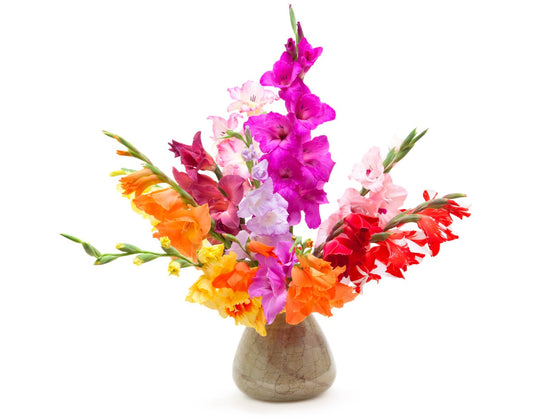
Gladioli
Grow gladioli from corms in Australia: planting depth and timing for six zones, staking, feeding, cutting, lifting and storing, pests and the wild weed species.
| Position | Full sun, sheltered from wind |
|---|---|
| Depth | 10 to 15 cm, flat side down |
| Spacing | 10 to 15 cm |
| First pick | 13 to 17 weeks from planting |
Hippeastrum
Grow hippeastrums in any Australian zone: when to plant bulbs, why the neck sits above the soil, pots, feeding, frost, pests, toxicity and state weed status.
| Position | Full sun or dappled shade |
|---|---|
| Depth | Top third above soil |
| Spacing | 10 to 30 cm |
| First pick | 5 to 8 weeks |