
How to Grow Calla Lilies in Australia
Plant calla lily tubers 10 cm deep, rough side up and 20 to 30 cm apart, once frosts are over and the soil is warm. Water lightly until shoots appear, then keep the soil evenly moist through flowering. Give them at least six hours of sun. Flowers usually follow 7 to 12 weeks after planting, and the tubers rest over winter.
| Sun | Full sun, hot-afternoon shade |
|---|---|
| Water | Evenly moist in growth, dry when dormant |
| Soil | Free-draining, rich in organic matter, pH 6 to 6.5 |
| Feed | Compost and bone meal, then seaweed feeds and potash |
| Spacing | 20 to 30 cm |
| Depth | 10 cm, rough side up |
| Germination | Shoots in about two weeks in warm soil |
| Harvest | 7 to 12 weeks from planting |
| Container | Yes, 15 cm pot per tuber |
| Frost | Tender in growth; lift where ground freezes |
| Use | Summer beds, pots and cut flowers |
Calla lilies (Zantedeschia hybrids) are tuberous perennials in the arum family (Araceae), grown for their sculpted, funnel-shaped flowers in summer beds, pots and vases. They come from southern Africa and are not true lilies, which belong to the genus Lilium. The coloured hybrids grow from Tasmania to Queensland. The usual stumble is water: too much on a sleeping tuber, then too little once the leaves are up.
Three mistakes that matter
- Watering a tuber before it sprouts. A dormant tuber in cold, wet soil can rot before a leaf appears, and the coloured hybrids rot far more readily than white arum lilies. Plant into barely damp, free-draining soil and hold off watering until shoots show.
- Letting the soil dry out in summer. Drought tells a calla its season is over, so the leaves yellow early and flowering stops. Keep the soil evenly moist from the first leaf to the last flower, and mulch beds.
- Planting in heavy shade. Callas with less than about six hours of direct sun make plenty of leaves but few flowers. Choose a spot in full sun.
When to plant
Plant tubers (swollen underground stems that store food) once frosts are over and the soil is warming. Outside the tropics, that falls between late winter and late spring. Cold soil leaves a tuber idle and open to rot. Flowers follow in late spring or summer in most zones, and the clump can return each year.
| Zone | Example cities | Plant | Flowering | Notes |
|---|---|---|---|---|
| Tropical | Darwin NT; Cairns, Townsville QLD; Broome WA | May-Jun | Jul-Oct | Marginal. Plant in the dry season, in pots with afternoon shade; wet-season heat and rain rot tubers. |
| Subtropical | Brisbane, Gold Coast, Sunshine Coast QLD; Coffs Harbour, Lismore NSW | Aug-Sep | Oct-Jan | Frost-free gardens can leave tubers in the ground. Give afternoon shade through the summer heat. |
| Arid and semi-arid | Alice Springs NT; Broken Hill, Dubbo NSW; Mildura VIC | Aug-Sep | Oct-Dec | Plant after the last inland frost. Afternoon shade, mulch and steady water carry flowers before peak heat. |
| Temperate | Sydney, Newcastle, Wollongong NSW; Melbourne, Geelong VIC | Aug-Oct | Nov-Feb | Sydney gardens can start in August. In Melbourne, wait until frosts end, often September or October. |
| Mediterranean | Perth, Bunbury WA; Adelaide and the SA coast | Aug-Oct | Nov-Feb | Water deeply and mulch through dry summers. Wet winters can rot dormant tubers in heavy soil, so lift them. |
| Cool and alpine | Hobart, Launceston TAS; Canberra ACT; Ballarat VIC; Orange NSW | Oct-Nov | Dec-Mar | Plant after the last frost, often around Melbourne Cup weekend. Lift tubers before the ground freezes. |
In frost-free gardens, tubers can stay in the ground all year and simply resprout. Where frost lingers, get a head start as under Starting in pots.
Site, soil and setup
Coloured callas want sun, shelter from hot summer wind, and soil that stays moist without ever sitting wet. That last point separates them from the white arum lily, which grows happily in boggy ground.
| Need | What to do |
|---|---|
| Sun | Full sun. In hot inland and northern districts, morning sun with afternoon shade prevents leaf scorch. |
| Soil | Free-draining and rich in organic matter. Heavy clay that stays wet rots tubers, so raise the bed or grow in pots. |
| pH | About 6.0 to 6.5, slightly acid. If a test reads below 5.5, dig in dolomite lime at 100 to 200 g per square metre four weeks before planting. |
| Bed preparation | Dig in a 5 cm layer of compost, with bone meal at 100 g per square metre. Skip fresh manure: its nitrogen makes leaves at the expense of flowers. |
| Mulch | A light layer of sugarcane or straw, kept clear of the crown and new shoots. |
A clump can stay in one spot for years, so rotation does not apply. After soft rot, plant fresh tubers in a different bed.
Calla or arum lily?
Both are Zantedeschia, and both get called calla lilies, which causes plenty of confusion. The white arum lily (Zantedeschia aethiopica) is a larger plant, usually 1 to 1.5 m tall, that thrives in wet ground. It has escaped gardens into creeks, wetlands and pasture. The coloured callas are hybrids, mainly of Z. elliottiana and Z. rehmannii, and stand about 30 to 75 cm tall. The declarations below name the white arum lily.
| State or territory | What the weed lists say about white arum lily |
|---|---|
| Western Australia | A declared pest, including its green-and-white flowered garden form. Plants offered for sale or given away should be reported. |
| South Australia | Declared under the state's landscape law. Statewide, its sale is prohibited and moving it on public roads is restricted. Landholders in the Green Adelaide and Hills and Fleurieu regions must control it, except plants kept more than 100 m from any wetland or watercourse. |
| Victoria | Not a declared noxious weed, but regarded as a significant environmental weed. |
| New South Wales | Covered by the general biosecurity duty that applies to all pest plants. Mostly found in the South East and Greater Sydney. |
| Tasmania | Not on the declared weeds index, but regarded as an environmental weed. |
| Queensland | Not on the state's prohibited or restricted invasive plant lists. Brisbane City Council lists it as pest vegetation under a local law. |
| Northern Territory | Not on the list of declared weeds. |
| Australian Capital Territory | Not on the declared pest plant list. |
Arum lily spreads in dumped garden waste, so bin unwanted tubers of any Zantedeschia or ask your council how to dispose of them.
Container growing
Callas suit pots, where they tend to stay more compact than in the ground. Use a pot at least 15 cm wide, about 1.9 L, for one tuber, or 30 cm wide, about 14.5 L, for three. Choose one with drainage holes and fill it with premium potting mix. 'Dreamland', 'Dubai Nights', 'Night Club' and 'Picasso' all make good pot plants.
- Watering. Once shoots appear, keep the mix evenly moist, as pots dry out faster than beds. See watering pots through summer.
- Feeding. Give fish and seaweed blend at 25 mL per 9 L every fortnight from the first leaves until the leaves begin to yellow.
- Position. Morning sun and afternoon shade, out of hot wind. A pot in flower can come indoors for a few days.
- Winter. Once the leaves die down, stop watering and keep the pot dry and frost-free until spring.
Planting Bulbs
Callas are sold and planted as dormant tubers, often called bulbs, set straight into the bed or a pot.
Planting direct
- Choose firm tubers and discard any that are soft or smell foul.
- Find the rough, knobbly side with the growing eyes (buds) and set it facing up. If you cannot tell, lay the tuber on its side.
- Plant 10 cm deep, or up to 15 cm deep in hot districts to keep the tuber cooler.
- Space tubers 20 to 30 cm apart.
- Shoots usually appear in about two weeks in warm soil, and flowers follow 7 to 12 weeks after planting.
Starting in pots
In cold districts, pot tubers under cover in late winter, with about 5 cm of mix over them. After the last frost, harden them off (give them a week or so of longer daily stays outdoors). See hardening off seedlings. Plant each one at the depth it grew in the pot.
Care by growth stage
Callas are light feeders, and too much nitrogen buys leaves instead of flowers. Water matters more than feed: it rises with the leaves and falls away after flowering.
| Stage | Water | Feed | Watch for |
|---|---|---|---|
| Planting to first shoots, weeks 0 to 3 | None after planting into damp soil, unless the soil dries right out | Nothing beyond bed preparation | Soft, rotting tubers in cold, wet soil; snails on emerging shoots |
| Leaves unfolding, weeks 3 to 8 | Keep evenly moist; water deeply when the surface dries | Seaweed solution at 30 mL per 9 L every fortnight for the first month, then fish and seaweed blend at 25 mL per 9 L every fortnight | Holes chewed in young leaves; thrips |
| Flowering, weeks 7 to 16 | Keep moist right through flowering and picking | Liquid potash at the label rate every fortnight from the first buds | Scorched leaf edges in hot sun; streaked or spotted leaves |
| After flowering, to late summer | Keep watering while the leaves stay green | Fish and seaweed blend at 25 mL per 9 L every fortnight; stop when leaves yellow | Plants collapsing at soil level |
| Dying down, late summer to autumn | Reduce watering as leaves yellow, then keep dormant tubers dry | None | Frost where the ground freezes |
Week ranges run from planting and shift with the weather. If growth stalls in poor soil, a light dose of all-purpose controlled release granular (NPK around 14-5-10) scratched into the soil can help.
Where the ground freezes or winters stay wet, lift tubers in late autumn once the leaves have died back. Crowded clumps also need lifting, as in dividing perennials.
- Dig carefully, because a bruised tuber invites soft rot.
- Brush off the soil and dry the tubers for a few days in an airy spot.
- Store them dry and dark at about 10 to 16°C until spring.
- Divide crowded clumps every three to four years, cutting so each piece keeps a growing eye.
- Let the cut surfaces dry and heal before replanting.
Companion planting
Low, shallow-rooted plants that like the same moist, sunny bed make the best neighbours.
Grows well with
- Alyssum, a low carpet that draws hoverflies, whose larvae eat aphids.
- Lobelia, a shallow-rooted edging that leaves the tubers room.
- Begonias, which like the same moist, rich soil and stay below the flowers.
Keep away anything that shares their virus or crowds their crowns.
Keep apart
- Dahlias and asters, frequent hosts of spotted wilt and the thrips that spread it.
- Dense spreading groundcovers, which smother new shoots and hold damp around the crown.
- Lavender and other dry-country plants, which want the summer dryness that callas cannot take.
Harvesting Blooms
Pick a flower once its spathe (the coloured, funnel-shaped bract) has fully opened, before the central spike sheds pollen.
- Cut the stem low, or pull the whole stalk from its base with a firm tug.
- Pull spent flowers the same way, which keeps new stems coming.
- Leave every leaf in place, because the leaves feed the tuber for next year.
- Stand stems in clean water as soon as they are picked.
Picked at the right stage, callas can last up to two weeks in a vase. Stems can also wait dry in the fridge, at about 5°C, for three to four days before arranging.
Common problems
No flowers. Too much shade, too much nitrogen or a young tuber is usually to blame, and clumps often flower more strongly as they settle. Move them into more sun and use the feeds under Care by growth stage.
Tubers that never come up. Cold, wet soil after planting rots tubers (see Three mistakes that matter). Dig one up: a firm tuber is still waiting for warmth, while a soft one has rotted. Read more
Scorched, brown leaf edges. Hot afternoon sun or dry wind burns the leaves, most often in inland and northern gardens. Give afternoon shade and keep the soil moist.
Spotted leaves in humid weather. Fungal leaf spot can mark the leaves in warm, humid spells, unlike the pale streaks of spotted wilt. Water at soil level and improve airflow around the clump.
Leaves yellowing in late summer or autumn. This is the normal slide into dormancy once flowering ends. Ease off watering and let the leaves die back on their own.
Pests and diseases
Snails, thrips, aphids and soft rot are the usual troubles, and both insects can carry viruses.
Garden snail (Cornu aspersum). Snails and slugs chew young leaves and buds, feeding mostly at night and in cool, wet weather. Pick them off by torchlight after rain. Read more
Western flower thrips (Frankliniella occidentalis). These tiny insects feed deep inside the flower funnel, where sprays struggle to reach, and they spread spotted wilt. Clear weeds nearby, since they shelter thrips. Read more
Aphids, including green peach aphid (Myzus persicae). These small, soft insects cluster on new leaves and flower stems, leave sticky honeydew and can spread mosaic viruses. Hose off small colonies. Read more
Bacterial soft rot (Pectobacterium carotovorum). Tubers turn soft, slimy and foul-smelling, and plants can collapse at soil level. The bacteria enter through wounds and thrive in warm, wet soil. An infected tuber cannot be saved, so lift it and bin it.
Spotted wilt (Orthotospovirus tomatomaculae). Leaves, leaf stalks and flower stems show whitish or yellow streaks and spots, sometimes with small rings. Infected plants cannot be cured, and the virus can travel in tubers, so bin the whole plant.
Prevention first
- Plant only firm, unblemished tubers, and handle them gently.
- Water at soil level, and never leave pots standing in saucers of water.
- Keep weeds down around the bed, as they host thrips and spotted wilt.
- Check new leaves for snails after rain and on mild evenings.
Tips
- Pair a dark variety such as 'Cantor' or 'Night Club' with the white and pale pink of 'Crystal Blush', so each colour stands out.
- Grow speckled-leaf types such as 'Picasso' and 'Morning Sun' where they are seen up close, as the leaves stay decorative after the flowers fade.
- In frost-free gardens, leave clumps undisturbed for a few years, because callas resent root disturbance and often flower best once settled.
Due to quarantine restrictions and our shipping policy, we cannot send calla lily bulbs to Western Australia or Tasmania.
Questions
Is a calla lily the same as an arum lily?
Not quite. Both belong to Zantedeschia and share the common names. The white arum lily, Zantedeschia aethiopica, grows 1 to 1.5 m tall in wet ground. It is a declared weed in Western Australia and South Australia. Coloured callas are smaller hybrids, about 30 to 75 cm tall, and need free-draining soil.
Do calla lilies come back every year?
Yes. They are perennials that die down in late summer or autumn and resprout in spring. In frost-free gardens the tubers can stay in the ground. Where the ground freezes or winters stay wet, lift them in late autumn and store them dry and dark at about 10 to 16°C.
Why is my calla lily not flowering?
The usual causes are too much shade, too much nitrogen or a young tuber. Callas need at least six hours of direct sun to flower well. Avoid fresh manure, switch to a potassium feed once buds form, and expect clumps to flower more strongly as they settle.
How deep do you plant calla lily bulbs?
Plant the tubers 10 cm deep with the rough, budded side facing up, 20 to 30 cm apart. In hot districts, plant up to 15 cm deep to keep them cooler. Plant into damp soil and wait for shoots before watering again.
Are calla lilies poisonous to dogs and cats?
Yes. All parts contain calcium oxalate crystals, which cause burning and swelling of the mouth and throat if chewed. Keep plants and cut flowers away from pets and children, and wear gloves when handling. Call a vet for an animal, or the Poisons Information Centre on 13 11 26 for a person.
Grow it
Tap Add beside a size to put it in your cart. You stay on this page.
- Calla Lily (Orange Pride) (Pack of 1 Bulb)From $15.99

More bulbs and tubers to sow in October
All bulbs and tubersCanna Lily
Grow dwarf canna lilies from rhizomes: planting depth and timing for six zones, feeding for flowers, cutting back, dividing, pests, and the weed lists by state.
| Position | Full sun |
|---|---|
| Depth | 5 to 10 cm, eyes up |
| Spacing | 30 to 90 cm |
| First pick | 6 to 8 weeks from shooting |
Crinum
Grow crinum lilies in Australia: plant bulbs with the neck above the soil, where to site them, care through flowering, lily caterpillar control and toxicity.
| Position | Full sun to part shade |
|---|---|
| Depth | Neck just above soil |
| Spacing | 40 to 60 cm |
| First pick | Nov to Apr flowers |
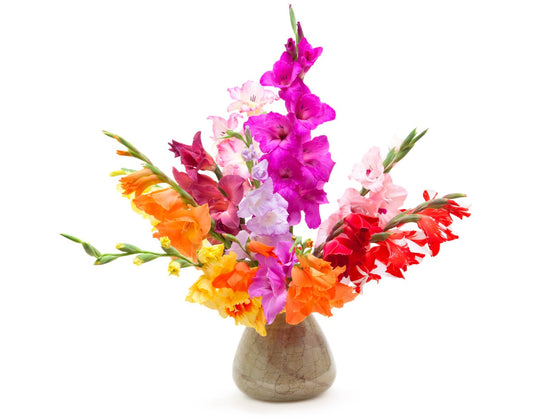
Gladioli
Grow gladioli from corms in Australia: planting depth and timing for six zones, staking, feeding, cutting, lifting and storing, pests and the wild weed species.
| Position | Full sun, sheltered from wind |
|---|---|
| Depth | 10 to 15 cm, flat side down |
| Spacing | 10 to 15 cm |
| First pick | 13 to 17 weeks from planting |
Hippeastrum
Grow hippeastrums in any Australian zone: when to plant bulbs, why the neck sits above the soil, pots, feeding, frost, pests, toxicity and state weed status.
| Position | Full sun or dappled shade |
|---|---|
| Depth | Top third above soil |
| Spacing | About 30 cm |
| First pick | 5 to 8 weeks |