
How to Grow Crocus in Australia
Plant crocus corms in autumn, from March to May, pointed end up, 10 cm deep and 7 to 10 cm apart. Choose full sun or part shade and free-draining soil. They flower in late winter and early spring where winters are cold, and rarely in the subtropics or tropics. Let the leaves yellow before mowing, and keep resting corms dry over summer.
| Sun | Full sun or part shade |
|---|---|
| Water | Moist in growth; dry summer rest |
| Soil | Free-draining and humus-rich; any pH |
| Feed | Bone meal at planting; potash after flowering |
| Spacing | 7 to 10 cm |
| Depth | 10 cm deep |
| Germination | Grown from corms, planted pointed end up |
| Harvest | Flowers Jul to Sep |
| Container | Yes; crowd corms close, not touching |
| Frost | Very hardy; needs winter cold to flower |
| Use | Lawns, rockeries, pots and early pollinators |
Crocus (Crocus vernus and its Dutch hybrids, and the yellow Crocus x luteus) are small corms in the iris family Iridaceae. They are grown for cup-shaped flowers in white, purple, striped and yellow from late winter into early spring. Planted in autumn, they brighten lawns, rockeries and pots wherever winters turn properly cold. The one thing most gardeners get wrong is expecting them to flower after a mild, frost-free winter.
Three mistakes that matter
- Expecting flowers after a warm winter. Dutch crocus need a long spell of cold to flower, and a mild winter often gives leaves and nothing more. In warm districts, chill the corms in the fridge first, as under Chilling, and treat them as annuals.
- Mowing or cutting the leaves too soon. The grassy leaves feed the corm for next year, so cutting them while green weakens the clump. Leave them for about six weeks after flowering, until they yellow, before mowing a crocus lawn.
- Wet soil while the corms rest. Corms rot in soggy ground, above all when summer sprinklers run over a dormant bed. Plant in free-draining soil, a raised bed or a pot, and water only while the leaves are green.
When to plant
Plant corms in autumn, from March to May, once the soil has cooled after summer; Anzac Day sits in the middle of that window. What decides flowering comes later: a long run of cold winter weeks, which the cool and alpine zone and the cooler temperate districts give reliably.
| Zone | Example cities | Plant | Flowering | Notes |
|---|---|---|---|---|
| Tropical | Darwin NT; Cairns, Townsville QLD; Broome WA | Not recommended | Not recommended | Winters are too warm for reliable flowers, and resting corms rot in the wet season. |
| Subtropical | Brisbane, Gold Coast, Bundaberg QLD; Coffs Harbour, Lismore NSW | May | Jul-Aug | Crocus rarely flower here. Chill corms six to eight weeks first, choose the coolest spot and treat as annuals. |
| Arid and semi-arid | Alice Springs NT; Broken Hill, Dubbo NSW; Mildura VIC; Kalgoorlie WA | Apr-May | Jul-Aug | Results are often poor. Cold nights help, but hot dry winds cut flowering short; try pots in part shade. |
| Temperate | Sydney, Newcastle, Wollongong NSW; Melbourne, Geelong VIC | Mar-May | Jul-Sep | Reliable in Melbourne and cooler inland districts. On the warm Sydney coast, chill corms first and plant in May. |
| Mediterranean | Perth, Bunbury WA; Adelaide and the SA coast | Apr-May | Jul-Sep | Dry summers suit resting corms, but mild coastal winters can mean few flowers; chill corms first. |
| Cool and alpine | Hobart, Launceston TAS; Canberra ACT; Ballarat VIC; Orange, Armidale NSW | Mar-Apr | Aug-Sep | Crocus are most at home here. Corms stay in the ground and clumps spread year after year. |
In warm districts, chill corms first and plant at the cool end of the window, in May.
Site, soil and setup
Crocus want winter sun on their leaves and soil that drains fast, because they grow through the wet months and rest dry in summer.
| Need | What to do |
|---|---|
| Light | Full sun or part shade. The ground under deciduous trees suits them, because it is sunny while they flower. |
| Soil | Gritty, free-draining soil rich in organic matter. A sandy loam with compost is ideal; avoid heavy clay. |
| pH | Acid, neutral or alkaline soil all suit. Only on very acid soil, rake in garden lime at 100 to 200 g per square metre four weeks before planting. |
| Drainage | On clay or wet ground, plant in a raised bed or a pot, or work in coarse sand and compost. |
| Bed preparation | Dig a 5 cm layer of compost into the top 20 cm. At planting, rake in bone meal at 100 g per square metre. |
| Lawns | Short, sparse grass suits the Dutch types best, in a patch you can leave unmown until the crocus leaves die down. |
Plant new corms in fresh soil rather than where bulbs have rotted, because rots and bulb mites can persist there.
Weed status, state by state
| State or territory | What the weed lists say |
|---|---|
| Victoria | No crocus on the declared noxious weeds list. |
| New South Wales | No crocus listed in NSW WeedWise. |
| Queensland | Not a prohibited or restricted invasive plant. |
| South Australia | Not on the list of declared plants. |
| Western Australia | Every crocus on the Western Australian Organism List is permitted (section 11), including Crocus vernus, Crocus flavus and Crocus x luteus. |
| Tasmania | Not on the declared weeds index. |
| Northern Territory | Not on the list of weeds in the NT. |
| Australian Capital Territory | Not among the declared pest plants. |
No state or territory declares spring crocus a weed, and in gardens they tend to naturalise without turning weedy. Councils can keep their own lists, so check yours before planting next to bushland.
Container growing
Pots suit crocus in every zone where they grow, and a pot can sit in the coldest corner of the garden over winter. Use a pot at least 15 cm across and 20 cm deep (about 3 L), with drainage holes. A pot that size holds up to 15 corms. Fill it with free-draining potting mix and crowd the corms in, close but not touching. All four store varieties stay low, at about 10 cm.
- Watering. Keep the mix just moist while the leaves are green, checking with a finger a few centimetres down. Never leave the pot standing in water.
- Feeding. From the first leaves, water in seaweed solution at 30 mL per 9 L every fortnight. Once flowering ends, switch to liquid potash at the label rate every fortnight until the leaves yellow.
- Position. Full sun in winter, then somewhere dry once the leaves die down.
Planting Bulbs
Crocus start from dormant corms, small and flattened in a papery skin, planted pointed end up.
What the store sells
| Variety | Group | Flowers | What it changes |
|---|---|---|---|
| 'Jeanne d'Arc' | Dutch crocus (Crocus vernus) | Large and white, purple at the base, with frilly orange stamens | A white drift for lawns and under trees; a good early flower for pollinators |
| 'Pickwick' | Dutch crocus (Crocus vernus) | Greyish white with bold purple stripes and orange stamens | A classic choice for naturalising in lawns |
| 'Yellow Mammoth' | Large yellow Dutch crocus; listed by the store as Crocus flavus | Large and orange-yellow | Strong-growing; a good pick for pots |
| Dutch Mixed | A mix of Dutch crocus | Purple, white, striped and yellow | Several colours from one planting; scatter for a natural drift |
The Royal Horticultural Society treats 'Yellow Mammoth' as a name for Crocus x luteus 'Golden Yellow', the old yellow Dutch crocus. All four are planted and grown the same way.
Chilling
Corms for the subtropics, the warm coast and any frost-free garden need a false winter before planting. Put them in a paper bag in the fridge crisper at 2 to 7°C for six to eight weeks, then plant straight away. This gives them their best chance of flowering, not a certainty. Keep fruit out of that fridge, because ripening fruit gives off ethylene gas, which harms flower development. Corms for the cool and alpine zone need no chilling.
Planting a bed of corms
- Prepare the bed as under Site, soil and setup.
- Set each corm pointed end up, 10 cm deep, or 12 cm deep in a lawn.
- Space corms 7 to 10 cm apart, in clumps or drifts rather than single rows.
- For a natural look, toss a handful across the ground and plant each where it lands.
- Water in well, then water again only if the soil dries out.
- Mark the spot, so a spade does not find the corms before the shoots appear.
Spring crocus, saffron crocus and autumn crocus
The store's crocus are spring crocus, grown only for their flowers. Saffron crocus (Crocus sativus) flowers in autumn and gives the spice; it has its own saffron guide. Autumn crocus belongs to its own family, the Colchicaceae, and flowers in autumn before its leaves appear.
After flowering: keep, lift or divide
The leaves usually yellow by late spring or early summer, and the corms then rest until autumn. Crowded clumps flower less, so lift and divide them every three to five years in late summer, while they are dormant. Replant the offsets straight away, or store them as under Harvesting Blooms.
| Zone | Over summer |
|---|---|
| Tropical | Not grown; see the calendar. |
| Subtropical | Corms seldom flower a second year; lift, store dry and chill again, or plant fresh corms. |
| Arid and semi-arid | Leave in a bed that stays dry; lift corms from any bed that is watered in summer. |
| Temperate | Leave in free-draining ground; lift where summer storms keep the soil wet. |
| Mediterranean | Leave in the ground, where the dry summer suits resting corms. |
| Cool and alpine | Leave in the ground, where clumps spread year after year. |
Care by growth stage
Cold weeks in winter, moisture while the leaves are green and a dry summer rest decide how well crocus flower. Feed lightly at planting, then give potassium as the leaves finish their work.
| Stage | Water | Feed | Watch for |
|---|---|---|---|
| Planted, roots forming, autumn, weeks 0 to 6 | Water in once, then only if the soil dries out | Bone meal at 100 g per square metre raked in at planting | Fresh holes where mice dig for corms; water lying after rain |
| Shoots and leaves, winter | Keep the soil lightly moist in dry spells | Seaweed solution at 30 mL per 9 L every fortnight | Aphids at the base of the shoots |
| Flowering, late winter to early spring | Keep watering at soil level in dry spells | Sulphate of potash at 30 to 50 g per square metre once, as the buds show | Flowers shut in dull weather, which is normal |
| After flowering, leaves green, about six weeks | Keep watering in dry spells until the leaves yellow | Liquid potash at the label rate every fortnight | Mowing or tidying before the leaves yellow |
| Leaves yellow, summer rest | Stop watering; the corms rest dry | None | Yellow, dying leaves, which are normal |
Crocus in good garden soil often need little more than this. If growth stalls in poor soil, a light dose of all-purpose controlled release granular (NPK around 14-5-10) scratched in as the shoots appear can help.
Companion planting
Crocus pair best with plants that share their cool, wet-winter and dry-summer rhythm.
Grows well with
- Daffodils, which flower alongside crocus and want the same dry summer rest.
- Scilla and hyacinths, other autumn-planted bulbs for the same sunny, free-draining bed.
- Deciduous trees, which stand bare and let in full sun while crocus flower.
- Short, sparse lawn grass, which the Dutch types colonise if mowing waits for their leaves.
Keep apart
- Vegetable beds and saffron plantings, where corms that are not to be eaten could be dug up by mistake.
- Thick, vigorous lawn or groundcover, which crowds the small corms and shades their leaves.
Harvesting Blooms
Crocus flowers open wide in the morning sun and close at night and on cloudy days. Enjoy them where they grow, on sunny days.
- Deadheading is not needed, though spent flowers can be pinched off for tidiness.
- Lift corms from pots once the leaves die down.
- For indoor colour, plant corms in moist potting mix and chill the pot in the fridge for 15 to 17 weeks. Keep the mix moist but not wet, and bring the pot to a cool, bright spot once shoots show.
- Keep forced corms potted until the leaves die down, then plant them out in autumn, because they will not force again.
Store lifted corms in paper bags somewhere cool and dry until autumn, and check them as under Prevention first before replanting.
Common problems
Leaves but no flowers. A warm winter, leaves cut early the spring before, or an overcrowded clump can stop flowering (see Three mistakes). Chill corms in warm districts and divide crowded clumps.
Flowers that stay shut. Crocus open only in sunshine, so a shaded spot keeps them closed. Move clumps into winter sun, such as under deciduous trees.
Weak or late shoots. Corms planted far too deep can exhaust themselves before they reach the surface. Plant at the depths under Planting Bulbs.
Corms gone after planting. Small holes in the soil in the first autumn or winter usually point to mice; see Mice and rats under Pests and diseases. For rotting corms, see Three mistakes.
Pests and diseases
Crocus pests mostly attack the corm, in the soil or in storage.
Mice and rats (Muridae). Rodents dig down to gnaw newly planted corms, most often in the first autumn and winter after planting. Lay wire mesh over new plantings, and keep spare corms in a closed container. Read more
Tulip bulb aphid (Dysaphis tulipae). Recorded in New South Wales, Victoria, Tasmania and Western Australia, it attacks crocus corms in storage and later feeds at the base of growing plants. Spray insecticidal soap on the shoots, at the rate on its label. Read more
Bulb mite (Rhizoglyphus robini). Recorded in Australia, bulb mites infest crocus corms and travel on infested stock. Badly infested corms rot, and their shoots come up stunted and distorted, so bin them and buy firm, clean corms.
Prevention first
- Plant only firm, healthy corms, and bin any that are soft, mouldy or damaged.
- Handle corms gently, because bruised corms let in rots and mites.
- Store lifted corms cool and dry, which also slows bulb mites.
- Check stored corms before planting for aphids and soft patches.
Tips
- Plant crocus as the top layer in a pot, above daffodils or tulips, for a longer show.
- Plant a clump beside a path or window you pass in winter, where the first flowers are easy to see.
- Where corms must be lifted each year, plant them in an old colander or open basket sunk into the bed, so they lift out together.
Due to quarantine restrictions and our shipping policy, we cannot send crocus corms to Western Australia or Tasmania.
Questions
When do you plant crocus bulbs in Australia?
Plant the corms in autumn, from March to May, once the soil has cooled. In cold districts, March or April suits. In warm districts, chill the corms in the fridge for six to eight weeks and plant in May. Flowers usually follow in late winter and early spring.
Will crocus grow in Brisbane or Queensland?
They rarely flower in the subtropics, and tropical winters are too warm for reliable flowers. Chilled corms planted in May in the coolest spot can flower once, so treat them as annuals. Stanthorpe, high enough to sit in the cool zone, is the exception.
How deep do you plant crocus corms?
Plant them 10 cm deep with the pointed end up, or 12 cm deep in a lawn. Space them 7 to 10 cm apart in clumps or drifts. Water in once, then again only if the soil dries out.
Do crocus come back every year?
Yes, where winters are cold and summers dry. Leave the corms in the ground, let the leaves yellow before mowing or tidying, and keep the bed dry over summer. Lift and divide crowded clumps every three to five years in late summer.
Are crocus poisonous to dogs and cats?
Spring crocus can cause drooling, vomiting and diarrhoea in pets that chew them, and the corms are not to be eaten. Autumn crocus, a different plant called Colchicum, is far more toxic. Call your vet, or the Poisons Information Centre on 13 11 26 for people.
Is spring crocus the same as saffron crocus?
No. Saffron comes from Crocus sativus, which flowers in autumn. The spring crocus sold for gardens are grown only for their flowers, and their corms are not to be eaten.
More bulbs and tubers to sow in October
All bulbs and tubersCalla Lily
Grow coloured calla lilies from tubers: planting depth and timing for six zones, water and feeding, lifting and storing, pests, toxicity and the arum lily weed.
| Position | Full sun, hot-afternoon shade |
|---|---|
| Depth | 10 cm, rough side up |
| Spacing | 20 to 30 cm |
| First pick | 7 to 12 weeks from planting |
Canna Lily
Grow dwarf canna lilies from rhizomes: planting depth and timing for six zones, feeding for flowers, cutting back, dividing, pests, and the weed lists by state.
| Position | Full sun |
|---|---|
| Depth | 5 to 10 cm, eyes up |
| Spacing | 50 to 70 cm |
| First pick | 6 to 8 weeks from shooting |
Crinum
Grow crinum lilies in Australia: plant bulbs with the neck above the soil, where to site them, care through flowering, lily caterpillar control and toxicity.
| Position | Full sun to part shade |
|---|---|
| Depth | Neck just above soil |
| Spacing | 40 to 60 cm |
| First pick | Nov to Apr flowers |
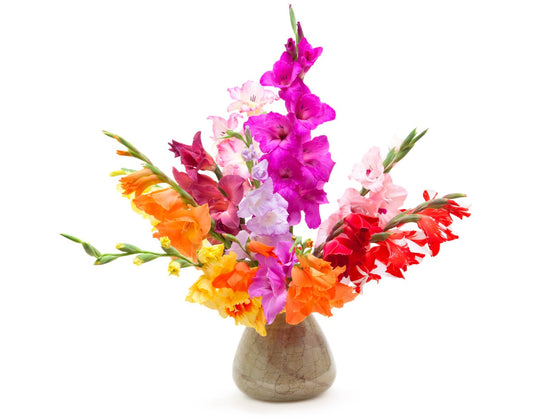
Gladioli
Grow gladioli from corms in Australia: planting depth and timing for six zones, staking, feeding, cutting, lifting and storing, pests and the wild weed species.
| Position | Full sun, sheltered from wind |
|---|---|
| Depth | 10 to 15 cm, flat side down |
| Spacing | 10 to 15 cm |
| First pick | 13 to 17 weeks from planting |