
How to Grow Lycoris in Australia
Lycoris, the golden and red spider lilies, are bulbs planted dormant from late summer into autumn. Set the tip of the neck level with the soil. Bare flower stems rise in late summer and autumn, then leaves grow through winter and die down for a dry summer rest. Leave clumps undisturbed for years. Every part is poisonous to people and pets.
| Sun | Full sun to part shade |
|---|---|
| Water | Moist in leaf; dry summer rest |
| Soil | Rich, well drained; any pH |
| Feed | Sulphate of potash as leaves appear |
| Spacing | 15 to 30 cm apart |
| Depth | Neck level with soil surface |
| Germination | Grown from bulbs; often skips first flowering |
| Harvest | Late summer to autumn |
| Container | Largest, deepest pot you can, with drainage |
| Frost | Red bulb to about minus 5°C; golden frost tender |
| Use | Cut flowers and borders; poisonous, not edible |
Lycoris (Lycoris species), in the family Amaryllidaceae, are bulbs grown for clusters of spidery flowers on bare stems in late summer and autumn. The store sells two: golden spider lily (Lycoris aurea) and red spider lily (Lycoris radiata). The leaves follow the flowers, stay green through winter and spring, then die down for a dry summer rest. Most failures come from planting too deep or watering bulbs while they rest.
Three mistakes that matter
- Burying the bulb. A bulb planted with its neck well under the soil can take longer to flower, or sulk for years. Set it so the tip of the neck sits level with the soil surface, or just above it.
- Watering through the summer rest. The bulbs rest dry from late spring to late summer, and steady water then can rot them. Plant away from lawn sprinklers and watered vegie beds, and leave the bed dry.
- Cutting the leaves early. The winter leaves rebuild the bulb for next year's flowers, and cutting them while green or yellowing weakens it and reduces flowering. Leave them until they wither, then tidy up.
When to plant
Plant dormant bulbs from late summer into autumn, while they are leafless. Aim to have them in by Anzac Day, so roots form before winter.
| Zone | Example cities | Plant | Flowering | Notes |
|---|---|---|---|---|
| Tropical | Darwin NT; Cairns, Townsville QLD; Broome WA | Not recommended | Not recommended | Steady heat and a wet-season summer give no cool season for the leaves and no dry rest. |
| Subtropical | Brisbane, Gold Coast, Bundaberg QLD; Coffs Harbour, Lismore NSW | Feb-Apr | Feb-Apr | Plant as summer heat eases. Red suits the ground; in wet summers golden does better in a pot kept dry. |
| Arid and semi-arid | Alice Springs NT; Broken Hill, Dubbo NSW; Mildura VIC; Kalgoorlie WA | Feb-Mar | Feb-Apr | Plant before inland frosts begin. Red only, with afternoon shade and frost shelter; frost ruins golden leaves. |
| Temperate | Sydney, Newcastle, Wollongong NSW; Melbourne, Geelong VIC | Feb-Apr | Feb-Apr | Plant as summer heat eases. Red can flower in March on the NSW coast; Melbourne golden needs a frost-free wall. |
| Mediterranean | Perth, Bunbury WA; Adelaide and the SA coast | Feb-Apr | Feb-Apr | Dry summers suit the rest. Where no rain falls, one deep late-summer soak can bring stems up. |
| Cool and alpine | Hobart, Launceston TAS; Canberra ACT; Ballarat VIC; Orange NSW | Feb-Mar | Mar-Apr | Plant before frosts. Red needs a sheltered sunny spot and deep, dry winter mulch; keep golden potted under cover. |
A new bulb often skips its first autumn and flowers from the second, so a bare first year is no cause for alarm. A potted plant already in leaf can go in at other times, at the depth it grew in its pot.
Site, soil and setup
Both species come from eastern Asia, where they grow on rocky hillsides and stream banks. They need summer warmth and soil that dries out while they rest.
| Need | What to do |
|---|---|
| Light | Full sun to part shade. Afternoon shade suits hot inland gardens and helps the flowers last, and red spider lily flowers best in part shade. |
| Soil | Rich, well-drained loam or sand. Dig a 5 cm layer of compost through the top 20 cm before planting. |
| pH | Acid, neutral or alkaline soil all suit. Golden spider lily comes from limestone country, so on acid soil add garden lime at 100 g per square metre four weeks ahead. |
| Drainage | Never waterlogged. On heavy clay, plant on a mound or a raised bed so the bulbs do not sit wet. |
| Feeding at planting | Rake bone meal into the bed at 100 g per square metre. |
| Summer water | A spot that receives no summer watering: away from lawn sprinklers, drippers and the vegie patch. |
A clump stays in one place for years, so crop rotation does not apply. Flower stems reach about 30 to 60 cm.
Weed status, state by state
| State or territory | What the weed lists say |
|---|---|
| Victoria | Neither species is on the declared noxious weeds list. |
| New South Wales | Neither species is listed in NSW WeedWise. |
| Queensland | Neither is a prohibited or restricted invasive plant. |
| South Australia | Neither is on the list of declared plants. |
| Western Australia | Both are listed as permitted (section 11) on the Western Australian Organism List, not declared pests. |
| Tasmania | Neither is on the declared weeds index. |
| Northern Territory | Neither is on the list of weeds in the NT. |
| Australian Capital Territory | Neither is a declared pest plant. |
Container growing
The bulbs need a deep, wide root run to flower, and a cramped pot can stop flowering altogether. Use the largest, deepest pot you can, with drainage holes, and set three bulbs about 15 cm apart. Fill it with premium potting mix and set the necks at the surface. Red spider lily is the smaller plant and suits a pot better. Golden spider lily grows larger, but earns a pot where frost would ruin its leaves.
- Watering. Water when the top 3 cm of mix dries, from the first flower stems until the leaves yellow. Then keep the pot dry until late summer.
- Feeding. Water in fish and seaweed blend at 25 mL per 9 L every fortnight while the leaves are green.
- Position. Full sun to part shade, out of strong wind while the stems are up.
- Frost. In frosty gardens, move pots of golden spider lily under a verandah or eave for winter.
Planting Bulbs
Lycoris start from a dormant bulb, rounded and about 5 cm across, with a neck at the top.
The two the store sells
| Feature | Golden spider lily | Red spider lily |
|---|---|---|
| Flowers | Five or six large, upward-facing, golden-yellow flowers per stem | Four to six bright red, nodding flowers per stem |
| Stem height | About 40 to 60 cm | About 30 to 60 cm |
| Leaves | Thick, succulent, blue-green, to about 60 cm long | Narrow, grey-green, with a pale central stripe |
| Frost | Leaves are frost tender and collapse in a freeze | Bulb hardy to about minus 5°C; leaves can be damaged below about minus 2°C |
| Best position | Frost-free and sunny, with a dry summer rest | Part shade, sheltered from hard frost |
| Seed | Some plants set seed; seedlings take about five years to flower | Usually sets no seed; increases by offsets |
Ismene, also sold as spider lily, is a different bulb with its own guide.
Planting a bulb
- Prepare the bed as under Site, soil and setup.
- Space bulbs 15 to 30 cm apart, closer for a dense clump.
- Dig each hole deep enough for the whole bulb, with roots spread down.
- Set the bulb so the tip of its neck sits level with the soil surface, or just above.
- Firm the soil and water in once with seaweed solution at 30 mL per 9 L.
- Mark the spot, because nothing shows above ground until the stems or leaves appear.
Dividing a crowded clump
Leave clumps alone for years: they increase by offsets and flower best undisturbed. When a crowded clump starts to flower less, lift it with a fork while dormant in early summer, around December. Gently pry the offsets, or daughter bulbs, away from the mother bulb without cutting them. Replant them at once with the necks at the surface, and expect a gap in flowering, often of a year or more.
Care by growth stage
A dry summer rest and green winter leaves decide how well a clump flowers. Feed lightly, and only while the leaves are growing.
| Stage | Water | Feed | Watch for |
|---|---|---|---|
| Planting, late summer to autumn | Water in once, then only if the soil dries out | Seaweed solution at 30 mL per 9 L at planting | Water lying over the bulbs |
| Flowering, late summer to autumn | Keep the soil lightly moist while stems are up | None | Stems bent by wind; flowers fading fast in hot sun |
| Leaves growing, autumn to winter | Rain is usually enough; water deeply in dry spells | Sulphate of potash at 30 g per square metre as the leaves appear | Lily caterpillar in autumn; frost on golden spider lily leaves |
| Leaves yellowing, spring | Water less as the leaves fade | None | Leaves cut or mown before they wither |
| Summer rest, Dec to late summer | None; keep the bed dry | None | Soil staying damp |
Flower stems often rise soon after heavy late-summer rain, and a clump can flower in waves as more rain falls. Where summer stays dry, one deep soak in late summer can bring them up. If growth stalls in poor soil, a light dose of all-purpose controlled release granular (NPK around 14-5-10) scratched in as the leaves appear can help. Avoid high-nitrogen feeds, which favour leaves over flowers.
Companion planting
Pair Lycoris with plants that hide its bare stems in flower and cover the gap it leaves in summer.
Grows well with
- Daylilies, whose arching leaves fill the space while the bulbs rest.
- Phlox, which flowers in the same border and hides the base of the stems.
- Echinacea and rudbeckia, sun-loving perennials for the same well-drained bed.
- A low groundcover, which softens the bare stems and stays clear of the bulb necks.
Keep apart
- Vegie beds, watered lawns and anything else watered through summer: see Three mistakes that matter.
- Garlic, onions and other edible bulbs, because the bulbs look alike when dug and a mix-up is dangerous.
Harvesting Blooms
Cut stems for the vase when the first one or two flowers in the cluster have opened and the rest are coloured buds.
- Wear gloves, because every part of the plant is poisonous.
- Cut in the cool of the morning with clean secateurs.
- Cut the stem near the base and stand it straight in deep water.
A cluster lasts about two weeks, longer out of hot sun and wind. Keep the vase in a cool room, out of reach of children and pets.
Common problems
No flowers. A new bulb often waits a year, and a deep-planted bulb waits longer. A crowded clump flowers less; see Dividing a crowded clump.
Soft, rotting bulbs. Summer water or waterlogged soil rots the resting bulb; replant firm bulbs on a raised, unwatered bed.
Leaves turned to mush. Frost collapses the succulent leaves of golden spider lily and weakens the bulb. Grow it in a frost-free spot, or in a pot moved under cover.
No leaves in summer. The bulbs are leafless from late spring until after flowering; this rest is normal, not a sign of death.
Pests and diseases
Lycoris are generally free of serious pests and diseases, and rodents leave the toxic bulbs alone.
Lily caterpillar (Spodoptera picta). Grey caterpillars with black lines, up to 5 cm long, attack amaryllis-family bulbs in New South Wales, Queensland and the NT. No record names Lycoris as a host, but around Sydney they feed in early to mid autumn, just as its leaves emerge. They chew leaves in groups, then bore into the bulb's crown. Check under leaves for egg masses covered in pale brown hairs, and pick off egg-laden leaves and caterpillars.
Prevention first
- Check the new leaves regularly through autumn for egg masses and chewed tips.
- Fork over the soil around a damaged clump to expose pupae.
- Check nearby crinums, clivias and hippeastrums too, because the caterpillars feed across the amaryllis family.
- Plant only firm, unblemished bulbs, and discard any that feel soft.
Tips
- Plant in groups of three to five bulbs, which fill out into a clump that flowers as one.
- Plant beside a path, in a courtyard or at the front of a border, where the bare stems are seen up close.
- Spent flower stems can be cut at the base once the flowers fade, or left to wither; neither harms the bulb.
Due to quarantine restrictions and our shipping policy, we cannot send Lycoris bulbs to Western Australia or Tasmania.
Questions
Are spider lilies poisonous to dogs and cats?
Yes. All parts of Lycoris contain lycorine and related alkaloids, and the bulb holds the most. Eaten, they can cause vomiting and diarrhoea in pets and people. Plant away from where dogs dig, wear gloves when handling bulbs, and call a vet if a pet eats any.
When do you plant Lycoris bulbs in Australia?
Plant dormant, leafless bulbs from late summer into autumn, about February to April, with the tip of the neck level with the soil surface. In cool and frosty areas, plant by March so roots form before the cold.
Why is my red spider lily not flowering?
A new bulb often skips its first autumn. Bulbs planted too deep, watered through summer, or crowded into an old clump also flower poorly. Leaves cut while still green weaken the bulb for the next year.
Why do spider lilies flower without leaves?
Lycoris flower on bare stems in late summer and autumn, straight after their dry summer rest. The leaves follow the flowers, grow through winter and spring, then die down again. This is normal for the plant.
Is red spider lily a weed in Australia?
No. Neither red nor golden spider lily is a declared weed in any state or territory, and Western Australia lists both as permitted plants. Clumps spread slowly by offsets.
Should I cut back spider lily leaves?
No. Leave the leaves until they wither naturally in spring. They rebuild the bulb for next year's flowers, and cutting them while green or yellowing reduces flowering.
More bulbs and tubers to sow in October
All bulbs and tubersCalla Lily
Grow coloured calla lilies from tubers: planting depth and timing for six zones, water and feeding, lifting and storing, pests, toxicity and the arum lily weed.
| Position | Full sun, hot-afternoon shade |
|---|---|
| Depth | 10 cm, rough side up |
| Spacing | 20 to 30 cm |
| First pick | 7 to 12 weeks from planting |
Canna Lily
Grow dwarf canna lilies from rhizomes: planting depth and timing for six zones, feeding for flowers, cutting back, dividing, pests, and the weed lists by state.
| Position | Full sun |
|---|---|
| Depth | 5 to 10 cm, eyes up |
| Spacing | 50 to 70 cm |
| First pick | 6 to 8 weeks from shooting |
Crinum
Grow crinum lilies in Australia: plant bulbs with the neck above the soil, where to site them, care through flowering, lily caterpillar control and toxicity.
| Position | Full sun to part shade |
|---|---|
| Depth | Neck just above soil |
| Spacing | 40 to 60 cm |
| First pick | Nov to Apr flowers |
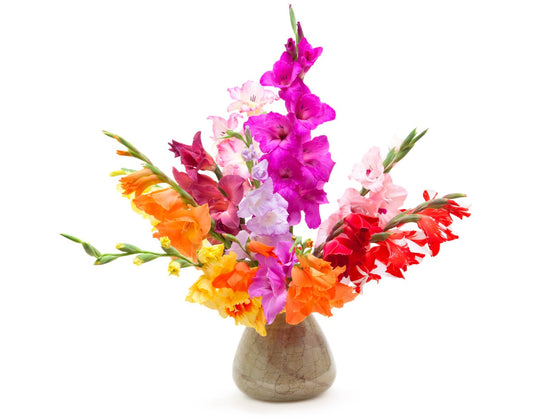
Gladioli
Grow gladioli from corms in Australia: planting depth and timing for six zones, staking, feeding, cutting, lifting and storing, pests and the wild weed species.
| Position | Full sun, sheltered from wind |
|---|---|
| Depth | 10 to 15 cm, flat side down |
| Spacing | 10 to 15 cm |
| First pick | 13 to 17 weeks from planting |