
How to Grow Ismene in Australia
Plant ismene bulbs in spring after the last frost, once the soil is warm. Set the base about 10 cm deep with the neck at soil level, 20 cm apart. Give full sun to light shade and rich, moist but well-drained soil. Keep it moist while the buds form, and lift the bulbs before frost in cold areas.
| Sun | Full sun to light shade |
|---|---|
| Water | Moist while in leaf; dry while dormant |
| Soil | Rich, moist but well drained |
| Feed | Compost, bone meal, then fortnightly liquid feeds |
| Spacing | About 20 cm apart |
| Depth | Base 10 cm deep |
| Germination | Grown from bulbs; leaves appear in warm soil |
| Harvest | Flowers in summer, over about two weeks |
| Container | Good in a pot 30 cm across |
| Frost | Frost tender; lift bulbs where frost is regular |
| Use | Fragrant cut flowers, borders and pots |
Ismene (Hymenocallis x festalis), also called Peruvian daffodil or sacred lily of the Incas, is a summer-flowering bulb in the amaryllis family (Amaryllidaceae). It is a garden hybrid of two Peruvian species, grown for its fragrant white flowers with a frilled cup and long, curling petals. It shares its family with the true daffodil but grows in summer and rests in winter. It thrives in warm gardens from Darwin to Sydney and flowers in pots further south. The usual mistake is planting it too early, into soil that is still cold.
Three mistakes that matter
- Planting into cold soil. Ismene dislikes temperatures below about 15°C, so bulbs planted in early spring sit idle and can rot in cold, wet ground. Wait until frosts have passed and the soil feels warm to the hand.
- Letting the soil dry as buds form. In a dry spell the flower buds can wither before they open, and the whole summer display is lost. Keep the soil evenly moist from the first leaves until flowering ends.
- Leaving bulbs in frosty ground, or tearing their roots. Frost can kill the bulbs where winters bite, and badly damaged roots can stop the next summer's flowers. Lift the bulbs before the first frost and keep the roots attached.
When to plant
Plant dormant bulbs in spring, after the last frost, once the soil has warmed. In the cool south, Melbourne Cup weekend in early November is a reliable marker. One planting flowers for years, so there is no need to plant in succession.
| Zone | Example cities | Plant | Flowering | Notes |
|---|---|---|---|---|
| Tropical | Darwin NT; Cairns, Townsville QLD; Broome WA | Sep-Nov | Nov-Feb | Plant before the wet season; water growing bulbs until rain comes. Bulbs can stay in the ground, dry while dormant. |
| Subtropical | Brisbane, Sunshine Coast, Bundaberg QLD; Coffs Harbour, Lismore NSW | Sep-Nov | Nov-Feb | Bulbs can stay in the ground all year. Check for lily caterpillar through the humid summer. |
| Arid and semi-arid | Alice Springs NT; Broken Hill, Dubbo NSW; Mildura VIC; Kalgoorlie WA | Oct-Nov | Dec-Feb | Mulch and water deeply in the heat. Lift bulbs before the inland frosts from about May. |
| Temperate | Sydney, Newcastle, Wollongong NSW; Melbourne, Geelong VIC | Oct-Nov | Dec-Mar | Sydney bulbs can stay in sheltered beds. In Melbourne, grow in pots or lift the bulbs in autumn. |
| Mediterranean | Perth, Bunbury WA; Adelaide and the SA coast | Oct-Nov | Dec-Feb | Water steadily through the long dry summer, then let the bulbs rest dry once leaves yellow. |
| Cool and alpine | Hobart, Launceston TAS; Canberra ACT; Ballarat VIC; Orange NSW | Nov-Dec | Jan-Mar | Grow in pots or lift the bulbs each autumn before the frosts from about April. |
Leaves come first and the flowers follow in summer. Bulbs planted late in the window can still flower, later in the season.
Site, soil and setup
Ismene comes from mild, moist country and wants a warm, sheltered spot with rich soil that holds moisture but never lies wet in the cold.
| Need | What to do |
|---|---|
| Light | Full sun to light shade. In hot inland gardens, afternoon shade keeps the leaves fresh. |
| Shelter | Choose a spot out of strong wind, because the flower stems stand 60 to 90 cm tall. |
| Soil | Rich in organic matter, moist but well drained. Loam suits it best; sand and clay both work once improved. |
| pH | Acid, neutral or alkaline soil all suit it, so no correction is needed. |
| Bed preparation | Dig in a 5 cm layer of compost. At planting, rake in bone meal at 100 g per square metre. |
| Room to grow | A clump spreads 30 to 45 cm, so set it near the front of a border or beside a path. |
Crop rotation does not apply to a bulb that stays in one place for years. Lift and divide crowded clumps instead, as described under Tips.
What the state weed lists say
No state or territory names ismene as a declared or noxious weed. Western Australia lists it as a permitted organism, not a declared pest.
| State or territory | What the weed lists say about Hymenocallis x festalis |
|---|---|
| Western Australia | Listed as a permitted organism in the Western Australian Organism List, with no control category. |
| South Australia | Not on the list of declared plants. |
| Victoria | Not on the declared noxious weeds list. |
| New South Wales | No profile in the state weed database. |
| Tasmania | Not on the declared weeds index. |
| Queensland | Not on the prohibited or restricted invasive plant lists. |
| Northern Territory | Not on the list of declared weeds. |
| Australian Capital Territory | Not on the declared pest plant list. |
Container growing
A pot suits ismene where winters are frosty, because the whole pot can move under cover. For two or three bulbs, use a pot at least 30 cm across, about 15 L, with good drainage holes. Fill it with premium potting mix. A plastic pot keeps the mix from drying out as fast as terracotta.
- Planting. Set the bulbs with the neck and shoulder just above the mix.
- Position. Full sun or bright light shade, sheltered from wind.
- Watering. Water every few days in warm weather while the plants are in leaf, so the mix stays moist.
- Feeding. Give fish and seaweed blend at 25 mL per 9 L every fortnight from the first leaves until flowering ends.
- Winter. As the leaves yellow, stop watering and move the pot to a dry, frost-free spot until spring.
Planting Bulbs
Ismene starts from a large bulb with a neck up to about 5 cm long.
Before planting
Choose firm bulbs, and discard any that are soft or mouldy. The bulb is poisonous if eaten, so store it where children and pets cannot reach it, and well away from onions in the kitchen.
Planting in the ground
- Set each bulb upright, neck pointing up.
- Plant with the base about 10 cm deep, so the tip of the neck sits level with or just above the soil.
- Space bulbs about 20 cm apart, in groups of three or more.
- Water in well once, then water lightly until the leaves appear.
Care by growth stage
Ismene wants plenty of water while it grows and flowers, then a dry rest once the leaves die down in autumn.
| Stage | Water | Feed | Watch for |
|---|---|---|---|
| Planted bulbs, until leaves show | Light watering until the first leaves show | Nothing beyond the compost and bone meal | Soft bulbs in cold, wet soil; snails on new shoots |
| Leaves growing | Keep evenly moist; water deeply in dry spells | Fish and seaweed blend at 25 mL per 9 L every fortnight | Lily caterpillar chewing leaves |
| Flower stems rise | Never let the soil dry out | Sulphate of potash at 30 to 50 g per square metre, once | Buds withering in a dry spell; stems bent by wind |
| Flowering, about 2 weeks | Keep watering right through flowering | Fish and seaweed blend every fortnight | Mealybugs in the leaf bases |
| After flowering, into autumn | Water while leaves stay green | Seaweed solution at 30 mL per 9 L every fortnight | Leaves yellowing, the sign the bulb is going dormant |
| Winter dormancy | Little or none | None | Frost in cold zones; lift the bulbs before it |
If growth stalls in poor soil, scratch a light dose of all-purpose controlled release granular (NPK around 14-5-10) into the soil as the leaves appear.
Lifting and storing in frosty areas
Lift the bulbs where frost is regular, such as Canberra, Hobart and the inland, or overwinter them in their pots under cover.
- Dig the bulbs before the first frost, as the leaves yellow, keeping as many roots as you can.
- Leave them to dry in the open air, out of rain, then brush off the soil.
- Dry the bare bulbs for several weeks more, checking that the roots stay plump and pliable.
- Store them in dry perlite somewhere dry and frost free, between about 12 and 21°C.
- Replant in spring once the soil warms.
Companion planting
Ismene pairs well with summer plants that like the same rich, moist soil and leave its leaves in the sun.
Grows well with
- Dahlias, which flower alongside it in the same rich soil and are lifted on the same autumn timetable in cold zones.
- Zinnias, sun-loving summer annuals whose bright colours set off the white flowers.
- Alyssum, a low edging that covers bare soil without shading the bulb leaves.
Keep apart
- Crinum, clivia and hippeastrum, because they share the lily caterpillar, which can move from clump to clump.
- Thick plantings of agapanthus and other strappy plants, which shelter snails close to the young ismene shoots.
Harvesting Blooms
Cut a stem for the vase when the first flower in the cluster has opened and the others are swelling.
- Cut in the cool of the morning, with clean secateurs.
- Cut the leafless flower stem low, leaving every leaf on the plant to feed the bulb.
- Stand cut stems in a bucket of water straight away.
- Change the vase water every couple of days.
- On plants left in the garden, cut off each stem once its flowers fade.
Each stem carries two to five flowers, and a planting flowers over about two weeks. The scent is strongest at night, so a vase suits a room used in the evening.
Common problems
Bulbs that do nothing. Cold soil at planting is the usual cause, as described in Three mistakes that matter.
Buds that wither. Dry soil while the stems rise is the cause, as described in Three mistakes that matter. Water deeply before hot days and mulch to hold moisture.
Leaves but no flowers. Crowded clumps and bulbs whose roots were torn at lifting often flower poorly. Divide crowded clumps, and lift stored bulbs with their roots intact.
Weak plants after winter in the ground. In frosty areas, bulbs left in the ground over winter can come back less vigorous and flower less reliably. Lift them, or plant against a warm house wall.
Pests and diseases
Ismene is seldom troubled by disease.
Lily caterpillar (Spodoptera picta). Striped yellow, grey and black caterpillars, up to 5 cm long, attack spider lilies and their amaryllis relatives. They chew the leaves and bore down into the bulb, often killing it. The pest occurs in Queensland, the Northern Territory and New South Wales. In the same states the lily borer (Brithys crini), black with white spots and an orange head, tunnels inside leaves and stems. Search at first light, down into the leaf bases, and pick off egg masses under the leaves. For heavy attacks, use a caterpillar spray registered for the job, repeated as the label directs. Treat the lily borer the same way.
Common garden snail (Cornu aspersum) and slugs. They graze the young shoots and hide among strappy leaves, especially after rain in the cooler months. Hunt for them after rain, and set traps such as saucers of stale beer dug in level with the soil. Read more
Mealybugs (family Pseudococcidae). White, fluffy insects 2 to 5 mm long cluster in the leaf bases and on stored bulbs, leaving sticky honeydew. Dab small colonies with methylated spirits on a cotton bud, and spray horticultural oil on larger ones, but never in hot weather. Read more
Prevention first
- Check new leaves weekly in warm, humid weather, when lily caterpillar is most active.
- Inspect stored bulbs before planting, and discard any carrying mealybugs or soft rot.
- Keep the spacing given under Planting Bulbs, so air moves through the clump.
- Clear dead leaves after dormancy as part of everyday garden hygiene.
Tips
- Push a label in beside each clump at planting, because nothing shows above ground through winter.
- Divide clumps once crowding thins the flowers, often after about five years, in late winter before new growth starts. Replant the offsets at once.
- Pot up the small offsets that come away when you lift or divide, and grow them on until they reach flowering size.
Due to quarantine restrictions and our shipping policy, we cannot send ismene bulbs to Western Australia or Tasmania.
Questions
Is ismene the same as a daffodil?
No. Ismene is Hymenocallis, a summer-flowering garden hybrid of two Peruvian species, while the true daffodil is a spring bulb. Both belong to the amaryllis family, and the frilled cup at the centre of an ismene flower is why it is called the Peruvian daffodil.
How deep do you plant ismene bulbs?
Set each bulb upright with its base about 10 cm deep. The tip of the long neck should sit level with or just above the soil. Space bulbs about 20 cm apart. In a pot, leave the neck and shoulder just above the mix.
Do you need to dig up ismene bulbs over winter?
Only where frost is regular. In tropical, subtropical and most coastal gardens the bulbs can stay in the ground. In Canberra, Hobart and the inland, lift them before the first frost, dry them with their roots on and store them frost free until spring.
Why is my ismene not flowering?
The usual causes are dry soil while the buds form, crowded clumps, and roots torn when the bulbs were lifted. Keep the soil moist from the first leaves to the last flower, and divide clumps once they become crowded.
Is ismene poisonous?
Yes, if eaten. The bulb contains lycorine and related alkaloids, which can cause nausea, vomiting and diarrhoea. Store bulbs away from children, pets and kitchen onions. If someone swallows part of a bulb, call the Poisons Information Centre on 13 11 26.
Is ismene a weed in Australia?
It is not a declared or noxious weed in South Australia, Victoria, New South Wales, Tasmania, Queensland, the Northern Territory or the ACT. Western Australia lists it as a permitted organism, not a declared pest.
More bulbs and tubers to sow in October
All bulbs and tubersCalla Lily
Grow coloured calla lilies from tubers: planting depth and timing for six zones, water and feeding, lifting and storing, pests, toxicity and the arum lily weed.
| Position | Full sun, hot-afternoon shade |
|---|---|
| Depth | 10 cm, rough side up |
| Spacing | 20 to 30 cm |
| First pick | 7 to 12 weeks from planting |
Canna Lily
Grow dwarf canna lilies from rhizomes: planting depth and timing for six zones, feeding for flowers, cutting back, dividing, pests, and the weed lists by state.
| Position | Full sun |
|---|---|
| Depth | 5 to 10 cm, eyes up |
| Spacing | 50 to 70 cm |
| First pick | 6 to 8 weeks from shooting |
Crinum
Grow crinum lilies in Australia: plant bulbs with the neck above the soil, where to site them, care through flowering, lily caterpillar control and toxicity.
| Position | Full sun to part shade |
|---|---|
| Depth | Neck just above soil |
| Spacing | 40 to 60 cm |
| First pick | Nov to Apr flowers |
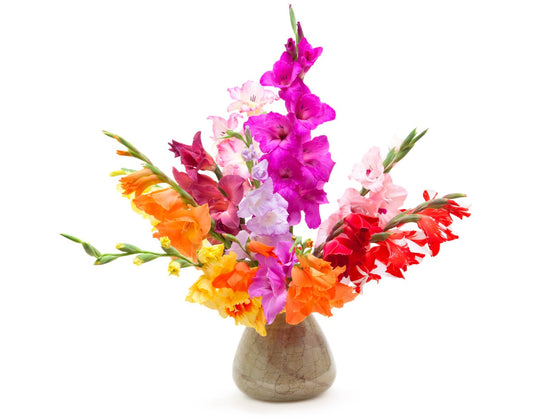
Gladioli
Grow gladioli from corms in Australia: planting depth and timing for six zones, staking, feeding, cutting, lifting and storing, pests and the wild weed species.
| Position | Full sun, sheltered from wind |
|---|---|
| Depth | 10 to 15 cm, flat side down |
| Spacing | 10 to 15 cm |
| First pick | 13 to 17 weeks from planting |