
How to Grow Dahlias in Australia
Dahlias grow readily from seed. Sow in spring, 6 to 10 mm deep in trays kept at 18 to 21°C, 4 to 6 weeks before the last frost. Plant out 30 cm apart in full sun and rich, free-draining soil once frost has passed. Bedding dahlias flower about 16 weeks after sowing and form tubers that can be lifted, stored and replanted.
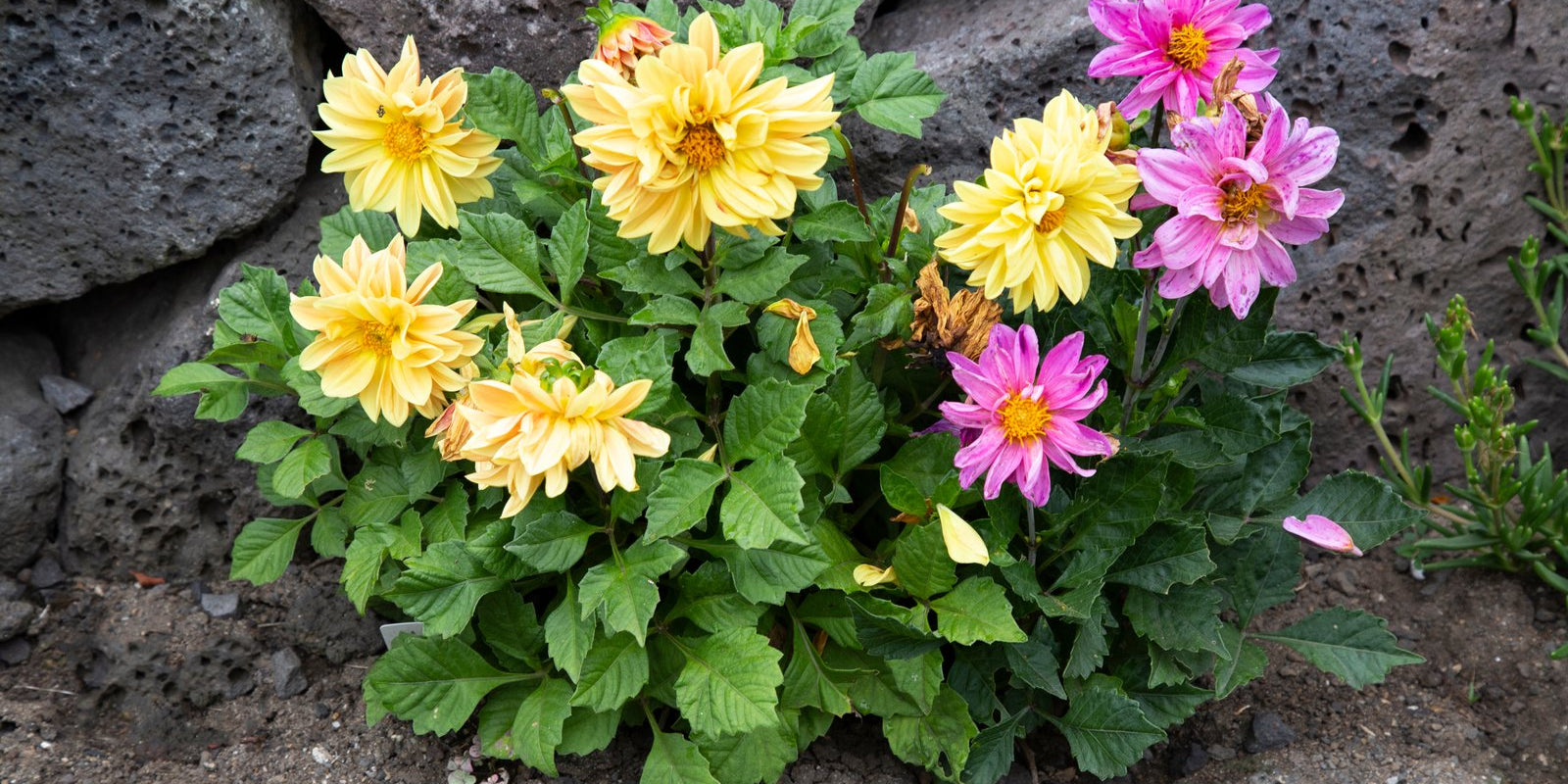
| Sun | Full sun, shade hot afternoons |
|---|---|
| Water | Deep, regular soaks at ground level |
| Soil | Rich, free-draining, pH 6.5 to 7 |
| Feed | Hungry: fish and seaweed, then potash |
| Spacing | 30 cm apart |
| Depth | 6 to 10 mm |
| Germination | 3 days to 3 weeks at 18 to 21°C |
| Harvest | Flowers about 16 weeks |
| Container | Yes; pot at least 30 cm wide |
| Frost | Tender; tubers need frost-free storage |
| Support | Stake taller plants; tie every 30 cm |
| Use | Bedding, pots, borders and cut flowers |
Dahlia (Dahlia hybrids, sold as Dahlia pinnata) is a tuberous perennial in the daisy family (Asteraceae), grown for bright flowers from summer into autumn. Sown in spring, bedding dahlias flower in about 16 weeks and form tubers (swollen storage roots) that can be lifted, stored and replanted. The mistake most gardeners make is setting frost-tender seedlings out too early.
Three mistakes that matter
- Planting out before the last frost. Dahlias do not survive frost, so a late cold snap can kill young plants outright. Keep seedlings under cover and plant them out only once frost has passed and nights stay mild.
- Leaving young shoots to the snails. Snails and slugs love new dahlia shoots and nip them off, and a plant that has to regrow flowers later. Protect seedlings from the day they go out, using the methods under Pests and diseases.
- Leaving tubers in cold, wet ground. Tubers rot over winter in soil that stays wet or freezes. Lift them once the plant dies back and store them until spring, unless your soil is free-draining and frost-free.
When to plant
Dahlia seed germinates best with the tray at 18 to 21°C, but frost decides when seedlings can go into the garden. Start trays 4 to 6 weeks before your last frost, so seedlings are ready to plant out as it passes. One spring sowing is enough, because each plant flowers for months and its tubers carry it into later years.
| Zone | Example cities | Sow | Flowering | Notes |
|---|---|---|---|---|
| Tropical | Darwin NT; Cairns, Townsville QLD; Broome WA | Apr-Jul | Aug-Nov | Grow in the dry season. Tubers rot in the wet: resow yearly, or keep pots out of the rain. |
| Subtropical | Brisbane, Sunshine Coast, Bundaberg QLD; Coffs Harbour NSW | Jul-Oct | Nov-May | Start trays in winter for early spring planting. Plant into raised beds and give humid summers good airflow. |
| Arid and semi-arid | Alice Springs NT; Broken Hill NSW; Mildura VIC; Kalgoorlie WA | Aug-Oct | Dec-Apr | Plant out after the last inland frost. Mulch deeply, give afternoon shade and shelter from hot wind. |
| Temperate | Sydney, Newcastle, Wollongong NSW; Melbourne, Geelong VIC | Sep-Nov | Jan-May | Plant out around Melbourne Cup weekend. On the frost-free coast, free-draining ground can hold tubers over winter. |
| Mediterranean | Perth, Bunbury WA; Adelaide and the SA coast | Sep-Nov | Jan-May | Summer heat arrives dry and early: mulch, water steadily at ground level and give afternoon shade. |
| Cool and alpine | Hobart, Launceston TAS; Canberra ACT; Ballarat VIC; Orange NSW | Sep-Nov | Jan-Apr | Raise trays indoors and plant out after the last frost, often mid November. Lift tubers before winter. |
At the cold edge of a window, keep trays indoors on a bright sill or a seedling heat mat. In temperate and Mediterranean gardens, sowings made as late as December usually still flower before autumn cools.
Site, soil and setup
| Need | What to do |
|---|---|
| Sun | Full sun for 6 to 8 hours a day. Where summers are hot, morning sun and afternoon shade stop buds scorching and colours bleaching. |
| Shelter | Out of hot, drying wind, and away from the roots of trees and large shrubs, which rob the bed of water and food. |
| Soil | Moist, fertile and free-draining. In heavy clay, build a raised bed or a mound 20 to 30 cm high, because tubers rot in wet ground. |
| pH | 6.5 to 7. Below that, spread dolomite lime at 100 to 200 g per square metre 4 weeks before planting. Above it, work in elemental sulphur at 25 to 50 g per square metre 3 months ahead. |
| Bed preparation | Dig in a 5 to 10 cm layer of well-rotted manure or compost 4 to 6 weeks ahead, then scatter pelletised chicken manure at 100 g per square metre at planting. |
| Water-repellent soil | On sandy inland or western soils, a wetting agent at the label rate helps water soak in. |
Dahlias sit outside the vegie rotation and can return to the same bed each spring once it is dressed again with compost or manure. For ground that stays soggy after rain, see waterlogged garden soil.
Container growing
All seven seed selections are compact bedding dahlias, and the five Delight shades are described as ideal for pots and tubs. Give one plant a pot at least 30 cm wide, about 15 L. A pot 50 cm wide, about 50 L, holds three. Fill it with premium potting mix. In autumn, the pot can go under cover with the tubers left inside, kept barely moist.
- Watering. Water whenever the top of the mix feels dry, which in summer heat can be daily. See watering pots through summer.
- Feeding. Fish and seaweed blend at 25 mL per 9 L every fortnight. From the first flowers, switch to liquid potash at the label rate, also fortnightly.
- Position. Full sun; move the pot into afternoon shade in heatwaves.
Sowing Seeds
Start dahlias in trays or small pots under cover, where warmth is steady and snails cannot reach them.
Starting under cover
- Fill a clean tray with moist seed raising mix and firm the surface lightly.
- Sow the seed 6 to 10 mm deep and cover it lightly but firmly.
- Keep the tray at the temperature under When to plant, under a clear cover, and label it.
- Seedlings usually appear in 3 days to 3 weeks. Lift the cover once they do, to let air in.
- Once the first true leaves open, move each seedling into a 10 cm pot, holding it by a leaf, never the stem.
- Grow the pots on in bright light, so the seedlings stay short and sturdy.
| Variety | Flowers | Plant | Height | Spacing |
|---|---|---|---|---|
| Bloody Mary Mix | Double and semi-double, mixed colours, early | Deep bronze green leaves, even and compact, some mildew resistance | Compact bedding | 30 cm |
| Delight Orange, Red, Violet, White and Yellow Shades | Semi-double, in shades of the one colour | Compact, for pots, tubs, borders and beds | 20 to 30 cm | 30 cm |
| Unwins Bedding Mix | Bronze, salmon, apricot, orange, scarlet, crimson, yellow and lavender, with a golden centre | Compact; needs no staking | 20 to 30 cm | 30 cm |

Sowing direct
In warm gardens, seed can go straight into a fine bed once the soil holds 18°C and frost has passed. Sow two seeds every 30 cm, 6 to 10 mm deep, and thin to the stronger seedling once true leaves appear. Snails find direct-sown seedlings first, so trays are the safer start.
Transplanting
Harden seedlings off first (a week outdoors by day and indoors at night, which toughens soft growth), as in hardening off seedlings. Plant them 30 cm apart at their pot depth and water them in with seaweed solution at 30 mL per 9 L.
Care by growth stage
Dahlias are hungry and thirsty, but nitrogen late in the season gives leaves instead of flowers and tubers that store poorly.
| Stage | Water | Feed | Watch for |
|---|---|---|---|
| Seedlings in trays, weeks 1 to 5 | Keep the mix just moist; water from below | Nothing until the first true leaves, then seaweed solution at half strength, 15 mL per 9 L, every fortnight | Damping off; pale, stretched seedlings |
| Planting out, weeks 5 to 8 | Water in well, then whenever the soil surface dries | Chicken manure pellets in the bed (see Site, soil and setup), then seaweed solution at 30 mL per 9 L every fortnight for a month | Snails and slugs on new shoots; late frost |
| Growing on, weeks 8 to 14 | Soak deeply about twice a week in heavy soil, more often in sand, at ground level | Fish and seaweed blend at 25 mL per 9 L every fortnight | Earwigs on buds; aphids on soft tips |
| First flowers, from about week 16 | Keep watering steady; mulch to hold moisture | Sulphate of potash at 30 to 50 g per square metre, watered in, then liquid potash at the label rate every fortnight | Two-spotted mite in hot, dry weather |
| Late summer to autumn | Keep watering steady while plants flower and are picked; ease off as leaves yellow | Liquid potash every fortnight; no high-nitrogen feeds, so tubers plump and keep | Powdery mildew; mottled, stunted plants |
If you prefer a conventional feed, mix a controlled release granular (NPK 12-3-8 to 14-5-10) into the bed at planting. Use an all-purpose soluble (NPK 23-4-18 to 27-5-9) fortnightly while plants grow, then a flowering soluble (NPK 15-4-26 to 15-5-20) fortnightly from the first buds.

Compact bedding plants usually stand alone, but seedlings vary and some grow taller or sprawl under heavy flowers and rain. Drive in a stake at least 12 mm thick when you plant, so the tuber is never speared later. Begin tying at 20 to 40 cm tall, then about every 30 cm: tight around the stake, loose around the stem.
Disbudding and Deadheading
An early pinch, then weekly deadheading, gives a bushy plant that keeps flowering until the cold. Disbudding is optional: it trades many flowers for fewer, bigger ones.
- Pinch out the growing tip once the plant has 4 to 5 pairs of leaves, about 20 cm tall, to make it branch.
- For larger blooms, pinch out the two side buds beside each central bud.
- Deadhead weekly, cutting each spent flower back to a leaf joint lower down the stem.
- Strip a few of the lowest leaves in humid weather to let air through the plant.
- Dip secateurs in a 1 part bleach to 9 parts water solution between plants, so viruses are not carried from plant to plant.
- As plants yellow in autumn, cut them back by a third, then another third a week or two later.
Companion planting
Low flowers around dahlias draw in the predatory insects that eat aphids and thrips.
Grows well with
- Alyssum, a low edging whose tiny flowers draw predatory insects.
- Marigolds, which share the sun and draw beneficial insects.
- Dill, whose flat flower heads draw predatory insects to the bed.
- Cosmos, a daisy-family cousin that shares the bed and fills the same vases.

Keep apart
- Tomatoes and capsicum, which share tomato spotted wilt virus and the thrips that spread it.
- Asters, another flower that suffers heavy losses to the same virus.
Harvesting Blooms
Cut dahlias when the flower is fully open, not in bud.
- Cut in the early morning or cool of the evening, never in midday heat.
- Use clean, sharp secateurs and cut stems as long as possible.
- Strip the leaves from the bottom half of each stem.
- Stand stems in a bucket of water straight away and keep it in the shade.
- Pick often: every cut stem is also a deadhead, and it keeps new buds coming.

Keep the vase cool and top up the water daily. To save seed, let a few heads dry on the plant until they feel tight and full, then pick out the dark, papery seeds. Saved seed does not come true (see Common problems).
Lifting and storing tubers
Each seed-grown plant forms its own small clump of tubers by the end of its first season. Lift the best plants' clumps once the leaves brown and wither in late autumn, and each tuber regrows as the same plant next spring.
| Step | What to do |
|---|---|
| Decide | Lift wherever winter soil stays wet or freezes (see Three mistakes that matter). Even free-draining ground can lose tubers in a very wet winter. In the tropics, resow each year instead (see When to plant). |
| Lift | Cut the stems to a short stub. Slice around the clump with a spade about 40 cm out from the stem, then lever it up without snapping the necks. |
| Divide | Cut the clump apart with secateurs so each tuber keeps a piece of the old stem, where the eyes (buds) grow. A small first-year clump can wait whole until spring, when the eyes show. Discard soft, rotten tubers. |
| Store | Lay tubers on about 5 cm of just-damp coir, sawdust or potting mix in a box, cover them lightly and label them. Keep the box cool, dark, frost-free and away from rats. |
| Check | Look every few weeks. Remove any that rot and mist the medium if tubers shrivel. |
| Replant | In spring after the last frost, once the soil holds 13°C, lay each tuber flat 10 cm deep, eye up. Do not water again until shoots are 15 cm tall, unless the soil dries out. |
Common problems
Seeds did not come up. A tray kept too cool or allowed to dry out is the usual cause. Read more
Seedlings collapse at soil level. Damping off (Pythium species and Rhizoctonia solani) rots stems in wet, crowded trays, so sow thinly in fresh mix. Read more
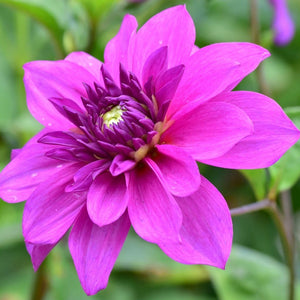
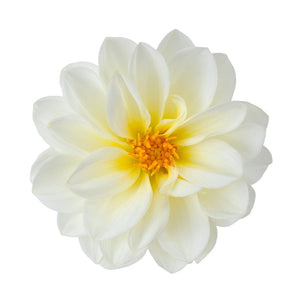
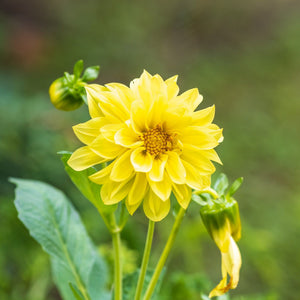
Flowers look nothing like the packet. This is normal: each seedling is a hybrid that differs from its parents, so colour and form vary.
Lush leaves, few flowers. Too much nitrogen once buds form, or too much shade, gives leaf at the expense of flowers. Switch to the potash feeds under Care by growth stage.
Scorched buds and faded colour. Hot sun burns buds and bleaches blooms, dark reds and purples most; give afternoon shade.
Stored tubers rot or shrivel. Storage that is too wet rots them and too dry shrivels them; follow the Store and Check steps above.
Pests and diseases
Snails, earwigs and mites do most of the damage, while thrips matter most for the virus they carry.
Common garden snail (Cornu aspersum). This introduced snail, found in every state and territory, eats new dahlia shoots, and slugs do the same. Sink shallow beer traps into the soil, or ring pots with copper tape. Read more
European earwig (Forficula auricularia). Common in southern Australia, it chews buds and petals at night and hides by day. Trap it in small pots stuffed with damp, scrunched newspaper, and empty them each morning. Read more
Two-spotted mite (Tetranychus urticae). Tiny sap-suckers on leaf undersides cause pale stippling, bronzing and fine webbing, and numbers climb fast in hot, dry weather. Hose the undersides of the leaves regularly, or spray insecticidal soap there. Read more
Western flower thrips (Frankliniella occidentalis). This tiny insect scars soft leaves and spreads tomato spotted wilt virus, which causes ringspots, line patterns and stunting. An infected plant cannot be cured, so pull it out and bin it, and never keep its tubers. Read more
Powdery mildew (Golovinomyces cichoracearum and Podosphaera xanthii). Grey-white powdery patches spread over the leaves, most often in late summer when air is humid but leaves stay dry. Remove affected leaves and spray 1 part full-cream milk to 10 parts water. Read more
Aphids (family Aphididae). A few do little harm, but crowds on soft tips spread virus between plants. Hose them off or spray insecticidal soap. Read more
Prevention first
- Clear weeds and rubbish around the bed, where snails and earwigs hide by day.
- Pull sowthistle and capeweed in particular, because they harbour thrips and the virus.
- Water at ground level in the morning, never on the leaves late in the day.
- Keep only tubers from strong, clean plants, and bin any with mottled leaves.
Tips
- Tie a label to your favourite seedlings while they flower, so you know which clumps to lift in autumn.
- When deadheading, look at the shape: a new bud is round, while a spent flower is pointed.
- Grow the dark-leaved Bloody Mary Mix for contrast: bright flowers stand out strongly against its deep bronze green leaves.
- Leave a few open, single-flowered plants unpicked for the bees, which favour flowers with a visible centre.
Questions
Do dahlias grown from seed flower in the first year?
Yes. Bedding dahlias sown in spring usually flower about 16 weeks later, from mid summer into autumn. By the end of that first season each plant has also formed a small clump of tubers. These can be lifted, stored and replanted the next spring.
Will dahlias from seed look like the flowers on the packet?
Not exactly. Dahlias do not pollinate themselves, so every seedling is a new hybrid. Colour, flower form and height vary from plant to plant, even within a single colour shade. To keep a plant you like, save its tubers rather than its seed, because a tuber regrows as the same plant.
When should I plant dahlia seeds in Australia?
Sow in spring, 4 to 6 weeks before your last frost, with the tray at 18 to 21°C. That is usually September to November in southern and cool gardens and July to October around Brisbane. In the tropics, sow from April to July for flowers in the dry season.
Do I need to dig up dahlia tubers over winter?
Only where winter soil is wet, heavy or frozen, because tubers rot there. Lift them once the leaves brown and wither, and divide them so each keeps an eye. Store them in just-damp coir or sawdust somewhere cool, dark and frost-free. In frost-free, free-draining gardens they can stay in the ground.
Can I grow dahlias in pots?
Yes. Seed-grown bedding dahlias are compact and suit pots and tubs. Use a pot at least 30 cm wide for one plant, or 50 cm wide for three, filled with premium potting mix. Water whenever the top of the mix dries and feed fortnightly.
Why does my dahlia have lots of leaves but few flowers?
The usual causes are too much nitrogen once buds form, or too much shade. From the first buds, switch to a potassium-rich feed such as sulphate of potash or liquid potash. Grow plants where they get 6 to 8 hours of sun. Deadheading weekly also keeps new flowers coming.
Grow it
More flower guides
All flowers
Ageratum
Grow ageratum from seed in Australia: surface sowing, months for six climate zones, spacing, pots, deadheading, weed and livestock cautions and pests to watch.
| Position | Full sun, 6 hours or more |
|---|---|
| Depth | Surface, 1 mm at most |
| Spacing | 30 cm; Red Flint 40 cm |
| First pick | 12 to 14 weeks from sowing |

Alyssum
Grow alyssum from seed in Australia: sowing months for six climate zones, surface sowing, spacing, pots, shearing for more flowers, and the pests to watch.
| Position | Full sun or part shade |
|---|---|
| Depth | Surface sow, press in |
| Spacing | 15 to 20 cm |
| First pick | 8 to 9 weeks from sowing |

Aquilegia
Grow aquilegia from seed in Australia: chilling the seed, when to sow in six climate zones, part shade, pots, deadheading, cut flowers and common pests.
| Position | Part shade or morning sun |
|---|---|
| Depth | Surface, 3 mm cover at most |
| Spacing | 30 to 50 cm |
| First pick | From about 28 weeks |

Aster
Grow China asters in Australia: sowing months for six climate zones, spacing, pots, watering, Fusarium wilt and thrips, and cutting blooms for the vase.
| Position | Full sun, 6 hours minimum |
|---|---|
| Depth | 6 mm |
| Spacing | 30 to 40 cm |
| First pick | 13 to 16 weeks |