
How to Grow Godetia in Australia
Sow godetia in autumn across most of Australia, scattering the fine seed on raked soil and covering it with no more than 2 mm. Grow it in full sun and light, free-draining soil with little fertiliser, because rich soil makes leaves. Thin to 15 to 20 cm, pinch once and deadhead often. Flowers usually follow 10 to 13 weeks after sowing.
| Sun | Full sun; shade hot afternoons |
|---|---|
| Water | Moderate; copes with dry spells once established |
| Soil | Light, free-draining, modest fertility, pH 6.6 to 7.3 |
| Feed | Little: seaweed for seedlings, potash at budding |
| Spacing | 15 to 20 cm |
| Depth | No deeper than 2 mm |
| Germination | 7 to 14 days in cool soil |
| Harvest | 10 to 13 weeks |
| Container | Dwarf types: 10 L pot, 25 cm wide |
| Frost | Cool-season annual; tolerates light frost |
| Use | Beds, borders, pots, cut flowers and bees |
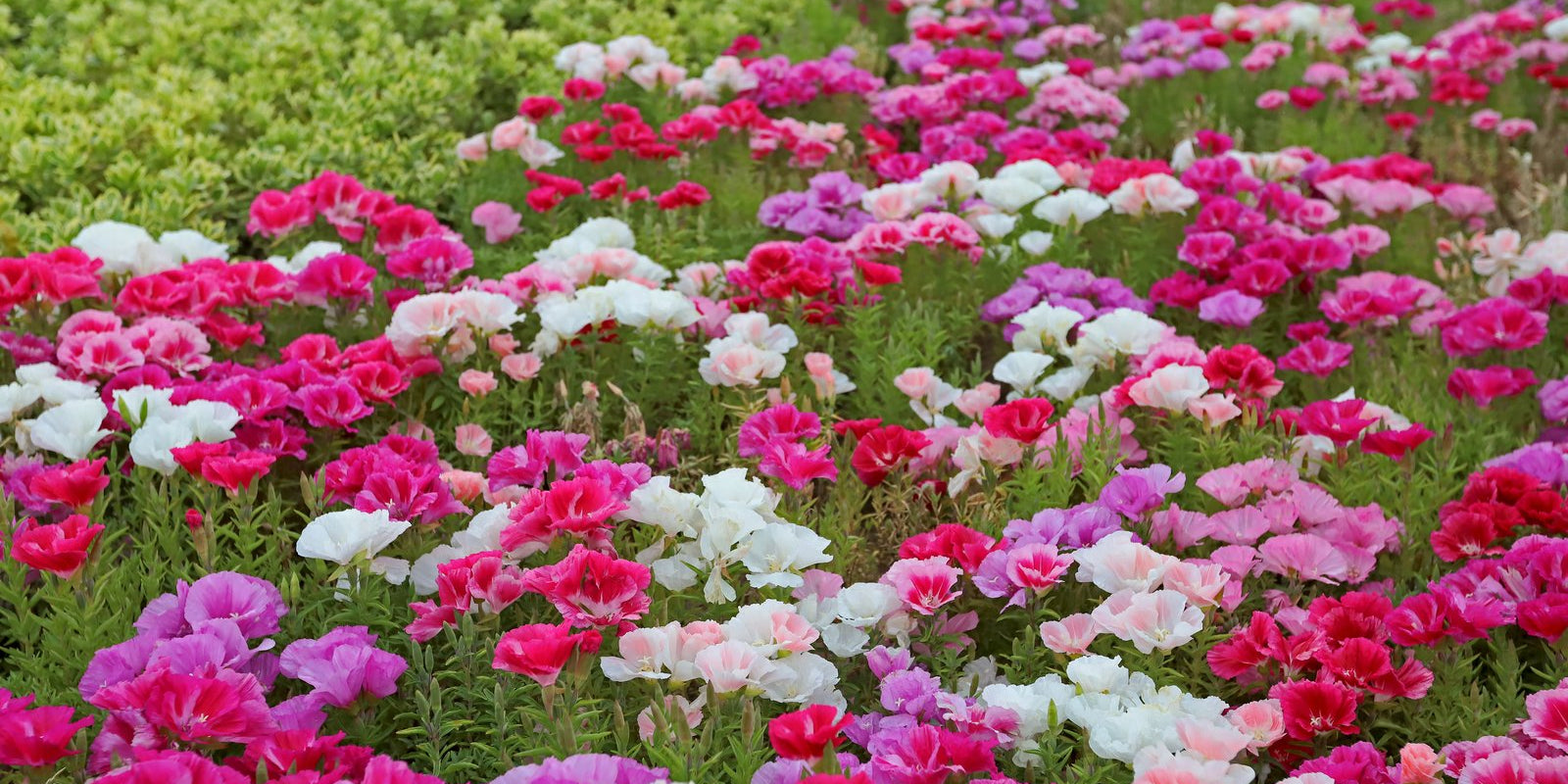
Godetia (Clarkia amoena), or farewell to spring, is a cool-season annual in the evening primrose family, Onagraceae, grown for satiny, cup-shaped flowers. A native of the winter-rain coast of western North America, it suits Australian gardens that sow in autumn and flower in spring. Most failures come from kindness: rich soil, generous feeding and a spring sowing that runs into summer heat.
Three mistakes that matter
- Sowing in spring where summers are hot. Godetia gives its best display before peak heat, and plants caught by hot weather flower poorly or stop. Sow in autumn so buds form as spring days lengthen, and keep spring sowings for cool districts.
- Feeding it like a vegetable. Manure, rich compost and nitrogen feeds give tall, leggy, leafy plants with few blooms. Grow it in average or sandy soil and keep feeding light, as set out in Care by growth stage.
- Raising seedlings in punnets. Godetia resents root disturbance, and seedlings in trays are prone to damping off (a soil-borne rot that fells seedlings at soil level). Sow direct where plants are to flower, because direct-sown plants are generally sturdier.
When to plant
Seed comes up in cool to mild soil, about 10 to 21°C, and plants grow best with mild days and cool nights. That makes autumn the main sowing season across most of Australia, with Anzac Day a handy midpoint. Plants flower sooner as days lengthen, so autumn sowings bloom through spring. For a longer display, sow a second batch two weeks after the first.
| Zone | Example cities | Sow | Flowering | Notes |
|---|---|---|---|---|
| Tropical | Darwin NT; Cairns, Townsville QLD; Broome WA | Apr-Jun | Jul-Sep | Sow as the wet season ends; warm dry-season days shorten flowering, so expect a brief display. |
| Subtropical | Brisbane, Gold Coast, Bundaberg QLD; Coffs Harbour, Lismore NSW | Mar-Jun | Jul-Oct | Sow as summer humidity eases; plants flower through the mild winter and spring, before the heat. |
| Arid and semi-arid | Alice Springs NT; Mildura VIC; Broken Hill, Dubbo NSW; Kalgoorlie WA | Mar-Jun | Aug-Nov | Sow once summer heat breaks; mulch and give light afternoon shade, as spring warms quickly inland. |
| Temperate | Sydney, Newcastle, Wollongong NSW; Melbourne, Geelong VIC | Mar-Jun and Aug-Sep | Aug-Dec | Autumn sowings flower best; Melbourne, the cool end, can also sow Aug to Sep for early summer colour. |
| Mediterranean | Perth, Bunbury WA; Adelaide SA | Mar-Jun | Aug-Nov | Sow after the autumn break; wet winters and dry summers match its home climate, so plants flower in spring. |
| Cool and alpine | Canberra ACT; Hobart TAS; Ballarat VIC; Armidale NSW | Feb-Apr and Sep-Oct | Oct-Feb | Autumn sowings must establish before hard frosts; otherwise sow Sep to Oct for summer flowers. |
In southern and western gardens, sow straight after the autumn break, the first soaking rain of the winter growing season. Sowings at the late edge of a window flower into early summer heat and give a shorter show.
Site, soil and setup
Choose full sun, with light afternoon shade in hot inland and northern gardens. Godetia prefers light, free-draining soil of modest fertility and copes with sand, clay, alkaline soil and salty sea air. A pH of about 6.6 to 7.3 suits it.
| Where | What to do |
|---|---|
| Every bed | Weed, fork the soil loose and rake it fine. Add no manure or blood and bone. |
| Pure sand that dries in hours | Dig in a 5 cm layer of compost before sowing, and nothing richer. |
| Acid soil, below pH 6 | Spread garden lime at 100 to 200 g per square metre and dig it in 4 weeks ahead of sowing. |
| Heavy clay that stays wet | Raise or mound the bed. Gypsum at 500 g to 1 kg per square metre helps only dispersive clay. A dry crumb in rainwater that clouds within 20 hours confirms it. |
| Sandy or inland soil that sheds water | Water in a wetting agent at the label rate before sowing. |
Avoid a bed just fed for vegetables, and sow godetia in a different spot each year so soil-borne wilt diseases do not build up.
Container growing
Low types such as 'Monarch Dwarf Single Mix', about 25 to 30 cm tall, suit pots and window boxes. Use a pot of at least 10 L, about 25 cm across, filled with fresh potting mix. Sow straight into the pot and leave it in place. Once true leaves show, thin to two or three plants about 15 cm apart.
- Watering: pots dry out faster than beds, so check them every day or two and water when the top few centimetres feel dry.
- Feeding: once buds show, water in worm casting liquid diluted to weak tea colour every fortnight.
- Position: full sun through winter and spring, then light afternoon shade as the weather warms.
Sowing Seeds
Sow godetia direct where it will flower, and raise it in cells only where a bed is not ready.
Sowing direct
- Rake the soil fine, firm it lightly, and scatter seed thinly over the surface.
- Cover with no more than 2 mm of fine soil, or simply press the seed in, as light helps it germinate.
- Keep the surface damp but never soggy; seedlings usually appear in 7 to 14 days.
- Thin to 15 to 20 cm apart once seedlings show their first true leaves.
- Guard young seedlings from snails and slugs until they establish.
Starting under cover
- Sow two or three seeds per cell of seed raising mix, left on the surface under a fine layer of vermiculite.
- Keep the tray in bright light with good airflow, and water from below, because damping off strikes readily.
- Harden off seedlings over one to two weeks (moving them outdoors for longer each day so they adjust to sun and wind).
- Plant out while small, before roots circle the cell, at the same depth they grew.
Care by growth stage
Sun, cool nights and a light hand with food decide how well godetia flowers. Weeks count from sowing; autumn sowings grow slowly through winter and can take longer.
| Stage | Water | Feed | Watch for |
|---|---|---|---|
| Seedlings (weeks 1 to 4) | Keep the surface damp with a gentle spray | Nothing until true leaves show, then seaweed solution at half strength (15 mL per 9 L) fortnightly | Seedlings collapsing at soil level; snails grazing overnight |
| Young plants (weeks 4 to 8) | Water deeply, early in the day, when the soil is dry 5 cm down | None in garden soil; in very poor sand, seaweed solution at 30 mL per 9 L fortnightly | Aphids on shoot tips; pinch plants once (see Deadheading) |
| Budding (weeks 8 to 11) | Water the soil, not the leaves, when dry 5 cm down | Sulphate of potash at 30 g per square metre, scattered once around plants and watered in | White powdery film on leaves in humid spells |
| Flowering (week 11 onward) | Keep watering steadily right through picking, without easing off | Nothing more in beds | Plants flagging as summer heat builds |
Where plants stay small and pale in very poor sand, scratch in a light dose of all-purpose controlled release granular (NPK around 14-5-10). Established plants tolerate dry spells, but steady water keeps flowers coming.

Deadheading
One early pinch and regular deadheading keep godetia making flowers rather than seed.
- Pinch once: before the first buds, when plants carry four or five sets of true leaves, snip the tip just above a leaf.
- Deadhead often: cut fading flowers off just above a set of leaves with sharp snips.
- Cut for the vase: picking a stem does the same job and pushes new side shoots.
- Leave a few: let some flowers set seed if you want self-sown seedlings next autumn; otherwise deadhead them all.
- End of season: pull spent plants, and bin any with mildew rather than composting them.
Companion planting
Godetia keeps company best with other lean-soil annuals sown at the same time, and its nectar draws honey bees to nearby vegetable beds.
Grows well with
- Californian poppy (Eschscholzia californica): wants the same poor, free-draining soil and full sun.
- Nigella (Nigella damascena): another autumn-sown annual that flowers alongside it in spring.

Keep apart
- Beans, peas and lupins: they enrich the soil with nitrogen, which pushes godetia into leaf.
Harvesting Blooms
Cut a stem when its first flower opens, because many of the buds above it keep opening in water.
- Cut in the cool of the morning or evening.
- Use sharp, clean snips, taking the longest stem possible just above a set of leaves.
- Strip leaves that would sit below the waterline.
- Stand stems in a clean bucket of water straight away.
In a clean vase, stems usually last 7 to 10 days. Change the water every few days and pick off spent blooms.
Common problems
Seedlings collapse at soil level. Damping off (Pythium species and Rhizoctonia solani) rots young stems, most often in wet, cold seed raising mix or soil. Read more
Few seedlings come up. Seed buried deeper than 2 mm, or sown into warm, dry soil, often fails. Sow on the surface once the soil cools, and keep it damp. Read more
Older plants wilt and topple in wet ground. Stem and root rot takes hold where soil stays soggy, so drain the bed and water only when the soil is dry below the surface.
Stems grow thin and floppy. Warm weather while plants develop, or too little light for tray-grown seedlings, gives weak, spindly stems. Read more
Plants yellow and stop flowering in summer. Godetia is an annual that declines once temperatures stay above about 27°C, so pull plants and sow again in autumn.
Pests and diseases
Godetia has no serious pests, and most trouble arrives in the mild, damp weeks of late winter and spring.
Aphids (family Aphididae). Small sap-suckers gather on shoot tips and buds, and leaves can wilt or turn sticky with honeydew. A firm jet from the hose knocks most of a colony off. Read more
Powdery mildew (order Erysiphales). White spots spread into a floury film across the leaves, worst in crowded plants and humid spells. Caught early, a spray of 1 part full-cream milk to 10 parts water can slow it.
Garden snail (Cornu aspersum). Snails and slugs feed at night and after rain, grazing tender seedlings and leaving a silver slime trail. Hand-pick them after dark. Read more
Prevention first
- Water at soil level early in the day, so leaves dry before night.
- Thin seedlings to their full spacing so air moves between plants.
- Check shoot tips weekly in spring and hose off any aphids.
- Clear boards, pots and weeds where snails shelter near young seedlings.
Tips
- Mix the fine seed with four to ten parts dry, washed sand for an even scatter.
- For bees, sow a patch at least 1 m across rather than a thin line.
- Collect seed from dry, brown capsules once plants finish, and sow it the following autumn.
- For a dense carpet of colour, keep plants at the closer end of the spacing, as crowding can lift flower numbers.
Questions
When do you plant godetia seeds in Australia?
Mostly in autumn, once summer heat breaks and the soil cools. Sow Apr to Jun in the tropics, and Mar to Jun in subtropical, arid and Mediterranean gardens. Temperate areas sow Mar to Jun or Aug to Sep. Cool areas sow Feb to Apr or Sep to Oct.
Is godetia the same as clarkia?
Godetia is Clarkia amoena, a species once placed in its own genus, Godetia, and still sold under that name. Elegant clarkia (Clarkia unguiculata) is a different species in the same genus. Both are annuals from western North America.
Why is my godetia all leaves and no flowers?
Usually the soil is too rich. Manure, blood and bone or nitrogen feeds push leafy growth at the expense of flowers. Grow godetia in average or sandy soil in full sun and feed lightly. Late sowings can also flower poorly once summer heat arrives.
Does godetia come back every year?
No, it is an annual that dies after flowering. It often self-sows, though: leave a few flowers to set seed and seedlings may come up the next autumn. Deadhead every flower if you do not want volunteers.
Can you grow godetia in pots?
Yes. Low types such as 'Monarch Dwarf Single Mix' suit a pot of at least 10 L, about 25 cm across. Sow straight into the pot, as seedlings dislike being moved. Keep it in full sun, check moisture every day or two and feed lightly once buds show.
How long do godetia cut flowers last?
Usually 7 to 10 days in a clean vase. Cut when the first flower on a stem opens, strip leaves below the waterline and stand stems in water straight away. Many of the buds keep opening in the vase.
Grow it
More flower guides
All flowers
Ageratum
Grow ageratum from seed in Australia: surface sowing, months for six climate zones, spacing, pots, deadheading, weed and livestock cautions and pests to watch.
| Position | Full sun, 6 hours or more |
|---|---|
| Depth | Surface, 1 mm at most |
| Spacing | 30 cm; Red Flint 40 cm |
| First pick | 12 to 14 weeks from sowing |

Alyssum
Grow alyssum from seed in Australia: sowing months for six climate zones, surface sowing, spacing, pots, shearing for more flowers, and the pests to watch.
| Position | Full sun or part shade |
|---|---|
| Depth | Surface sow, press in |
| Spacing | 15 to 20 cm |
| First pick | 8 to 9 weeks from sowing |

Aquilegia
Grow aquilegia from seed in Australia: chilling the seed, when to sow in six climate zones, part shade, pots, deadheading, cut flowers and common pests.
| Position | Part shade or morning sun |
|---|---|
| Depth | Surface, 3 mm cover at most |
| Spacing | 30 to 50 cm |
| First pick | From about 28 weeks |

Aster
Grow China asters in Australia: sowing months for six climate zones, spacing, pots, watering, Fusarium wilt and thrips, and cutting blooms for the vase.
| Position | Full sun, 6 hours minimum |
|---|---|
| Depth | 6 mm |
| Spacing | 30 to 40 cm |
| First pick | 13 to 16 weeks |