
How to Grow Livingstone Daisies in Australia
Sow Livingstone daisy seed in autumn in most of Australia, as the soil cools to about 10 to 25°C. Scatter the fine seed on the surface, cover it lightly and keep it damp. Grow plants in full sun and sandy, free-draining soil, 15 to 20 cm apart, and water sparingly once they spread. Flowers usually open about 20 weeks after sowing.
| Sun | Full sun, 6 hours minimum |
|---|---|
| Water | Sparingly once established; only when soil dries |
| Soil | Sandy, very free-draining; any pH |
| Feed | Little needed; seaweed solution at planting out |
| Spacing | 15 to 20 cm |
| Depth | Surface, lightly covered, 3 mm maximum |
| Germination | 7 to 21 days at 10 to 25°C |
| Harvest | About 20 weeks to flower |
| Container | At least 10 L, about 30 cm across |
| Frost | Takes light frost once established; protect seedlings |
| Use | Rockeries, gravel gardens, edging, pots, seaside gardens |
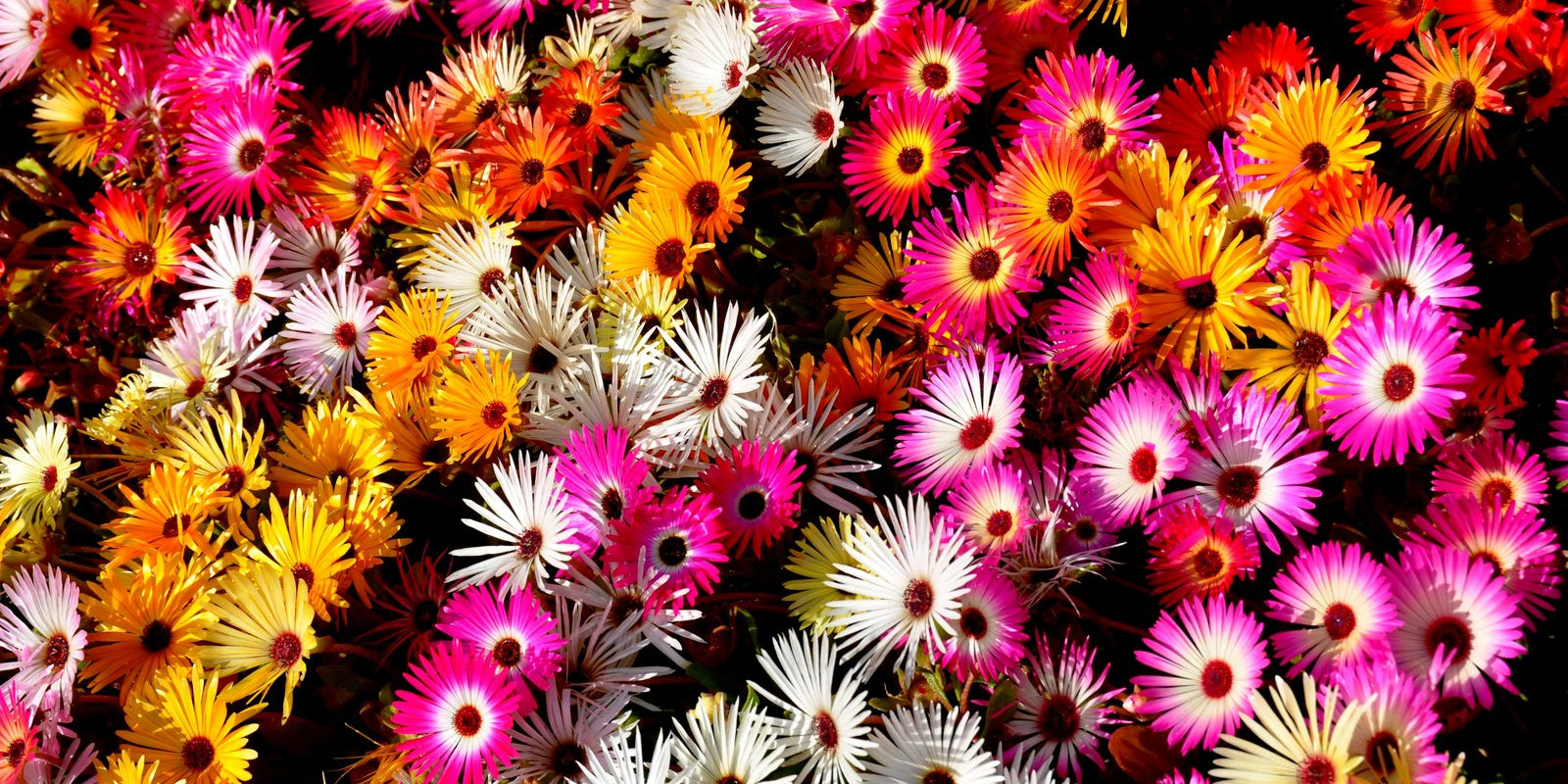
Livingstone daisy (Dorotheanthus bellidiformis, listed by Australian herbaria as Cleretum bellidiforme) is a low succulent annual in the fig-marigold family, Aizoaceae. Grown for carpets of shimmering daisies, it flowers in hot, dry, sandy spots where little else will, and its leaves glisten with water-storing cells. The usual mistake is sowing it in spring, when in most of Australia it is a cool-season annual sown in autumn.
Three mistakes that matter
- Sowing into spring warmth. This is a winter-growing annual from South Africa, so spring-sown plants in warm zones meet heat and humidity before they flower well. Sow as autumn cools, in your zone's window under When to plant.
- Rich, wet soil and heavy watering. Roots rot in soil that stays wet, and overwatered older plants collapse. Choose sandy, free-draining ground, skip the manure, and water only once the soil is dry well below the surface.
- Planting in shade. The flowers open fully only on warm, sunny days and stay shut in shade and on cloudy days. Give plants at least six hours of direct sun, with nothing tall on their northern side.
When to plant
Falling temperatures set the date. Seed germinates in soil of about 10 to 25°C, so sow once the summer heat breaks and keep sowing until the soil turns cold. Plants grow through winter, flower from late winter into spring, and die off as summer heat returns.
| Zone | Example cities | Sow | Flowering | Notes |
|---|---|---|---|---|
| Tropical | Darwin NT; Cairns, Townsville QLD; Broome WA | Mar-May | Jul-Sep | Sow as the wet season eases for dry-season flowers; pots or raised beds avoid humid rot. |
| Subtropical | Brisbane, Gold Coast, Bundaberg QLD; Coffs Harbour, Lismore NSW | Mar-May | Jul-Oct | Flowers through the drier winter and spring; summer humidity and rain end the plants. |
| Arid and semi-arid | Alice Springs NT; Broken Hill, Dubbo NSW; Mildura VIC; Kalgoorlie WA | Mar-May | Jul-Oct | Sow once autumn heat eases; cover seedlings on frosty inland nights until established. |
| Temperate | Sydney, Newcastle, Wollongong NSW; Melbourne, Geelong VIC | Feb-May | Jul-Nov | Sow direct early in the window; from April, raise seedlings in trays and plant out after 4 to 6 weeks. |
| Mediterranean | Perth, Bunbury WA; Adelaide SA | Feb-May | Jul-Nov | The closest match to its Cape home: sow after the first autumn rains for a spring carpet. |
| Cool and alpine | Hobart TAS; Canberra ACT; Ballarat VIC; Armidale NSW | Feb-Apr and Sep-Oct | Aug-Nov and Feb-Mar | Sow in autumn where frost is light; where it is hard, start under cover in spring. |
In cool gardens, aim to have seed in by about Anzac Day so seedlings establish before the cold. In temperate and Mediterranean gardens, sowings from April on do better raised in trays and planted out. Where frosts are hard, sow under cover in spring and plant out after the last frost for a summer display.
Site, soil and setup
Rockeries, gravel gardens, sunny banks, gaps between pavers, dry-stone walls and seaside gardens all suit it. It grows in acid, neutral or alkaline soil, so pH seldom needs correcting; drainage matters far more.
| Where | What to do |
|---|---|
| Sandy or gravelly soil | Pull every weed and loosen the top few centimetres. Nothing else is needed. |
| Very poor, pale sand | Dig in a 5 cm layer of compost before sowing to give seedlings a start. |
| Heavy clay that stays wet | Grow on a raised bed or mound of sandy soil, or in pots. |
| Sand that sheds water | Water in a wetting agent at the label rate before sowing. |
Leave out manure and other rich fertilisers, which this plant does not need. Where grey mould has struck, grow somewhere else the next year, because the fungus survives on old plant debris.
Container growing
In the humid tropics and subtropics a pot is the safer choice, because fast-draining mix lowers the risk of rot. Troughs, window boxes and hanging baskets suit it too. Use a container of at least 10 L, about 30 cm across, with drainage holes and quality potting mix. The Livingstone Daisy Mix stays about 10 cm tall, so every plant in the packet suits a pot.
- Watering: let the top few centimetres of mix dry out, then soak the pot. Never leave it standing in a full saucer.
- Feeding: from four weeks after planting until the first flowers, water in worm casting liquid diluted to the colour of weak tea, fortnightly.
- Position: the sunniest spot you have, and under the eaves during long spells of rain.
Sowing Seeds
Sow straight into the bed where the plants are to flower, or raise seedlings in trays to plant out.
Sowing direct
- The seed is dust fine, so mix it with dry sand and scatter it thinly over raked, damp soil, as in sowing tiny seeds.
- Press it in and cover it lightly with fine mix, no more than 3 mm deep.
- Keep the surface damp but never soggy with a fine spray; seedlings usually appear in 7 to 21 days.
- Thin seedlings to 15 to 20 cm apart once they are big enough to handle.
Raising seedlings in trays
- Scatter seed thinly over a clean, deep tray of fresh seed raising mix, press it in and cover it with a light dusting of mix.
- Keep the tray bright and sheltered, and water it from below so the fine seed is not washed around. Never let the mix stay wet, which invites damping off.
- After four to six weeks, harden off the seedlings (moving them outdoors for longer each day over about a week).
- Plant out 15 to 20 cm apart at the depth they grew, and water in with seaweed solution at 30 mL per 9 L.
The Livingstone Daisy Mix is a colour blend, so one sowing gives many shades side by side.
| Feature | What to expect |
|---|---|
| Height and spread | About 10 cm tall, spreading 25 to 30 cm into a low mat |
| Flowers | Daisies 2 to 3 cm across in white, cream, yellow, orange, pink, magenta and red, often with a paler or darker centre |
| Leaves | Flat, fleshy and green or maroon-tinged, dotted with raised water-storing cells that glisten in sun |
| Life cycle | Annual: flowers once, sets seed and dies as summer arrives |
Care by growth stage
Water decides how this crop goes: steady moisture for seedlings, then very little once plants spread. Weeks count from sowing.
| Stage | Water | Feed | Watch for |
|---|---|---|---|
| Germination and seedlings (weeks 1 to 6) | Keep the surface damp with a fine spray, never soggy | Nothing until the first true leaves, then seaweed solution at half strength (15 mL per 9 L) fortnightly | Snails and slugs after rain; seedlings collapsing at soil level |
| Planting out and establishing (weeks 6 to 10) | Water in well, then only when the top few centimetres are dry | Seaweed solution at 30 mL per 9 L when planting out, then no more in the ground | Snails grazing the fleshy leaves overnight |
| Spreading into a mat (weeks 10 to 20) | Only when the soil is dry about 10 cm down, in the morning, at the soil | None in the ground; in pots, worm casting liquid at weak tea colour fortnightly | Aphids on shoot tips; yellowing, soft stems from wet soil |
| Flowering (from about week 20) | Keep the same sparing routine right through flowering, a deep soak only when dry | None needed | Grey fuzz on spent petals in cool, damp spells |
If plants in very poor sand stall, a light scatter of controlled release all-purpose granular (NPK around 14-5-10) scratched into the soil can help.

Deadheading
Removing spent flowers keeps new buds coming and keeps grey mould off the mat.
- Weekly: pinch or snip faded flowers back to just above a set of leaves.
- After damp weather: clear fallen petals out of the mat, where grey mould takes hold.
- Straying stems: cut back any that spill over paths or onto neighbouring plants.
- Late in the season: stop deadheading a few plants if you want seed (see Harvesting Blooms).
- End of season: pull plants once they yellow in the heat; bin any with grey mould rather than composting them.
Companion planting
The best partners want the same sun, lean soil and dry summer rest, and the open flowers feed honey bees in return.
Grows well with
- Low spring-flowering bulbs: they bloom alongside and share the dry summer rest.
- Alyssum: a low edging whose flowers feed hoverflies, and hoverfly larvae eat aphids.
- Californian poppies: thrive in the same harsh, dry, poor ground.

Keep apart
- Tall plants on the northern side: their shade keeps the flowers shut.
- Thirsty vegetables and lawn under sprinklers: the extra water rots the roots.
- Dense, damp groundcovers: they hide the snails and slugs that graze seedlings.
Harvesting Blooms
Enjoy the flowers in the garden rather than the vase, as they open only in bright sun and close at night. The harvest worth planning is seed.
- Mark healthy plants of favourite colours while they are still in flower.
- Watch for hard, dry, five-sided capsules as plants brown in early summer.
- Cut the capsules on a dry day, before rain splashes the seed out of them.
- Crush them over a sheet of paper to free the tiny, light brown seed.
- Tip out the chaff and let the seed dry on the paper for a week.
Store the seed in a labelled paper envelope in a cool, dry, dark place, and sow it the next autumn. Seed saved from a colour blend usually gives a mix of colours again.
Common problems
Flowers stay closed. Shade, cloud, rain and cold keep the flowers shut, so check the site first (see Three mistakes).
Plants turn soft and collapse. Roots rot when soil stays wet, from heavy clay and long rainy spells as well as overwatering (see Three mistakes). Read more
Seedlings fall over at soil level. Damping off (Pythium species and Rhizoctonia solani) rots young stems, most often in wet seed raising mix or soil. Read more
Few seedlings come up. Dust-fine seed fails when it is buried too deep, washed away by a hard spray, or left to dry out on the surface.
The show ends in late spring. Rising heat, humidity and summer rain end a winter annual's life, so this is the natural finish rather than a fault.
Pests and diseases
Snails do most of the damage, especially to seedlings after autumn rain.
Common garden snail (Cornu aspersum). Snails, and slugs such as the grey field slug (Deroceras reticulatum), graze seedlings and fleshy leaves overnight and leave silvery slime trails. Read more
Aphids (family Aphididae). These small sap-suckers cluster on shoot tips and under leaves, which can wilt or discolour and turn sticky with honeydew. Read more
Grey mould (Botrytis cinerea). Ageing petals, then stems, turn soft and furred with grey mould, mostly in cool weather with heavy dew or fog.
Prevention first
- Hunt snails by torchlight after rain, and use only an iron-based bait, which is far safer around pets and wildlife.
- Water in the morning and at the soil, so leaves and flowers are dry by night.
- Keep plants at their full spacing so air moves through the mat.
- Hose aphids off shoot tips with a firm jet before colonies build.
Tips
- When the display finishes, sow portulaca into the same sunny spot: it wants warm soil and flowers through the summer.
- Scatter seed into paving cracks, dry-stone walls and rock pockets, where drainage is sharp and plants often come back from their own seed.
- Copy a favourite colour with stem cuttings from a vigorous plant, which root quickly in a gritty mix.
- Pigface (Carpobrotus species, most of them native) and the native Disphyma and Sarcozona are different plants. They are perennial or short-lived perennial succulents, mostly trailing, where Livingstone daisy lives for one season.
- Livingstone daisy has naturalised in parts of South Australia and Western Australia, so deadhead plants near bushland and coastal scrub before seed ripens.
Questions
When do you plant Livingstone daisy seeds in Australia?
Sow in autumn in most of Australia, from February or March to May, as the soil cools to about 10 to 25°C. Plants grow through winter and flower in late winter and spring. In cold, frosty areas, sow in autumn only where frost is light, or start seed under cover in September or October.
Why are my Livingstone daisy flowers not opening?
They need sun. The flowers open fully only on warm, sunny days and close at night, in shade and on cloudy or rainy days. Move pots into full sun, and do not plant them where taller plants shade them for part of the day.
Is Livingstone daisy the same as pigface?
No. Livingstone daisy is an annual from South Africa that lives for one season. Pigface (Carpobrotus species, most of them native) and the native Disphyma and Sarcozona are succulents that are perennial or short-lived perennial, most of them trailing. All belong to the same family, Aizoaceae, which is why their flowers look alike.
Do Livingstone daisies come back every year?
The plants do not, because they die after flowering as summer arrives. They often seed themselves in gravel and paving cracks, though, and saved seed sown each autumn keeps them going. Near bushland, deadhead before seed ripens, as the plant has naturalised in parts of South Australia and Western Australia.
How often should I water Livingstone daisies?
Keep seedlings damp until they establish, then water only when the soil is dry about 10 cm down. Water deeply in the morning, at the soil rather than over the leaves. Too much water rots the roots and can kill older plants.
Can Livingstone daisies grow in pots?
Yes. Use a pot of at least 10 L, about 30 cm across, with drainage holes and quality potting mix. Pots, window boxes and hanging baskets drain quickly, which lowers the risk of rot, and suit humid northern gardens especially well.
Grow it
More flower guides
All flowers
Ageratum
Grow ageratum from seed in Australia: surface sowing, months for six climate zones, spacing, pots, deadheading, weed and livestock cautions and pests to watch.
| Position | Full sun, 6 hours or more |
|---|---|
| Depth | Surface, 1 mm at most |
| Spacing | 30 cm; Red Flint 40 cm |
| First pick | 12 to 14 weeks from sowing |

Alyssum
Grow alyssum from seed in Australia: sowing months for six climate zones, surface sowing, spacing, pots, shearing for more flowers, and the pests to watch.
| Position | Full sun or part shade |
|---|---|
| Depth | Surface sow, press in |
| Spacing | 15 to 20 cm |
| First pick | 8 to 9 weeks from sowing |

Aquilegia
Grow aquilegia from seed in Australia: chilling the seed, when to sow in six climate zones, part shade, pots, deadheading, cut flowers and common pests.
| Position | Part shade or morning sun |
|---|---|
| Depth | Surface, 3 mm cover at most |
| Spacing | 30 to 50 cm |
| First pick | From about 28 weeks |

Aster
Grow China asters in Australia: sowing months for six climate zones, spacing, pots, watering, Fusarium wilt and thrips, and cutting blooms for the vase.
| Position | Full sun, 6 hours minimum |
|---|---|
| Depth | 6 mm |
| Spacing | 30 to 40 cm |
| First pick | 13 to 16 weeks |