
How to Grow Honesty in Australia
Sow honesty 3 mm deep in autumn, in sun or part shade and moist, free-draining soil, spacing plants 40 to 50 cm apart. It is a biennial: plants grow leaves through the first year, need winter cold to flower, and bloom the following spring. Cut stems once the pods dry to a papery silvery tan, then rub off the outer skins to show the silver discs.
| Sun | Full sun to part shade |
|---|---|
| Water | Steady while young; water once dry 5 cm down |
| Soil | Moist, free-draining, compost-rich; acid to alkaline |
| Feed | Compost at sowing; light liquid feeds only |
| Spacing | 40 to 50 cm |
| Depth | 3 mm |
| Germination | 7 to 14 days in mild soil |
| Harvest | 8 to 14 months, autumn-sown |
| Container | One plant per 6 L pot, 20 cm wide |
| Frost | Frost hardy; needs winter cold to flower |
| Use | Dried silver pods, spring flowers, bees, cottage borders |
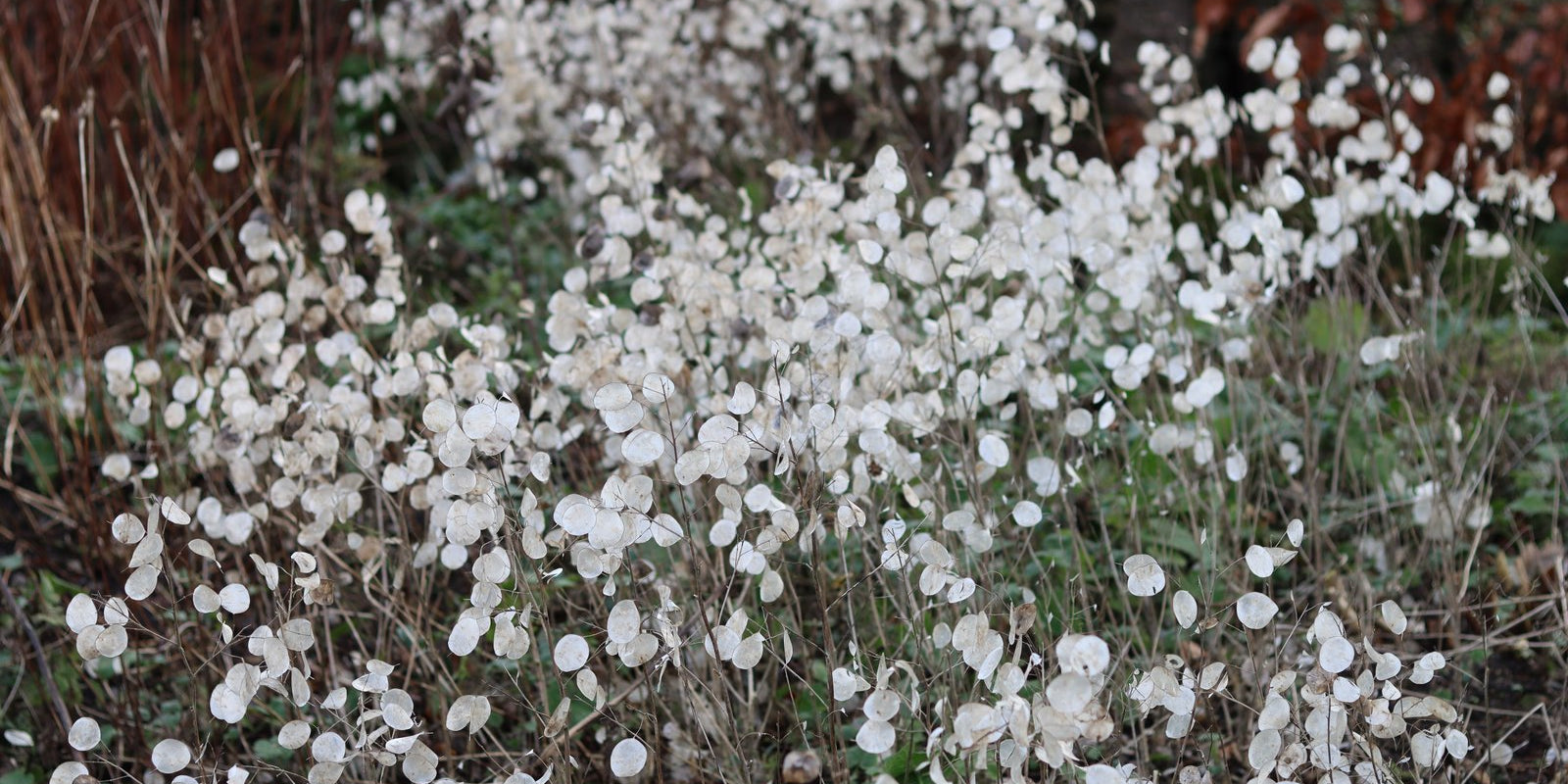
Honesty (Lunaria annua) is a cottage garden plant in the cabbage family, Brassicaceae. It is grown for scented purple or white spring flowers and flat pods that dry to silver discs. Once settled it asks for little care, and it self-seeds from year to year. What most gardeners misjudge is its pace: honesty flowers in its second spring, after a winter of cold.
Three mistakes that matter
- Pulling out the leafy first-year plants. As a biennial, honesty spends its first months as a low clump of heart-shaped leaves. Leave the clumps in place: they usually flower the following spring, set pods and then die.
- Moving plants once they are big. Honesty grows a long taproot, and larger plants often establish poorly after transplanting. Sow where the plants will stay, or move seedlings at 5 to 10 cm tall, while the root is still short.
- Sowing so late that plants meet winter small. Tiny seedlings can miss the cold of their first winter and wait another full year to flower. Sow early in your zone's window, as set out in When to plant.
When to plant
Winter decides the timing, not soil warmth. Honesty needs a spell of cold to flower. That cold only counts once a plant is past its juvenile phase (a young stage in which cold has no effect). Seed germinates in mild soil, about 10 to 22°C, usually within 7 to 14 days.
| Zone | Example cities | Sow | Harvest | Notes |
|---|---|---|---|---|
| Tropical | Darwin NT; Cairns, Townsville QLD; Broome WA | Not recommended | Not recommended | Honesty needs winter cold to flower, and lowland tropical winters are likely too warm, so plants may never bloom. |
| Subtropical | Brisbane, Gold Coast, Sunshine Coast QLD; Coffs Harbour, Lismore NSW | Mar-May | Jan-Apr | Sow in autumn for spring flowers. Mild coastal winters can leave flowering sparse; cooler inland valleys suit it better. |
| Arid and semi-arid | Alice Springs NT; Broken Hill, Dubbo NSW; Mildura VIC; Kalgoorlie WA | Mar-May | Jan-Apr | Cold inland nights suit it; give afternoon shade and mulch, and water deeply through summer heat. |
| Temperate | Sydney, Newcastle, Wollongong NSW; Melbourne, Geelong VIC | Feb-May and Aug-Oct | Jan-Apr | Both windows work. In Melbourne, the cold end, favour early autumn so plants size up before winter. |
| Mediterranean | Perth, Bunbury WA; Adelaide SA | Feb-May and Aug-Oct | Jan-Apr | Autumn sowings suit best; spring-sown plants face the long dry summer, so give part shade, mulch and steady water. |
| Cool and alpine | Hobart TAS; Canberra ACT; Ballarat VIC; Orange, Armidale NSW | Feb-Apr and Sep-Nov | Jan-Apr | Sow autumn batches by Anzac Day so plants size up before hard frosts; honesty itself is frost hardy. |
Autumn sowings usually flower the next spring, while spring sowings stay leafy for a year and flower the spring after. Sow a small batch two years running and the patch flowers every spring, then carries on by self-seeding.
Site, soil and setup
Give honesty full sun or part shade, with at least 3 hours of direct sun a day. In hot inland and Mediterranean gardens, morning sun and afternoon shade suit it best, while deep shade gives stretched plants and fewer flowers. It grows in most soils, acid to alkaline, if they hold moisture yet drain freely.
| Where | What to do |
|---|---|
| Every bed | Weed thoroughly, then dig in a 5 cm layer of compost before sowing. |
| Acid soil where clubroot has struck cabbage-family crops | Choose another bed if you can. Otherwise spread garden lime at 100 to 200 g per square metre and dig it in 4 weeks ahead, lifting the pH towards 7. |
| Heavy clay that stays wet | Build a raised bed. Gypsum at 500 g to 1 kg per square metre helps only dispersive clay: drop a dry crumb in rainwater, and a milky cloud within 20 hours confirms it. |
| Sandy or inland soil that sheds water | Dig in extra compost to hold moisture, and water in a wetting agent at the label rate before sowing. |
Because honesty belongs to the cabbage family, rotate it with broccoli, cabbage and their relatives. Clubroot spores can survive in soil for many years.
Container growing
The mix the store sells grows 50 cm to 1 m tall, and no compact selection of honesty is offered. For one plant, choose a pot at least 20 cm wide and deep, about 6 L, filled with fresh potting mix. A pot also keeps a free-seeding plant within bounds.
- Watering: pots dry out faster than beds, so check them every few days and water whenever the surface feels dry.
- Feeding: water in fish and seaweed blend at 25 mL per 9 L fortnightly during leafy growth. From the first flowers, switch to liquid potash at the label rate, fortnightly.
- Position: bright part shade, out of hot afternoon sun.
Sowing Seeds
Start honesty from seed, sown direct or in cells for early transplanting. The mixed seed is sold as Lunaria biennis, an older name for the same plant, and gives purple and white flowers.
Sowing direct
- Sow seed 3 mm deep, two or three seeds to a spot, with the spots 40 to 50 cm apart.
- No soaking or chilling is needed first.
- Keep the soil moist but never soggy until seedlings are up.
- Thin to the strongest seedling at each spot once true leaves show.
- Mulch around seedlings once they stand about 5 cm tall.

Starting in cells
- Sow one or two seeds per cell of seed raising mix, 3 mm deep, and keep the mix moist but never wet or dry.
- Plant out once seedlings have true leaves and stand 5 to 10 cm tall, before roots circle the cell.
- Harden off seedlings over one to two weeks first (moving them outdoors for longer each day so they adjust to sun and wind).
- Set each seedling at the depth it grew in the cell, 40 to 50 cm apart, and water it in well.
Care by growth stage
Honesty is a light feeder. A compost-rich bed carries it most of the way, and too much nitrogen only makes soft leaves. Water matters most in the first months, while the taproot goes down.
| Stage | Water | Feed | Watch for |
|---|---|---|---|
| Seedlings (weeks 1 to 6) | Keep the soil damp, watering gently at the base | Nothing until the first true leaves, then seaweed solution at half strength (15 mL per 9 L) fortnightly | Seedlings collapsing at soil level (see Common problems); snails at night |
| Leafy clump (week 6 to winter) | Water deeply at the base, early in the day, once the soil is dry 5 cm down | None in good soil; in poor soil, fish and seaweed blend at 25 mL per 9 L fortnightly | Holes chewed by green caterpillars; aphids under leaves |
| Winter | Water only when the soil is dry 5 cm down | None | Plants that yellow and wilt in moist soil (clubroot, see Pests and diseases) |
| Flowering (spring) | Water steadily as the flower stems rise | Liquid potash at the label rate fortnightly from the first flowers | Aphids on flower stems; white blisters under leaves |
| Pods ripening (late spring to summer) | Keep watering steadily while pods fill, without easing off | None | Pods turning papery and silvery (see Harvesting Stems) |
If growth stalls in poor soil, scratch a light dose of all-purpose controlled release granular (NPK around 14-5-10) into the soil around each plant.

Companion planting
Honesty suits a cottage border or a bed under deciduous trees, and its spring flowers feed honeybees and native bees.
Grows well with
- Tulips and other spring bulbs: they flower at the same time and suit the same part-shade border.
- Foxgloves: another cottage biennial that likes the same dappled light.
- Aquilegia: flowers alongside in part shade and shares none of honesty's cabbage-family diseases.
- Violas: a low spring edging in front of the taller stems.

Keep apart
- Broccoli, cabbage, kale and their relatives: they share clubroot, white blister and cabbage white caterpillars.
- Stock and wallflowers: both are clubroot hosts too, so keep them out of the same bed.
Harvesting Stems
Cut stems for drying once the pods have turned from green to a light silvery tan and feel papery.
- Cut whole stems at ground level with clean, sharp secateurs.
- Use them straight away, or hang them upside down in bunches somewhere dry and airy.
- For silver discs, rub each pod gently between finger and thumb until the brown outer skins flake away with the seeds.
- For seed, cut pods once they turn brown but before they open, then dry the seeds on paper towel somewhere warm and dry.

Kept away from damp, dried stems can last for years in a vase with no water. Fresh flower stems also suit spring posies.
Common problems
Seedlings collapse at soil level. Damping off (Rhizoctonia solani and Pythium species) rots young stems, most often in cold, damp soil or seed raising mix. Read more
No flowers after a mild winter. Without enough cold, a plant can stay leafy for another year, most often in mild coastal subtropical gardens.
Plants yellow and die in summer. This is the natural end for a biennial once its pods have set, not a disease.
Pests and diseases
Honesty is seldom badly troubled, but as a cabbage-family plant it shares the pests and diseases of broccoli and cabbage.
Cabbage white butterfly (Pieris rapae). Velvety green caterpillars chew holes in the leaves of cabbage-family plants, honesty included. Pick them off, or cover young clumps with fine insect mesh. Read more
Diamondback moth (Plutella xylostella). Its small, slender, pale green caterpillars wriggle hard when touched and can feed on leaves, flower heads and pods. Older ones leave see-through windows in leaves. Pick them off, or cover young clumps with fine mesh, as the moths are tiny.
Aphids (family Aphididae). These small sap-suckers cluster on new shoots, flower stems and leaf undersides, and leave sticky honeydew. Read more
Slugs and snails (class Gastropoda). They feed at night on tender leaves and do most harm to seedlings. Read more
Clubroot (Plasmodiophora brassicae). This soil-borne disease swells roots into galls, so plants yellow and wilt even in moist soil. Lift affected plants with their roots and bin them.
White blister (Albugo candida). White, raised blisters form under leaves and on stems, most often in cool weather with heavy dews. Remove affected leaves and bin them.
Prevention first
- Check leaf undersides weekly for eggs, caterpillars and aphids.
- Pull cabbage-family weeds such as shepherd's purse, which carry white blister and clubroot.
- Water at the base early in the day, so leaves dry quickly.
- Bin diseased plants rather than composting them.
Tips
- Leave some pod-laden stems standing where self-sown seedlings are welcome: the silver discs catch low light well into autumn and winter.
- Pull self-sown seedlings you do not want while they are small, before the taproot goes deep.
- Honesty has escaped gardens in parts of New South Wales, Victoria, South Australia and Tasmania. Near bushland, cut most pod stems before they shed seed.
Questions
Why has my honesty not flowered in its first year?
Honesty is a biennial. It spends its first months as a leafy clump and needs a spell of winter cold before it flowers. Autumn sowings usually flower the next spring, while spring sowings flower in the spring after that. Leave the clumps in place.
When should I sow honesty seeds in Australia?
Sow in autumn, from February to May in temperate and Mediterranean areas and March to May in the subtropics and inland. Cool areas sow February to April, before hard frosts. Spring sowings also work in southern zones. Honesty is not recommended in the lowland tropics, where winters are likely too warm for it to flower.
Does honesty grow in shade?
Yes, in part shade. It needs at least 3 hours of direct sun a day. In hot inland or Mediterranean gardens it does best with morning sun and afternoon shade. In deep shade plants stretch and flower poorly.
How do I get the silver discs from honesty seed pods?
Wait until the pods have dried on the plant to a light silvery tan, then cut whole stems at ground level. Rub each pod gently between finger and thumb. The brown outer skins flake away with the seeds, leaving the translucent silver disc.
Is honesty invasive in Australia?
It self-seeds freely and has escaped gardens in parts of New South Wales, Victoria, South Australia and Tasmania. Pull unwanted seedlings while they are small, and cut most pod stems before they shed seed, especially near bushland.
Can honesty grow in pots?
Yes. Use a pot at least 20 cm wide and deep, about 6 L, with fresh potting mix, and grow one plant in it. Keep it in bright part shade and water whenever the surface feels dry. A pot also stops the plant seeding through the garden.
Grow it
More flower guides
All flowers
Ageratum
Grow ageratum from seed in Australia: surface sowing, months for six climate zones, spacing, pots, deadheading, weed and livestock cautions and pests to watch.
| Position | Full sun, 6 hours or more |
|---|---|
| Depth | Surface, 1 mm at most |
| Spacing | 30 cm; Red Flint 40 cm |
| First pick | 12 to 14 weeks from sowing |

Alyssum
Grow alyssum from seed in Australia: sowing months for six climate zones, surface sowing, spacing, pots, shearing for more flowers, and the pests to watch.
| Position | Full sun or part shade |
|---|---|
| Depth | Surface sow, press in |
| Spacing | 15 to 20 cm |
| First pick | 8 to 9 weeks from sowing |

Aquilegia
Grow aquilegia from seed in Australia: chilling the seed, when to sow in six climate zones, part shade, pots, deadheading, cut flowers and common pests.
| Position | Part shade or morning sun |
|---|---|
| Depth | Surface, 3 mm cover at most |
| Spacing | 30 to 50 cm |
| First pick | From about 28 weeks |

Aster
Grow China asters in Australia: sowing months for six climate zones, spacing, pots, watering, Fusarium wilt and thrips, and cutting blooms for the vase.
| Position | Full sun, 6 hours minimum |
|---|---|
| Depth | 6 mm |
| Spacing | 30 to 40 cm |
| First pick | 13 to 16 weeks |