
How to Grow Baby Blue Eyes in Australia
Sow baby blue eyes in autumn, once the soil cools to about 10 to 20°C. Sow 2 to 3 mm deep where it will flower, as it dislikes transplanting. Thin to 15 to 20 cm in full sun to part shade and free-draining soil. Water in dry spells, deadhead regularly, and expect flowers 12 to 16 weeks after sowing, before the heat returns.
| Sun | Full sun to part shade |
|---|---|
| Water | Evenly moist, never soggy; water in dry spells |
| Soil | Free-draining sandy or loam, acid to neutral |
| Feed | Compost at sowing; light liquid feeds |
| Spacing | 15 to 20 cm |
| Depth | 2 to 3 mm |
| Germination | 7 to 21 days in cool soil |
| Harvest | Flowers in 12 to 16 weeks |
| Container | Pot at least 20 cm wide, 4 L |
| Frost | Hardy annual; tolerates light frost |
| Use | Edging, bulb cover, pots, baskets and bees |
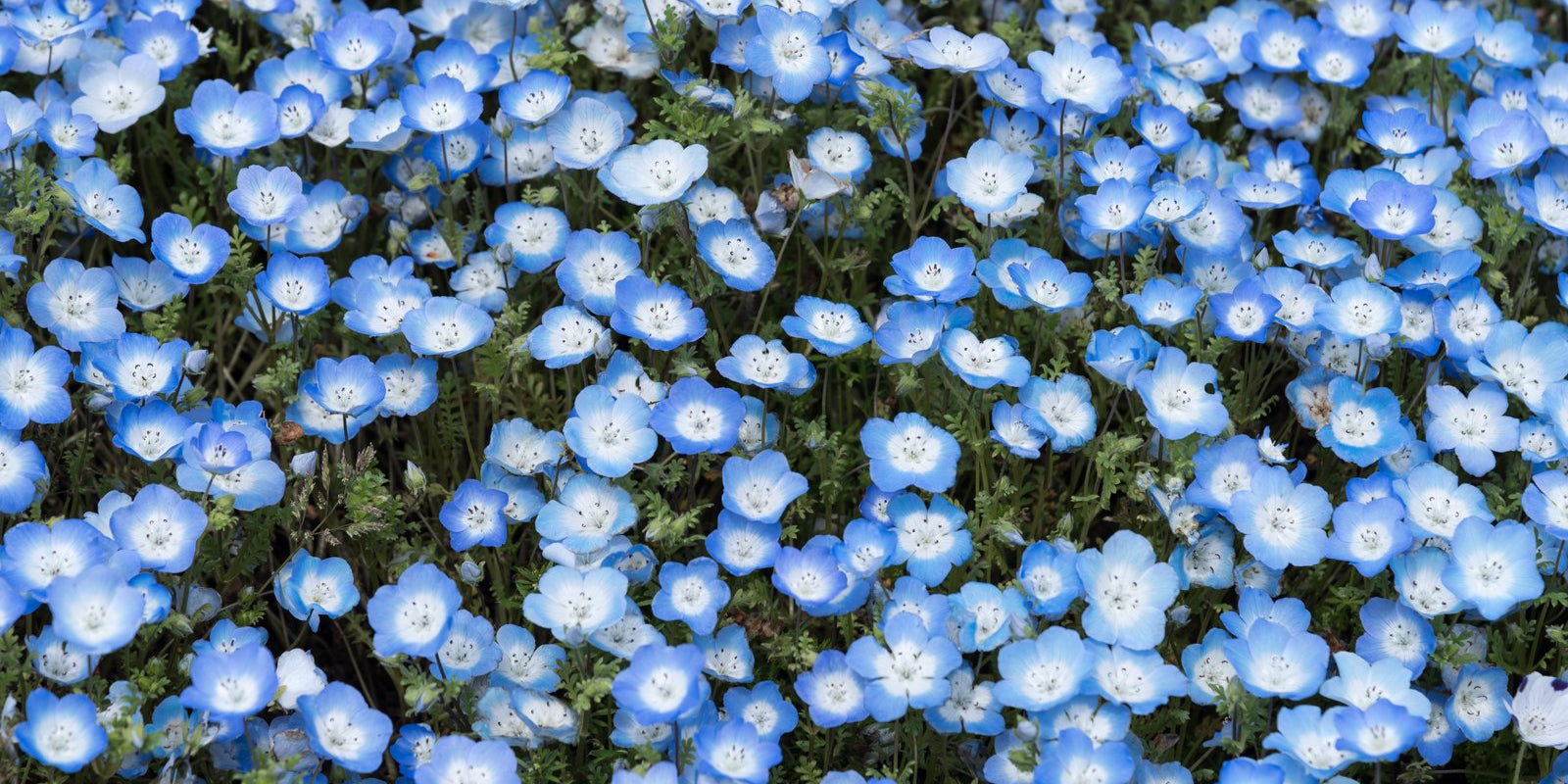
Baby blue eyes (Nemophila menziesii) is a low annual in the borage family, Boraginaceae, grown for its white-centred, sky-blue flowers. Sown in autumn, it carpets edges, pots and the ground under spring bulbs, and is one of the first annuals to flower after winter. The usual mistake is to treat it as a summer annual, when it is a cool-season plant that fades once the heat arrives.
Three mistakes that matter
- Sowing in spring where summers are hot. A spring sowing in Brisbane or Alice Springs meets the heat just as buds form, and the plants flop and die early. Sow in autumn, in the months under When to plant.
- Raising seedlings in punnets. Baby blue eyes does not transplant well, and seedlings pulled apart from a crowded punnet often wilt or stall. Sow direct where plants will flower, or sow into biodegradable pots and plant each pot whole.
- Heavy, wet soil. Plants suffer in soggy ground and long spells of wet, humid weather, and overwatered roots can rot. Choose free-draining sandy or loam soil, raise the bed over clay, and water only when the surface dries.
When to plant
Sow when autumn nights start to cool and the soil sits at about 10 to 20°C. Seed comes up most evenly below about 21°C, and plants flower best while nights stay under about 18°C. In cooler southern gardens a second, shorter window opens in spring. For a longer display, make two or three sowings a few weeks apart.
| Zone | Example cities | Sow | Flowering | Notes |
|---|---|---|---|---|
| Tropical | Darwin NT; Cairns, Townsville QLD; Broome WA | Apr-May | Jul-Sep | Sow as the dry season starts; expect a short display that fades once the build-up heat returns. |
| Subtropical | Brisbane, Gold Coast, Bundaberg QLD; Coffs Harbour, Lismore NSW | Mar-May | Jul-Oct | Sow once autumn soil cools below 20°C; plants flower through the mild winter, and spring sowings collapse in humid heat. |
| Arid and semi-arid | Alice Springs NT; Mildura VIC; Broken Hill, Dubbo NSW; Kalgoorlie WA | Mar-Apr | Jul-Oct | Sow once autumn nights cool; plants ride out light inland frosts and flower before the heat. |
| Temperate | Sydney, Newcastle, Wollongong NSW; Melbourne, Geelong VIC | Mar-May and Sep-Oct | Jul-Dec | Sow once autumn soil cools below 20°C for the longest show; spring sowings suit cooler Melbourne better than Sydney. |
| Mediterranean | Perth, Bunbury WA; Adelaide SA | Mar-May and Sep | Jul-Nov | Sow once autumn soil cools below 20°C; winter rain carries them, and a September sowing flowers briefly before the heat. |
| Cool and alpine | Hobart, Launceston TAS; Canberra ACT; Ballarat VIC; Orange NSW | Feb-Apr and Sep-Oct | Sep-Jan | Autumn sowings overwinter as small plants; where frosts are hard, sow in spring after the worst frosts. |
Autumn sowings made by about Anzac Day usually settle in before the coldest weeks; later ones still grow, only more slowly. In spring, sow early rather than late, because a late sowing meets the heat before it has flowered for long.
Site, soil and setup
Give plants full sun in cool zones, and morning sun with afternoon shade where spring turns hot. They also grow in the dappled shade between shrubs and under deciduous trees. Shelter them from drying winds. Most garden soils suit, from acid to neutral, so lime is rarely needed.
| Where | What to do |
|---|---|
| Every bed | Dig in a 5 cm layer of compost before sowing. Rich soil carries this light feeder most of the way. |
| Soil testing well below pH 6 | Lime only if the rest of the bed needs it too: garden lime at 100 to 200 g per square metre, dug in 4 weeks ahead of sowing. |
| Heavy clay that stays wet | Build a raised bed or grow in pots. Gypsum at 500 g to 1 kg per square metre helps only dispersive clay: drop a dry crumb in rainwater, and a milky cloud within 20 hours confirms it. |
| Sandy or inland soil that sheds water | Water in a wetting agent at the label rate before sowing, then mulch lightly once seedlings stand. |
After damping off or powdery mildew, sow the next batch in a different bed.
Container growing
At 15 to 25 cm tall with stems that spill over the rim, baby blue eyes suits pots, troughs and hanging baskets. Its roots are shallow, so width matters more than depth. Use a pot at least 20 cm across holding 4 L or more of fresh potting mix. The one blue form sold here is already compact, so no dwarf selection is needed.
- Watering: pots dry out faster than beds, so keep the top 7 cm or so of mix moist but never waterlogged.
- Feeding: from the first buds, water in fish and seaweed blend at 25 mL per 9 L every fortnight.
- Position: a sheltered spot with morning sun; move pots into afternoon shade as spring warms.
Sowing Seeds
Sow seed direct where it is to flower, which suits a plant that dislikes having its roots disturbed.
Sowing direct
- Rake the soil fine, sow thinly 2 to 3 mm deep and firm it gently. Cover the seed, as darkness in the first few days helps it come up evenly.
- Keep the surface damp with a fine spray; seedlings usually appear in 7 to 21 days.
- Once true leaves show, thin seedlings to 15 to 20 cm apart.
- For a loose carpet under bulbs or shrubs, scatter seed over weeded ground, rake it in lightly and walk over it to press it down.

Starting under cover
- Sow two or three seeds, 2 to 3 mm deep, in each biodegradable pot of seed raising mix, 6 to 8 weeks before planting out.
- Keep the tray cool and bright, not on a heat mat, because warm mix makes germination uneven (see When to plant).
- Thin to the strongest seedling in each pot.
- Harden off seedlings over about a week (moving them outdoors for longer each day so they adjust to sun and wind).
- Plant each biodegradable pot whole, or slide the seedling out with its root ball intact, then water it in.
Care by growth stage
Cool weather and steady moisture decide how long the display lasts; feeding matters far less. Weeks count from sowing.
| Stage | Water | Feed | Watch for |
|---|---|---|---|
| Germination and seedlings (weeks 1 to 4) | Keep the surface damp with a fine spray | Nothing until the first true leaves, then seaweed solution at half strength (15 mL per 9 L) fortnightly | Snails and slugs after rain; seedlings collapsing at soil level |
| Spreading growth (weeks 4 to 12) | Water at the base whenever the surface feels dry | Seaweed solution at 30 mL per 9 L fortnightly; nothing more in compost-rich soil | Sprawling stems; pinch the tips (see Deadheading) |
| Flowering (from about week 12) | Water deeply in dry spells, as drought cuts flowering short | Fish and seaweed blend at 25 mL per 9 L fortnightly | Aphids on buds and shoot tips |
| Late flowering and seed set | Keep watering steadily while plants still flower, without easing off | Stop feeding | White film on leaves; yellowing as heat builds |
If growth stalls in poor soil, a light dose of all-purpose controlled release granular (NPK around 14-5-10) scratched into the soil can help.

Deadheading
An early pinch makes a denser mound, and regular deadheading keeps flowers coming for longer.
- Pinch once: nip out the growing tips of young plants so they branch and grow bushier.
- Deadhead often: snip each spent flower stem just above the first set of full leaves.
- Want seedlings next year: stop deadheading near the end of flowering and let the last flowers set seed.
- Want no seedlings: keep deadheading until the plants come out, so no seed forms.
- End of season: pull plants once they yellow, and bin any with mildew.
Companion planting
Low, early and bee-friendly, baby blue eyes works best as a living carpet around plants that stand taller in late winter and spring.
Grows well with
- Spring bulbs such as tulips: a blue ground cover beneath them that flowers at the same time.
- Alyssum: another low edger, and one that draws hoverflies, lacewings and other aphid predators.
- Californian poppy: suits the same sunny, free-draining spot and also draws bees.
- Forget-me-not: another cool-season blue for the shadier, damper end of the same bed.

Keep apart
- Lawn and running grasses at the bed edge: they creep in and outcompete the low plants.
- Dense, fast annuals sown right over the top: they shade out such a low plant.
Harvesting Blooms
The flowers are best left in the garden, as cut stems do them little justice. The harvest that counts is seed.
- Watch for the seed pods to turn brown as the plant dies back.
- Cut the seed heads before the dying plant falls over.
- Dry them in a paper bag, shake the bag after a week, then pick out the chaff.
Store the cleaned seed in a small envelope in a cool, dark, dry place until autumn. Sow it along path edges and under bulbs, or share it with a neighbour.
Common problems
Seedlings collapse at soil level. Damping off (Pythium species and Rhizoctonia solani) rots young stems, most often in wet, crowded seed beds and trays. Read more
Patchy germination. Warm soil (see When to plant), seed buried deeper than 3 mm or a seed bed left to dry out all leave gaps.
Seedlings pop up everywhere next autumn. Baby blue eyes self-sows where it is happy, which is welcome in a bulb bed and less so in a vegie patch.
Pests and diseases
Trouble tracks the season: snails in the damp weeks after autumn rain, aphids on soft growth as spring warms.
Common garden snail (Cornu aspersum). Snails, and slugs such as the grey field slug (Deroceras reticulatum), graze seedlings to stalks overnight. Protect young plants first, and clear the pots and debris they hide under by day. Where hand-picking cannot keep up, scatter an iron-based bait thinly rather than metaldehyde pellets. Even iron baits can poison a dog that eats a large amount, so keep pets away. Read more
Aphids (family Aphididae). Clusters of small sap-suckers gather on buds and shoot tips, leaving distorted growth and sticky honeydew. A firm jet of water dislodges most of a colony. Read more
Powdery mildew (order Erysiphales). A white, floury film spreads over the leaves, often a sign that the planting is nearing its end. Caught early, a spray of 1 part full-cream milk to 10 parts water can slow it.
Prevention first
- Thin seedlings to their full spacing so air moves between plants.
- Water the soil, not the leaves, and water in the morning so plants dry by night.
- Check seedlings with a torch after dark and remove snails by hand.
- Keep mulch pulled back from seedling stems, where snails shelter.
Tips
- Plants tolerate light foot traffic, so sow a pinch of seed between stepping stones or along a path edge.
- In a rock garden or on a sunny, gritty bank, sow into the pockets between stones, where the sharp drainage suits it.
- Five spot (Nemophila maculata) is a close relative with white petals, each marked with a large blue-violet spot.
Questions
When should I sow baby blue eyes seeds in Australia?
Sow in autumn in most of Australia, from about March to May, as nights cool. Cool zones can start in February and sow again in September and October. Temperate and Mediterranean gardens also have a short spring window. In the tropics, sow early in the dry season.
Does baby blue eyes grow in shade?
Yes, it grows in full sun to part shade and copes with dappled shade between shrubs. In warm gardens, afternoon shade helps it flower for longer. Pinching the tips early keeps plants compact.
Why did my baby blue eyes die in summer?
It is a cool-season annual, so it sets seed and dies as the weather heats up. Plants flower best while nights stay below about 18°C. Sow in autumn so flowering comes in late winter and spring, before the heat.
Does baby blue eyes self-seed?
Yes, in conditions it likes it drops seed and comes up again the following autumn. Let the last flowers set seed if you want that. Keep deadheading if you do not, or cut and dry the seed heads to sow where you choose.
Can I grow baby blue eyes in pots or hanging baskets?
Yes. Its stems trail over the rim and its roots are shallow. Use a pot at least 20 cm across holding 4 L or more of fresh potting mix. Keep the top few centimetres moist and give it afternoon shade as spring warms.
How long do baby blue eyes take to flower from seed?
Usually 12 to 16 weeks from sowing. Autumn sowings grow slowly through winter and are among the first annuals to flower as it ends, often alongside spring bulbs.
Grow it
More flower guides
All flowers
Ageratum
Grow ageratum from seed in Australia: surface sowing, months for six climate zones, spacing, pots, deadheading, weed and livestock cautions and pests to watch.
| Position | Full sun, 6 hours or more |
|---|---|
| Depth | Surface, 1 mm at most |
| Spacing | 30 cm; Red Flint 40 cm |
| First pick | 12 to 14 weeks from sowing |

Alyssum
Grow alyssum from seed in Australia: sowing months for six climate zones, surface sowing, spacing, pots, shearing for more flowers, and the pests to watch.
| Position | Full sun or part shade |
|---|---|
| Depth | Surface sow, press in |
| Spacing | 15 to 20 cm |
| First pick | 8 to 9 weeks from sowing |

Aquilegia
Grow aquilegia from seed in Australia: chilling the seed, when to sow in six climate zones, part shade, pots, deadheading, cut flowers and common pests.
| Position | Part shade or morning sun |
|---|---|
| Depth | Surface, 3 mm cover at most |
| Spacing | 30 to 50 cm |
| First pick | From about 28 weeks |

Aster
Grow China asters in Australia: sowing months for six climate zones, spacing, pots, watering, Fusarium wilt and thrips, and cutting blooms for the vase.
| Position | Full sun, 6 hours minimum |
|---|---|
| Depth | 6 mm |
| Spacing | 30 to 40 cm |
| First pick | 13 to 16 weeks |