
How to Grow Manuka in Australia
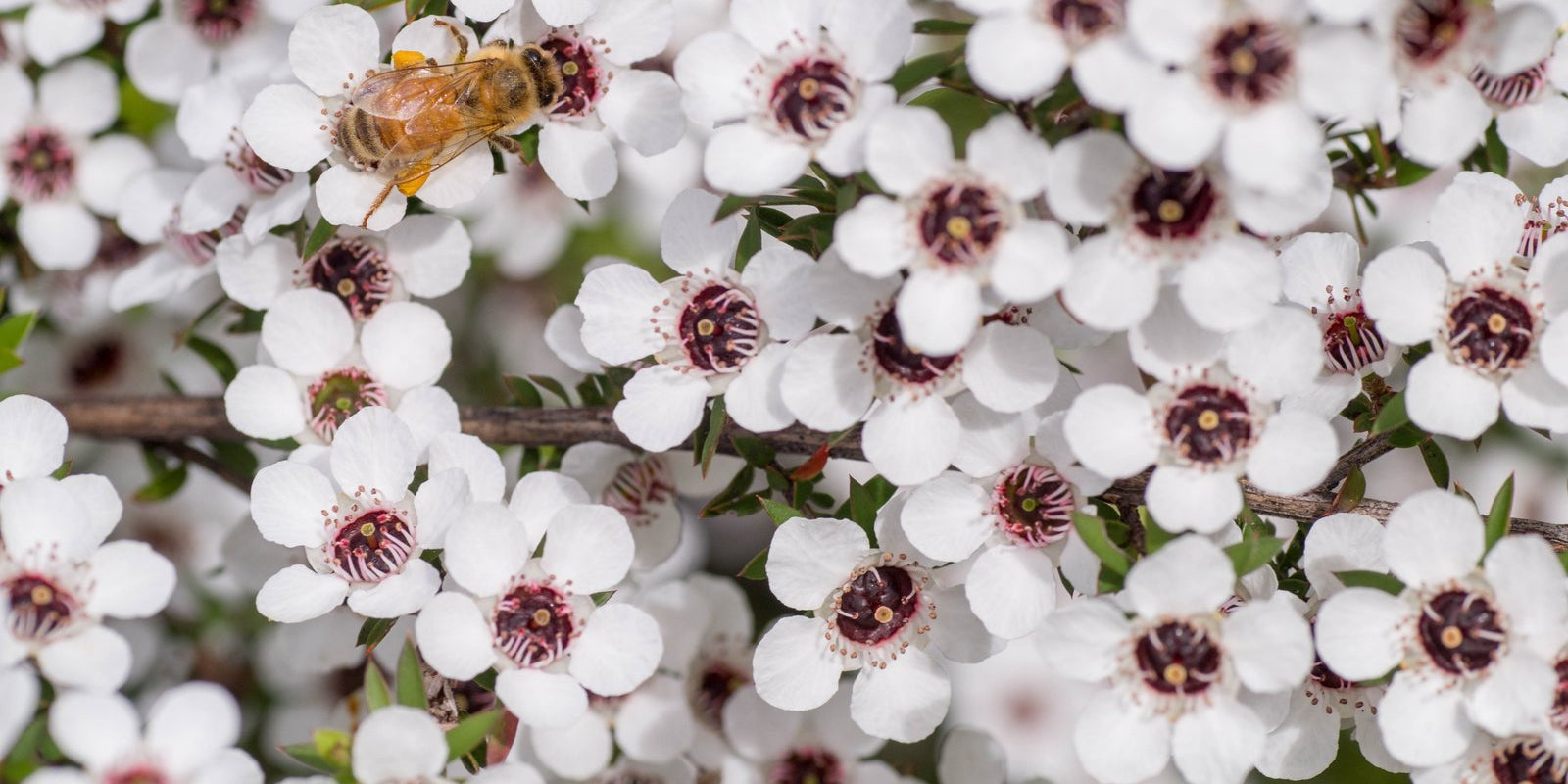
Manuka is an evergreen native tea tree grown for white or pink-tinged flowers that draw bees. Press the very fine seed onto damp seed raising mix without burying it, and keep the tray at 20 to 25°C. Seedlings appear in 2 to 4 weeks. Plant out 1 to 2 m apart in free-draining, acid to neutral soil. Seed-raised plants can flower from their second year.
| Sun | Full sun to part shade |
|---|---|
| Water | Moist while young; deep, occasional soaks later |
| Soil | Free-draining, acid to neutral, low fertility |
| Feed | Minimal; low-phosphorus native feeds only |
| Spacing | 1 to 2 m |
| Depth | Surface sow, press in |
| Germination | 2 to 4 weeks at 20 to 25°C |
| Harvest | Can flower from the second year |
| Container | Yes; pot at least 40 cm wide |
| Frost | Hardy to about -7°C once established |
| Use | Flowering screen, bee shrub, coastal and native gardens |
Manuka (Leptospermum scoparium) is an evergreen, twiggy shrub of the myrtle family (Myrtaceae). It is grown for its aromatic leaves and masses of white, sometimes pink-tinged flowers that bees love. It grows wild along creeks from the NSW south coast to Tasmania and in New Zealand, so it takes frost and damp ground. The mistake most growers make is burying the fine seed, which sprouts best pressed onto the surface.
Three mistakes that matter
- Burying the seed. Manuka seed is very fine, and a covering of mix can leave a tray bare for weeks. Press it onto damp seed raising mix and add no more than the finest sprinkle on top, as set out under Sowing Seeds.
- Cutting back into bare wood. Old, leafless stems may reshoot poorly, so a hard cut on a leggy shrub risks leaving a dead framework. Trim lightly every year after flowering instead, starting in the first year, as under Trimming and Shaping.
- Missing the first webbing. Teatree web moth caterpillars bind shoot tips into nests of silk and droppings, and they can strip and even kill a young plant. Check twiggy shoots often and clear nests while they are small, as under Pests and diseases.
When to plant
Manuka seed germinates best at about 20 to 25°C, so sow when days are reliably mild. In a cool spell, start the tray on a seedling heat mat. One sowing is enough, because each plant is a permanent shrub. Seed-raised plants can flower from their second full growing season, and some take longer.
| Zone | Example cities | Sow | Flowering | Notes |
|---|---|---|---|---|
| Tropical | Darwin NT; Cairns, Townsville QLD; Broome WA | Not recommended | Not recommended | A shrub of cool south-eastern creeks, suited to cold to warm temperate climates. Humid coasts also favour myrtle rust. |
| Subtropical | Brisbane, Sunshine Coast, Bundaberg QLD; Coffs Harbour NSW | Mar-May and Aug-Sep | Sep-Dec | Autumn trays wait in pots until spring. Plant in an open, breezy spot and check new shoots for rust. |
| Arid and semi-arid | Alice Springs NT; Broken Hill NSW; Mildura VIC; Port Augusta SA | Mar-Apr and Sep-Oct | Sep-Dec | Autumn trays wait in pots, sheltered from frost, until spring. Give steady water and afternoon shade in the first summer. |
| Temperate | Sydney, Newcastle, Wollongong NSW; Melbourne, Geelong VIC | Oct-Jan | Oct-Feb | Late spring and early summer trays stay warm unaided. In Melbourne, start October trays indoors or on a heat mat. |
| Mediterranean | Perth, Bunbury WA; Adelaide and the SA coast | Mar-May and Sep-Oct | Oct-Jan | Autumn trays wait in pots until spring. Water deeply through the long dry summer until plants establish. |
| Cool and alpine | Hobart, Launceston TAS; Canberra ACT; Ballarat VIC; Orange NSW | Oct-Dec | Nov-Feb | Raise trays indoors and keep seedlings in pots under cover through winter, then plant out after the next last frost. |
In frosty districts, raise seedlings under cover and plant them out after the last frost, around Melbourne Cup weekend in many cool gardens. A tray that reaches planting size in autumn stays in its pots, sheltered, until then, which can mean a full year from sowing.
Site, soil and setup
Manuka puts up with poor soil, coastal wind and damp ground, but it flowers best in a bright, open spot.
| Need | What to do |
|---|---|
| Sun | Full sun to part shade. Flowering is heaviest in sun or light shade. |
| Soil | Sandy or loamy soil that drains freely but holds some moisture. It tolerates heavier soil. |
| pH | Acid to neutral. On alkaline soil, dig in elemental sulphur at 25 to 50 g per square metre 3 months or more before planting, and skip lime and mushroom compost. |
| Drainage | Copes with damp creek-bank soil, but roots can rot where water lies for days. On heavy, wet clay, raise the planting spot into a low mound. |
| Bed preparation | Dig in a 5 cm layer of compost and nothing richer. |
| Shelter | Established shrubs handle coastal wind. Shelter young plants from wind and frost in their first year. |
No rotation is needed. Give each shrub room to spread 1 to 2 m wide. Most garden plants reach about 2 m high, though wild plants can grow 5 m tall. For help reading a soil test, see soil pH explained.
Container growing
Manuka can be grown in a large pot. Use a pot at least 40 cm wide, about 30 L, with drainage holes. Fill it with native potting mix, or premium potting mix with about a fifth coarse sand mixed through.
- Watering. Water when the top few centimetres of mix feel dry, and never leave the pot standing in water. See watering pots through summer.
- Feeding. Give worm casting liquid diluted to weak tea colour once a fortnight in spring and summer, and nothing in winter.
- Position. Full sun to part shade, shaded in the first summer as under Transplanting.
Sowing Seeds
Start manuka in a punnet or seed tray under cover, where the fine seed and tiny seedlings can be watched every day.
Starting under cover
- Fill a punnet with fresh seed raising mix, with up to a fifth coarse sand added for drainage, and water it before sowing.
- Mix the seed with a pinch of dry sand and scatter it thinly, as in sowing tiny seeds.
- Press it firmly onto the surface. Leave it uncovered, or give it the finest sprinkle of mix.
- Cover the tray with clear plastic and keep it at the temperature under When to plant, in bright, filtered light.
- Mist whenever the surface starts to dry. A tray that dries out can kill the seed.
- Seedlings usually appear in 2 to 4 weeks. Take off the plastic as soon as they do, or they grow weak, and move the tray into sun out of hot afternoon sun.
| Step | When | What to do |
|---|---|---|
| Pricking out | At two or three leaves | Move the strongest seedlings into their own small pots or tubes |
| Growing on | Until roots fill the pot | Keep in the same spot; mix moist but not wet |
| Planting out | Mild weather, after the last frost | Plant 1 to 2 m apart, at the lower end for a hedge |
Transplanting
Before planting, harden seedlings off (a week or two of longer outdoor stays, so leaves toughen), as in hardening off seedlings. Plant each one at the depth it grew in its pot and water it in with seaweed solution at 30 mL per 9 L. Shade young plants on hot afternoons through their first summer.
Care by growth stage
Steady moisture while young and a light hand with feed decide how well manuka grows.
| Stage | Water | Feed | Watch for |
|---|---|---|---|
| Seedlings in trays, weeks 1 to 8 | Keep the surface moist, never soggy; mist or water from below | Nothing until the first true leaves, then seaweed solution at half strength, 15 mL per 9 L, every fortnight | Damping off (seedlings collapsing at soil level); a surface left to dry |
| Potted seedlings, weeks 8 to 26 | Water when the top of the mix dries | Worm casting liquid diluted to weak tea colour, every fortnight | Pale, stretched growth in low light |
| First year in the ground | A deep soak once a week in dry weather; keep mulch topped up | Seaweed solution at 30 mL per 9 L at planting and again 2 weeks later | Wilting on hot, windy days; webbing on shoot tips |
| Flowering, from the second year | Keep watering steady through dry spells while in flower | None needed | Scale and black sooty mould; yellow rust spots on new shoots |
| Established shrubs | Deep, occasional soaks in long dry spells | Compost as a 5 cm mulch each spring, kept clear of the stems | Bare lower stems if trimming lapses |
Week ranges run from the sowing date. If growth stalls in very poor sand, a controlled release granular labelled for natives and low in phosphorus, scratched in once after flowering, can help.
Trimming and Shaping
Light trimming after flowering keeps manuka dense and leafy, while a shrub left alone can turn woody and open at the base.
- Pinch out the soft shoot tips of young plants in their first year, so they branch and stay bushy.
- Each year, straight after flowering, shorten the flowered shoots, cutting within the leafy growth.
- Clip a hedge or screen lightly at the same time, rather than in one hard cut later.
- Cut out dead, crossing or webbed shoots whenever you see them, and bin them.
- Wet shoots with myrtle rust first to dampen the spores. Then prune them out, bag them and put them in the general waste bin, never green waste or compost.
- Wash secateurs and gloves with detergent and water after handling rusted shoots.
Companion planting
Manuka suits a native or coastal border alongside plants that share its taste for well-drained soil and little feed.
Grows well with
- Everlasting daisy (Xerochrysum bracteatum), which wants the same light, well-drained soil in full sun.
- Brachycome (Brachyscome species), a native daisy that carpets the soil at the shrub's feet in sun or part shade.
- Tussock grasses (Poa species), natives that like the same moist, low ground once established.
Keep apart
- Lilly pilly (Syzygium species) and other myrtle family plants massed together, which share myrtle rust and pass its spores between them.
- Heavily fed vegetable and rose beds, for the reason under Go easy on phosphorus.
Flowering and Seed Capsules
Flowers open on the new growth from spring into summer. Each leaves a small woody capsule that hangs on long after the petals drop.
- Choose capsules at least 12 months old; the newest ones may hold unripe seed.
- Snip a few short lengths of stem carrying capsules, rather than stripping a whole branch.
- Lay them in an open container in a warm, dry spot.
- Shake out the fine seed as the capsules open, usually within 2 to 7 days.
Store the seed dry in a sealed container, ideally in the fridge at about 4°C; kept dry, it stays viable for several years. Flowering stems can also be cut for the vase, since manuka flowers on new growth.
Is manuka a weed?
No Australian state or territory lists manuka as a declared weed.
| State or territory | Native there? | What the weed lists say |
|---|---|---|
| New South Wales | Yes, on the south coast from Mt Imlay south | Not among the weeds in NSW WeedWise |
| Victoria | Yes | Not on the declared noxious weeds list |
| Tasmania | Yes | Not on the declared weeds index |
| Queensland | No | Not on the prohibited or restricted invasive plant lists |
| South Australia | No | Not declared; the declared tea tree is coastal tea-tree (Leptospermum laevigatum), a different species |
| Western Australia | No | Permitted on the WA Organism List, not a declared pest |
| Northern Territory | No | Not on the declared weeds list |
| Australian Capital Territory | No | Not in the ACT pest declaration |
Lists change, so check with your state or territory biosecurity agency before planting near bushland.
Common problems
Empty trays. Seed buried too deep (see Three mistakes that matter), a surface left to dry or a cold tray is the usual cause. Read more
Thin, leaning seedlings. Too little light makes seedlings stretch, so move trays into bright, filtered light as soon as they emerge. Read more
Bare, woody lower stems. Skipped trimming leaves a leggy, woody shrub; see Three mistakes that matter and Trimming and Shaping.
Yellowing and dieback in wet ground. Roots rot in soil that stays waterlogged, so move young plants to a mound or a better-drained spot. Read more
Few flowers. Deep shade or skipped trimming is the usual cause, since flowers form on new growth; see Site, soil and setup and Trimming and Shaping.
Sawdust at branch forks. Small piles of sawdust-like frass at the forks or the base mean borers, so squirt methylated spirits into each hole with a small syringe.
Pests and diseases
Most trouble on manuka comes from leaf-binding caterpillars, sap-sucking scale and myrtle rust.
Teatree web moth (Orthaga thyrisalis). Its caterpillars bind shoots into webbed nests packed with brown droppings, worst on fine-leaved tea trees. Pull nests out early with gloved hands or a strong jet from the hose, or cut off webbed stems and bin them. The moths often return, so keep checking.
Scale insects (superfamily Coccoidea). Scale sucks sap from stems and leaves, and a black sooty mould usually follows; manuka is among the more prone tea trees. Hose off light infestations, and spray horticultural oil, mixed to the label, when the young crawlers are moving, usually in early spring. Read more
Myrtle rust (Austropuccinia psidii). Purple spots on soft new leaves turn into bright yellow powdery pustules, and heavy attacks kill shoot tips. Australian agencies list tea trees among its hosts, and New Zealand trials show manuka is susceptible, though field infection there has so far been low. Prune out rusted shoots as under Trimming and Shaping, and check the APVMA register for a fungicide registered against myrtle rust. Report a suspected case to your state or territory biosecurity agency or the Exotic Plant Pest Hotline on 1800 084 881.
Damping off (Pythium species and Rhizoctonia solani). Seedlings pinch in at soil level and topple, rotted by these common soil fungi and water moulds. Keep the mix moist but not wet to lower the risk. Read more
Prevention first
- Sow into fresh seed raising mix in scrubbed trays.
- Look over new shoots every few weeks for webbing, scale and yellow rust spots.
- Space plants so air moves through them and leaves dry quickly after rain.
- Keep young shrubs watered in dry spells, since thriving plants suffer less from web moth.
Tips
- Seedlings vary in flower colour, from white to the odd pink. To keep a favourite, take semi-ripe cuttings (shoots firm at the base, soft at the tip) in summer, because only cuttings come true.
- Plant manuka beside a path or gate, where brushing past it releases the scent of the crushed leaves.
- Use it for a hedge or screen along a boundary, where its twiggy growth makes a dense, low-water barrier.
Due to quarantine restrictions and our shipping policy, we cannot send Manuka Honey Tea Tree seed to Western Australia or Tasmania.
Questions
Is manuka the same as tea tree?
Manuka is one tea tree among many. It is Leptospermum scoparium, native to south-eastern Australia and New Zealand. Other tea trees include coastal tea-tree, Leptospermum laevigatum, and lemon-scented tea tree, Leptospermum petersonii. Each is a different species with its own needs.
Why are my manuka seeds not germinating?
The usual cause is seed sown too deep. Manuka seed is very fine and is pressed onto the surface of damp seed raising mix, with at most the lightest sprinkle on top. Keep the tray at 20 to 25°C and never let it dry out. Seedlings usually appear in 2 to 4 weeks.
How long does manuka take to flower from seed?
Seed-raised manuka can flower from its second full growing season, though some plants take longer. Flowers open on new growth from spring into summer. Yearly light trimming after flowering keeps plenty of new growth coming for the next season.
Is manuka a weed in Australia?
No state or territory lists it as a declared weed. It is native in New South Wales, Victoria and Tasmania. Western Australia lists it as a permitted organism. South Australia declares a different species, coastal tea-tree. Check with your state biosecurity agency before planting near bushland.
Does manuka get myrtle rust?
It can. Australian agencies list tea trees among the hosts of myrtle rust, and New Zealand trials show manuka is susceptible. Field infection on manuka in New Zealand has so far been low. Watch soft new shoots for bright yellow powdery spots, and bag and bin any infected growth.
Can I grow manuka in a pot?
Yes. Use a pot at least 40 cm wide, about 30 L, with drainage holes and a free-draining potting mix. Water when the top few centimetres dry out, give afternoon shade in the first summer, and feed only lightly with a low-phosphorus product.
Grow it
Tap Add beside a size to put it in your cart. You stay on this page.
- Manuka Honey Tea Tree seedsFrom $2.99

More flowers to sow in October
All flowers
Ageratum
Grow ageratum from seed in Australia: surface sowing, months for six climate zones, spacing, pots, deadheading, weed and livestock cautions and pests to watch.
| Position | Full sun, 6 hours or more |
|---|---|
| Depth | Surface, 1 mm at most |
| Spacing | 30 cm; Red Flint 40 cm |
| First pick | 12 to 14 weeks from sowing |

Alyssum
Grow alyssum from seed in Australia: sowing months for six climate zones, surface sowing, spacing, pots, shearing for more flowers, and the pests to watch.
| Position | Full sun or part shade |
|---|---|
| Depth | Surface sow, press in |
| Spacing | 15 to 20 cm |
| First pick | 8 to 9 weeks from sowing |

Aster
Grow China asters in Australia: sowing months for six climate zones, spacing, pots, watering, Fusarium wilt and thrips, and cutting blooms for the vase.
| Position | Full sun, 6 hours minimum |
|---|---|
| Depth | 6 mm |
| Spacing | 30 to 40 cm |
| First pick | 13 to 16 weeks |
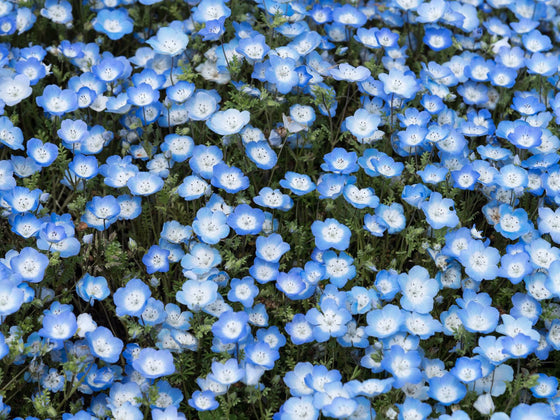
Baby Blue Eyes
Grow baby blue eyes from seed in Australia: autumn sowing months for six climate zones, depth, spacing, shade, pots, pests and saving seed for next year.
| Position | Full sun to part shade |
|---|---|
| Depth | 2 to 3 mm |
| Spacing | 15 to 20 cm |
| First pick | Flowers in 12 to 16 weeks |