
How to Grow Penstemons in Australia
Sow penstemon seed 2 mm deep in autumn or spring, at 18 to 24°C, and expect seedlings over 2 to 4 weeks or longer. Plant out 30 to 40 cm apart in full sun and lean, free-draining soil. Water well in spring, keep the crown dry in winter, and cut spent spikes to keep flowers coming.
| Sun | Full sun, six hours plus |
|---|---|
| Water | Moist in spring; little once established |
| Soil | Free-draining, lean, gritty or sandy |
| Feed | Compost mulch in spring; rarely more |
| Spacing | 30 to 40 cm |
| Depth | 2 mm, lightly covered |
| Germination | 2 to 4 weeks at 18 to 24°C |
| Harvest | From 12 weeks; often second summer |
| Container | Yes, 40 L pot, 45 cm deep |
| Frost | Frost hardy once established |
| Use | Borders, rockeries, pots, cut flowers, bees |
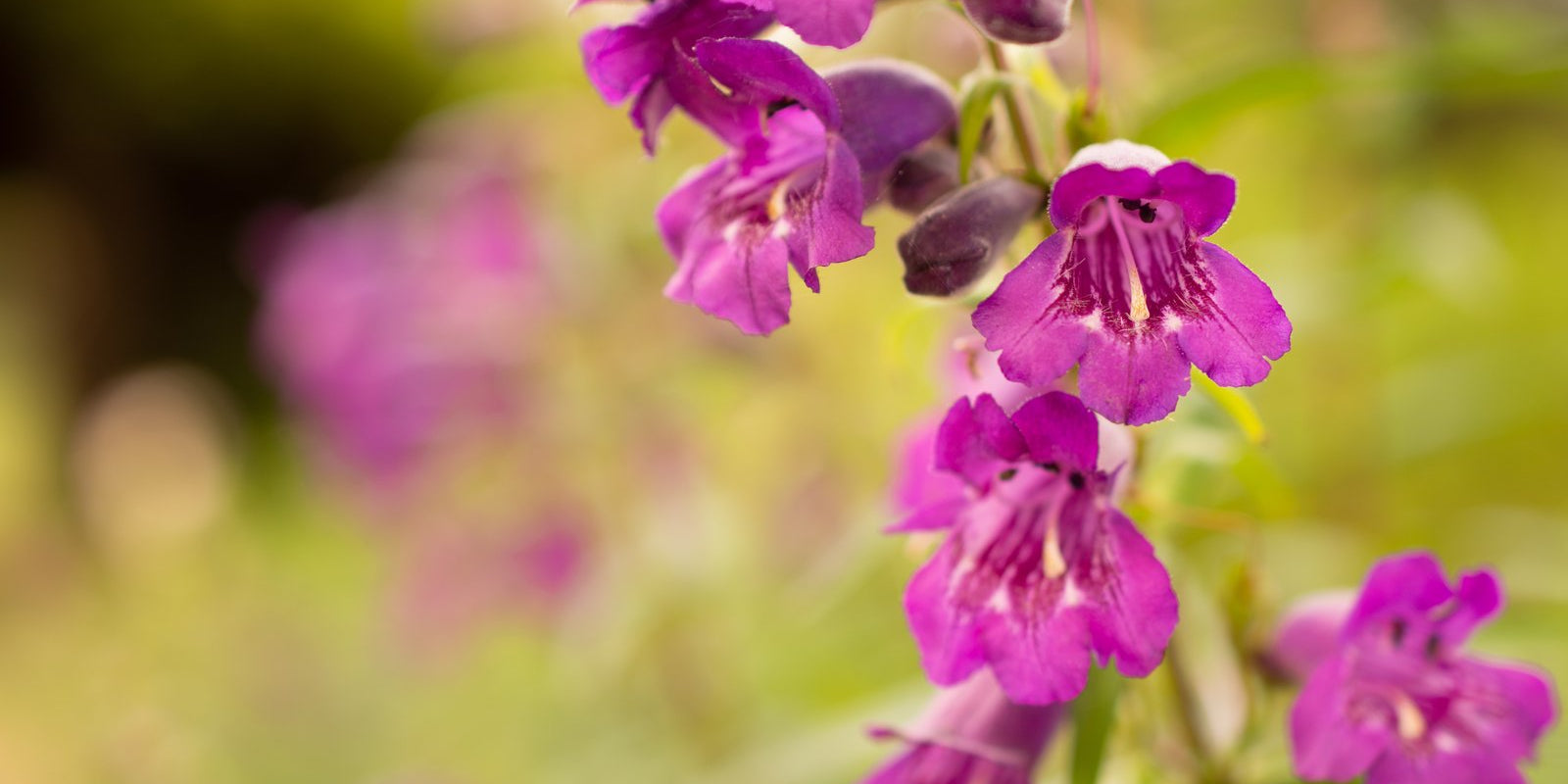
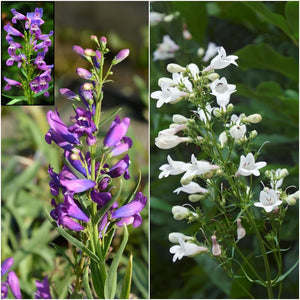
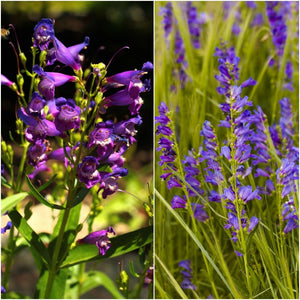
Penstemon (Penstemon species), or beardtongue, is a clump-forming perennial in the plantain family (Plantaginaceae). It is grown for tall spikes of tubular, foxglove-like flowers that bees work through late spring and summer. Two kinds are sold as seed: Compact Mix, a beardlip penstemon (Penstemon barbatus), and Rocky Mountain penstemon (Penstemon strictus). Once settled they handle heat, dry spells and frost, and the usual mistake is killing them with kindness: wet, rich, over-watered soil.
Three mistakes that matter
- Planting in heavy, wet soil. Penstemons rot at the crown in ground that stays wet, and a plant can collapse within days. Choose free-draining soil or a raised bed, and see waterlogged soil for the fixes.
- Feeding and watering like a thirsty annual. Rich soil and regular fertiliser give soft, floppy stems and fewer flowers. Most garden soils need no extra feed, and plants want deep water in spring, then much less once flowering ends.
- Giving up on the seed tray too soon. Penstemon seed comes up unevenly, with stragglers appearing weeks after the first seedlings. Keep the tray moist and sheltered for several weeks after the first shoots, rather than tipping it out.
When to plant
Seed germinates at 18 to 24°C, so sow in the mild weeks of autumn or spring, or under cover in cold months. One sowing fills a bed for a few years, because plants are perennial but short-lived, usually two to five years. Sow a fresh batch every second or third year to keep the display going.
| Zone | Example cities | Sow | Flowering | Notes |
|---|---|---|---|---|
| Tropical | Darwin, Katherine NT; Cairns, Townsville QLD; Broome WA | Apr-Jun | Aug-Nov | A dry-season flower only. Wet-season rain and humidity usually rot the crown, so treat plants as short-lived. |
| Subtropical | Brisbane, Gold Coast, Sunshine Coast QLD; Coffs Harbour NSW | Mar-May and Aug-Sep | Oct-Jan | Autumn sowings flower best. Give sharp drainage and air, because humid summers bring mildew and crown rot. |
| Arid and semi-arid | Broken Hill, Dubbo NSW; Mildura VIC; Kalgoorlie WA | Mar-Apr and Aug-Sep | Oct-Jan | Water well through spring, then mulch with gravel and give light afternoon shade in the hottest weeks. |
| Temperate | Sydney, Newcastle, Wollongong NSW; Melbourne, Geelong VIC | Apr-May and Aug-Oct | Nov-Mar | Autumn trays left outdoors suit Rocky Mountain. Spring sowings flower from early summer in warm years. |
| Mediterranean | Perth, Bunbury WA; Adelaide and the SA coast | Apr-May and Aug-Sep | Oct-Feb | Sow with the winter rains so roots settle before the dry heat; a wetting agent helps on sand. |
| Cool and alpine | Hobart, Launceston TAS; Canberra ACT; Ballarat VIC; Orange NSW | Mar-Apr and Aug-Oct | Dec-Mar | Raise spring seedlings under cover and plant out after the last frost. Prune hard only in spring. |
Rocky Mountain seed often comes up more evenly after a cold, damp spell. In cool and temperate gardens, sow its tray around Anzac Day and leave it outdoors. In frosty districts, keep spring seedlings under cover until the last frost, which Melbourne Cup weekend marks in many districts.
Site, soil and setup
Pick a sunny spot that is never dug over, because a clump stays put for several years with its crown right at the surface.
| Need | What to do |
|---|---|
| Sun | Full sun, at least six hours a day, for upright stems and clear colours. In hot inland and northern gardens, light afternoon shade helps. |
| Soil | Light, gritty or sandy loam. Lean, rocky ground suits penstemons better than rich garden soil. |
| pH | Slightly acid to alkaline. If a test reads below 5.5, dig in dolomite lime at 100 to 200 g per square metre 4 weeks before planting. |
| Drainage | Essential. On clay, dig in coarse grit and plant on a raised bed or low mound so water drains away from the crown. |
| Bed preparation | Dig in a 5 cm layer of compost before planting and skip manure. On sandy soil that sheds water, as around Perth and Adelaide, apply a wetting agent at the label rate. |
| Rotation | None while the clump is healthy. After a plant dies of crown rot, put its replacement in fresh ground elsewhere. |
For help reading your ground first, see sandy, clay or loam.
Container growing
Penstemons root deeply, so use a pot at least 45 cm across and 45 cm deep, around 40 L, filled with a free-draining potting mix. Compact Mix is the better choice for a pot. Rocky Mountain grows taller and needs the largest pot you have, in a spot sheltered from strong wind.
- Watering: water deeply when the top 5 cm of mix is dry, never leaving the pot in a saucer; see watering pots in summer.
- Feeding: fish and seaweed blend at 25 mL per 9 L every fortnight from spring growth to the end of flowering.
- Position: full sun, with afternoon shade in hot districts.
- Winter: water only when the mix is nearly dry, and stand the pot on feet so it drains freely.
Sowing Seeds
Start penstemons in cells under cover, where slow and uneven seed is easy to watch, or sow direct in autumn where the plants will grow. The two varieties differ in the ways below.
| Variety | Flowers | Height | Spacing | Germination | First flowers |
|---|---|---|---|---|---|
| Compact Mix (Penstemon barbatus, early form) | Scarlet, pink and lavender over bronze-green leaves | Listed at 30 to 70 cm | 30 cm | 2 to 4 weeks at 18 to 24°C, erratic | Often in the first summer from an early sowing |
| Rocky Mountain (Penstemon strictus) | Blue-purple, from early summer for a month or more | About 75 cm | 40 cm | 2 to 4 weeks at 21 to 24°C; more even after a cold spell | Often not until the second summer |
Starting under cover
- Fill cells or a tray with fresh seed raising mix and water it well before sowing.
- Sow two or three seeds per cell, 2 mm deep, and cover them lightly with fine mix.
- Keep the mix just moist, never wet, in bright light out of hot afternoon sun.
- Hold the tray at the temperature under When to plant. Seedlings usually appear in 2 to 4 weeks, and more often follow later.
- Thin each cell to the strongest seedling by snipping the others at soil level.
- Pot each seedling on into its own tube once it has two pairs of true leaves.
Sowing direct
In cool and temperate gardens, rake a weed-free patch to a fine surface in autumn. Sow small groups of seed 2 mm deep, 30 cm apart for Compact Mix and 40 cm for Rocky Mountain. Winter cold and rain do the work of a fridge, and seedlings come up as the soil warms. Mark each group and thin to the strongest seedling.
Transplanting
Plant out when seedlings are 5 to 10 cm tall. Harden them off first (a week or so of gradually longer spells outdoors that toughens soft growth), as in hardening off seedlings. Set the crown level with the soil surface and water in with seaweed solution at 30 mL per 9 L. Keep mulch clear of the crown.
Care by growth stage
Good spring moisture and a dry crown decide how long a penstemon lives. Water new plants steadily through their first summer, then let established clumps get by on deep, occasional soaks.
| Stage | Water | Feed | Watch for |
|---|---|---|---|
| Seedlings in cells, weeks 1 to 8 | Keep the mix just moist, never soggy | Nothing until the first true leaves, then seaweed solution at half strength, 15 mL per 9 L, every fortnight | Damping off; leggy seedlings in low light |
| After planting out, weeks 8 to 14 | Water deeply once or twice a week in dry weather until new growth shows | Worm casting liquid, diluted to weak tea colour, every fortnight | Slugs and snails on soft leaves |
| First summer, weeks 14 to 30 | Soak deeply when the top 5 cm of soil is dry | None in reasonable soil; in poor, sandy soil, fish and seaweed blend at 25 mL per 9 L every fortnight | Wilting on hot afternoons; aphids on new tips |
| Winter rest | Only if the soil dries right out | None | Crown rot in wet ground; frost on freshly cut stems |
| Spring growth, from the second year | Water in dry spells, because spring moisture matters most | A 5 cm layer of compost around the clump, clear of the crown | Slugs and snails on new shoots; aphids on soft tips |
| Flowering, late spring and summer | Keep watering steady through flowering and picking, then ease off once the last spikes fade | None | Powdery mildew in humid weather; spent spikes to cut |
Weeks count from sowing. If growth stalls in poor soil, a light dose of all-purpose controlled release granular (NPK around 14-5-10) scratched in each spring can help.

Deadheading
Cutting spent spikes keeps new ones coming. It can also help a clump live longer, because a plant that sets no seed has more left for next season.
- As a spike fades, cut it back to a pair of leaves; new spikes follow from lower down and from the base.
- When the main flush ends, cut the whole plant back by about half, to a neat mound of leaves.
- In frost-free gardens, trim the clump to about a third of its height in winter to keep it compact.
- In frosty districts, trim by only a third in autumn, then cut back hard in spring after the last frost.
- Leave two or three spikes to ripen seed only if you want self-sown seedlings or seed to save.
Companion planting
Penstemons suit a sunny cottage border, a gravel garden or a rockery, beside plants that want the same lean, free-draining soil.
Grows well with
- Lavender, which wants the same sun and drainage and little water once established.
- Everlasting daisies, which take dry spells and lean soil and flower alongside in spring.
- Thyme along the front edge, low and drought hardy, so it never shades the crown.

Keep apart
- Mint and other spreading runners, which crowd the crown and compete for water.
- Vegie beds on daily watering, where the constant wet invites crown rot.
- Tall, dense perennials that shade the clump and still the air, which invites powdery mildew.
Harvesting Blooms
Cut a spike for the vase when about a third of its flowers are open, and the buds above keep opening in water.
- Pick early in the morning, when stems are full of water.
- Carry a bucket of water and stand each stem in it straight after cutting.
- Cut just above a pair of leaves, so a side spike can follow.
- Strip any leaves that would sit below the water line.
- Recut the base before arranging, and add a floral preservative if you have one.
A spike usually lasts about a week in a vase. If stems will not be displayed straight away, keep them somewhere cool, between about 4 and 15°C.
Mix the scarlet and pink Compact Mix spikes with blue-purple Rocky Mountain ones in a tall jug.
Common problems
Seeds did not come up. Cold or dry mix and impatience are the usual causes; see Three mistakes that matter. Seed often germinates better after six months to a year in dry storage, so sow the rest of the packet later before giving up. Read more
Plant died over winter. Cold, wet soil around the crown is the usual cause, and a hard cut before frost makes it worse; see Deadheading for safer timing.
No flowers in the first year. Rocky Mountain often spends its first season building roots and flowers from the second summer, as do late sowings of either variety.
Floppy, sprawling stems. Too little sun stretches the stems, as does rich, well-fed soil; see Three mistakes that matter. Move the clump into full sun.
Clump fading after a few years. Penstemons are short-lived, so a tired, woody clump is normal. Let a spike or two self-sow, or raise fresh plants from seed.
Pests and diseases
Penstemons have few serious troubles, and most start with wet soil, crowded plants or soft spring growth.
Slugs and snails (Gastropoda). They chew seedlings and new shoots, mostly at night. Check under leaves and around rocks where they shelter by day, and set shallow beer traps dug slightly into the soil. Read more
Aphids (Aphididae). These small green, black or brown insects, about 2.5 mm long, cluster on new tips and buds. Hose them off or prune the worst tips, and for repeat outbreaks spray soapy water or horticultural oil, never in hot weather. Read more
Powdery mildew (Erysiphe species). White, powdery patches spread over leaves in humid, crowded plantings. Remove the worst leaves and spray 1 part full-cream milk to 10 parts water in the early morning. Read more
Crown and root rot (Fusarium and Rhizoctonia species). In wet, heavy soil the plant suddenly wilts and dies, and it pulls easily from the ground. Bin it with its roots, fix drainage and replant elsewhere.
Prevention first
- Plant in free-draining soil at the spacing in the variety table, and water at the base in the morning.
- Check new shoots at dusk each spring for slugs and snails.
- Keep broad sprays off the bed, so ladybirds, lacewings and hoverflies keep aphids down and the fungus-eating ladybird (Illeis galbula) grazes mildew.
- Clear dead stems and fallen leaves around the clump, as in garden hygiene.
Tips
- Save your own seed from a spike or two: capsules are ready when dry, hard and dark. Stored in a paper envelope somewhere cool and dry, seed usually stays viable for about five years.
- Grow both varieties for a longer show: Compact Mix flowers from late spring, and Rocky Mountain takes over in early summer.
- Penstemons feed many bees, especially solitary bees; see gardening for bees for plants to pair with them.
Questions
How long do penstemon seeds take to germinate?
Usually 2 to 4 weeks at 18 to 24°C, but germination is uneven and stragglers can appear weeks later. Sow 2 mm deep, keep the mix just moist, and leave the tray in place well after the first seedlings show.
Do penstemon seeds need cold stratification?
Not always, but Rocky Mountain penstemon comes up more evenly after a cold, damp spell. In cool and temperate gardens, sow the tray in autumn and leave it outdoors in a sheltered spot. Seedlings appear as the weather warms.
Will penstemon flower in the first year from seed?
Compact Mix often flowers in its first summer from an early sowing. Rocky Mountain usually spends its first season building roots and flowers from the second summer.
How long do penstemons live?
Most live two to five years. Wet winter soil shortens that, and cutting spent spikes before they set seed can help a clump last longer. Sow a fresh batch every second or third year to keep the display going.
Can you grow penstemons in pots?
Yes. Use a pot at least 45 cm across and deep, around 40 L, with free-draining potting mix. Compact Mix suits a pot best. Water when the top 5 cm dries and feed fortnightly with fish and seaweed blend through spring and summer.
When should I cut back penstemons?
Cut spent spikes to a pair of leaves as they fade, and cut the plant back by half when the main flush ends. In frosty districts, trim by only a third in autumn and cut back hard in spring after the last frost.
Grow it
More flowers to sow in September
All flowers
Ageratum
Grow ageratum from seed in Australia: surface sowing, months for six climate zones, spacing, pots, deadheading, weed and livestock cautions and pests to watch.
| Position | Full sun, 6 hours or more |
|---|---|
| Depth | Surface, 1 mm at most |
| Spacing | 30 cm; Red Flint 40 cm |
| First pick | 12 to 14 weeks from sowing |

Alyssum
Grow alyssum from seed in Australia: sowing months for six climate zones, surface sowing, spacing, pots, shearing for more flowers, and the pests to watch.
| Position | Full sun or part shade |
|---|---|
| Depth | Surface sow, press in |
| Spacing | 15 to 20 cm |
| First pick | 8 to 9 weeks from sowing |

Aster
Grow China asters in Australia: sowing months for six climate zones, spacing, pots, watering, Fusarium wilt and thrips, and cutting blooms for the vase.
| Position | Full sun, 6 hours minimum |
|---|---|
| Depth | 6 mm |
| Spacing | 30 to 40 cm |
| First pick | 13 to 16 weeks |

Aubretia
Growing aubretia as a hardy groundcover in Australian gardens: sowing, position, trimming after flowering, companion plants and common pests.
| Position | Full sun, 6 hours or more |
|---|---|
| Depth | On the surface, barely covered |
| Spacing | 25 to 30 cm |
| First pick | Spring, after a winter chill |