
How to Grow Bells of Ireland in Australia
Sow Bells of Ireland seed on the surface, under no more than 3 mm of fine mix, because light helps it germinate. In most zones sow in autumn, and in cool zones in spring. Germination is slow, often 14 to 35 days. Space plants 25 to 30 cm apart in full sun and well-drained soil, stake them young, and cut spikes 12 to 16 weeks after sowing.
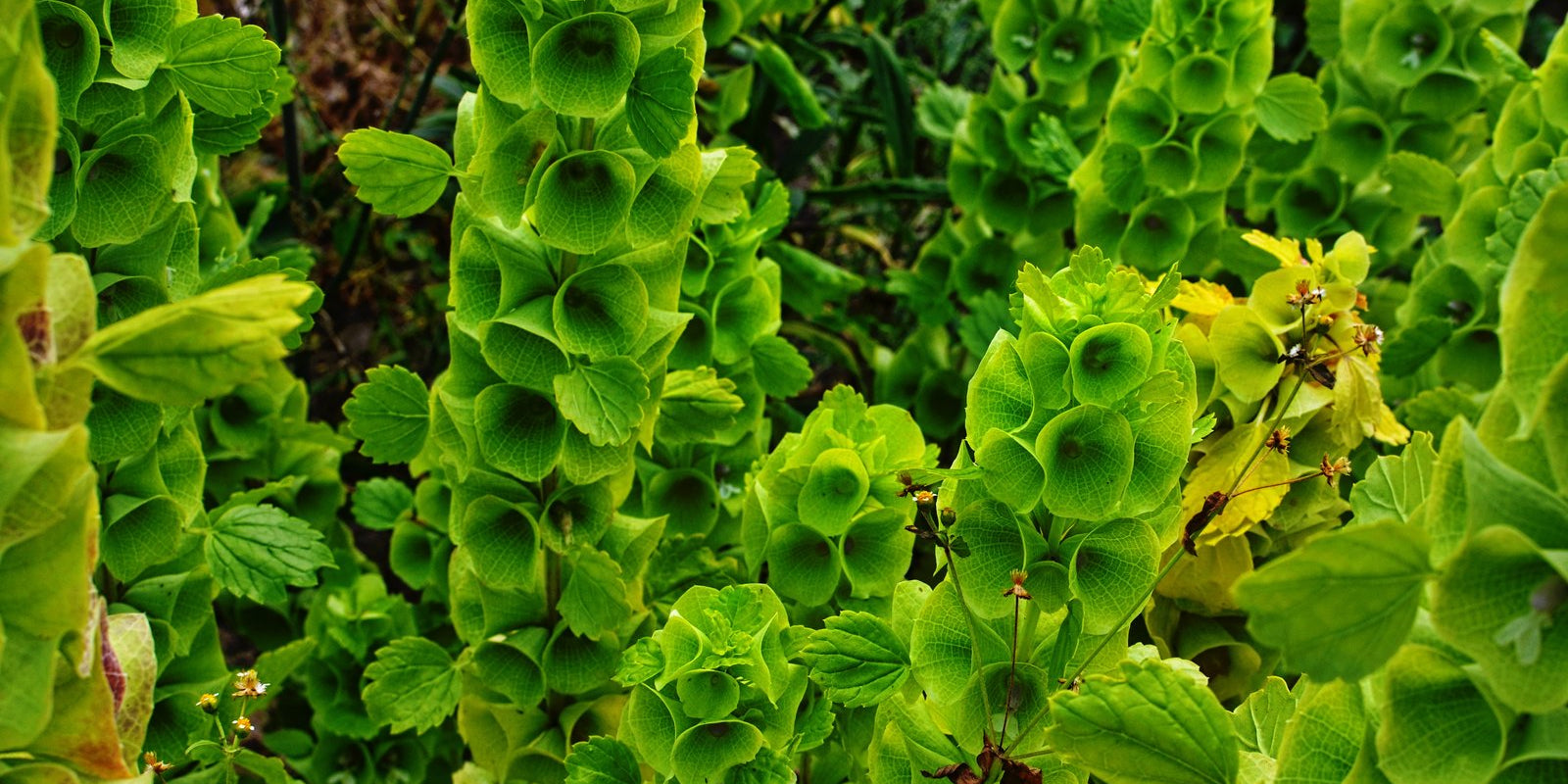
| Sun | Full sun, 6 hours minimum |
|---|---|
| Water | Evenly moist, never waterlogged |
| Soil | Well-drained, moderately fertile, acid to alkaline |
| Feed | Compost at planting; light liquid feeds |
| Spacing | 25 to 30 cm |
| Depth | Surface, 3 mm at most |
| Germination | 14 to 35 days at 15 to 20°C |
| Harvest | 12 to 16 weeks; autumn sowings flower in spring |
| Container | 30 cm wide and deep, about 20 L |
| Frost | Half-hardy; plant out after the last frost |
| Support | Stake young plants; tie stems loosely |
| Use | Fresh and dried arrangements, borders, pots |
Bells of Ireland (Moluccella laevis) is an annual in the mint family, Lamiaceae, grown for tall spikes of green bells for fresh and dried arrangements. Each bell is a calyx (the cup of sepals around a flower), and despite the name the plant comes from western Asia, not Ireland. It thrives in a mild, cool growing season, and the usual mistake is burying the seed, which needs light to germinate.
Three mistakes that matter
- Burying the seed. Light helps the seed germinate, so seed sown at the usual depth for flowers can sit in the dark and never come up. Sow on the surface, as set out in Sowing Seeds, and let the light reach it.
- Sowing into summer heat. Plants struggle through hot, humid summers, and some run up short spikes that barely flower. Sow in your zone's window from When to plant, so plants grow through the mild months and flower before the heat.
- Moving seedlings late. Bells of Ireland forms a taproot and transplants poorly, so a seedling left to crowd a punnet often stalls after planting. Sow direct, or sow into individual cells and plant out while seedlings are small.
When to plant
Sow when the soil sits between about 10 and 18°C. Seed germinates best at 15 to 20°C, and a daily swing from cool nights to warm days helps it along. In the warmer zones that means autumn, with Anzac Day a handy marker, so plants flower in spring before the heat. In the cool zone, sow in spring and plant out after the last frost.
| Zone | Example cities | Sow | Harvest | Notes |
|---|---|---|---|---|
| Tropical | Darwin NT; Cairns, Townsville QLD; Broome WA | Apr-Jun | Jul-Oct | Sow early in the dry season so spikes finish before the heat and wet-season humidity return. |
| Subtropical | Brisbane, Gold Coast, Bundaberg QLD; Coffs Harbour, Lismore NSW | Apr-Jun | Jul-Oct | Grows through the mild winter and flowers in spring, before humid summer weather sets in. |
| Arid and semi-arid | Alice Springs NT; Broken Hill, Dubbo NSW; Mildura VIC; Kalgoorlie WA | Mar-Apr and Aug-Sep | Aug-Dec | Cover autumn sowings on frosty nights; spring sowings need to flower before the hot, dry summer. |
| Temperate | Sydney, Newcastle, Wollongong NSW; Melbourne, Geelong VIC | Mar-May and Aug-Oct | Aug-Jan | Autumn sowings flower in spring. Start August sowings in cells under cover, and sow direct from September. |
| Mediterranean | Perth, Bunbury WA; Adelaide SA | Mar-May and Aug-Sep | Aug-Dec | Autumn is the main window, as summer arrives hot, dry and early. Start August sowings in cells under cover. |
| Cool and alpine | Hobart TAS; Canberra ACT; Ballarat VIC; Armidale NSW | Sep-Nov | Dec-Mar | Start in cells under cover in September; plant out after the last frost, often Melbourne Cup weekend. |
Site, soil and setup
Choose full sun, at least six hours a day, sheltered from strong wind. In hot inland and western gardens, a little afternoon shade helps. Bells of Ireland wants well-drained, moderately fertile soil that stays evenly moist, and copes with most soils from acid to alkaline.
| Where | What to do |
|---|---|
| Every bed | Before sowing, dig in a 5 cm layer of compost with pelletised chicken manure at 100 g per square metre. |
| Very acid soil, below pH 6.0 | Spread garden lime at 100 to 200 g per square metre and dig it in 4 weeks ahead of sowing. |
| Heavy or compacted clay | Build a raised bed or loosen the soil deeply with extra compost, because compacted soil stunts the taproot. |
| Sandy or inland soil that sheds water | Water in a wetting agent at the label rate before sowing, and add compost to hold moisture. |
After an outbreak of crown rot, grow the next Bells of Ireland in a different bed.
Container growing
Bells of Ireland grows well in a large pot, where the upright spikes add height to a sunny patio. The store's seed is the standard type, about 70 cm tall. Choose a pot at least 30 cm wide and 30 cm deep, about 20 L. Fill it with fresh premium potting mix and keep 25 cm between plants in a wider trough.
- Watering: pots dry out quickly, so check them daily in warm weather and water whenever the surface feels dry.
- Feeding: from four weeks after sowing, water in fish and seaweed blend at 25 mL per 9 L every fortnight until buds form.
- Position: full sun and out of strong wind, and push a short stake into the pot at sowing.
Sowing Seeds
Direct sowing suits most gardens, and cells give an earlier start where spring is cold and frosty.
Preparing the seed
Germination is slow and uneven, and a little preparation can help. Many growers chill the seed in the fridge for one to two weeks, then soak it for 24 hours before sowing. Trials have not shown chilling to help every batch, so light and a swing between cool nights and warm days matter more. Cold stratification covers the fridge method step by step.
Sowing direct
- Rake the bed to a fine surface and water it the day before sowing.
- Sow two or three seeds at spots 25 to 30 cm apart. Press them onto the surface and cover with a dusting of fine mix, 3 mm at most.
- Mist or sprinkle gently to keep the surface damp; seedlings usually appear in 14 to 35 days.
- Mark each spot, because slow seedlings are easy to weed out by mistake.
- Thin to the strongest seedling at each spot once true leaves show.

Starting in cells
- Sow two seeds per individual cell or small pot of seed raising mix, 6 to 8 weeks before planting out, pressed onto the surface.
- Cover the tray with cling wrap pierced with a few holes, and water with a spray bottle so the seed is not washed under.
- Stand the tray in bright light where nights are cool, near 15°C, rather than on constant bottom heat.
- Harden off seedlings over one to two weeks (moving them outdoors for longer each day so they adjust to sun and wind).
- Plant out while young, before roots circle the cell; in the cool zone, wait until nights stay above about 4°C.
Care by growth stage
Steady moisture, a light hand with feed and early staking decide how tall the spikes grow. Weeks count from sowing, and slow germination or winter cold can stretch them, so autumn sowings wait until spring to flower.
| Stage | Water | Feed | Watch for |
|---|---|---|---|
| Seedlings (weeks 1 to 6) | Keep the surface damp with a fine spray | Nothing until the first true leaves, then seaweed solution at half strength (15 mL per 9 L) fortnightly | Seedlings collapsing at soil level (see Common problems); snails and slugs after rain |
| Young plants (weeks 6 to 10) | Water deeply at the base when the surface dries | In poor soil, fish and seaweed blend at 25 mL per 9 L fortnightly; compost-rich soil needs nothing more | Aphids on shoot tips; set stakes now |
| Spikes forming (weeks 10 to 12) | Keep the soil evenly moist under mulch | Sulphate of potash at 30 g per square metre, once, watered in | Leaning stems; pale, speckled leaves in hot, dry weather |
| Cutting (week 12 onward) | Keep watering steadily through cutting, without easing off | No further feed needed | Brown leaf spots with a yellow halo (see Pests and diseases) |
Stake plants while they are young, as tall spikes can lean or snap in wind. Push a stake about 1 m long in beside each plant, or run twine or netting between stakes at the corners of a block. Tie stems loosely with soft ties as they grow. If growth stalls in poor soil, a light dose of all-purpose controlled release granular (NPK around 14-5-10) scratched into the soil can help.

Companion planting
Bells of Ireland is a tall, upright cool-season annual, so its best partners share that habit and fill the same cutting bed.
Grows well with
- Larkspur: another upright annual that adds height, and in temperate gardens it can go in during the same March to May window.
- Cornflower: grows to about 90 cm in the same sunny, well-drained bed.
- Purple-leaved plants: dark foliage sets off the pale green spikes.

Keep apart
- Sunflowers: their height and broad leaves shade a row of Bells of Ireland and compete for water.
- Low edging plants on the south side of the row: spikes up to 90 cm tall shade them for much of the day.
Harvesting and Drying Blooms
Cut for the vase once bells line most of the stem and the tip is still opening. Cut for drying once the bells feel firm to the touch.
- Wear gloves, because small, sharp spines sit below the bells and can irritate skin.
- Cut long stems with sharp secateurs; regular cutting pushes side shoots that flower later.
- Strip the leaves, which yellow early in water, from at least the lower half of each stem.
- Dip the stem ends briefly in boiling water, then stand them in warm water.
- Keep stems upright and away from side light, because they bend toward the brightest window.
- Keep the vase away from ripening fruit, as the stems are highly sensitive to ethylene gas.
| Use | After cutting | How long it lasts |
|---|---|---|
| Fresh | Condition as listed above, then arrange in clean water | Usually 7 to 10 days, sometimes up to two weeks |
| Dried | Cut before seed ripens, then hang upside down in small bunches in a dry, airy place until fully dry | Keeps for years, fading from green to pale beige |
To hold fresh stems a few days before arranging, keep them cold at 1 to 3°C for no more than five days.
Common problems
No seedlings after two weeks. Germination can take up to five weeks and often comes up in patches, so wait before resowing and see Preparing the seed.
Seedlings collapse at soil level. Damping off (Pythium species and Rhizoctonia solani) rots young stems, most often when seed and seedlings sit in wet mix. Read more
Plants wilt and die back at the base. Crown rot attacks at soil level, most often in heavy or waterlogged soil; pull affected plants and bin them.
Bells turn beige early. The calyces fade to beige as a spike ages and sets seed, so cut stems sooner for green bells.
Pests and diseases
Bells of Ireland has few serious pests, so a weekly look at shoot tips and under the leaves is usually enough.
Aphids (family Aphididae). These small sap-suckers cluster on soft shoot tips and under leaves, leaving sticky honeydew and distorted growth. Read more
Two-spotted mite (Tetranychus urticae). Tiny mites speckle leaves pale and spin fine webbing underneath, and numbers build fast in hot, dry weather. Read more
Cercospora leaf spot (Cercospora moluccellae). Small flecks with a yellow halo turn brown and merge until leaves wither, and the fungus has been collected in New South Wales.
Garden snail (Cornu aspersum) and grey field slug (Deroceras reticulatum). They graze seedlings to the ground overnight, most often after rain from autumn through spring, when a slow, patchy sowing is easy to lose. Hand-pick them by torchlight about two hours after sunset, and pull mulch back from seedling stems. Read more
Prevention first
- Keep the full spacing from Sowing Seeds so air moves between plants.
- Water the soil, not the leaves, early in the day so foliage dries quickly.
- Hose shoot tips and leaf undersides with a firm jet to knock off aphids and mites.
- Pick off spotted leaves and bin them, along with spent plants, rather than composting them.
Tips
- Leave one or two spikes to dry on the plant, then collect the dark seed for next season.
- Bells of Ireland has naturalised in parts of Western Australia, South Australia and New South Wales, so near bushland cut every spike before seed ripens.
- For an all-green bunch, pair the spikes with a lime-green flower such as Zinnia 'Envy'.
Questions
When should I plant Bells of Ireland seeds in Australia?
In most zones, sow in autumn: Apr to Jun in the tropics and subtropics, and Mar to May in temperate and Mediterranean areas. Inland, sow Mar to Apr or Aug to Sep. In cool areas, sow Sep to Nov and plant out after the last frost.
Why are my Bells of Ireland seeds not germinating?
They are slow and uneven, often taking 14 to 35 days. Seed also needs light, so a thick covering of soil can stop it. Press seed onto the surface, cover with 3 mm of fine mix at most, keep it damp, and give it cool nights near 15°C.
Do Bells of Ireland seeds need to be chilled before sowing?
Not always. Many growers chill seed in the fridge for one to two weeks and then soak it for 24 hours. Trials have not shown chilling helps every batch, so light and a swing between cool nights and warm days matter more.
How do you dry Bells of Ireland?
Cut stems once the bells feel firm, before the seed ripens. Strip the leaves, tie the stems in small bunches and hang them upside down in a dry, airy place until fully dry. The bells fade from green to pale beige and can keep for years.
Are Bells of Ireland really from Ireland?
No. The plant is native to western Asia, around Turkey, Syria and the Caucasus. The name likely comes from the green colour of the bells, which are the calyces around tiny white to pink flowers.
How long do Bells of Ireland last in a vase?
Usually 7 to 10 days, sometimes up to two weeks. Strip the leaves and keep the stems upright, away from side light. Keep the vase away from ripening fruit, as the stems are highly sensitive to ethylene gas.
Grow it
More flower guides
All flowers
Ageratum
Grow ageratum from seed in Australia: surface sowing, months for six climate zones, spacing, pots, deadheading, weed and livestock cautions and pests to watch.
| Position | Full sun, 6 hours or more |
|---|---|
| Depth | Surface, 1 mm at most |
| Spacing | 30 cm; Red Flint 40 cm |
| First pick | 12 to 14 weeks from sowing |

Alyssum
Grow alyssum from seed in Australia: sowing months for six climate zones, surface sowing, spacing, pots, shearing for more flowers, and the pests to watch.
| Position | Full sun or part shade |
|---|---|
| Depth | Surface sow, press in |
| Spacing | 15 to 20 cm |
| First pick | 8 to 9 weeks from sowing |

Aquilegia
Grow aquilegia from seed in Australia: chilling the seed, when to sow in six climate zones, part shade, pots, deadheading, cut flowers and common pests.
| Position | Part shade or morning sun |
|---|---|
| Depth | Surface, 3 mm cover at most |
| Spacing | 30 to 50 cm |
| First pick | From about 28 weeks |

Aster
Grow China asters in Australia: sowing months for six climate zones, spacing, pots, watering, Fusarium wilt and thrips, and cutting blooms for the vase.
| Position | Full sun, 6 hours minimum |
|---|---|
| Depth | 6 mm |
| Spacing | 30 to 40 cm |
| First pick | 13 to 16 weeks |