
How to Grow Balloon Flowers in Australia
Sow balloon flower seed on the surface of moist seed raising mix in spring and leave it uncovered, because it needs light. Seedlings appear in 2 to 4 weeks at 18 to 21°C. Plant out after frost, 30 to 45 cm apart, in free-draining soil in sun or part shade. Mark the spot, because plants die back in winter and shoot late in spring.

| Sun | Full sun to part shade |
|---|---|
| Water | Even moisture while young; little once established |
| Soil | Free-draining, rich, slightly acid |
| Feed | Chicken manure in spring; potash at flowering |
| Spacing | 30 to 45 cm |
| Depth | Surface sow, uncovered |
| Germination | 2 to 4 weeks at 18 to 21°C |
| Harvest | Second summer, from 29 weeks |
| Container | Yes, 15 L pot, 30 cm deep |
| Frost | Frost hardy; dies back in winter |
| Use | Borders, rockeries, pots and cut flowers |
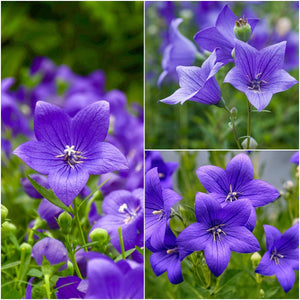
Balloon flower (Platycodon grandiflorus) is a clump-forming perennial in the bellflower family (Campanulaceae). It is grown for its fat buds, which swell like tiny hot air balloons before splitting open into starry blue-purple bells through summer. It is frost hardy and long-lived, and it suits a sunny border, a rockery or a pot. It is one of the last perennials to wake in spring, and the usual mistake is giving up on it, or digging straight through it.
Three mistakes that matter
- Covering the seed. Balloon flower seed needs light to germinate, so seed buried under mix often never comes up. Press it onto the surface of moist mix, leave it uncovered and keep it in bright light.
- Digging up the sleeping crown. Plants die back to nothing in winter and shoot late in spring, well after most perennials. A spade or a new planting in that bare patch slices the fleshy roots, so mark each clump before it dies down.
- Planting in wet, heavy soil. The thick roots rot in waterlogged ground, most often while the plant sits dormant through a wet winter. Choose free-draining soil, raise the bed on clay, and see waterlogged soil for the fixes.
When to plant
Seed germinates best at 18 to 21°C, so balloon flower is a spring sowing in most gardens. Start it under cover in early spring and plant out once frosts have passed. One sowing is enough, because plants live for many years and flower each summer. A spring sowing usually gives a few flowers at most in its first year and a full display from the second summer.
| Zone | Example cities | Sow | Flowering | Notes |
|---|---|---|---|---|
| Tropical | Darwin, Katherine NT; Cairns, Townsville QLD; Broome WA | Not recommended | Not recommended | A cool-climate perennial: year-round warmth gives no winter rest, and wet-season rain rots the fleshy roots. |
| Subtropical | Brisbane, Gold Coast, Sunshine Coast QLD; Coffs Harbour NSW | Mar-May and Aug-Sep | Nov-Feb | Often short-lived in humid summers. Give afternoon shade and sharp drainage, or grow it in a pot. |
| Arid and semi-arid | Broken Hill, Dubbo NSW; Mildura VIC; Kalgoorlie WA | Aug-Oct | Dec-Feb | Sow in spring. Afternoon shade, deep mulch and a deep weekly soak carry plants through summer. |
| Temperate | Sydney, Newcastle, Wollongong NSW; Melbourne, Geelong VIC | Sep-Nov | Dec-Mar | Start under cover in September; spring sowings flower most freely from the second summer. |
| Mediterranean | Perth, Bunbury WA; Adelaide and the SA coast | Sep-Oct | Dec-Feb | Sow early so seedlings settle before the dry heat, then mulch and water deeply through summer. |
| Cool and alpine | Hobart, Launceston TAS; Canberra ACT; Ballarat VIC; Orange NSW | Sep-Nov | Jan-Mar | Fully at home here. Raise seedlings under cover and plant out after the last frost. |
Late sowings that meet the first hot spell need bright shade until they have four true leaves. In cool gardens such as Canberra and the tablelands, keep seedlings under cover until the last frost, which Melbourne Cup weekend marks in many districts.
Site, soil and setup
Pick the spot as if it were permanent, because it is. Balloon flower grows a thick, fleshy taproot that resents being moved, and an established clump rarely needs dividing.
| Need | What to do |
|---|---|
| Sun | Full sun to part shade. In hot inland and northern gardens, afternoon shade helps plants through summer. Too little sun gives leggy stems that flop. |
| Soil | Moist but well-drained loam, rich in organic matter. |
| pH | Slightly acid soil suits it best. If a test reads above 7.5, dig in elemental sulphur at 25 to 50 g per square metre, 3 months or more before planting. |
| Drainage | Avoid heavy, waterlogged soil. On clay, add compost to the planting area and plant on a raised bed or low mound. |
| Bed preparation | Dig in a 5 to 10 cm layer of well-rotted cow or horse manure 4 to 6 weeks ahead, or a 5 cm layer of compost. Scatter pelletised chicken manure at 100 g per square metre at planting. |
| Rotation | None while the clump thrives. If a plant dies of root rot, put its replacement in fresh ground elsewhere. |
For more on reading your ground before you commit, see soil pH.
Container growing
Balloon flower grows well in a pot, and a pot gets around heavy garden soil altogether. Use one of at least 15 L, 30 cm across and 30 cm deep, so the taproot has room to run down. Fill it with a free-draining potting mix. 'Tall Blue' reaches about 50 cm, which suits a large patio pot. Dwarf selections such as 'Sentimental Blue', 'Fairy Snow' (white) and the Astra series stay about 15 to 30 cm tall.
- Watering: water when the top of the mix feels dry, more often in summer heat; see watering pots in summer.
- Feeding: fish and seaweed blend at 25 mL per 9 L every fortnight from spring shoots to the end of flowering.
- Top dressing: each spring, spread a thin layer of compost over the mix as shoots appear.
- Position: full sun to part shade, with afternoon shade in hot districts.
- Winter: keep the mix barely moist while the plant is dormant, and stand the pot on feet so it drains freely.
Sowing Seeds
Start balloon flower in cells or tubes under cover, or sow it straight into the bed once frosts have passed.
Starting under cover
- Fill cells or deep tubes with fresh seed raising mix and water it well before sowing.
- Scatter two or three seeds per cell on the surface, press them in gently and leave them uncovered, as in sowing tiny seeds.
- Keep the surface evenly moist with a fine mist, in strong light but out of hot direct sun.
- Hold the cells at the temperature under When to plant. Seedlings usually appear in 2 to 4 weeks, and some seed takes longer.
- Thin each cell to the strongest seedling by snipping the others at soil level.
Sowing direct
Rake the soil to a fine surface and press seed onto it in small groups 30 to 45 cm apart. Keep it moist with a fine spray until seedlings show. Mark each group, then thin to the strongest seedling.
Transplanting
Plant out when seedlings are 5 to 10 cm tall. Harden them off first (a week or so of gradually longer spells outdoors that toughens soft growth), as in hardening off seedlings. Tip each rootball out whole rather than pulling on the stem, and set the crown level with the soil surface, 30 to 45 cm apart. Water in with seaweed solution at 30 mL per 9 L and mulch around the plant, keeping mulch off the crown.
Care by growth stage
Steady moisture in the first summer and dry feet in winter decide how well a balloon flower settles in. Once the taproot is down, established plants cope with dry spells and need little extra water.
| Stage | Water | Feed | Watch for |
|---|---|---|---|
| Seedlings in cells, weeks 1 to 8 | Keep the mix evenly moist, never soggy | Nothing until the first true leaves, then seaweed solution at half strength, 15 mL per 9 L, every fortnight | Mix drying out; damping off; snails on trays set outside |
| Young plants after planting out, weeks 8 to 16 | Water deeply once or twice a week in dry weather, so the root zone stays evenly moist | Worm casting liquid, diluted to weak tea colour, every fortnight | Slugs and snails on soft leaves |
| First summer and autumn, weeks 16 to 30 | Water deeply in dry spells, at the base | Fish and seaweed blend at 25 mL per 9 L every fortnight until autumn | Wilting on hot afternoons; a few first flowers late in the season |
| Dormant, winter | None unless the soil dries right out | None | Waterlogging; spade damage to the hidden crown |
| Shoots emerging, spring, from the second year | Water only in long dry spells | Pelletised chicken manure at 100 g per square metre as shoots appear, watered in | Slugs and snails on new shoots; stems growing leggy |
| Budding and flowering, summer | Keep watering steady through flowering and picking | Sulphate of potash at 30 to 50 g per square metre once, as the first buds swell, watered in | Aphids and thrips on buds; stems flopping after rain |
Weeks count from sowing, and from the second year the clump follows the last three rows each season. Each spring, spread a 5 cm layer of compost around the clump as mulch, clear of the crown. If growth stalls in poor soil, a light dose of all-purpose controlled release granular (NPK around 14-5-10) scratched in as shoots appear can help.

Deadheading
Removing spent flowers keeps a clump flowering for longer and limits self-sown seedlings.
- Pinch or snip each faded flower just below it, leaving the buds beside it to open.
- Once a stem has finished flowering, cut it back to a leaf lower down.
- Deadheading can bring a smaller second flush of flowers in early autumn.
- Where stems flopped the year before, cut all stems back by half in late spring, around November in southern gardens.
- In autumn, let the foliage yellow and die back before cutting it to the ground. Or leave the stalks standing over winter to mark the spot.
- Leave a few late flowers to set seed only if you want self-sown seedlings.
Companion planting
Balloon flower belongs at the front or middle of a sunny border, in a rockery or along a path edge.
Grows well with
- Lavender, which wants the same sun and free drainage and little water once established.
- Delphinium, whose taller spires stand behind the clump in cool and temperate borders.
- Violas along the front edge, which flower in the cool months while the crown is still bare.

Keep apart
- Mint and other spreading runners, which crowd the crown and compete for water.
- Thirsty plants on daily watering, because the constant wet can rot the fleshy roots.
- Annual beds that are dug over every season, where the dormant crown is easy to spear.
Harvesting Blooms
Cut a stem for the vase when two or three of its flowers are open and the rest are fat balloon buds.
- Pick early in the morning, when stems are full of water.
- Carry a bucket of water and stand each stem in it straight after cutting.
- Seal each cut end over a candle flame for a few seconds, until the milky sap stops flowing.
- Stand the sealed stems in deep water for a few hours before arranging.

Sealed stems often last 7 to 10 days in a vase, while unsealed stems can collapse within a day or two. If they will not be displayed straight away, keep cut stems somewhere cool, between about 4 and 15°C.
Mix the unopened balloons with open bells in a jug, where the buds keep swelling and opening over several days.
Common problems
Seeds did not come up. Buried seed, dry mix or cold conditions are the usual causes; see Three mistakes that matter. Read more
Nothing came back in spring. Balloon flower is very slow to emerge, so wait until late spring before digging to check. If the ground stayed wet, look for soft, rotted roots.
No flowers in the first year. Young plants put their effort into the taproot first, and most give their full display from the second summer.
Tall, floppy stems. Too little sun or very rich soil stretches the stems; cut them back by half in late spring, as under Deadheading.
Plant sulked after moving. The fleshy roots are easily damaged, so moved or divided clumps often stall or die. Raise a fresh plant from seed instead.
Pests and diseases
Balloon flower has few serious troubles, and most of them start with wet soil or soft spring growth.
Slugs and snails (Gastropoda). They chew the soft shoots as they emerge in spring and can strip young seedlings. Check under leaves and around rocks where they shelter by day, and set shallow beer traps dug slightly into the soil. Read more
Aphids (Aphididae). These soft green, black or brown insects, about 2.5 mm long, cluster on new growth and buds and distort the leaves. Hose them off or prune the worst tips, and for repeat outbreaks spray soapy water or horticultural oil, never in hot weather. Read more
Thrips (Thysanoptera). These tiny insects, usually 1 to 2 mm long, leave silvery-brown speckling and streaks on leaves. Hang yellow sticky traps and spray insecticidal soap every week for four to six weeks, sparing ladybirds and lacewings. Read more
Root rot (soil-borne fungi and water moulds). It strikes in heavy soil that stays wet, and the clump wilts or fails to shoot. Lift and bin a dead plant with its roots, then fix drainage before replanting.
Prevention first
- Plant in free-draining soil and water at the base, not over the leaves.
- Check new shoots at dusk each spring for slugs and snails.
- Keep broad sprays off the bed so ladybirds, lacewings and hoverflies can keep aphids and thrips down.
- Clear spent stalks and fallen leaves around the clump in autumn, as in garden hygiene.
Tips
- Children love the buds: a fully swollen balloon squeezed gently between two fingers pops open.
- Plant in groups of three or more, where the stems lean on each other and the display reads from across the garden.
- Self-sown seedlings can appear around an established clump; lift any you want elsewhere while they are small, before the taproot runs deep.
Questions
How long do balloon flower seeds take to germinate?
Usually 2 to 4 weeks at 18 to 21°C, and some seed takes longer. Sow on the surface and leave it uncovered, because the seed needs light to germinate. Keep the mix evenly moist in bright light, out of hot direct sun.
Do balloon flowers come back every year?
Yes. Balloon flower is a long-lived, frost hardy perennial. It dies back to the ground in winter and shoots again late in spring, often weeks after other perennials. Mark the clump so nobody digs it up while it rests.
Will balloon flower bloom the first year from seed?
Usually only lightly, if at all. A spring sowing spends its first season building a taproot, and the full display comes from the second summer. Seedlings started early under cover have the best chance of a few flowers late in the first summer.
Can you grow balloon flowers in pots?
Yes. Use a pot of at least 15 L, 30 cm across and 30 cm deep, filled with free-draining potting mix. Water when the top of the mix dries, feed fortnightly from spring to the end of flowering, and keep the mix barely moist in winter.
Why has my balloon flower not come up this spring?
It is probably still asleep. Balloon flower is one of the last perennials to shoot, often not until late spring. Wait before digging to check. If the ground stayed wet all winter, the fleshy roots may have rotted.
Can I divide or move a balloon flower?
It is best left alone. The thick, fleshy taproot is easily damaged, so moved or divided clumps often stall or die. Raise extra plants from seed, or lift self-sown seedlings while they are small.
Grow it
More flower guides
All flowers
Ageratum
Grow ageratum from seed in Australia: surface sowing, months for six climate zones, spacing, pots, deadheading, weed and livestock cautions and pests to watch.
| Position | Full sun, 6 hours or more |
|---|---|
| Depth | Surface, 1 mm at most |
| Spacing | 30 cm; Red Flint 40 cm |
| First pick | 12 to 14 weeks from sowing |

Alyssum
Grow alyssum from seed in Australia: sowing months for six climate zones, surface sowing, spacing, pots, shearing for more flowers, and the pests to watch.
| Position | Full sun or part shade |
|---|---|
| Depth | Surface sow, press in |
| Spacing | 15 to 20 cm |
| First pick | 8 to 9 weeks from sowing |

Aquilegia
Grow aquilegia from seed in Australia: chilling the seed, when to sow in six climate zones, part shade, pots, deadheading, cut flowers and common pests.
| Position | Part shade or morning sun |
|---|---|
| Depth | Surface, 3 mm cover at most |
| Spacing | 30 to 50 cm |
| First pick | From about 28 weeks |

Aster
Grow China asters in Australia: sowing months for six climate zones, spacing, pots, watering, Fusarium wilt and thrips, and cutting blooms for the vase.
| Position | Full sun, 6 hours minimum |
|---|---|
| Depth | 6 mm |
| Spacing | 30 to 40 cm |
| First pick | 13 to 16 weeks |