
How to Grow Vinca in Australia
Sow vinca from spring into early summer, once the soil is warm and frosts are over; the tropics sow Mar to Sep. Cover the seed 2 to 5 mm deep, as it germinates in darkness. Plant 20 to 30 cm apart in full sun and free-draining soil, and water only once the soil dries. Flowers start 12 to 16 weeks from sowing. Every part is poisonous if eaten.

| Sun | Full sun |
|---|---|
| Water | Deep but occasional; let soil dry between |
| Soil | Free-draining, slightly acidic to neutral |
| Feed | Light; compost at planting, little after |
| Spacing | 20 to 30 cm |
| Depth | 2 to 5 mm, covered |
| Germination | 4 to 15 days in warm soil |
| Harvest | Flowers 12 to 16 weeks |
| Container | Pots of 10 L or more |
| Frost | Frost tender; plant out after last frost |
| Use | Summer beds, borders, pots; poisonous if eaten |
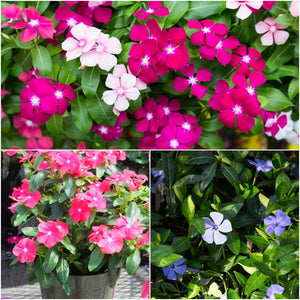
Vinca, or Madagascar periwinkle (Catharanthus roseus), is a member of the dogbane family, Apocynaceae, grown for flat pink, rose and white flowers above glossy leaves. It copes with heat and dry spells better than most summer annuals, but every part of it is poisonous if eaten. Most failures come from cold soil and too much water, not from drought.
Three mistakes that matter
- Sowing into cold soil. Seed sits and rots in cool, damp soil, and young plants set out into it stall. Wait until the soil is properly warm, following the cue under When to plant.
- Watering like a thirsty annual. Soil that never dries out invites root and stem rot, which can kill a bed of vinca in a short time. Let the soil dry well between waterings, as set out in Care by growth stage.
- Leaving the seed in the light. Vinca seed germinates in darkness, so seed pressed onto the surface often fails to come up. Cover it with 2 to 5 mm of mix or soil, as Sowing Seeds describes.
When to plant
Seed comes up in 4 to 15 days in soil of about 21 to 28°C, and young plants stall in cooler soil. Sow from spring into early summer once frosts are over. In the cool and southern temperate zones, Melbourne Cup weekend is the traditional marker for planting out frost-tender flowers.
| Zone | Example cities | Sow | Flowering | Notes |
|---|---|---|---|---|
| Tropical | Darwin NT; Cairns, Townsville QLD; Broome WA | Mar-Sep | Jun-Jan | Sow through the dry season so plants settle before the wet; raised beds help them survive heavy rain. |
| Subtropical | Brisbane, Gold Coast, Bundaberg QLD; Coffs Harbour NSW | Sep-Dec | Dec-May | Sow once the soil warms in spring; plant into raised or mounded beds before the summer storms. |
| Arid and semi-arid | Alice Springs NT; Dubbo NSW; Mildura VIC; Kalgoorlie WA | Sep-Nov | Dec-Apr | Sow after the last inland frost; mulch well, as plants handle dry heat but not cold nights. |
| Temperate | Sydney, Newcastle, Wollongong NSW; Melbourne VIC | Sep-Dec | Dec-May | Sydney can start in September; Melbourne, the cold end, waits for October trays and Melbourne Cup planting. |
| Mediterranean | Perth, Bunbury WA; Adelaide SA | Sep-Dec | Dec-May | Suits the long dry summer; correct alkaline or water-repellent sand before planting. |
| Cool and alpine | Hobart TAS; Canberra ACT; Ballarat VIC; Armidale NSW | Sep-Dec | Jan-Apr | Start seed indoors in September and October; plant out only after the last frost, usually November. |
At the cool edge of a window, start seed in trays indoors and plant out once nights stay above about 13°C. Late sowings still flower, but plants slow down once autumn nights fall below about 16°C.
Site, soil and setup
Choose the hottest, sunniest spot you have: vinca grows in part shade but flowers far more freely in full sun. Free-draining soil matters more than rich soil, and sand, loam or well-drained clay all suit it. It prefers slightly acidic soil and tolerates slightly alkaline ground where drainage is good.
| Where | What to do |
|---|---|
| All beds | Clear weeds, loosen the soil with a fork and work in a 5 cm layer of compost. |
| Alkaline soil, above about pH 7.5 | Dig in elemental sulphur at 25 to 50 g per square metre, 3 months or more before planting. |
| Clay or low spots where water lies | Build a raised bed or plant on mounds. If a dry crumb of the clay clouds a jar of rainwater within 20 hours, gypsum at 500 g to 1 kg per square metre will help. |
| Sandy soil that sheds water | Apply a wetting agent at the label rate, then mulch after planting. |
Root rot organisms live on in soil from one season to the next. Never replant vinca where earlier vinca or petunias collapsed and rotted; see waterlogged soil for fixing a wet bed.
Container growing
Vinca suits pots, window boxes and hanging baskets, and 'Little Mixed', at about 25 cm tall, stays compact enough for small spaces. Allow at least 10 L of potting mix per plant: a 30 cm pot holds about 13.5 L, and it needs drainage holes. Bagged mix can carry Legionella bacteria, so dampen it before opening, wear a mask and gloves, and wash your hands afterwards.
- Watering: wait until the mix is dry a few centimetres down, then soak it until water runs from the base. See watering pots in summer.
- Feeding: potted plants run out of food sooner than beds. From the first flowers, water on fish and seaweed blend at 25 mL per 9 L every fortnight.
- Position: full sun, off saucers, so no water sits around the roots after rain.
Sowing Seeds
Start vinca in trays for the earliest flowers and the most even plants, or sow it straight into warm garden soil.
Starting in trays
- Sow into fresh seed raising mix and cover the seed with 2 to 5 mm of mix.
- Cover the tray with a board or newspaper to keep it dark, and keep it warm; a seedling heat mat helps.
- Keep the mix moist but never wet, and lift the cover daily.
- Take the cover off as soon as shoots show and move the tray into bright light.
- Pot seedlings on or plant them out at 5 to 10 cm tall, once they have true leaves.

Sowing direct
- Wait for warm soil and settled weather, then rake a fine seedbed.
- Sow in small groups at the spacing in the table below, covered as for trays.
- Thin each group to the strongest seedling once true leaves open.
Transplanting
Harden off tray-raised seedlings first (give them a little more time outdoors each day for about a week). Plant them out after the last frost at the depth they grew. Settle each one in with half-strength seaweed solution, 15 mL per 9 L.
| Variety | Colours | Height | Depth and spacing | Flowers from sowing |
|---|---|---|---|---|
| 'Little Mixed' | Rose, white, soft pink, and deep rose with a carmine eye | About 25 cm | 2 mm deep, 30 cm apart | About 85 days |
| 'Tall Rosea Mixed' | White, pink, carmine and rose, with white or pink centres | Taller, often about 40 cm | 5 mm deep, 20 cm apart | About 110 days |
Care by growth stage
Vinca lives on warmth and lean, well-drained soil. Far more plants die from too much water than too little, so let the soil tell you when to water.
| Stage | Water | Feed | Watch for |
|---|---|---|---|
| Seedlings (weeks 1 to 6) | Mist or water from below; moist, never soggy | None until true leaves open, then half-strength seaweed solution (15 mL per 9 L) every fortnight | Seedlings collapsing at the base; stretching in poor light |
| Establishing (first 4 weeks after planting out) | A deep soak at the base in the morning whenever the top few centimetres are dry | Only if leaves look pale: worm casting liquid, weak tea colour, every fortnight | Yellowing and dropped leaves after cold nights; aphids on new shoots |
| Flowering (from about week 12) | Only when the soil is dry about 10 cm down, even in summer | Beds need little; in poor soil, fish and seaweed blend (25 mL per 9 L) every fortnight | Whitefly under leaves; stems blackening at the base after heavy rain |
| Late season | Keep the same deep, occasional watering while plants are in flower | Full-strength seaweed solution (30 mL per 9 L) once after a heatwave | Fewer flowers as nights cool; paired seed pods forming |
If growth stalls in poor, sandy soil, a light dose of all-purpose controlled release granular (NPK around 14-5-10) scratched into the soil can help.

Deadheading
Spent vinca flowers drop cleanly on their own, so the job is shaping the plant and stopping seed rather than snipping every bloom.
- At planting out: pinch off the top pair of leaves for bushier plants with more flowers.
- Leggy plants: after a flush of flowers, cut stems back to just above a lower pair of leaves.
- Seed pods: pick off the slender pods, which form in pairs, while they are still green.
- Diseased stems: cut out blackened stems and put them in the bin, not the compost.
- Handling: wear gloves, because the stems bleed a milky sap and every part is poisonous, then wash your hands.
- Frosty zones: pull plants out once cold nights stop flowering.
Companion planting
Vinca pairs best with flowers that share its heat, full sun and dry feet.
Grows well with
- Zinnias: another heat lover sown in the same warm months, with taller flowers to stand behind vinca.
- Celosia: wants the same sun and summer warmth, and adds plumes and crests beside vinca's flat flowers.
- Marigolds: sown at the same time, they fill a hot bed edge with the same low, mounded habit.
Keep apart
- Petunias: both are prone to Phytophthora rot, so neither should follow the other in a bed where plants rotted.
- Lettuce and other crops watered daily: the steady moisture they need keeps vinca roots too wet.
Harvesting Blooms
Cut sprigs once most flowers on a stem are open, which usually begins about 12 to 16 weeks from sowing.
- Cut in the cool of the morning with clean snips, just above a pair of leaves.
- Take short sprigs, which suit posies and small jars better than tall vases.
- Strip any leaves that would sit under water and stand stems in water straight away.
- Float single flowers in a shallow bowl for a table.
Keep cut sprigs in a cool room out of direct sun and top up the water daily. Enjoy vinca in jars and posies only: the flowers are not edible and must never be used to garnish food.
Common problems
Bare trays or rows. Cold soil or seed left uncovered in the light explains most failures; see Three mistakes that matter. Read more
Seedlings topple overnight. Damping off (a stem rot of young seedlings, from Pythium, Phytophthora and Rhizoctonia species) strikes where mix stays wet. Read more
Yellow, dropping leaves in spring or autumn. Nights below about 13°C make leaves roll, yellow and fall, so plant later next time and let autumn plants go.
Pale new leaves in summer. Vinca struggles to take up iron in alkaline soil or mix, so check the pH as Site, soil and setup describes. Read more
Few flowers on long stems. Too much shade is the usual cause, because full sun brings the heaviest flowering.
Pests and diseases
Rot in wet soil kills far more vinca than insects do.
Phytophthora stem and root rot (Phytophthora species). Stems blacken near the soil, and plants wilt and collapse, often soon after heavy rain or overwatering. Pull out affected plants with the soil around their roots, bin them and replant elsewhere.
Aphids (family Aphididae). These soft sap-suckers, 2 to 3 mm long, crowd new shoots and leave sticky honeydew. Hose them off, or spray insecticidal soap onto the shoots and leaf undersides. Read more
Whitefly (family Aleyrodidae). Tiny white insects rise in a cloud when the plant is brushed, and leaves yellow. Hang yellow sticky traps nearby, and direct a soap spray at the leaf undersides. Read more
Prevention first
- Water at the base early in the day, so the leaves dry before night.
- Keep to the spacing in Sowing Seeds, so air moves between plants.
- Start every tray sowing in fresh mix and a scrubbed tray.
- Check new shoots and leaf undersides weekly in hot weather.
Tips
- Vinca has naturalised in eastern Queensland, the NSW north coast, northern and western WA and the Top End, where it is an environmental weed. Pull self-sown seedlings and keep plantings away from bushland and dunes.
- Plant out in mild weather or late in the day, because young plants establish poorly in extreme heat.
- Grow vinca where small children and pets will not chew it, and never use it as a home remedy. If anyone eats part of a plant, call the Poisons Information Centre on 13 11 26.
- In frost-free gardens vinca is a short-lived perennial, so a healthy plant can flower on into a second year.
Questions
When should I plant vinca seeds in Australia?
Sow once the soil is warm and frosts are over. Brisbane, Sydney, Perth and Adelaide sow Sep to Dec, and inland gardens such as Alice Springs and Mildura Sep to Nov. Hobart and Canberra start seed indoors in Sep and Oct and plant out after the last frost. The tropics sow Mar to Sep.
Is vinca poisonous to children and pets?
Yes. Every part of Madagascar periwinkle is poisonous if eaten, and the plant is a known problem for dogs and cats. Grow it where small children and pets will not chew it, wear gloves when pruning, and never use it as a remedy. If anyone swallows part of a plant, call the Poisons Information Centre on 13 11 26.
Is vinca the same as the periwinkle groundcover?
No. Bedding vinca is Madagascar periwinkle, Catharanthus roseus, a bushy summer flower grown from seed. Blue periwinkle (Vinca major) and lesser periwinkle (Vinca minor) are creeping groundcovers from Europe. Blue periwinkle is a significant environmental weed across southern Australia and is declared in the ACT and Western Australia.
Is vinca a weed in Australia?
In the north it can be. Madagascar periwinkle has naturalised in eastern Queensland, the NSW north coast, northern and western Western Australia and the Top End. It is treated as an environmental weed in Queensland, New South Wales and Western Australia. Pick off seed pods and pull self-sown seedlings, especially near bushland or dunes.
Why are my vinca plants dying?
Wet soil is the usual cause. Phytophthora rot blackens stems at the base and collapses plants, often soon after heavy rain or overwatering. Water only when the soil is dry about 10 cm down, and grow it in free-draining soil or raised beds. Bin collapsed plants with the soil around their roots.
Is vinca an annual or a perennial?
It is a frost-tender perennial that most gardeners grow as a summer annual. In frost-free tropical and subtropical gardens a plant can flower on into a second year. Where frost falls, plants die in winter, so sow fresh seed each spring.
Grow it

More flower guides
All flowers
Ageratum
Grow ageratum from seed in Australia: surface sowing, months for six climate zones, spacing, pots, deadheading, weed and livestock cautions and pests to watch.
| Position | Full sun, 6 hours or more |
|---|---|
| Depth | Surface, 1 mm at most |
| Spacing | 30 cm; Red Flint 40 cm |
| First pick | 12 to 14 weeks from sowing |

Alyssum
Grow alyssum from seed in Australia: sowing months for six climate zones, surface sowing, spacing, pots, shearing for more flowers, and the pests to watch.
| Position | Full sun or part shade |
|---|---|
| Depth | Surface sow, press in |
| Spacing | 15 to 20 cm |
| First pick | 8 to 9 weeks from sowing |

Aquilegia
Grow aquilegia from seed in Australia: chilling the seed, when to sow in six climate zones, part shade, pots, deadheading, cut flowers and common pests.
| Position | Part shade or morning sun |
|---|---|
| Depth | Surface, 3 mm cover at most |
| Spacing | 30 to 50 cm |
| First pick | From about 28 weeks |

Aster
Grow China asters in Australia: sowing months for six climate zones, spacing, pots, watering, Fusarium wilt and thrips, and cutting blooms for the vase.
| Position | Full sun, 6 hours minimum |
|---|---|
| Depth | 6 mm |
| Spacing | 30 to 40 cm |
| First pick | 13 to 16 weeks |