
How to Grow Gypsophila in Australia
Sow baby's breath seed in autumn in warm and inland zones, and in autumn and spring in southern gardens. Barely cover it, no deeper than 5 mm; seedlings appear in 1 to 3 weeks at 18 to 24°C. Grow in full sun and lean, free-draining soil, 20 to 30 cm apart, with little feed. Flowers are ready 7 to 13 weeks from sowing; sow every 3 to 4 weeks.
| Sun | Full sun, 6 hours plus |
|---|---|
| Water | Deep, infrequent; drought tolerant once established |
| Soil | Lean, free-draining, pH 6.5 to 8.0 |
| Feed | Light; compost at sowing, little else |
| Spacing | 20 to 30 cm |
| Depth | Barely covered, 5 mm maximum |
| Germination | 1 to 3 weeks at 18 to 24°C |
| Harvest | 7 to 13 weeks |
| Container | Pots of 10 L or more |
| Frost | Frost hardy |
| Use | Cut and dried filler flowers, edging, rockeries |
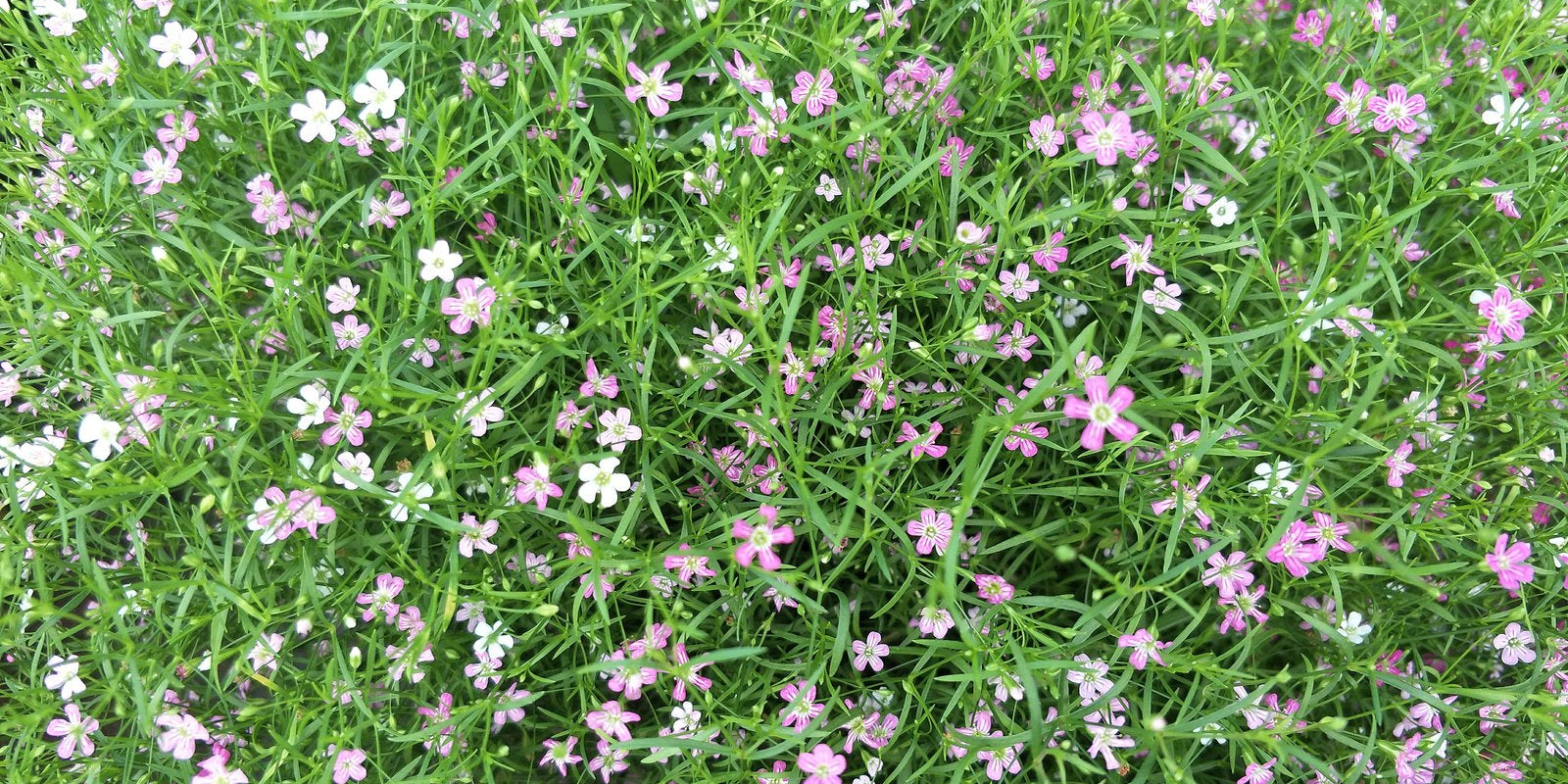
Gypsophila, or baby's breath, belongs to the pink or carnation family, Caryophyllaceae, and is grown for clouds of tiny flowers that lighten a bouquet. Annual baby's breath (Gypsophila elegans) gives sprays for cutting within a few months of sowing. Creeping baby's breath (Gypsophila repens) is a low alpine perennial from central and southern Europe, used on edges, walls and rockeries. Both suit the mild months of Australian gardens, and the usual mistake is feeding them like vegetables.
Three mistakes that matter
- Rich, well-fed soil. Manure and regular feeding push soft, lush growth, and the thin stems flop in rain and flower late. Grow in lean ground with compost only, as set out in Site, soil and setup.
- Wet or sour soil. Roots rot and plants collapse at the base in heavy, soggy ground, and creeping baby's breath dislikes winter wet. Give both a free-draining bed and lime any acid soil.
- Sowing only once. Each sowing of the annual flowers for a limited spell, then the plants are spent. Sow a fresh batch every 3 to 4 weeks through your zone's window for flowers over many months.
When to plant
Seed comes up in 1 to 3 weeks in soil of 18 to 24°C. Plants flower best in mild weather. Heat like a Central Australian summer makes them bloom fast on short stems that dry out. In southern gardens, Anzac Day falls inside the autumn window.
| Zone | Example cities | Sow | Flowering | Notes |
|---|---|---|---|---|
| Tropical | Darwin NT; Cairns, Townsville QLD; Broome WA | Mar-Jun | May-Sep | Sow in the dry season; heat in the build-up makes stems short and flowers dry out. |
| Subtropical | Brisbane, Sunshine Coast, Bundaberg QLD; Coffs Harbour NSW | Mar-Jun | May-Oct | Autumn and early winter sowings flower through the mild, dry months before summer humidity. |
| Arid and semi-arid | Alice Springs NT; Broken Hill, Dubbo NSW; Mildura VIC; Kalgoorlie WA | Mar-May | Jun-Oct | Sow as the heat breaks; plants take inland frost and flower before summer heat. |
| Temperate | Sydney, Newcastle, Wollongong NSW; Melbourne VIC | Feb-May and Aug-Nov | Apr-Feb | Autumn sowings flower into winter and spring; Melbourne, the cold end, may start spring sowings later. |
| Mediterranean | Perth, Bunbury WA; Adelaide SA | Mar-May and Aug-Oct | May-Dec | Autumn sowings grow on winter rain; spring sowings need mulch and steady water before dry heat. |
| Cool and alpine | Hobart TAS; Canberra ACT; Ballarat VIC; Armidale NSW | Feb-Apr and Sep-Dec | Apr-May and Oct-Mar | Autumn seedlings are frost hardy and overwinter; start spring batches once hard frosts ease. |
At the hot end of a window, sow in trays in light shade and plant out as the weather cools. Creeping baby's breath follows the same windows but starts best in trays, since it stays in one spot for years.
Site, soil and setup
Give gypsophila full sun, at least 6 hours a day, and light, free-draining soil that is not too rich. It prefers neutral to alkaline ground, about pH 6.5 to 8.0, and sandy or gravelly beds suit it well.
| Where | What to do |
|---|---|
| Every bed | Weed thoroughly, loosen the soil with a fork and work in a 5 cm layer of compost. Leave out manure. |
| Acid soil, below pH 6.5 | Dig in garden lime or dolomite lime at 100 to 200 g per square metre, 4 weeks before sowing. |
| Clay that stays wet | Build a raised bed or mound the rows. Test a dry clod in rainwater first: if it clouds within 20 hours the clay is dispersive, and gypsum at 500 g to 1 kg per square metre helps. |
| Creeping baby's breath | Plant at the top of a wall, in a rockery or in a gravel bed, where water drains away fast in winter. |
The fungus behind collar rot and damping off survives on old plant material. Choose a fresh spot if plants collapsed there the year before.
Container growing
Both kinds grow in pots, and creeping baby's breath spills over the rim of a wide bowl or mixed planter. Allow at least 10 L of potting mix in a pot with drainage holes; a 30 cm pot holds about 13.5 L. Legionella bacteria can live in bagged mix, so wet it before opening, wear a mask and gloves, and wash your hands afterwards.
- Watering: once the mix is dry a few centimetres down, soak it until water runs from the base.
- Feeding: pots run short of food sooner than beds. From the first buds, water on fish and seaweed blend at 25 mL per 9 L every two weeks.
- Position: full sun, out of strong wind.
Sowing Seeds
The annuals do best sown straight into the bed, and creeping baby's breath is easiest raised in a tray and planted out.
Sowing direct
- Rake a fine, level seedbed and scatter the seed thinly in rows or small patches.
- Barely cover it, no deeper than 5 mm, and firm the surface with the back of the rake.
- Water with a fine rose and keep the surface damp, never soggy, until shoots appear.
- Thin to 20 to 30 cm apart once the first true leaves open.
Starting in trays
- Fill a tray with fresh seed raising mix and press the seed onto the surface, or just cover it.
- Cover with plastic film pierced with a few holes, and keep the tray in bright, indirect light.
- Mist with a spray bottle so the seed is not washed about.
- Move seedlings into their own cells as soon as the first true leaves open.
- Harden off the seedlings (give them a little more time outdoors each day over about a week) and plant out 30 cm apart.
The two annuals share one method from sowing to picking; creeping baby's breath lives for years and hugs the ground.
| Variety | Kind | Size and habit | Grown for |
|---|---|---|---|
| 'Covent Garden' | Annual | 45 to 60 cm, many stems | White flowers 1.5 to 2 cm across, the classic filler for bouquets |
| Baby's Breath Mix | Annual | About 50 cm | Larger, wide-open flowers early in the season, for bunches or a vase of its own |
| Creeping baby's breath | Perennial | About 15 cm, a low mat of grey-green leaves | Soft-white starry flowers from early summer on edges, walls, rockeries and pots |
Care by growth stage
Restraint decides gypsophila, so the fertiliser bag can stay in the shed. Once established it tolerates dry spells, and too much water or fertiliser gives thin, weak stems and later flowers.
| Stage | Water | Feed | Watch for |
|---|---|---|---|
| Seedlings (weeks 1 to 4) | Light and often; damp, never soggy | None before true leaves; then half-strength seaweed solution, 15 mL per 9 L, every two weeks | Stems pinching and toppling at soil level; snails overnight |
| Young plants (weeks 4 to 7) | Deep soak at the roots once soil is dry about 10 cm down, early morning or late afternoon | None in a prepared bed; pale plants in poor sand get worm casting liquid, weak tea colour, every two weeks | Aphids on soft tips |
| Flowering (from about week 7) | Same deep, infrequent soaks; keep the foliage dry | In poor soil only, sulphate of potash at 30 g per square metre, once, as buds form | Caterpillars in buds; silvery, scarred flowers; grey fuzz on sprays in damp weather |
| Picking and end of flush | No let-up: water as before right through picking | None | Pale, stippled leaves in hot, dry spells; plants yellowing as the flush ends |
| Creeping baby's breath, established | Only in long dry spells; none in a wet winter | Seaweed solution, 30 mL per 9 L, once each spring | Rot at the crown after a wet winter |
If growth stalls in very poor sand, scratch in a light dose of all-purpose controlled release granules (NPK around 14-5-10) at the label rate.

Deadheading
Spent sprays set seed and slow the plant down, so cutting them off, or picking often, keeps new flowers coming.
- Annuals: cut faded sprays back to a side shoot or a pair of leaves, which can bring a second, smaller flush.
- Creeping baby's breath: clip the mat over lightly straight after the main flowering.
- Near bushland: remove faded heads before seed drops, as the tips below explain.
- End of the flush: pull out spent annuals, compost them and sow the next batch.
Companion planting
Gypsophila mixes well with other sun lovers that want lean, free-draining soil and little feed.
Grows well with
- Cornflowers: blue flowers rise through a white cloud of baby's breath, and both want full sun and light soil.
- Everlasting daisies: a second flower for drying, happy in the same lean bed.
- Lavender: shares the free-draining, alkaline-tolerant ground creeping baby's breath needs along a path or wall.
- Vegetable beds: the flowers draw bees and butterflies, part of a pollinator-friendly garden.

Keep apart
- Mint beside creeping baby's breath: its runners cross the bed and smother a low mat.
- Zucchini and other heavily fed, thirsty crops: the rich soil and water they need make gypsophila soft and floppy.
Harvesting Blooms
Cut the annuals when most flowers on a spray are open and a few buds are still closed, usually 7 to 13 weeks from sowing.
- Pick in the cool of the morning, before the sprays warm up.
- Take the longest stem you can, cutting just above a side shoot or leaf pair.
- Strip leaves that would sit under water, and stand stems straight into a scrubbed bucket of water.
- Snip short sprays of creeping baby's breath for small posies.
In the vase, replace the water every 3 days, or sooner if it turns cloudy. To dry, stand stems in a little water in a cool, airy room out of the sun, and let it run out. Use fresh sprays around roses and larger blooms, or as a bunch of their own.
Common problems
Bare rows after sowing. Seed covered deeper than 5 mm, a surface left to dry, or soil colder than When to plant gives usually explains it. Read more
Seedlings topple overnight. Damping off (a rot of seedling stems, mostly from Pythium species and Rhizoctonia solani) strikes where mix or soil stays wet. Read more
Plants collapse at the base. Collar rot (Rhizoctonia solani) follows overwatering; the second of the Three mistakes that matter covers the fix.
Stems sprawl and flop. Rich soil or strong wind is the usual cause; see the first of the Three mistakes that matter.
Short stems and papery, dried flowers. Hot weather makes plants bloom fast on short stems, so keep to the months in When to plant.
Pests and diseases
Sap-suckers peak in dry weather, caterpillars in the buds and mould in damp spells.
Garden snail (Cornu aspersum) and grey field slug (Deroceras reticulatum). They chew seedlings to the ground overnight and leave silvery trails. Go out with a torch about two hours after sunset, especially after rain, and collect them. Read more
Aphids (family Aphididae). These small sap-suckers crowd soft shoots and leave sticky honeydew. Knock them off with a strong jet of water, or spray insecticidal soap onto the leaf undersides. Read more
Two-spotted mite (Tetranychus urticae). Leaves turn pale and finely stippled as numbers climb in hot, dry weather. Hose the leaf undersides on a few mornings running and keep plants from drying out. Read more
Thrips (order Thysanoptera). These tiny insects rasp flowers and leaves, leaving silvery streaks and black specks. Hang blue sticky traps nearby and remove damaged flowers. Read more
Native budworm (Helicoverpa punctigera). Green caterpillars up to 40 mm long feed in buds and flowers; its look-alike, cotton bollworm (Helicoverpa armigera), is managed the same way. Shake stems over a white sheet twice a week while flowering and remove the caterpillars.
Grey mould (Botrytis cinerea). Flowers brown and grow grey fuzz in cool, damp weather with heavy dew. Cut off affected sprays, bin them, and water at soil level.
Prevention first
- Keep to the spacing in Sowing Seeds, so air moves through the plants.
- Water at the roots in the morning, leaving the foliage dry.
- Start tray sowings in new mix and a scrubbed tray.
- Check buds and leaf undersides twice a week from the first flowers.
Tips
- Wrap bunches you give away in tissue paper rather than a plastic sleeve, which traps heat and can brown the flowers.
- Lift and divide a crowded clump of creeping baby's breath in spring or early autumn to make new plants.
- Gypsophila can self-sow, and the annual can escape gardens. Near bushland, deadhead before seed drops and pull unwanted seedlings while small.
Questions
When should I plant baby's breath seeds in Australia?
Sow in autumn in the tropics, subtropics and inland, from March, and in both autumn and spring in the south. Sydney and Melbourne sow Feb to May and Aug to Nov. Perth and Adelaide sow Mar to May and Aug to Oct, and Canberra and Hobart Feb to Apr and Sep to Dec.
Is baby's breath an annual or a perennial?
Both kinds are sold. Annual baby's breath (Gypsophila elegans), which includes 'Covent Garden' and the mix, flowers within a few months and then dies. Sow it every 3 to 4 weeks. Creeping baby's breath (Gypsophila repens) is a perennial that forms a low mat and flowers again each year.
How do you dry baby's breath flowers?
Strip the leaves and stand the stems in a vase with a little water, in a cool, airy room out of the sun. Let the water run out and the sprays dry upright. Small bunches can also hang upside down in a dry, dark, well-ventilated spot for a couple of weeks.
Why is my baby's breath floppy?
Rich soil, manure or regular feeding pushes soft growth that rain and wind flatten. Grow it in lean, free-draining soil with compost only, choose a sheltered spot, and skip feeding unless the soil is very poor.
Is baby's breath toxic to cats and dogs?
The ASPCA lists annual baby's breath as non-toxic to dogs, cats and horses. Eating it may still cause mild stomach upset, such as vomiting or diarrhoea, so keep bouquets out of reach of pets that chew plants.
Can baby's breath be grown in pots?
Yes. Use a pot holding at least 10 L, such as one 30 cm across, with drainage holes and free-draining potting mix. Creeping baby's breath suits a wide bowl, where it spills over the rim. From the first buds, give fish and seaweed blend at 25 mL per 9 L every two weeks.
Grow it

More flowers to sow in September
All flowers
Ageratum
Grow ageratum from seed in Australia: surface sowing, months for six climate zones, spacing, pots, deadheading, weed and livestock cautions and pests to watch.
| Position | Full sun, 6 hours or more |
|---|---|
| Depth | Surface, 1 mm at most |
| Spacing | 30 cm; Red Flint 40 cm |
| First pick | 12 to 14 weeks from sowing |

Alyssum
Grow alyssum from seed in Australia: sowing months for six climate zones, surface sowing, spacing, pots, shearing for more flowers, and the pests to watch.
| Position | Full sun or part shade |
|---|---|
| Depth | Surface sow, press in |
| Spacing | 15 to 20 cm |
| First pick | 8 to 9 weeks from sowing |

Aster
Grow China asters in Australia: sowing months for six climate zones, spacing, pots, watering, Fusarium wilt and thrips, and cutting blooms for the vase.
| Position | Full sun, 6 hours minimum |
|---|---|
| Depth | 6 mm |
| Spacing | 30 to 40 cm |
| First pick | 13 to 16 weeks |

Aubretia
Growing aubretia as a hardy groundcover in Australian gardens: sowing, position, trimming after flowering, companion plants and common pests.
| Position | Full sun, 6 hours or more |
|---|---|
| Depth | On the surface, barely covered |
| Spacing | 25 to 30 cm |
| First pick | Spring, after a winter chill |