
How to Grow Canterbury Bells in Australia
Sow Canterbury bell seed on the surface of damp seed raising mix and leave it uncovered, because it needs light to germinate. At 18 to 20°C it usually comes up in under two weeks. Plant out 30 cm apart in fertile, free-draining soil in sun or part shade. Most sowings grow a leafy rosette first and flower 7 to 15 months after sowing.
| Sun | Full sun to part shade |
|---|---|
| Water | Keep moist, never waterlogged |
| Soil | Fertile, moist and free-draining; acid to alkaline |
| Feed | Compost at planting; light liquid feeds only |
| Spacing | 30 cm |
| Depth | Surface sow; needs light |
| Germination | Under two weeks at 18 to 20°C |
| Harvest | 7 to 15 months from sowing |
| Container | One plant per 25 cm, 8 L pot |
| Frost | Hardy; the rosette overwinters outdoors |
| Support | Stake tall spikes in windy spots |
| Use | Cottage borders, cut flowers, bees and butterflies |
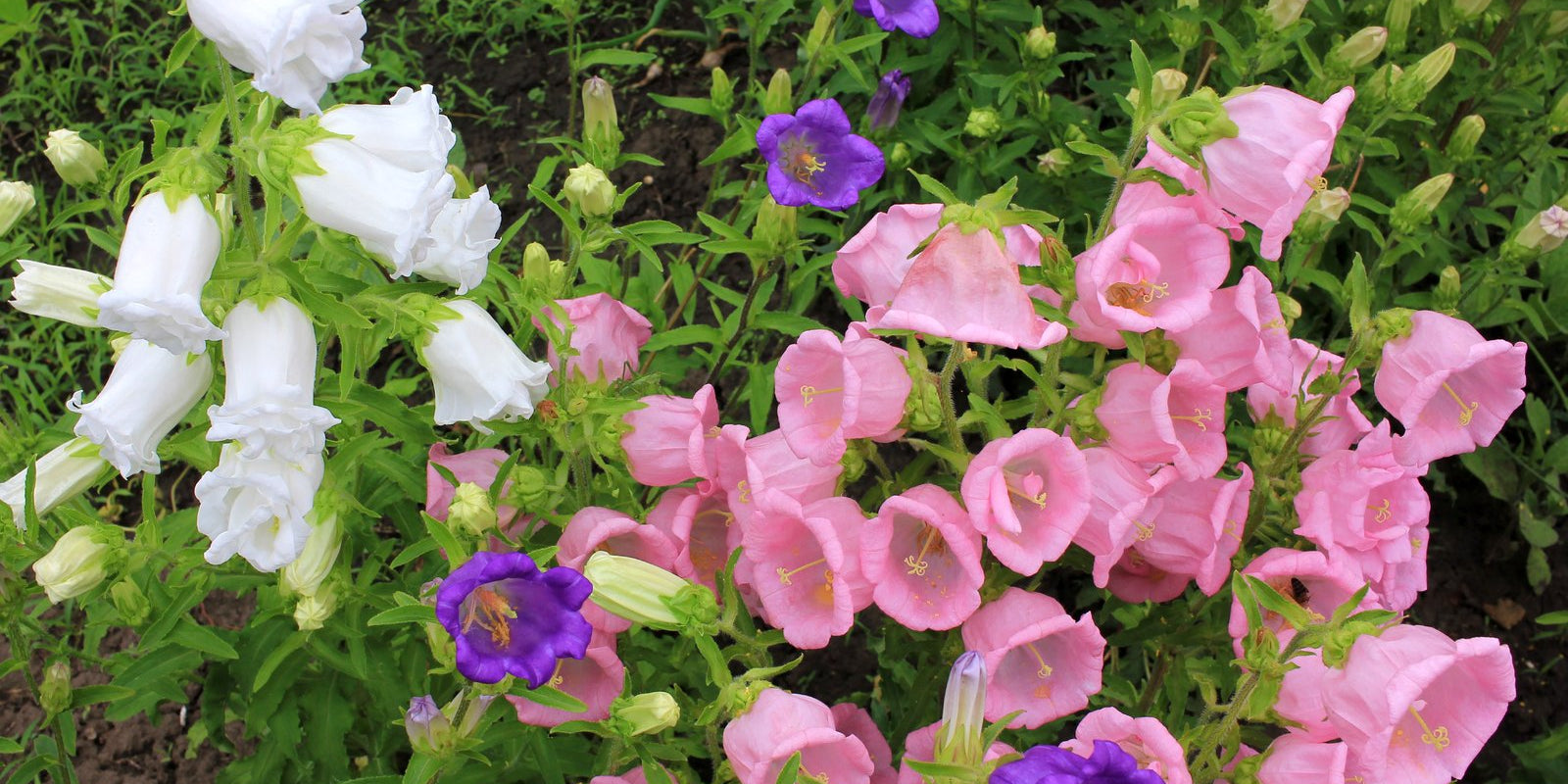
Canterbury bells (Campanula medium) belong to the bellflower family, Campanulaceae, and are grown for tall spikes of bells in purple, lavender and white. In the cup and saucer form, a petal-like calyx spreads behind each bell like a saucer. They are biennials, so most sowings grow a leafy rosette in the first year and flower in the second, after a winter. The usual mistake is to bury the fine seed.
Three mistakes that matter
- Burying the seed. The seed needs light to germinate, so even a thin layer of mix can stop it coming up. Press it onto the surface of damp seed raising mix and leave it uncovered, as Sowing Seeds sets out.
- Giving up on the leafy first-year plant. A low rosette of leaves is all most sowings make before winter, and it can look like a failure. Keep it watered, weeded and mulched, and the flower spike follows the next spring or summer.
- Soil that stays wet. Plants in waterlogged or crowded beds are prone to root rots and white mould, and the rosette sits through a whole winter. Plant into free-draining soil 30 cm apart, raising the bed on heavy clay.
When to plant
Germinate seed at 18 to 20°C, where it usually comes up in under two weeks. Sown from late summer into autumn, plants that are well grown by winter usually flower the next late spring and summer. Sown in late winter or spring, the rosette grows through summer, sits out winter and flowers about a year after sowing.
| Zone | Example cities | Sow | Harvest | Notes |
|---|---|---|---|---|
| Tropical | Darwin NT; Cairns, Townsville QLD; Broome WA | Not recommended | Not recommended | Not practical: plants struggle above about 27°C, and true biennials rarely get the winter cold they need to flower. |
| Subtropical | Brisbane, Sunshine Coast, Bundaberg QLD; Coffs Harbour NSW | Mar-Jul | Oct-Dec | Sow in autumn so rosettes grow through the mild winter; plant in afternoon shade, as plants dislike heat. |
| Arid and semi-arid | Alice Springs NT; Broken Hill, Dubbo NSW; Mildura VIC; Kalgoorlie WA | Mar-Jul | Oct-Dec | Cold winter nights suit biennials; give afternoon shade, mulch and steady water as spring heat builds. |
| Temperate | Sydney, Newcastle, Wollongong NSW; Melbourne, Geelong VIC | Feb-Oct | Nov-Jan | Feb to May sowings usually flower the next late spring; later sowings wait through summer and flower a year on. |
| Mediterranean | Perth, Bunbury WA; Adelaide SA | Feb-Oct | Nov-Jan | Autumn sowings flower before the dry heat; spring sowings need afternoon shade, mulch and steady water all summer. |
| Cool and alpine | Hobart, Launceston TAS; Canberra ACT; Ballarat VIC; Armidale NSW | Feb-May and Sep-Nov | Dec-Feb | Cold winters suit it; Feb to May sowings usually flower the next summer, Sep to Nov sowings a year later. |
In cool gardens, seed started under cover in late winter sometimes flowers the same summer, about six months on. Some modern strains are bred to flower without a cold spell, but the Cup and Saucer Mix is the traditional biennial form.
Site, soil and setup
Grow Canterbury bells in full sun or part shade. In warm zones give them afternoon shade, because they struggle in heat above about 27°C. They want fertile, moist soil that drains freely, and grow in acid, neutral or alkaline soil.
| Where | What to do |
|---|---|
| Every bed | Dig in a 5 cm layer of compost before planting out. |
| Poor, sandy soil | Add pelletised chicken manure at 100 g per square metre at planting, and no more. |
| Heavy clay or a wet spot | Build a raised bed or mound so winter rain drains away from the crown of the rosette. |
| Hot, west-facing beds | Plant where a wall, shrub or taller plant casts shade through the afternoon. |
Avoid a bed where any plant had white mould, because its hard resting bodies (sclerotia) survive in soil for several years.
Container growing
Canterbury bells suit pots. Grow one plant in a pot at least 25 cm wide (about 8 L), or three in a 33 cm pot (about 18 L). Fill it with fresh premium potting mix. Potting mix can carry Legionella bacteria, so wet it first, wear gloves and a mask, and wash your hands afterwards.
- Watering: check pots every day or two in warm weather and water whenever the top few centimetres feel dry.
- Feeding: water in fish and seaweed blend at 25 mL per 9 L fortnightly from early spring through flowering.
- Position: morning sun with afternoon shade in warm zones, against a wall or fence where the 80 cm spikes are out of strong wind.
Sowing Seeds
Start Canterbury bells in a tray or punnet and plant them out as young rosettes, or sow direct in the months the zone table allows.
Starting under cover
- Fill a tray with fine seed raising mix, water it, then sprinkle the seed thinly over the surface.
- Press the seed in lightly and leave it uncovered.
- Keep the tray at the temperature given in When to plant, misting the surface to keep it damp.
- Move the tray into bright light as soon as seedlings appear.
- Prick out each seedling (lift it by a leaf into its own cell or small pot) once it is large enough to handle.
Planting out
- Harden off seedlings over about a week (moving them outdoors for longer each day so they adjust to sun and wind).
- Plant out 4 to 6 weeks after sowing, 30 cm apart, at the depth they grew in the cell.
- Water in with seaweed solution at half strength, 15 mL per 9 L.
- Mulch around the rosette, keeping the mulch clear of the crown.
Sowing direct
Scatter seed thinly over raked, damp soil, press it in and leave it uncovered. Thin seedlings in stages to 30 cm apart, keeping the sturdiest.
The tussock bellflowers sold beside this mix are a different plant, Campanula carpatica, a low perennial with its own Tussock guide.
Care by growth stage
A plant spends a year or more in the bed before it flowers. Steady moisture, free drainage and a light hand with feed decide the result. Stages run from sowing.
| Stage | Water | Feed | Watch for |
|---|---|---|---|
| Seedlings (weeks 1 to 6) | Mist to keep the surface damp, never soggy | Nothing until the first true leaves, then seaweed solution at half strength (15 mL per 9 L) fortnightly | Seedlings collapsing at soil level; thin, stretched seedlings in low light |
| Leafy rosette (planting out to late autumn) | Water deeply at the base when the top few centimetres dry | Fish and seaweed blend at 25 mL per 9 L monthly, only if leaves look pale | Snails and slugs chewing leaves; aphids under leaves |
| Winter rest | Water only in long dry spells; keep the crown out of puddles | None | Rot at the base in soggy soil; top up mulch over the root zone |
| Stem and bud (spring of the flowering year) | Water deeply once or twice a week in dry weather | Fish and seaweed blend at 25 mL per 9 L fortnightly until buds show colour | Aphids on buds; spikes leaning in wind; stake them before the buds open |
| Flowering and cutting | Keep watering steadily right through flowering, without easing off | None in beds; pots stay on fish and seaweed blend fortnightly | White mould on stems in humid weather |
Plants grouped together help hold each other up. In windy spots, set a stake beside each plant before the flowers open and tie the stem loosely at two points.
If growth stalls in poor soil, a light dose of all-purpose controlled release granular (NPK around 14-5-10) scratched into the soil can help.
Deadheading
Removing spent bells and finished spikes can bring a second, smaller flush of flowers, and it decides how much seed falls in the bed.
- Spent bells: pinch each one off as it browns so the spike keeps looking fresh.
- Finished spikes: cut the whole spike back to the leaves once its last bells fade.
- Seed for next year: leave one or two spikes to ripen their pods if you want self-sown seedlings.
- After flowering: pull the plant once flowering ends and compost it if healthy.
Canterbury bells self-seed, but Campanula medium is on no declared weed list in any state or territory. It is not in the Australian Plant Census, the national list of native and naturalised plants.
| Where | What the weed list says |
|---|---|
| Queensland | No Campanula among prohibited or restricted invasive plants |
| New South Wales | No Campanula in NSW WeedWise |
| Victoria | No Campanula on the declared noxious weeds list |
| Tasmania | No Campanula in the declared weeds index |
| South Australia | No Campanula among the 140 declared plants |
| Western Australia | Listed as permitted, under the name Canterbury Bells |
| Northern Territory | No Campanula among declared weeds |
| Australian Capital Territory | No Campanula among declared pest plants |
Companion planting
Canterbury bells belong in a cottage border, where tall spikes stand behind shorter flowers that share the same sun and water.
Grows well with
- Foxgloves and hollyhocks: fellow biennials sown at the same time, so one bed carries all three through their leafy first year.
- Sweet William: a shorter biennial that fronts the tall spikes.
- Roses and shrubs: Canterbury bells suit planting beneath them, where the spikes rise through the gaps.
Keep apart
- Sunflowers and asters: both host white mould, which also attacks Canterbury bells.
- Dense, sprawling ground covers: they crowd the rosette and keep air from moving around it.
Cutting Blooms
Cut spikes for the vase when one or two of the lowest bells have opened.
- Cut in the cool of the morning with clean secateurs, taking a long stem.
- Strip any leaves that would sit below the waterline.
- Stand stems in clean water straight away.
- Add floral preservative to the vase water for a longer vase life.
Cut spikes usually last up to about 8 days in a vase, and longer with floral preservative. Mixed purple, lavender and white spikes give height to a jug of cottage flowers.
Common problems
Seedlings collapse at soil level. Damping off (Pythium species and Rhizoctonia solani) rots young stems, most often in wet mix that is too cold or too warm for the seedling. Read more
Thin, stretched seedlings. Low light makes seedlings spindly and weak before they reach the garden. Read more
Plants wilt and rot at the base. Root rots caused by Rhizoctonia solani and Fusarium species brown the roots and crown until the whole plant collapses, worst in overwatered, heavy soil.
The plant dies after flowering. That is normal: a biennial flowers, sets seed and dies in its second year. Read more
Pests and diseases
Most damage falls on young plants and on flowering plants in humid weather.
Common garden snail (Cornu aspersum). Snails and slugs chew young rosettes overnight, most after rain, so hand-pick them after dark. Read more
Foxglove aphid (Aulacorthum solani). This green aphid, recorded in all six states, sucks sap from leaves and buds; spray clusters with insecticidal soap or horticultural oil. Read more
White mould (Sclerotinia sclerotiorum). Rot starts at leaf edges, then a white, cottony growth covers the flower stem until it collapses; pull and bin affected plants.
Prevention first
- Rake up fallen leaves and spent flowers from around the rosette.
- Water the soil rather than the leaves, and in the morning.
- Check leaf undersides and buds weekly for aphids from early spring.
- Bin, never compost, any plant with white mould.
Tips
- Sow a batch two years running and the bed holds flowering plants every year, one sowing in flower while the next grows its rosette.
- Label the rosettes at planting out, because a leafy first-year plant is easy to pull out by mistake when weeding.
- Bees and butterflies visit the open bells, so a clump near the vegie patch draws pollinators in.
Questions
Do Canterbury bells flower in the first year?
Usually not. They are biennials, so most sowings grow a leafy rosette first and flower after a winter, 7 to 15 months from sowing. In cool gardens, seed started under cover in late winter sometimes flowers the same summer. Some modern strains are bred to flower without a cold spell.
When should I sow Canterbury bells in Australia?
Sow Feb to Oct in temperate areas and in Perth and Adelaide. Sow Mar to Jul in subtropical and inland areas, and Feb to May or Sep to Nov in cool areas. Autumn sowings usually flower the next late spring or summer. Canterbury bells are not practical in the tropics.
Should Canterbury bell seeds be covered?
No. The seed needs light to germinate. Sprinkle it thinly on damp seed raising mix, press it in lightly and leave it uncovered. Kept at 18 to 20°C and damp, seedlings usually appear in under two weeks.
Do Canterbury bells come back every year?
No. A Canterbury bell plant flowers once, in its second year, then sets seed and dies. Leave a spike or two to ripen and drop seed, or sow a fresh batch each year, so there are flowering plants every year.
Are Canterbury bells and tussock bellflowers the same plant?
No. Canterbury bells (Campanula medium) are tall biennials with spikes of large bells. Tussock bellflower (Campanula carpatica) is a low perennial. Both are bellflowers, but they are sown and grown differently.
Are Canterbury bells a weed in Australia?
Campanula medium is not on any state or territory declared weed list, and Western Australia lists it as permitted. Plants do self-seed in the garden, so cut spent spikes before the pods ripen if you do not want seedlings.
Grow it
Tap Add beside a size to put it in your cart. You stay on this page.

More flowers to sow in October
All flowers
Ageratum
Grow ageratum from seed in Australia: surface sowing, months for six climate zones, spacing, pots, deadheading, weed and livestock cautions and pests to watch.
| Position | Full sun, 6 hours or more |
|---|---|
| Depth | Surface, 1 mm at most |
| Spacing | 30 cm; Red Flint 40 cm |
| First pick | 12 to 14 weeks from sowing |

Alyssum
Grow alyssum from seed in Australia: sowing months for six climate zones, surface sowing, spacing, pots, shearing for more flowers, and the pests to watch.
| Position | Full sun or part shade |
|---|---|
| Depth | Surface sow, press in |
| Spacing | 15 to 20 cm |
| First pick | 8 to 9 weeks from sowing |
Amaranth Flower
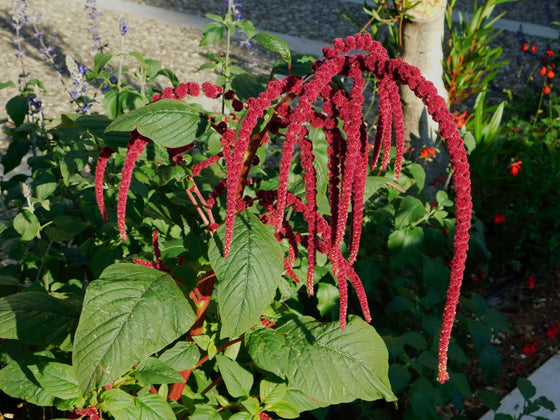
Grow ornamental amaranth from seed in Australia: love-lies-bleeding, plumes and Joseph's coat, sowing months for six zones, staking, drying and weed status.
| Position | Full sun, out of strong wind |
|---|---|
| Depth | 2 to 5 mm |
| Spacing | 40 to 80 cm |
| First pick | 14 to 16 weeks |

Aster
Grow China asters in Australia: sowing months for six climate zones, spacing, pots, watering, Fusarium wilt and thrips, and cutting blooms for the vase.
| Position | Full sun, 6 hours minimum |
|---|---|
| Depth | 6 mm |
| Spacing | 30 to 40 cm |
| First pick | 13 to 16 weeks |