
How to Grow Kniphofia in Australia
Red hot pokers are tough, clump-forming perennials planted as crowns in spring, or in autumn where winters are mild. Set the crown at soil level in full sun and free-draining soil, 60 to 90 cm apart. Water through the first year, then only in long dry spells. Cut spent spikes at the base, and divide clumps only when crowding cuts flowering.
| Sun | Full sun for best flowers |
|---|---|
| Water | Deep, occasional soaks; drought tolerant once established |
| Soil | Free draining, enriched with organic matter |
| Feed | Light: compost at planting, potash at flowering |
| Spacing | 60 to 90 cm |
| Depth | Crown at soil level |
| Germination | Grown from crowns; seedlings flower after about three years |
| Harvest | Late spring to autumn |
| Container | Pot at least 40 cm wide, gritty mix |
| Frost | Frost hardy; avoid cold, wet soil |
| Use | Borders, bird gardens, gravel beds, cut flowers |
Red hot pokers (Kniphofia), also called torch lilies, are clump-forming perennials in the family Asphodelaceae. They are grown for tall spikes of tubular flowers in red, orange and yellow. They come from southern Africa, shrug off drought, frost and wind once settled, and draw wattlebirds and other nectar-feeding birds into Australian gardens. Most failures trace back to one thing: soil that stays wet around the crown in winter.
Three mistakes that matter
- Heavy, wet soil. Roots and crowns sitting in cold, waterlogged ground through winter can rot, and the clump dies out. Plant in free-draining soil, or raise heavy clay into a mound with coarse grit, as set out under Site, soil and setup.
- Burying the crown. A crown set deeper than it grew, or smothered under mulch, stays wet and is prone to rot. Plant a potted crown at the depth it sat in its pot, and keep mulch clear of it.
- Dividing too soon. Red hot pokers resent disturbance, and a freshly split clump can take a year to settle and flower poorly. Leave clumps alone for several years, and divide only once flowering falls off from crowding.
When to plant
Plant in spring as the soil warms and the worst of the winter wet has passed. The crown then has a full growing season to root in. Where winters are mild and soils drain freely, autumn planting around Anzac Day also works, because the roots settle in cool, moist soil before summer.
| Zone | Example cities | Plant | Flowering | Notes |
|---|---|---|---|---|
| Tropical | Darwin NT; Cairns, Townsville QLD; Broome WA | Not recommended | Not recommended | Wet-season heat and downpours keep the crowns wet, and wet crowns rot. |
| Subtropical | Brisbane, Bundaberg QLD; Coffs Harbour, Lismore NSW | Mar-May and Aug-Sep | Nov-Apr | Plant once summer storms ease, or before they return. Raise beds with grit; drier inland gardens suit it best. |
| Arid and semi-arid | Alice Springs NT; Broken Hill, Dubbo NSW; Mildura VIC; Kalgoorlie WA | Mar-Apr and Sep-Oct | Nov-Mar | Plant in warm autumn soil or after the last frost. Takes frost once settled; soak deeply through the first summer. |
| Temperate | Sydney, Newcastle, Wollongong NSW; Melbourne, Geelong VIC | Mar-May and Sep-Nov | Dec-Apr | Plant around Anzac Day or once spring soil warms. Keep away from bushland, where it escapes. |
| Mediterranean | Perth, Bunbury WA; Adelaide and the SA coast | Mar-May and Sep-Oct | Nov-Apr | Autumn planting lets winter rain settle roots. Water deeply through the first dry summer. |
| Cool and alpine | Hobart, Launceston TAS; Canberra ACT; Ballarat VIC; Orange NSW | Sep-Nov | Jan-Apr | Plant after the worst winter wet. Leave old leaves over winter, or tie them over the crown. |
A late planting needs regular deep soaks through its first summer. Where frost meets cold, wet winter soil, skip autumn and wait for spring, because a new crown there is the one most likely to rot.
Site, soil and setup
Sun and drainage decide how well a clump flowers. Red hot pokers take sandy, loamy or gravelly soils, and coastal wind, but not ground that stays soggy.
| Need | What to do |
|---|---|
| Sun | Full sun, at least six hours a day, gives the most spikes. Light shade is tolerated, with fewer flowers. |
| Soil | Average to sandy, well-drained soil enriched with organic matter. Heavy, wet soils are not tolerated. |
| pH | Grows in acid, neutral and alkaline soils, so no correction is needed in most gardens. |
| Drainage | On clay, build a raised bed or mound and mix in coarse grit. |
| Bed preparation | Dig in a 5 cm layer of compost a few weeks ahead. On poor sand, add pelletised chicken manure at 100 g per square metre. |
| Room | Clumps spread 60 to 90 cm and widen each year, with spikes up to about 1.5 m tall. The stems are sturdy and need no staking, even in exposed spots. |
A clump stays put for years, so rotation does not apply. Where water pools after storms, read waterlogged soil before planting.
Weed status, state by state
Red hot poker (Kniphofia uvaria), the species both store lines belong to, has escaped from gardens in south-eastern Australia. It is an environmental weed in Victoria and New South Wales, though no state or territory declares it.
| State or territory | What the weed lists say |
|---|---|
| Victoria | Not a declared noxious weed. Regarded as an environmental weed: it has invaded coastal heath at Phillip Island, Anglesea and Port Campbell. It sits on Knox, Nillumbik and Frankston local weed lists. |
| New South Wales | Not listed in NSW WeedWise. Naturalised on the central and southern tablelands, and a weed of swamps in the Upper Blue Mountains. |
| South Australia | Not on the list of declared plants. Possibly naturalised in the south-east. |
| Western Australia | Listed as permitted (section 11) on the Western Australian Organism List, not a declared pest. |
| Tasmania | Not a declared weed. Sparingly naturalised near old gardens. |
| Queensland | Not a prohibited or restricted invasive plant. |
| Northern Territory | Not on the list of weeds in the NT. |
| Australian Capital Territory | Not a declared pest plant. |
It spreads by creeping rhizomes (underground stems) and by small wind-blown seed. Keep plantings well away from bushland, swamps and creeks, and cut spent spikes before seed ripens. Dig out shoots creeping beyond the clump, and bin unwanted divisions: dumped garden waste has started roadside clumps that last for years.
Container growing
Dwarf types under about 60 cm, such as 'Little Maid', suit pots best. Give them a pot at least 25 cm wide, about 7 L, with drainage holes. Taller plants like the store's lines need a pot at least 40 cm wide and deep, about 30 L. Fill with premium potting mix blended with coarse grit, roughly seven parts to three.
- Watering. Water when the mix is dry a few centimetres down, more often in hot weather. See watering pots in summer.
- Feeding. Water in fish and seaweed blend at 25 mL per 9 L every fortnight from spring to late summer. Nutrients in potting mix soon run out.
- Position. Full sun. In cold, wet winters, move the pot against a sheltered wall and raise it on feet so it drains.
Planting Crowns
Red hot pokers are started from a crown: a potted plant, a bare-root side shoot or a division from an established clump.
Crown division
Lift a crowded clump with a fork in spring, or in autumn where winters are mild. Split it into pieces that each carry a fan of leaves and plenty of roots. Or slice off a side shoot without lifting the whole clump. Dig compost into the bed before replanting. Expect fewer flowers that first year; divisions usually flower within one or two years. See dividing perennials for the method.
Planting a crown
- Prepare the bed as under Site, soil and setup.
- Set a potted plant at the same depth it grew in its pot. Plant a bare-root crown with its top shoot just above the soil.
- Space plants 60 to 90 cm apart, closer for dwarf types.
- Firm the soil and water in with seaweed solution at 30 mL per 9 L.
- Mulch around, not over, the crown.
From seed
Seedlings vary because red hot pokers cross readily, so seed will not reproduce a named variety such as 'Mango'. Collect seed in autumn, keep it in the fridge, and sow it in spring in trays kept near 15°C. Press it onto moist seed-raising mix without covering it, because it needs light to germinate, and allow up to 90 days. Plants take about three years to flower.
Care by growth stage
Water matters most in the first year; after that, drainage and a little restraint keep clumps flowering. Established plants are not hungry and need little feeding in fair soil.
| Stage | Water | Feed | Watch for |
|---|---|---|---|
| Newly planted, weeks 1 to 8 | A thorough soak whenever the topsoil dries; moist, never soggy | Seaweed solution at 30 mL per 9 L every fortnight | Snails on new shoots; rot in wet, cold soil |
| First summer | An occasional thorough soak in dry spells | None beyond the compost dug in at planting | Soil drying out completely while roots are young |
| Spring growth, established clumps | Rain is usually enough; water only in long dry spells | On poor or sandy soil, pelletised chicken manure at 100 g per square metre once | Snails and slugs feeding on emerging flower spikes |
| Flowering, summer to autumn | Keep watering deeply in dry spells while spikes form | Sulphate of potash at 30 g per square metre, watered in once as spikes appear | Thrips silvering the flowers |
| Late autumn and winter | Usually none; keep pots barely moist | None | Water lying around crowns after heavy rain |
Before watering an established clump, check the soil is dry about 15 cm down. If growth stalls in very poor sand, a light dose of all-purpose controlled release granular (NPK around 14-5-10) scratched in each spring can help.
Cutting Back
Most of the work is removing spent spikes and old leaves, which keeps the clump tidy and stops seed spreading. Do the leaf work in late winter or early spring, once the coldest, wettest weather is over.
- Cut each faded flower stem right down at the base, which also leaves room for new spikes.
- On evergreen clumps, gently pull out dead or tatty leaves one at a time in spring.
- Pull green leaves out at the base rather than cutting them, so no stubs are left.
- Where a clump dies back over winter, leave the old leaves on to shelter the crown, then cut them off at the base in spring.
- In the coldest districts, tie the leaves together over the crown in winter to shed rain.
- Wear gloves, because old leaves can be slimy and the edges are finely toothed.
Companion planting
Pair red hot pokers with plants that like the same sun and sharp drainage.
Grows well with
- Salvia, whose blue and purple flowers set off the warm spikes.
- Rudbeckia and cannas, for a bed of hot colours.
- Ornamental grasses, which share the dry, sunny conditions and soften the clumps.
Keep apart
- Thirsty, moisture-loving plants, whose watering keeps the crowns too wet.
- Large shrubs and trees, whose shade cuts flowering.
Harvesting Blooms
The store's lines flower mainly from summer into autumn, though some other kniphofias flower from autumn to spring. The small flowers open from the bottom of the spike upwards. Cut a stem when the lowest flowers have opened and the top is still in bud.
- Cut in the cool of early morning, at the base of the stem.
- Leave plenty of spikes on the plant for the birds.
Bare-root crowns and divisions do not store: plant or pot them up straight away.
Common problems
Leaves but few flowers. Too much shade, a crowded clump that needs dividing, or a clump split recently (see Three mistakes that matter).
Clump collapsing over winter. Wet soil around the crown; see Three mistakes that matter and the root rot entry under Pests and diseases.
Flowers fading from the bottom up. This is normal: each spike opens from its base, so the older lower flowers fade first.
Seedlings appearing away from the clump. Spikes were left to set seed, which spreads on the wind; cut them sooner and pull seedlings young.
Brown, tatty leaves in late winter. Old foliage dies back with the cold; tidy it in spring as under Cutting Back.
Pests and diseases
Red hot pokers rarely suffer serious pest or disease trouble, and most problems start with wet soil or a stressed clump.
Garden snail (Cornu aspersum). Snails, and slugs with them, hide among the leaves and chew emerging flower spikes. Check the clump on damp evenings, hand-pick, and use an iron-based bait if needed. Read more
Thrips, including gladiolus thrips (Thrips simplex). Tiny insects that fleck, silver and distort flowers and young leaves. Cut off badly marked spikes and spray insecticidal soap late in the day, away from feeding bees. Read more
Aphids (family Aphididae). Colonies can gather on young flower spikes, and a heavy infestation distorts the blooms. Hose them off with a firm jet of water, or cut off a badly infested spike. Read more
Root and crown rot (Phytophthora and Fusarium species). The plant wilts, and the leaves turn dull and pull out easily. There is no cure: bin affected plants and do not replant red hot pokers in that spot.
Prevention first
- Plant in full sun and free-draining soil, so clumps stay strong.
- Check young flower spikes for aphid colonies and snails as they rise.
- Clear dead leaves and litter where snails shelter.
- Check bought crowns for soft or rotten bases before planting.
Tips
- Plant where you can see the clump from a window, because wattlebirds and rosellas visit the spikes through the flowering season.
- In exposed coastal gardens, red hot pokers make a reliable accent, since they tolerate wind and some salt.
- Bin seed-laden spikes rather than composting them, so seed does not spread with the compost.
Due to quarantine restrictions and our shipping policy, we cannot send kniphofia plants to Western Australia or Tasmania.
Questions
When is the best time to plant red hot pokers?
Spring is the safest time, once the soil warms and winter rain eases, so the crown roots in before winter. Where winters are mild and soils drain freely, autumn planting also works. Where frost meets cold, wet soil, wait for spring.
Are red hot pokers a weed in Australia?
No state or territory declares red hot poker a weed. It is an environmental weed in Victoria and New South Wales, where it has escaped into coastal heath and mountain swamps. Plant away from bushland and creeks, and cut spent spikes before seed ripens.
Why is my red hot poker not flowering?
The usual causes are too much shade, a crowded clump, or one divided recently. Young divisions and newly planted crowns often take a year or two to flower well. Give full sun and free-draining soil, and divide only when crowding slows flowering.
Should I cut back red hot pokers after flowering?
Cut each spent flower stem off at the base as it fades. Leave the leaves alone until late winter or spring, then pull out dead ones at the base. Do not shear green foliage to the ground.
Do red hot pokers attract birds?
Yes. The tubular flowers are rich in nectar, and wattlebirds, rosellas and other nectar-feeding birds visit the spikes. Bees visit them too.
Can red hot pokers grow in pots?
Yes, dwarf types suit pots best. Use a pot at least 25 cm wide for dwarf types, or 40 cm for tall ones, with gritty potting mix and drainage holes. Feed fortnightly from spring to late summer and keep pots out of winter wet.
More bulbs and tubers to sow in October
All bulbs and tubersCalla Lily
Grow coloured calla lilies from tubers: planting depth and timing for six zones, water and feeding, lifting and storing, pests, toxicity and the arum lily weed.
| Position | Full sun, hot-afternoon shade |
|---|---|
| Depth | 10 cm, rough side up |
| Spacing | 20 to 30 cm |
| First pick | 7 to 12 weeks from planting |
Canna Lily
Grow dwarf canna lilies from rhizomes: planting depth and timing for six zones, feeding for flowers, cutting back, dividing, pests, and the weed lists by state.
| Position | Full sun |
|---|---|
| Depth | 5 to 10 cm, eyes up |
| Spacing | 50 to 70 cm |
| First pick | 6 to 8 weeks from shooting |
Crinum
Grow crinum lilies in Australia: plant bulbs with the neck above the soil, where to site them, care through flowering, lily caterpillar control and toxicity.
| Position | Full sun to part shade |
|---|---|
| Depth | Neck just above soil |
| Spacing | 40 to 60 cm |
| First pick | Nov to Apr flowers |
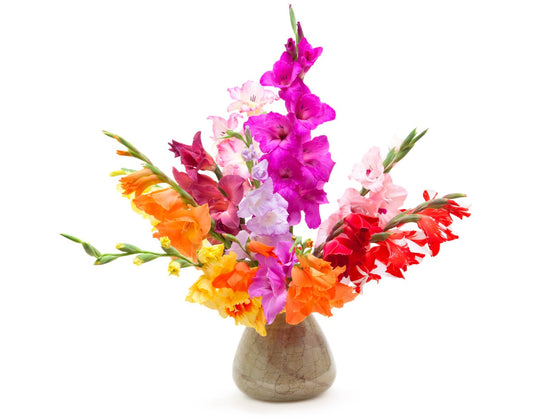
Gladioli
Grow gladioli from corms in Australia: planting depth and timing for six zones, staking, feeding, cutting, lifting and storing, pests and the wild weed species.
| Position | Full sun, sheltered from wind |
|---|---|
| Depth | 10 to 15 cm, flat side down |
| Spacing | 10 to 15 cm |
| First pick | 13 to 17 weeks from planting |