
How to Grow Alliums in Australia
Plant drumstick allium bulbs in autumn, from April, pointed end up. Set them 8 to 10 cm deep and 10 to 15 cm apart, in full sun and free-draining soil. Keep the soil lightly moist while the leaves grow, then let the bulbs rest dry over summer. Egg-shaped purple heads follow from November into January. Like all onions, the plant is toxic to dogs and cats.
| Sun | Full sun |
|---|---|
| Water | Moist in growth; dry summer rest |
| Soil | Free-draining, pH 6.0 to 8.0 |
| Feed | Bone meal at planting; potash at flowering |
| Spacing | 10 to 15 cm |
| Depth | 8 to 10 cm deep |
| Germination | Grown from bulbs, planted pointed end up |
| Harvest | Oct to Jan, by zone |
| Container | Yes; seven bulbs per 30 cm pot |
| Frost | Frost hardy; flowers best after cool winters |
| Use | Sunny borders, bees, fresh and dried flowers |
Drumstick allium (Allium sphaerocephalon), an ornamental onion in the family Amaryllidaceae, is grown for its flowers, not to eat. Its egg-shaped heads open green, then turn deep purple on stems 60 to 90 cm tall, drawing bees in late spring and early summer. It needs little water once established and fails mainly when wet soil rots the bulbs; garlic, onion and leek have their own guides.
Three mistakes that matter
- Planting in soil that stays wet. The small bulbs rot in heavy, waterlogged ground and in beds watered through summer. Plant in free-draining soil, a raised bed or a pot, and stop watering once the leaves wither.
- Cutting the leaves while they are green. The leaves feed the bulb for next year, so removing them early weakens the bulb and gives fewer flowers. Let them yellow and dry before tidying them away.
- Planting where onions or garlic grew. Ornamental alliums can catch the same diseases as edible ones, and white rot can survive in soil for up to 20 years. Choose a bed with no recent onion, garlic or leek crop.
When to plant
Plant the bulbs in autumn, from April, once the heat of summer has left the soil. Anzac Day sits in the middle of the window, and planting just before autumn rain settles the bulbs in. Flowers follow from November into January, a little earlier in the subtropics, and the bulbs then rest through summer.
| Zone | Example cities | Plant | Flowering | Notes |
|---|---|---|---|---|
| Tropical | Darwin NT; Cairns, Townsville QLD; Broome WA | Not recommended | Not recommended | Winters are too warm for the cold rest the bulbs need, and resting bulbs rot in the wet season. |
| Subtropical | Brisbane, Gold Coast, Bundaberg QLD; Coffs Harbour, Lismore NSW | May-Jun | Oct-Dec | Chill bulbs briefly in the fridge, plant in sharp drainage, and expect fewer flowers in later years. |
| Arid and semi-arid | Alice Springs NT; Broken Hill, Dubbo NSW; Mildura VIC; Kalgoorlie WA | Apr-May | Nov-Dec | Cold winter nights suit them. Water in dry winters, shelter stems from hot winds and keep summers dry. |
| Temperate | Sydney, Newcastle, Wollongong NSW; Melbourne, Geelong VIC | Apr-May | Nov-Jan | Bulbs usually return each year in well-drained beds. Use raised beds where summer storms keep soil wet. |
| Mediterranean | Perth, Bunbury WA; Adelaide and the SA coast | Apr-May | Nov-Jan | Wet winters and dry summers match the bulb's own cycle. Plant with the first autumn rains. |
| Cool and alpine | Hobart, Launceston TAS; Canberra ACT; Ballarat VIC; Orange NSW | Apr-May | Dec-Jan | Cold winters give a reliable rest, and the frost-hardy bulbs naturalise well over time. |
Bulbs that arrive early can wait somewhere cool, dry and airy until the soil cools. In the subtropics, a short spell in the fridge crisper before planting can improve flowering; plant straight from the fridge.
Site, soil and setup
| Need | What to do |
|---|---|
| Light | Full sun for the strongest stems; part shade is tolerated. |
| Shelter | A spot out of strong wind, which blows the tall stems over. |
| Soil | Any free-draining soil, sandy or loam; poor soil is fine. Avoid freshly manured beds, which are too rich. |
| pH | 6.0 to 8.0. On more acid soil, rake in garden lime at 100 to 200 g per square metre four weeks before planting. |
| Drainage | On clay or wet ground, plant in a raised bed or a pot, or work in coarse sand and compost. |
| Bed preparation | Dig in a 5 cm layer of compost. At planting, rake in bone meal at 100 g per square metre. |
| Rotation | Not where onions, garlic, leeks or chives have grown. |
Weed status, state by state
Drumstick allium is not known to be naturalised in Australia. In Victoria it has been recorded only as a casual escape, such as at Warrnambool, and was not seen spreading. No state or territory declares it.
| State or territory | What the weed lists say |
|---|---|
| Victoria | Not on the declared noxious weeds list or the advisory list of environmental weeds. |
| New South Wales | Not listed in NSW WeedWise. |
| Queensland | Not a prohibited or restricted invasive plant. |
| South Australia | Not on the list of declared plants. |
| Western Australia | Permitted (section 11) on the Western Australian Organism List; presence in the state unknown. This is weed status only: bulbs still face the state's entry rules that keep out onion rust. |
| Tasmania | Not on the declared weeds index. |
| Northern Territory | Not on the list of weeds in the NT. |
| Australian Capital Territory | Not among the declared pest plants. |
It still spreads by seed, offsets and tiny bulbils in the flower head. Snap off spent heads near bushland, and check your council's weed list. Do not confuse it with three-cornered garlic (Allium triquetrum), a declared weed in Victoria and South Australia. That weed has white, drooping, bell-shaped flowers with a green stripe, on three-sided stems.
Container growing
Most alliums do well in deep pots, a good answer to heavy or damp soil. Use a pot with drainage holes at least 30 cm wide and 30 cm deep (about 15 L) for one pack of seven bulbs. Fill it with free-draining potting mix with a little coarse sand or grit added.
- Watering. Pots need more water than beds; keep the mix lightly moist while the leaves grow, but never soggy.
- Feeding. Water in seaweed solution at 30 mL per 9 L every fortnight from the first shoots. Once the first flowers open, switch to liquid potash at the label rate every fortnight.
- Position. Full sun while in growth. Once the leaves die down, move the pot somewhere dry until autumn, or stand it behind other pots to hide the fading leaves.
Planting Bulbs
Drumstick alliums start from dormant bulbs about the size of a large coin, planted pointed end up.
Planting a bed of bulbs
- Prepare the bed as under Site, soil and setup.
- Set each bulb pointed end up, 8 to 10 cm deep.
- Space bulbs 10 to 15 cm apart.
- Plant in groups of seven or more, because the thin stems look best massed together.
- Water in well, and keep the soil just moist for the next two weeks to start the roots.
- Mark the spot, so a spade does not find the bulbs before the shoots appear.
After flowering: leave, lift or divide
Once flowering ends and the leaves have yellowed, let the bulbs rest dry through summer (see Three mistakes). Clumps grow by offsets, and in well-drained soil the bulbs return and naturalise. Lift and divide crowded clumps after the leaves and flowers have died down.
| Zone | Over summer |
|---|---|
| Tropical | Not grown; see the calendar. |
| Subtropical | Lift once the leaves die, store dry through the humid summer, and chill again before replanting. |
| Arid and semi-arid | Leave in a bed that stays dry; lift bulbs from any bed that is watered in summer. |
| Temperate | Leave in the ground where drainage is sharp; lift from beds that stay wet after summer storms. |
| Mediterranean | Leave in the ground; the dry summer suits a resting bulb. |
| Cool and alpine | Leave in the ground; the bulbs are frost hardy and naturalise well. |
Care by growth stage
Moisture while the leaves are green and a dry summer rest decide how well drumstick alliums flower. They need little feeding: a light start at planting, then potassium as the flowers open.
| Stage | Water | Feed | Watch for |
|---|---|---|---|
| Planted, roots forming, autumn | Water in, then keep just moist for two weeks | Bone meal at 100 g per square metre raked in at planting | Water lying over the bed after heavy rain |
| Leaves growing, winter | Keep the soil lightly moist | Seaweed solution at 30 mL per 9 L every fortnight | Snails on new shoots |
| Stems and buds, spring | Keep moist, watering deeply at soil level in dry spells | Seaweed solution at 30 mL per 9 L every fortnight | Silvery streaks from thrips; pale patches after cool, wet weather |
| Flowering, late spring to early summer | Keep watering in dry spells until flowering ends, then let the bed dry off | Liquid potash at the label rate every fortnight from the first flowers, or sulphate of potash at 30 to 50 g per square metre once | Leaves yellowing as the flowers open, which is normal |
| Leaves gone, summer rest | Stop watering; the bulbs need a dry summer | None | Seed heads and bulbils; see Weed status, state by state |
If growth stalls in poor soil, a light dose of all-purpose controlled release granular (NPK around 14-5-10) scratched in as the shoots appear can help.
Companion planting
Plants with spreading leaves or grey foliage hide allium leaves as they die back, and the purple heads rise through them.
Grows well with
- Catmint, a low, sun-loving mound that covers the fading allium leaves.
- Lamb's ear, grey foliage that sets off the purple heads and likes the same dry soil.
- Lavender, which shares the need for full sun and sharp drainage.
- Yarrow and ornamental grasses, feathery plants the stems can weave through.
Keep apart
- Onions, garlic, leeks and chives, which share white rot, downy mildew and onion thrips.
- Thirsty annuals watered through summer, because summer irrigation rots resting bulbs.
Harvesting Blooms
Cut stems for the vase when about half the florets in a head have opened and the stem just below the head feels firm.
- Water the bed the day before, and cut in the cool of early morning or evening.
- Use clean secateurs and stand the stems in clean water straight away.
- Cut the flower stem low and leave the leaves on the plant.
- Strip anything that would sit below the waterline, where it rots and shortens vase life.
- Expect a mild onion smell from cut stems.
- Leave some heads standing, because the dried heads look good in the border.
For dried heads, cut while the colour is bright, which helps them hold it. Tie small bunches with a rubber band and hang them upside down in a dark, dry, airy place, such as a wardrobe or shed. They usually dry in three to five weeks and keep for dried arrangements and wreaths.
Common problems
Leaves yellow as the flowers open. This is normal at flowering time, so leave the leaves to wither (see Three mistakes).
Leaves but no flowers. A warm winter, deep shade or leaves cut early the year before can stop bulbs flowering. Chill bulbs before planting in the subtropics and move clumps into sun.
Stems leaning or flattened. Wind flattens the tall stems, and shade makes them weak and leaning; plant in a sheltered, sunny spot.
Alliums coming up beyond the bed. Seed and flower-head bulbils spread the plant, as under Weed status, state by state; lift unwanted clumps once the leaves die. For rotting bulbs, see Three mistakes.
Pests and diseases
Alliums are usually trouble free in a sunny border, and most problems are the same ones that strike edible onions.
Onion thrips (Thrips tabaci). Widespread in Australia and abundant on onions and garlic, these tiny insects leave silvery streaks on the leaves. Spray insecticidal soap late in the day, away from open flowers. Read more
Downy mildew (Peronospora destructor). It thrives in cool, wet weather, starting as pale yellow patches on the leaves that turn greyish-purple with spores. Space bulbs for airflow, water at soil level, and bin badly affected leaves. Read more
White rot (Sclerotium cepivorum). It rots the roots and coats the bulb base with white fluffy fungus. Its tiny black resting bodies stay in the soil for years (see Three mistakes). Lift and bin affected bulbs with the soil around them, and never compost them.
Onion rust (Puccinia allii). Bright orange or dark brown bumps form along the leaf veins. It is worst on garlic and chives, and its spores spread on wind and rain splash. Remove affected leaves as soon as you see them and bin them, never compost. It is not known in Western Australia, where any suspected onion rust must be reported to the state agriculture department.
Garden snail (Cornu aspersum). Widespread in Australian gardens, snails and slugs chew young shoots. Hand-pick on damp evenings, or scatter bait thinly by its label, never in heaps, and keep dogs away from the pellets and packet. Read more
Prevention first
- Plant only firm, clean bulbs, and bin any that are soft, mouldy or blemished.
- Clear away spent allium leaves once they are dry, because plant debris carries downy mildew.
- Move soil and tools from an infected bed only after cleaning them, because white rot travels in soil.
- Check new shoots on damp winter evenings for snails, and leaves in spring for thrips.
Tips
- Store spare bulbs over summer in an old stocking hung in the shed, which keeps rodents away from them.
- Chill bulbs away from ripening fruit, because the ethylene gas it gives off can make the flower buds abort.
- Grow on the tiny bulbils from a flower head in a pot of gritty mix, 2.5 cm apart and 1 cm deep. They take several years to reach flowering size.
Due to quarantine restrictions and our shipping policy, we cannot send allium bulbs to Western Australia or Tasmania.
Questions
When do you plant allium bulbs in Australia?
Plant them in autumn, from April, once the summer heat has left the soil. Anzac Day is a handy marker. In the subtropics, a short spell in the fridge crisper first can help, then plant in May or June. Flowers usually follow from November into January.
How deep do you plant drumstick allium bulbs?
Plant them 8 to 10 cm deep with the pointed end up, 10 to 15 cm apart. Group seven or more together, because the thin stems look best massed. Water them in well and keep the soil just moist for two weeks, then water only if it dries out.
Are ornamental alliums poisonous to dogs and cats?
Yes. Like onions and garlic, alliums contain sulphur compounds that can damage the red blood cells of dogs and cats, and cats are especially sensitive. Plant them away from pets, store bulbs out of reach, and call a vet or the Animal Poisons Helpline if a pet eats any part.
Is drumstick allium the same as garlic or onion?
It belongs to the same genus as garlic, onion, leek and chives, but it is grown for its flowers. Treat it as an ornamental, not a vegetable, and grow edible alliums in a separate bed, since they share diseases.
Do alliums come back every year?
Yes, where the soil drains freely and stays dry in summer. Leave the bulbs in the ground, let the leaves yellow naturally and stop watering over summer. Lift and divide crowded clumps once the leaves die. In the subtropics, lift, store dry and chill again before replanting.
How do you dry drumstick allium flowers?
Cut the heads while their colour is bright, strip the leaves and tie the stems in small bunches with a rubber band. Hang them upside down in a dark, dry, airy place such as a wardrobe or shed. They usually dry in three to five weeks.
More bulbs and tubers to sow in October
All bulbs and tubersCalla Lily
Grow coloured calla lilies from tubers: planting depth and timing for six zones, water and feeding, lifting and storing, pests, toxicity and the arum lily weed.
| Position | Full sun, hot-afternoon shade |
|---|---|
| Depth | 10 cm, rough side up |
| Spacing | 20 to 30 cm |
| First pick | 7 to 12 weeks from planting |
Canna Lily
Grow dwarf canna lilies from rhizomes: planting depth and timing for six zones, feeding for flowers, cutting back, dividing, pests, and the weed lists by state.
| Position | Full sun |
|---|---|
| Depth | 5 to 10 cm, eyes up |
| Spacing | 50 to 70 cm |
| First pick | 6 to 8 weeks from shooting |
Crinum
Grow crinum lilies in Australia: plant bulbs with the neck above the soil, where to site them, care through flowering, lily caterpillar control and toxicity.
| Position | Full sun to part shade |
|---|---|
| Depth | Neck just above soil |
| Spacing | 40 to 60 cm |
| First pick | Nov to Apr flowers |
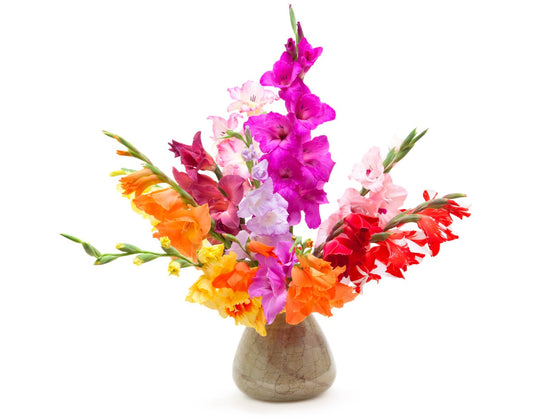
Gladioli
Grow gladioli from corms in Australia: planting depth and timing for six zones, staking, feeding, cutting, lifting and storing, pests and the wild weed species.
| Position | Full sun, sheltered from wind |
|---|---|
| Depth | 10 to 15 cm, flat side down |
| Spacing | 10 to 15 cm |
| First pick | 13 to 17 weeks from planting |