
How to Grow Bearded Iris in Australia
Bearded iris grow from rhizomes planted from late summer to autumn in full sun and free-draining soil. Set each rhizome on a low mound, 30 to 45 cm apart. Keep its top at the surface or under 1 to 2 cm of soil. Water sparingly, feed lightly with low-nitrogen products and divide clumps every three to five years. They need cold winters to flower.
| Sun | Full sun, six hours plus |
|---|---|
| Water | Sparing; dry between waterings, never waterlogged |
| Soil | Free-draining, slightly acid to alkaline |
| Feed | Light, low nitrogen: compost, then potash at buds |
| Spacing | 30 to 45 cm |
| Depth | Top at surface, 2 cm max |
| Germination | Rhizome: new leaves follow root growth |
| Harvest | Spring, often from second year |
| Container | Yes, wide pot 28 to 33 cm across |
| Frost | Hardy; frost can mark open flowers |
| Use | Spring borders and cut flowers |
Bearded iris (Iris germanica hybrids) is a hardy perennial in the iris family (Iridaceae), grown for tall spring spikes of ruffled flowers. It grows from a rhizome (a thick, creeping stem at the soil surface) that flowers once, then carries the clump on through offsets. It thrives on hot, dry summers and cold winters, and kindness kills more plants than neglect: too deep, too wet or too shaded. Dutch iris, a bulb, and peacock iris (Moraea), a corm, are different plants.
Three mistakes that matter
- Burying the rhizome. A rhizome planted deep stays too cool to flower, and one smothered in mulch is prone to rot. Set it with its top at the soil surface, or under no more than a thin skin of soil, as shown under Planting Rhizomes.
- Keeping it wet. Summer watering, heavy soil and damp mulch over the rhizome bring on soft rot, the usual way bearded iris die. Plant in free-draining or raised soil, keep mulch off the rhizome and water sparingly once plants are established.
- Planting in shade. With less than half a day of summer sun, a clump makes leaves but few or no flowers. Choose an open bed in full sun, clear of shrubs and groundcovers that would shade the rhizomes.
When to plant
Plant rhizomes from late summer into autumn, once the worst heat has passed, so new roots settle before winter. Cold winter nights set the flower buds, so the southern and cool zones suit bearded iris best and the tropics do not.
| Zone | Example cities | Plant | Flowering | Notes |
|---|---|---|---|---|
| Tropical | Darwin NT; Cairns, Townsville QLD; Broome WA | Not recommended | Not recommended | Winters are too warm to set flower buds, and wet-season rain rots the rhizomes. |
| Subtropical | Brisbane, Sunshine Coast, Bundaberg QLD; Coffs Harbour, Lismore NSW | Mar-May | Sep-Oct | Coastal winters are often too mild to flower well. Inland valleys do better, and rebloomers may need less chill. |
| Arid and semi-arid | Alice Springs NT; Broken Hill NSW; Mildura VIC; Port Augusta SA | Mar-May | Sep-Nov | Cold nights give good chill. Plant after the heat breaks, with afternoon shade and a light soil cover. |
| Temperate | Sydney, Newcastle, Wollongong NSW; Melbourne, Geelong VIC | Feb-Apr | Oct-Nov | Melbourne clumps peak around Melbourne Cup. Eastern Sydney suburbs may lack the winter chill to flower well. |
| Mediterranean | Perth, Bunbury WA; Adelaide and the SA coast | Mar-May | Oct-Nov | Dry summers and alkaline soils suit them. The Adelaide waterfront and western Perth suburbs may lack chill. |
| Cool and alpine | Hobart, Launceston TAS; Canberra ACT; Ballarat VIC; Orange NSW | Feb-Apr | Oct-Dec | Plant early so roots settle before frosts. Rhizome tops can sit exposed; frost may mark early buds. |
Clumps divided straight after flowering, in November or December, can be replanted then, with only light watering over summer.
Site, soil and setup
| Need | What to do |
|---|---|
| Sun | Full sun for at least six hours, and never less than half a day in summer. Winter shade does no harm. |
| Drainage | Free-draining soil that never lies wet. On heavy clay or in summer-rain districts, plant on a raised bed, mound or slope. |
| Soil and pH | Almost any well-drained soil, slightly acid to alkaline. Many South Australian growers succeed at around pH 9. If a test reads below about pH 6, dig in garden lime or dolomite lime at 100 to 200 g per square metre, four weeks before planting. |
| Bed preparation | Two to three weeks ahead, dig a 5 cm layer of compost through the top 25 to 30 cm. Avoid fresh manure, which leads to rot. |
| Mulch | Keep moisture-holding mulch, such as lawn clippings and pea straw, well clear of the rhizome. |
| Shelter | Shelter from strong wind, which bends and snaps tall stems while they grow fast in spring. |
An old clump exhausts its patch, so replant divisions into fresh ground or refresh the soil with compost first. A soil test kit settles the pH question in minutes; see soil pH explained.
Container growing
Tall bearded iris grow in pots with drainage holes, provided the mix drains freely and the watering stays light. A wide, shallow pot suits better than a deep one. One 28 to 33 cm wide and 20 to 26 cm deep, about 12 to 18 L, holds three rhizomes. Divide them every couple of years, before they crowd the pot. Fill it with a free-draining premium potting mix that is not high in nitrogen. The shortest varieties in the range, 'Dragons Drum' at about 86 cm and 'Bahloo' at about 89 cm, are the least likely to topple.
- Planting. Set the top of the rhizome level with the mix, which should sit at least 2.5 cm below the rim.
- Watering. Water only when the top 5 cm of mix is dry. Take care in heatwaves, when wet mix rots rhizomes fast; see watering pots through summer.
- Feeding. Dissolve sulphate of potash in water at the label rate and give it once a fortnight from the first buds until the last flowers fade.
- Position. Full sun out of strong wind, and away from a north-facing wall that keeps the pot too warm on winter nights.
Planting Rhizomes
Each rhizome is planted whole, with its fan of leaves and its roots, into a prepared bed in full sun.
Choosing among the varieties
All twelve varieties in the range are tall bearded irises of about 86 to 104 cm, but a few details change how they are grown.
| Group | Varieties | What changes |
|---|---|---|
| Recorded rebloomers | 'Bahloo', 'Beach Girl', 'Sweet Musette', 'Thriller'; 'Syncopation' reblooms in American records | Keep soil lightly moist through summer, never waterlogged. An autumn flush is possible, not certain. |
| Dark flowers | 'Titan's Glory', 'Praise The Lord', 'Thriller', 'Dragons Drum' | In hot districts, afternoon shade helps dark blooms last, above all the later 'Praise The Lord' and 'Thriller'. |
| Tallest stems | 'Praise The Lord' (about 104 cm), 'Beach Girl' (about 99 cm) | Plant out of strong wind, and stake single stems in exposed gardens. |
| Early season | 'Wedding Vow', 'Bahloo', 'Beach Girl', 'Dragons Drum', 'Titan's Glory' | The first to open, and the most exposed to a late frost on the buds. |
| Mid to late season | 'Praise The Lord', 'Rustler', 'Song of Norway', 'Stepping Out', 'Sweet Musette', 'Syncopation', 'Thriller' | Carry the display on, some into early summer, so mix them with early varieties. |
Planting in the ground
- Soak a dry rhizome for an hour or two before planting.
- Dig a shallow hole and build a low mound in its centre, then sit the rhizome on top with the roots spread down each side.
- Face the rhizome north, with the fan of leaves at the back, so the sun reaches it.
- Firm soil over the roots so the base of the rhizome sits snugly on the soil below, at the depth in the table below.
- Space rhizomes 30 to 45 cm apart, or plant three in a triangle, toes pointing in, to form a clump quickly.
- Water in well. New leaves follow once the roots are growing.
Planting depth by district
| District | Depth | Why |
|---|---|---|
| Cool and frosty districts, heavier soil | Top of the rhizome level with the soil, just exposed | Gathers what summer heat there is to ripen the rhizome. |
| Most of Australia, with hot summer sun | 1 to 2 cm of soil over the rhizome, the leaf junction at the surface | Stops harsh sun scorching the exposed top. |
| Sandy soil anywhere | Just cover the rhizome | Sand dries and heats quickly at the surface. |
Care by growth stage
Water decides the outcome: overwatering kills far more bearded iris than drought. Bearded iris are not hungry plants: in a bed, compost at planting and one potassium feed in spring are enough. Keep nitrogen low, because soft, leafy growth rots easily and flowers poorly.
| Stage | Water | Feed | Watch for |
|---|---|---|---|
| Planting, weeks 1 to 6 | Water in well, then at most once a week if dry | Nothing beyond the compost dug in at bed preparation | Rot if the soil stays wet; leaves yellowing while new roots form |
| Autumn and winter, weeks 6 to 24 | Rain is usually enough; water only in long dry spells | None | Rot at the top of the rhizome in wet winters; snails on young leaves |
| Spring growth, August to September | Keep the soil slightly damp in a dry spring | None until the first buds show | Leaf spot after rain or hail; snails and slugs |
| Summer after flowering, December to February | Every week or two in dry weather; established clumps often need none | None | Soft rot in humid heat; brown leaf tips from dry soil or salty water |
| Flowering, September to November | Keep watering steady through flowering, so the soil stays slightly damp but never wet | Sulphate of potash at 30 g per square metre once, as the first buds show, scratched in around the clump, kept off the rhizomes and watered in | Wind bending stems; frost marking buds; rot where a stem joins a leaf |
In poor soil, a controlled release granular lower in nitrogen than potassium, around NPK 6-10-10, can replace the compost. Mix it into the planting spot at the label rate, clear of the rhizome.
Division and Maintenance
Every three to five years a clump crowds itself and flowering falls away, which is the signal to divide it. Lift it soon after flowering or from late summer into autumn, as under When to plant.
- Lift the whole clump gently with a garden fork, working in from the outside.
- Snap off young rhizomes, each with a fan of leaves and roots. Discard the old centre, because a rhizome that has flowered never flowers again.
- Trim the leaves by about half and shorten long roots, so each division settles without wilting.
- Replant within a couple of weeks. Rhizomes kept longer go in a cool, dry place, never damp, and are soaked for a couple of hours before planting.
- Snap each spent flower stalk off at its base once its last bud has finished.
- Pull away brown, dead leaves through the year, since they harbour rot and leaf spot.
Companion planting
The best neighbours share full sun and a dry summer without spreading over the rhizomes.
Grows well with
- Roses, which want the same sun, provided their regular summer soak stays off the iris rhizomes.
- Ornamental grasses woven through a sunny border, for their upright, open habit.
Keep apart
- Violets, evening primrose and other creeping perennials, which spread over and shade the rhizomes.
- Thirsty plants that need regular summer watering or deep mulch, which keep rhizomes too wet.
Harvesting Blooms
Cut stems for the vase in the cool of the day, when the first bud is still closed but shows colour at its tip.
- Cut low on the stalk with clean secateurs, leaving the leaves to feed the rhizome.
- Carry stems upright with open flowers apart, because the petals bruise and crease easily.
- Stand stems in clean water; a coloured bud usually opens in a day or two.
- Pick off each faded flower so the next bud on the stem opens.
Cut stems usually last about 3 to 7 days in a vase. A single tall stem makes a vase on its own, or stands above lower spring flowers.
Common problems
No flowers in the first spring. A newly planted rhizome often spends its first year settling in, then flowers the following spring.
No flowers in a warm-winter garden. The rhizomes miss the winter chill they need, as on the Adelaide waterfront, in western Perth and eastern Sydney suburbs and most of Brisbane. A north-facing wall that holds heat overnight has the same effect.
Clump flowering less each year. Crowding, tired soil or too much nitrogen fertiliser are the usual causes. Divide it as under Division and Maintenance. Read more
Brown leaf tips in summer. Dry soil or salt building up from bore water burns the tips. Trim them off if they bother you.
Marked or misshapen flowers. Frost on open flowers or full buds leaves them limp and see-through, and glyphosate drift in the months before flowering deforms the blooms.
Stems kinked or fallen over. Wind dries and bends stems while they grow fast. In warm, wet springs, water trapped where a stem meets a leaf rots the joint.
Pests and diseases
Most trouble comes from wet weather rather than insects, so good drainage prevents most of it.
Bacterial soft rot (Pectobacterium carotovorum). The rhizome turns to a slimy, foul-smelling mush and the fan of leaves yellows and collapses. The bacterium enters through wounds and thrives in wet, poorly drained soil. Cut away all rotten tissue, leave the cut surface in the sun for a few days, then replant in a drier spot.
Sclerotium crown rot (Sclerotium rolfsii). Most common in warm districts and under winter mulch, it leaves the rhizome brown, soft and crumbly, with white fungal threads in the crown. Tan to reddish-brown balls the size of mustard seeds form on the plant and the soil. Bag and bin the plant with the soil around it, and never compost it.
Iris leaf spot (Cladosporium iridis). Small brown, water-soaked spots with yellow margins spread and merge along the leaves, worst after rain and on hail-damaged leaves. Pick off badly spotted leaves and clear away leaf debris. Orange-brown pustules inside pale spots are iris rust (Puccinia iridis), recorded from Tasmania to Queensland; pick off and bin those leaves the same way.
Garden snail (Cornu aspersum) and slugs. They leave ragged, torn leaves, mostly on young growth in cool, damp weather. Hunt them by torchlight a couple of hours after dark, especially after rain, and check under upturned broken pots set out as traps. Read more
Prevention first
- Give rhizomes the drainage and dry, mulch-free surface set out in Three mistakes that matter.
- Avoid nicking rhizomes when weeding or dividing, because wounds let soft rot in.
- Keep nitrogen low, as under Care by growth stage.
- Bin spotted leaves and spent stalks rather than leaving them on the bed; see garden hygiene.
Tips
- See varieties in bloom at an iris society show, held from mid October to early November; Victoria's falls around Melbourne Cup weekend.
- Bin or dry out unwanted rhizomes rather than composting them, because tiny offsets regrow, and garden iris has gone wild in parts of southern Australia.
- Label each clump at planting, since varieties look alike when out of flower.
Due to quarantine restrictions and our shipping policy, we cannot send bearded iris rhizomes to Western Australia or Tasmania.
Questions
When is the best time to plant bearded iris rhizomes in Australia?
Late summer to autumn, once the worst heat has passed. Plant from February to April in temperate and cool gardens, and from March to May in warmer and drier ones. Roots then settle before winter. Clumps can also be divided and replanted straight after flowering, in November or December, with only light summer watering.
How deep should bearded iris be planted?
Shallow. In most Australian gardens, cover the rhizome with 1 to 2 cm of soil, with the junction of rhizome and leaves at the surface. In cool, frosty districts the top can sit just exposed. A rhizome buried deeper stays too cool to flower, and one under mulch is prone to rot.
Why is my bearded iris not flowering?
The usual causes are too little summer sun, too little winter chill, too much nitrogen, an overcrowded clump or planting too deep. A newly planted rhizome may also skip its first spring. Give it full sun, feed lightly with a low-nitrogen fertiliser, and divide clumps every three to five years.
Can you grow bearded iris in Brisbane or the tropics?
Not reliably. Bearded iris need cold winter nights to set flower buds, and most of Brisbane is too mild, as is the tropical north. Inland valleys and elevated gardens in the subtropics do better. Plant in raised, free-draining beds, and try varieties recorded as rebloomers, which may need less chill.
When should I divide bearded irises?
Every three to five years, when the clump is crowded and flowers less. Divide soon after flowering, in November or December, or from late summer into autumn. Keep young rhizomes with a fan of leaves, discard the old centre, trim the leaves by half and replant within a couple of weeks.
Are bearded irises poisonous to dogs and cats?
Yes. All parts are poisonous if eaten, the rhizome most of all. In pets and people they can cause mouth burning, stomach pain, nausea and diarrhoea, and the sap can irritate skin. Keep rhizomes away from dogs, cats, horses and children, and wear gloves when dividing.
Grow it
Tap Add beside a size to put it in your cart. You stay on this page.
More bulbs and tubers to sow in October
All bulbs and tubersCalla Lily
Grow coloured calla lilies from tubers: planting depth and timing for six zones, water and feeding, lifting and storing, pests, toxicity and the arum lily weed.
| Position | Full sun, hot-afternoon shade |
|---|---|
| Depth | 10 cm, rough side up |
| Spacing | 20 to 30 cm |
| First pick | 7 to 12 weeks from planting |
Canna Lily
Grow dwarf canna lilies from rhizomes: planting depth and timing for six zones, feeding for flowers, cutting back, dividing, pests, and the weed lists by state.
| Position | Full sun |
|---|---|
| Depth | 5 to 10 cm, eyes up |
| Spacing | 30 to 90 cm |
| First pick | 6 to 8 weeks from shooting |
Crinum
Grow crinum lilies in Australia: plant bulbs with the neck above the soil, where to site them, care through flowering, lily caterpillar control and toxicity.
| Position | Full sun to part shade |
|---|---|
| Depth | Neck just above soil |
| Spacing | 40 to 60 cm |
| First pick | Nov to Apr flowers |
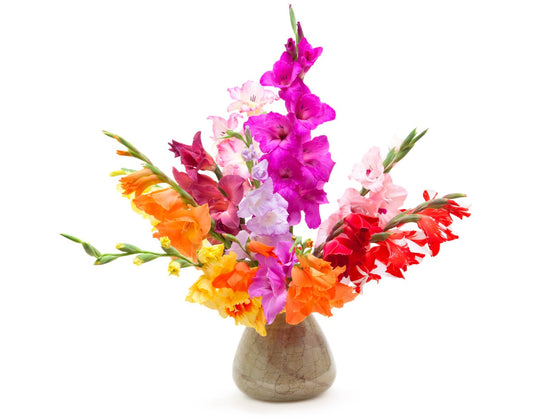
Gladioli
Grow gladioli from corms in Australia: planting depth and timing for six zones, staking, feeding, cutting, lifting and storing, pests and the wild weed species.
| Position | Full sun, sheltered from wind |
|---|---|
| Depth | 10 to 15 cm, flat side down |
| Spacing | 10 to 15 cm |
| First pick | 13 to 17 weeks from planting |