
How to Grow Ranunculi in Australia
Plant ranunculus corms in autumn, from March in cool districts to May in warm ones. Soak them for 3 to 4 hours, no longer. Plant them claws down, about 5 cm deep and 10 to 15 cm apart, in full sun and free-draining soil. Flowers usually follow three months or more later. Wear gloves: the sap irritates skin, and the plant is toxic to pets.

| Sun | Full sun, sheltered from wind |
|---|---|
| Water | Evenly moist in growth; dry summer rest |
| Soil | Light, fertile, free-draining; pH 6.0 to 7.0 |
| Feed | Bone meal at planting; potash from first flowers |
| Spacing | 10 to 15 cm |
| Depth | About 5 cm, claws down |
| Germination | Grown from corms; rootlets in 10 to 14 days |
| Harvest | Three months or more from planting |
| Container | Yes; a 30 cm pot holds about six |
| Frost | Takes light frost; mulch below minus 3°C |
| Use | Cut flowers, spring beds, borders and pots |
Ranunculus (Ranunculus asiaticus), the Persian buttercup of the buttercup family Ranunculaceae, is grown for its layered, rose-like flowers in spring beds, pots and the vase. Each claw-shaped corm (botanically a cluster of tuberous roots) goes in during autumn and can send up flower after flower through spring. Most failures trace back to one thing: corms that rot from too much water before they ever shoot.
Three mistakes that matter
- Soaking too long or planting into soggy soil. Corms left in water for more than about four hours, or planted into wet ground, often rot. Keep the soak short, as under Planting Corms, and plant into free-draining soil.
- Planting the claws upwards. The claws are roots and the shoot grows from the top. An upside-down corm usually survives but wastes energy turning around, so it comes up late and weak. Set every corm claws down.
- Planting too late in the year. Ranunculus flower best in cool weather, and days above about 25°C send them into summer dormancy. Late plantings run out of cool weeks before they flower. Plant in autumn so the flowers arrive before the heat.
When to plant
Plant once the soil has cooled after summer, usually from March in cool districts to May in warm ones. Anzac Day sits in the middle of that window across most of the south. Flowers usually follow three months or more after planting, later in cool districts, and keep coming for 8 to 12 weeks.
| Zone | Example cities | Plant | Flowering | Notes |
|---|---|---|---|---|
| Tropical | Darwin NT; Cairns, Townsville QLD; Broome WA | Not recommended | Not recommended | Days stay above the 25°C that sends ranunculus dormant, and corms rot in the wet season. |
| Subtropical | Brisbane, Gold Coast, Bundaberg QLD; Coffs Harbour, Lismore NSW | Apr-May | Jul-Sep | Plant in the sunniest, best-drained spot once nights cool. Midday shade helps flowers last. Stanthorpe belongs to Cool and alpine. |
| Arid and semi-arid | Alice Springs NT; Broken Hill, Dubbo NSW; Mildura VIC; Kalgoorlie WA | Apr-May | Aug-Oct | Cool nights suit them. Mulch against hard frost and shelter beds from hot spring winds that end flowering. |
| Temperate | Sydney, Newcastle, Wollongong NSW; Melbourne, Geelong VIC | Mar-May | Aug-Oct | Ranunculus suit this zone well. Melbourne can start in March; Sydney and the coast plant in April and May. |
| Mediterranean | Perth, Bunbury WA; Adelaide and the SA coast | Apr-May | Aug-Oct | Plant once autumn rain cools the soil. Warm, dry spring winds shorten flowering, so water steadily. |
| Cool and alpine | Hobart, Launceston TAS; Canberra ACT; Ballarat VIC; Orange NSW | Mar-Apr | Sep-Nov | Plant early so roots establish before winter. Mulch with straw where frosts fall below minus 3°C. |
Corms that arrive while the soil is still warm can wait, dry, in a cool, dark cupboard. Pre-sprouted corms, described under Planting Corms, can flower about two weeks sooner, which helps where spring heat comes early.
Site, soil and setup
Ranunculus come from the eastern Mediterranean and south-west Asia, where winters are mild and wet and summers dry.
| Need | What to do |
|---|---|
| Light | Full sun, at least six hours a day. In warm districts, some midday or afternoon shade helps the flowers last. |
| Shelter | Protect from strong wind, which damages the stems and petals. |
| Soil | Light, fertile, free-draining soil rich in compost. Never waterlogged. |
| pH | pH 6.0 to 7.0. Below 6.0, rake in dolomite lime at 100 to 200 g per square metre four weeks before planting. |
| Drainage | On heavy clay or wet ground, use a raised bed or a pot. |
| Bed preparation | Dig a 5 cm layer of compost into the top 20 cm. At planting, rake in bone meal at 100 g per square metre. Never use fresh chook manure, which can burn bulbs. |
Where corms rotted last year, plant the next batch in a fresh, better-drained spot.
Weed status, state by state
| State or territory | What the weed lists say about Ranunculus asiaticus |
|---|---|
| Victoria | Not on the declared noxious weeds list. No Ranunculus species is listed. |
| New South Wales | Not listed in NSW WeedWise. |
| Queensland | Not a prohibited or restricted invasive plant. |
| South Australia | Not declared. The weedy poison buttercup, Ranunculus sceleratus, is a declared plant. |
| Western Australia | Listed as permitted (section 11) on the Western Australian Organism List. Creeping buttercup, Ranunculus repens, is a declared pest and prohibited. |
| Tasmania | Not on the declared weeds index. |
| Northern Territory | Not on the list of weeds in the NT. |
| Australian Capital Territory | Not among the declared pest plants. |
Do not confuse the garden plant with the buttercups of paddocks and lawns. Creeping buttercup has glossy, golden yellow flowers with usually five broad petals, and spreads by runners through lawns, pastures and damp ground. Garden ranunculus has many-petalled flowers in a wide range of colours, grows from claw-shaped corms and does not run.
Container growing
Pots suit ranunculus well because the mix drains freely and a pot can be moved out of heavy rain. Bulbs have small root systems, so choose a squat, wide pot with drainage holes, at least 30 cm across (about 10 L). At 10 cm apart it holds about six corms. Fill it with premium potting mix and plant at the same depth as in the garden. The shorter lines, at 30 to 45 cm, suit pots best: the Trenton single colours, Bedazzle Blend and Dark Secrets.
- Watering. Water in once, then water when the top 2 cm of mix feels dry. Never leave the pot standing in a saucer of water.
- Feeding. Water in seaweed solution at 30 mL per 9 L every fortnight from the first shoots. From the first flowers, switch to liquid potash at the label rate every fortnight.
- Position. Full sun while in leaf. Move the pot under cover in long wet spells and once the leaves die down.
Planting Corms
Ranunculus start from dry, dormant corms, soaked briefly and planted claws down.
Pre-sprouting
Soak the corms in room-temperature water for 3 to 4 hours, until they plump up, and no longer. To pre-sprout, half-fill a seed tray with moist potting mix, lay the corms on it claws down and cover them. Keep the tray dark at 4 to 10°C for 10 to 14 days. Every few days, check that the mix is moist but not soggy, and remove rotting corms. They are ready when swollen to twice their size, with white rootlets.
What the store sells
| Line | Colours | Height | Flowers | What it changes |
|---|---|---|---|---|
| Trenton single colours | Black, Gold, Orange, Rose, Scarlet, White | 30 to 45 cm | Jul to Oct | One colour per pack, for blocks of colour in beds, pots or a cutting row |
| Trenton Mixed | Crimson, rose, orange, yellow, white and bicolours | 30 to 60 cm | Jul to Nov | The full colour range in packs of 12, 20 and 50 |
| Bedazzle Blend | Magenta, orange, violet, coral and gold | 30 to 45 cm | Jul to Oct | A blend chosen for colours that sit well together |
| Dark Secrets and Night Celebration | Near-black, burgundy, plum and dark red | 30 to 45 cm | Jul to Oct | Full sun and cool weather give the deepest colour |
| Pink Ice | Soft pink, white and cream | 40 to 60 cm | Aug to Oct | Taller stems; give it shelter from wind |
| Midikin Mixed and the Gift Box | Mixed | By pack | Spring | Plant and grow as for the other lines |
Planting a bed of corms
- Prepare the bed as under Site, soil and setup.
- Soak the corms as above. Pre-sprout them only if you have a dark spot at 4 to 10°C. Skip it where hard frosts below about minus 3°C are likely, because sprouted corms are more easily killed by cold.
- Set each corm claws down, 4 to 5 cm deep in cool districts and up to 8 cm deep in warm ones.
- Space corms 10 to 15 cm apart.
- Water in gently once, then water only if the soil dries out until shoots appear.
- Mark the rows, so a spade does not find the corms before the leaves do.
After flowering: keep, lift or replace
Once flowering ends, the leaves feed the corm, so leave them until they turn yellow and brown. Corms need a dry summer rest. Many weaken after one or two seasons, so plenty of gardeners treat them as annuals or biennials. To keep them, lift the corms once the leaves have died down and let them dry. Store them in a paper bag somewhere dry, airy and cool, about 10 to 13°C.
| Zone | After flowering |
|---|---|
| Tropical | Treat any trial as an annual. Corms rot in the wet season. |
| Subtropical | Lift before the summer rain, or buy fresh corms each autumn. |
| Arid and semi-arid | Lift, or leave in the ground if the bed stays dry all summer. |
| Temperate | Leave in free-draining soil, or lift where summer storms soak the bed. |
| Mediterranean | The dry summer suits corms left in the ground, if the bed is not watered. |
| Cool and alpine | Lift where the soil freezes or stays wet; elsewhere corms can stay put. |
Care by growth stage
Steady moisture once the leaves are up, and cool weather while the buds form, decide how long ranunculus keep flowering. Feed lightly at planting, then shift to potassium as the flowers open.
| Stage | Water | Feed | Watch for |
|---|---|---|---|
| Planted, roots forming, about weeks 0 to 3 | Water in once, then only if the soil dries out | Bone meal at 100 g per square metre raked in at planting | Water lying over the corms; soft, rotting corms |
| Leaves growing, from about week 3 until buds show | Keep the soil evenly moist, letting the surface dry slightly between waterings | Seaweed solution at 30 mL per 9 L every fortnight | Snails and slugs on new leaves; aphids on shoot tips |
| Buds and flowering, from week 12 or later | Keep watering steadily; water at soil level, not over the flowers | From the first flowers, liquid potash at the label rate every fortnight, or sulphate of potash at 30 to 50 g per square metre once | White powder on leaves; stems bent by wind; spent flowers to remove |
| Flowering ends, leaves yellowing | Reduce watering as the leaves fade | None | Yellowing leaves, which are normal |
If growth stalls in poor soil, a light dose of all-purpose controlled release granular (NPK around 14-5-10) scratched in as the leaves appear can help. Where frosts fall below about minus 3°C, lay straw mulch over the bed, since a hard freeze can kill plants and rot the corms.
Companion planting
Other cool-season bulbs and low spring flowers share the same autumn planting and fill the gaps between stems.
Grows well with
- Anemones, planted at the same time and depth, which flower alongside in beds and pots.
- Dutch iris, whose blue and purple flowers set off orange and gold ranunculus.
- Daffodils, which go in during autumn and flower earlier.
- Violas and pansies, low cool-season edging that covers bare soil.
Keep apart
- Vegie beds, where a corm or leaf could be eaten by mistake.
- Damp, shaded corners, where fungal disease and rot take hold.
Harvesting Blooms
Cut stems when the buds show full colour and feel soft and squashy, like a marshmallow, but before they open fully.
- Cut in the cool of the morning.
- Use clean secateurs and cut the stem low, near its base.
- Stand the stems straight in a bucket of water.
- Keep picking, because regular cutting encourages more flowers.
- Snap off spent flowers on plants left in the garden.

Cut ranunculus usually last 7 to 10 days in a vase and keep opening after cutting. The flowers are sensitive to ethylene gas, so keep the vase away from ripening fruit. Place it where cats and dogs cannot drink the water or chew the stems. Use the stems on their own or with other spring flowers in mixed arrangements.
Common problems
No shoots after planting. Corms that are soft or smell sour when dug have rotted, usually from wet soil or a long soak. See Three mistakes for the fix.
Short stems and few flowers. Late planting, strong wind or a run of warm days while buds form can shorten stems. Plant earlier, in full sun out of strong wind.
Flowering stops early in spring. Hot spells end the season, as under Three mistakes. Midday shade and steady water can stretch it a little.
Corms do not come back. Summer rain or watering rots dormant corms left in the ground. See After flowering under Planting Corms for when to lift them.
Pests and diseases
Most trouble arrives in damp spells in late winter and spring, when soft new growth is at its peak.
Aphids (family Aphididae). Aphids cluster on shoot tips and buds and spread plant viruses as they feed. Hose them off or spray with insecticidal soap. Read more
Garden snail (Cornu aspersum). Snails and slugs chew young leaves and buds at night in Australian gardens. Hand-pick on damp evenings, or scatter an iron-based bait thinly by its label, never in heaps, where dogs cannot reach the pellets or packet. Read more
Powdery mildew (Erysiphe aquilegiae). Recorded on ranunculus in Victoria, it coats leaves with a white powder, mostly in autumn and in crowded, still air. Remove badly affected leaves, space plants well and water at soil level. Read more
Grey mould (Botrytis cinerea). It attacks ageing petals in cool weather with heavy dew, covering them in a thick grey mould. Pick off affected and spent flowers and bin them, and keep plants well spaced.
Tomato spotted wilt virus (Orthotospovirus tomatomaculae). Found throughout Australia and carried by thrips, it causes ring spots, mottling and distorted leaves. Infected plants cannot be cured: pull and bin them, never keep their corms, and keep weeds down nearby.
Prevention first
- Plant only firm corms, and throw out any that are soft or mouldy.
- Keep to the spacing under Planting Corms, so air moves between the plants.
- Check new growth on damp evenings for snails and aphids.
- Clear spent flowers and yellowed leaves from the bed.
Tips
- Set a kitchen timer when the corms go into water, so the soak stops at four hours.
- Plant a second batch three or four weeks after the first to stretch the cutting season.
- If you cannot tell which way is up, plant the corm on its side and the shoot finds its own way.
- Grow a short row just for cutting, so picking does not thin the garden display.
Due to quarantine restrictions and our shipping policy, we cannot send ranunculus corms to Western Australia or Tasmania.
Questions
Should you soak ranunculus corms before planting?
Yes, but briefly. Soak them in room-temperature water for 3 to 4 hours, until they plump up, then plant straight away or pre-sprout them. Corms left in water much longer than four hours, or planted into soggy soil, often rot.
Which way up do you plant ranunculus corms?
Claws down. The claws are roots, and the shoot grows from the top of the corm. Plant about 5 cm deep and 10 to 15 cm apart. An upside-down corm usually still grows, but it comes up later and weaker.
When do you plant ranunculus in Australia?
In autumn, once the soil has cooled after summer. Cool districts plant in March and April, temperate gardens from March to May, and subtropical gardens in April and May. Flowers usually follow three months or more later and run through spring.
Will ranunculus flower again next year?
Sometimes. Corms need a dry summer rest and often weaken after one or two seasons. Where summers are dry, they can stay in the ground. Elsewhere, lift them once the leaves die down, dry them and store them cool and dry until autumn.
Are ranunculus poisonous to dogs and cats?
Yes. All parts contain protoanemonin, which is toxic to dogs, cats and horses and can blister skin. Store corms out of reach and wear gloves when planting. If a pet eats any, call a vet or the Animal Poisons Helpline on 1300 869 738.
Are garden ranunculus the same as the buttercup weed in lawns?
No. Lawn and paddock buttercups, such as creeping buttercup, have shiny yellow flowers with usually five petals and creeping stems. Garden ranunculus has many-petalled flowers in many colours and grows from claw-shaped corms. Creeping buttercup is a declared pest in Western Australia.
More bulbs and tubers to sow in October
All bulbs and tubersCalla Lily
Grow coloured calla lilies from tubers: planting depth and timing for six zones, water and feeding, lifting and storing, pests, toxicity and the arum lily weed.
| Position | Full sun, hot-afternoon shade |
|---|---|
| Depth | 10 cm, rough side up |
| Spacing | 20 to 30 cm |
| First pick | 7 to 12 weeks from planting |
Canna Lily
Grow dwarf canna lilies from rhizomes: planting depth and timing for six zones, feeding for flowers, cutting back, dividing, pests, and the weed lists by state.
| Position | Full sun |
|---|---|
| Depth | 5 to 10 cm, eyes up |
| Spacing | 50 to 70 cm |
| First pick | 6 to 8 weeks from shooting |
Crinum
Grow crinum lilies in Australia: plant bulbs with the neck above the soil, where to site them, care through flowering, lily caterpillar control and toxicity.
| Position | Full sun to part shade |
|---|---|
| Depth | Neck just above soil |
| Spacing | 40 to 60 cm |
| First pick | Nov to Apr flowers |
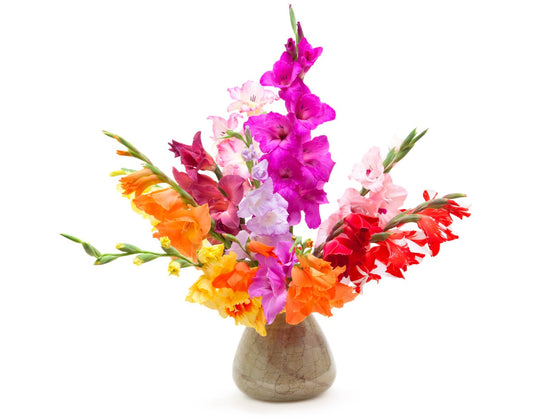
Gladioli
Grow gladioli from corms in Australia: planting depth and timing for six zones, staking, feeding, cutting, lifting and storing, pests and the wild weed species.
| Position | Full sun, sheltered from wind |
|---|---|
| Depth | 10 to 15 cm, flat side down |
| Spacing | 10 to 15 cm |
| First pick | 13 to 17 weeks from planting |