
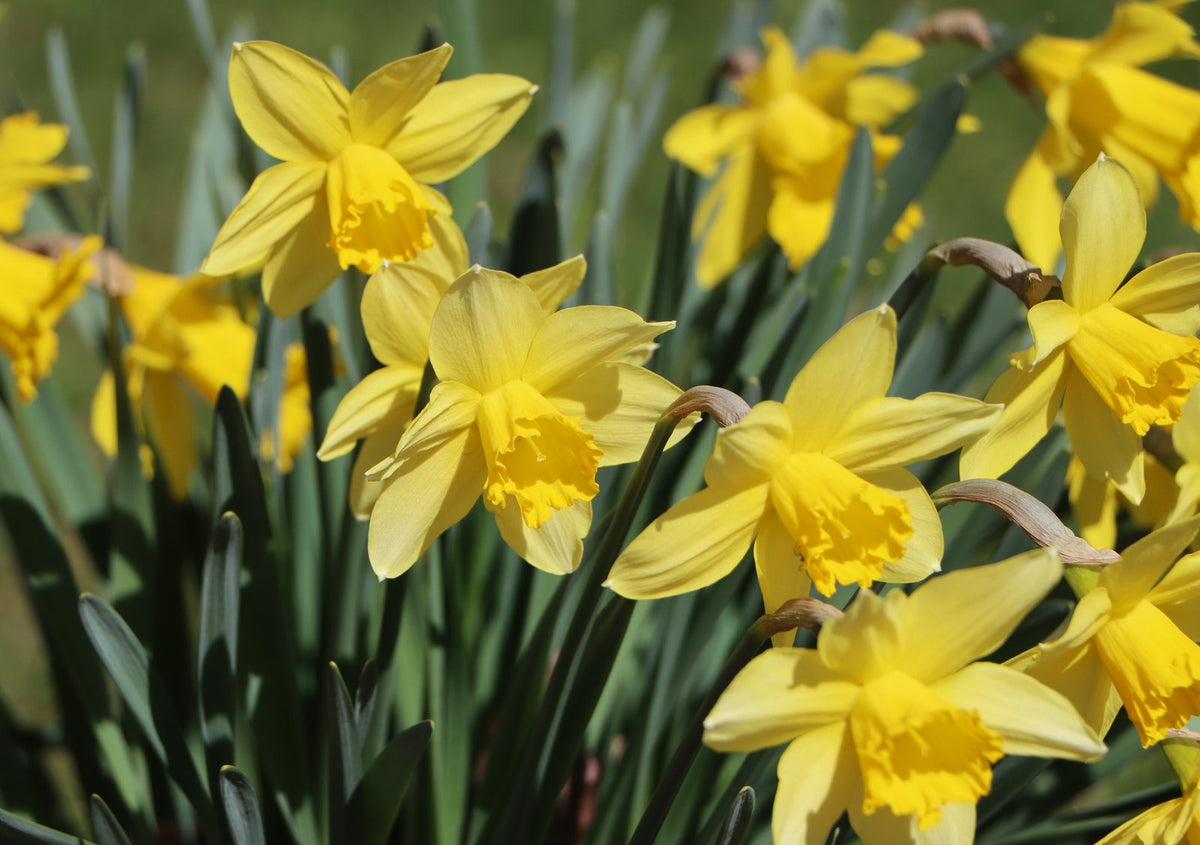

The short version: Plant spring bulbs once autumn has cooled the soil, mostly March to May, or June and July for chilled tulips in the subtropics. Dig each hole two to three times as deep as the bulb is tall, pointed end up, in soil that drains. Outside cool and alpine gardens, chill tulips in the fridge for 6 to 10 weeks, away from fruit; where winters are mild, hyacinths and daffodils need it too. After flowering, leave the leaves until they yellow.
A bag of bulbs on the laundry bench looks very patient, but inside each tulip or daffodil next spring's flower bud has already formed.
The coming months decide whether it opens on a tall stem, a stubby one, or not at all.
Bulb, corm, tuber or rhizome?
- Bulb: a short stem wrapped in fleshy, onion-like scales, as in daffodils and tulips.
- Corm: a solid, swollen stem base, replaced each year by a fresh one on top, as in freesias and crocus.
- Tuber: a swollen stem with buds, or eyes, dotted over it like a potato, as in calla lilies.
- Rhizome: a fleshy stem running sideways at or near the surface, as in bearded iris, so it is planted shallow.
When to plant, zone by zone
Plant once the summer heat has left the soil, with Anzac Day about halfway through the window. The seeds to sow beside the bulbs are in flowers to sow in March. Two exceptions: belladonna lily goes in from December to March, while dormant, and bearded iris from February to April in temperate and cool gardens, March to May elsewhere. Neither suits the tropics.
These zones are broad groupings; between two, or at altitude, lean on local cues such as first and last frosts.
Tropical (Darwin in the Northern Territory, Cairns and Townsville in Queensland). The dry season is too warm to chill most spring bulbs and the wet rots them, so our guides do not recommend them. To try, chill daffodils or jonquils 6 to 8 weeks and pot them in May or June as dry-season annuals; hippeastrums potted from May to July are a surer bet.
Subtropical (Brisbane and south-east Queensland, northern New South Wales). Plant most bulbs in April and May, chilled tulips in June and July. Tazetta jonquils, ixia, sparaxis, ranunculus and peacock iris need no chill. Use raised beds or pots, and lift corms before summer storms.
Arid and semi-arid (Alice Springs in the Northern Territory, Broken Hill in New South Wales, Mildura in Victoria, Kalgoorlie in Western Australia). Plant once the heat breaks, mostly April and May, with chilled tulips in May and June. Set jonquils 15 to 18 cm deep, water through dry winters and shelter beds from hot spring winds.
Temperate (Sydney and the New South Wales coast, Melbourne in Victoria). Melbourne starts in March, crocus included, and Sydney mostly in April. Chill tulips in both cities, and hyacinths and crocus in Sydney too. Keep storm water and sprinklers off resting bulbs.
Mediterranean (Perth and southern Western Australia, Adelaide in South Australia). Plant with the first autumn rains, March to May. Wet winters and dry summers suit freesias, ixia, sparaxis and jonquils, which can stay in the ground; deadhead them near bushland. Chill hyacinths and tulips and plant them in May.
Cool and alpine (Tasmania, Canberra in the ACT, Ballarat in Victoria, Orange and Armidale in New South Wales, Stanthorpe in Queensland). Plant early, mostly March and April, crocus included, tulips in April and May, and firm daffodils until June. Mulch freesias and ranunculus against hard frost.
Where we can send bulbs: quarantine rules and our shipping policy stop us sending flower bulbs, corms or rhizomes to Western Australia or Tasmania, or rhizomes to the Northern Territory. See our quarantine policy.
Which bulbs need chilling, and how
Tulips need about two months below 13°C to lengthen the stem and open the flower already inside the bulb; a mild winter gives short stems or leaves alone.
| Bulb | Chill it in | Weeks |
|---|---|---|
| Tulip | All zones except cool and alpine | 6 to 10 |
| Hyacinth | Subtropical, Sydney coast, Mediterranean, milder arid districts | 6 to 8 |
| Daffodil | Tropical, subtropical | 6 to 8 (jonquilla types 4 to 6) |
| Dutch iris, grape hyacinth | Subtropical | 6 to 8 |
| Crocus | Subtropical (rarely flowers even then), Sydney coast, mild Mediterranean coast | 6 |
| Anemone, freesia | Subtropical (optional for anemones) | 4 to 6 |
- Put dry bulbs in a paper bag labelled with the date and "poisonous, not food", in a crisper drawer or box of their own, in a fridge at 5°C or colder.
- Keep apples, pears and other ripening fruit out of that fridge, as their ethylene can ruin the flower bud.
- Do not freeze them, take them out by 12 weeks, and plant straight from the fridge.
How deep, how far apart, and which way up
In a spot with winter sun, dig each hole two to three times as deep as the bulb is tall and set the bulb pointed end up; shallow daffodils tend to split into small bulbs that do not flower. Space large bulbs such as daffodils 10 to 15 cm apart and small corms such as ixia 5 to 10 cm apart. Exceptions: belladonna lily sits with its neck at or above the soil, and bearded iris under 1 to 2 cm of soil, or just exposed in cool, frosty districts.

Anemones and ranunculus, both sold as corms, are the odd pair. Soak anemone corms in room-temperature water for 3 to 4 hours, then plant them 5 cm deep, pointed end down. Ranunculus go in dry, claws down, about 5 cm deep: our guide advises against soaking, as soaked corms often rot. Wear gloves for both, as the sap can blister skin.

Drainage, rot and pots
Soggy soil rots bulbs, often unseen. On heavy clay, use raised beds or pots. Water in once, then not again unless the soil dries before shoots appear; keep it just moist while leaves are green. Skip fresh chook manure, which can burn bulbs, and high-nitrogen feeds, which raise the risk of basal rot.
A wide, squat pot about 30 cm across and 20 cm deep takes about six daffodils almost touching, or about 15 ixia corms. Empty the saucer after rain, and shelter pots for a dry summer rest.
After flowering: leave the leaves
Snap off faded flowers but leave the leaves until they yellow, usually about six weeks. They refill the bulb and build next year's bud, so cutting, mowing or knotting them early can mean no flowers next year. Then stop watering. Where summers are wet, lift the bulbs and store them dry and airy until autumn.

- Usually return: daffodils in cool and temperate gardens; jonquils in most zones; freesias, ixia and sparaxis where summers are dry; crocus and grape hyacinths where winters are cold.
- Fade within a few years: ranunculus and anemones; add fresh corms each autumn.
- Annuals in warm zones: tulips outside cool gardens, and daffodils and hyacinths in the subtropics.
Freesias, ixia, sparaxis, peacock iris and grape hyacinths can escape into southern bushland: snap off spent stems before seed forms, and bin spare corms.
Bulbs are poisonous: store and plant with care
The Queensland Poisons Information Centre warns that daffodil bulbs are often mistaken for onions when stored together, that eating the bulb can cause severe vomiting and diarrhoea, and that the sap can irritate skin and eyes. Our grow guides rate daffodils, jonquils, hyacinths, tulips, hippeastrums, belladonna lilies and peacock iris as poisonous to people, cats and dogs.
- Wear gloves to plant, and store bulbs labelled, away from onions and out of children's reach.
- The Animal Poisons Helpline suggests fencing dogs out of bulb beds and skipping organic fertilisers there, which dogs dig for.
- If anyone eats part of a bulb, call the Poisons Information Centre on 13 11 26, even before symptoms. For a pet, call your vet or the Animal Poisons Helpline on 1300 869 738.
Frequently asked questions
Do all spring bulbs need to go in the fridge?
No. Cool and alpine gardens can skip it. Elsewhere, tulips need it, and hyacinths and daffodils where winters are mild.
Is it too late to plant bulbs in June?
Not necessarily. Cool districts can still plant firm daffodils in June, and the subtropics plant chilled tulips in June and July. Elsewhere, late bulbs flower later, on shorter stems.
Why did my bulbs come up with leaves but no flowers?
Usually the leaves were cut too soon the spring before. Crowding, shallow planting, dense shade and a missed chill also do it; our daffodil guide covers each.
Should I soak bulbs before planting?
Soak anemone corms for 3 to 4 hours. Most other bulbs and corms, ranunculus included, go in dry.
A paper bag in the crisper and cool autumn soil do most of the work for spring.
Related growing guides
- Flowers to sow in March, zone by zone
- Flowers to sow in February, zone by zone
- The autumn changeover: from summer beds to the winter patch
- Growing saffron from corms
- Fixing waterlogged garden soil
- Staying safe in the garden
Browse all flowering bulbs, or go straight to daffodils.