
How to Grow Sparaxis in Australia
Sparaxis, the harlequin flower, is a South African corm planted in autumn for spring flowers. Plant corms 5 cm deep and 10 cm apart, pointed end up, from March to May in full sun and free-draining soil. Water while in leaf, then keep them dry through summer. It is not recommended in the tropics, and it can spread into bushland, so plant it well away.
| Sun | Full sun |
|---|---|
| Water | Moist in growth, dry through summer |
| Soil | Free-draining sandy or loamy soil |
| Feed | Bone meal at planting, potash at budding |
| Spacing | 10 cm apart |
| Depth | 5 cm, pointed end up |
| Germination | Corms sprout in autumn after planting |
| Harvest | August to November, by zone |
| Container | Yes; ten corms in a 30 cm pot |
| Frost | Takes light frost; late frost scorches leaves |
| Use | Spring borders, pots and cut flowers |
Sparaxis (Sparaxis tricolor), the harlequin flower, grows from a corm (a swollen underground stem that stores food) and belongs to the iris family, Iridaceae. From the Cape of South Africa, it carries wiry spikes of spring flowers in red, orange, pink, purple, white and yellow. Each has a yellow throat edged in black. It suits Australian gardens with wet winters and dry summers, where a clump comes back for years. The usual mistake is watering it through its summer rest. The bigger risk is letting it spread into bushland, where it is a recognised weed.
Three mistakes that matter
- Watering through summer. Sparaxis rests as a dry corm from early summer to autumn, and wet soil in that rest rots it. Leave the bed unwatered once the leaves yellow, or lift the corms where summers are wet.
- Cutting the leaves while they are green. After flowering, the leaves feed the corm that makes next spring's flowers. Leave them until they yellow and wither, which can take six to eight weeks, then pull them away.
- Leaving clumps to crowd for years. Each corm forms cormlets (small new corms) beside it, and a packed clump flowers less each spring. Lift and divide once flowering declines, after the leaves wither.
When to plant
Plant corms in autumn, from March to May, once the summer heat has broken and the first autumn rain is due. In most southern gardens that means planting by about Anzac Day. Corms sprout in autumn, grow leaves through winter and flower in spring.
| Zone | Example cities | Plant | Flowering | Notes |
|---|---|---|---|---|
| Tropical | Darwin NT; Cairns, Townsville QLD; Broome WA | Not recommended | Not recommended | No cool winter for leaf growth, and corms rot in the wet season. |
| Subtropical | Brisbane, Gold Coast, Sunshine Coast QLD; Coffs Harbour NSW | Apr-May | Aug-Oct | Plant once nights cool. Lift corms when leaves yellow, before summer storms, or grow in pots. |
| Arid and semi-arid | Alice Springs NT; Broken Hill NSW; Mildura VIC; Kalgoorlie WA | Apr-May | Sep-Oct | Plant once nights cool after summer. Water through dry winters; mulch against inland frost. |
| Temperate | Sydney, Newcastle, Wollongong NSW; Melbourne, Geelong VIC | Mar-May | Sep-Nov | Plant once the summer heat breaks. On heavy, summer-wet clay, lift corms once the leaves yellow. |
| Mediterranean | Perth, Bunbury WA; Adelaide SA | Mar-May | Sep-Oct | Plant before the autumn break. Ideal dry summers; keep plantings well away from bushland and wetlands. |
| Cool and alpine | Hobart, Launceston TAS; Canberra ACT; Ballarat VIC; Orange NSW | Mar-Apr | Sep-Nov | Plant early so roots settle before hard frost. Mulch well; late frosts can scorch new leaves. |
Planting can run into early June, though late corms often flower later. Keep waiting corms in their bag in a cool, dark place until the window opens, rather than planting into baking summer soil.
Site, soil and setup
Sun and drainage decide how well sparaxis flowers. It grows on sandy or loamy soil, and copes with clay only where water never lies around the corms.
| Need | What to do |
|---|---|
| Light | Full sun for the most flowers. It copes with light shade if it gets a few hours of direct sun a day. |
| Soil | Free-draining sandy or loamy soil. On heavy clay, plant in a raised bed or grow it in pots. |
| pH | Slightly acid to neutral suits it, and it tolerates alkaline soil, so pH rarely needs correcting. |
| Bed preparation | Dig a 5 cm layer of compost through the bed, with bone meal at 100 g per square metre. |
| Summer | Choose a spot that is not watered in summer, away from lawns and vegie beds on irrigation. |
A clump stays put for years, so rotation does not apply; replant divided corms into freshly composted soil.
Weed status by state
Sparaxis has run wild across southern Australia from old gardens. The white-flowered Sparaxis bulbifera spreads by seed and by bulbils (tiny corms in the leaf joints). Sparaxis tricolor and its hybrids spread by seed, cormlets and a few bulbils in the lowest leaf joints. In Australia the name Sparaxis grandiflora has often been misapplied to Sparaxis bulbifera. No state or territory declares any sparaxis a pest plant. Victoria lists two as environmental weeds, and both are recorded as bushland weeds in South Australia and Western Australia.
| State or territory | What the weed lists say |
|---|---|
| Western Australia | All nine sparaxis species on the list, including S. bulbifera, S. grandiflora and S. tricolor, are Permitted (section 11) on the Western Australian Organism List, so not declared. S. bulbifera and S. pillansii (not always told apart from S. tricolor in Australia) are naturalised in the south-west, and sparaxis is a serious weed of clay wetlands on the Swan Coastal Plain. |
| South Australia | Not on the list of declared plants. S. bulbifera and S. tricolor are naturalised in the south-east and south and regarded as environmental weeds. |
| Victoria | Not a declared noxious weed. S. bulbifera and S. tricolor are both on the state's advisory list of environmental weeds, rated highly invasive. |
| Tasmania | Not on the declared weeds index. S. bulbifera is naturalised. |
| New South Wales | Not among the NSW WeedWise weed profiles. Both species are naturalised, mainly in coastal districts of central New South Wales. |
| Australian Capital Territory | Not a declared pest. S. tricolor is on the ACT advisory list of naturalised alien plants, on roadsides and in grassy areas around Canberra. |
| Queensland | Not on the prohibited or restricted invasive plant lists. |
| Northern Territory | Not on the list of weeds in the NT. |
Seed, bulbils and corms travel in water, on mowers and in dumped garden waste. Keep plantings well away from bushland, creeks, drains and wetlands. Seal spent corms, seed heads and pulled clumps in a black plastic bag for the general waste bin. See weed control for clearing a spread clump.
Container growing
Pots suit sparaxis well, because a pot can be moved out of summer rain. A pot at least 30 cm wide, about 14 L, holds a pack of ten corms set 7 to 8 cm apart. Use premium potting mix with a few handfuls of perlite for drainage, in a pot with good drainage holes. Harlequin Mixed grows 25 to 40 cm tall, a good height for a pot.
- Watering. After the first watering, keep the mix just moist from the first shoots through spring, never soggy.
- Feeding. Give seaweed solution at 30 mL per 9 L every fortnight from the first shoots until flowering ends.
- Position. Full sun in winter and spring. Once the leaves yellow, move the pot to a dry, shaded spot, such as a veranda, and stop watering until autumn.
- Repotting. Potting mix breaks down over time, so tip out the corms while dormant and replant into fresh mix every year or two.
Planting Corms
Start with dormant corms planted straight where they are to flower, and they bloom the first spring.
- Plant each corm about 5 cm deep, pointed end up, flat base down.
- Space corms about 10 cm apart, in groups rather than single rows.
- On heavy soil, sit each corm on a pinch of coarse sand to keep the base dry.
- Water once to settle the soil, then wait for shoots before watering again, unless the soil dries right out.
Care by growth stage
A moist winter and a dry summer suit sparaxis, so the watering pattern matters more than feeding. Compost and bone meal at planting carry most of the season.
| Stage | Water | Feed | Watch for |
|---|---|---|---|
| Planting to shoots, Mar to May | Water once at planting, then only if the soil dries out | Bone meal at 100 g per square metre dug in at planting | Soggy soil around the corms |
| Leaf growth, May to Aug | Water deeply about once a fortnight when no rain falls | Seaweed solution at 30 mL per 9 L every fortnight | Snails and slugs on new shoots; frost-scorched leaf tips |
| Buds and flowers, Aug to Nov | Keep the soil evenly moist, never waterlogged | Sulphate of potash at 30 g per square metre once, as buds show | Aphids on buds and stems |
| After flowering, about 6 to 8 weeks | Keep watering steadily while the leaves stay green | Fish and seaweed blend at 25 mL per 9 L every fortnight until the leaves yellow | Seed capsules forming; snap off spent stems |
| Summer rest, once the leaves wither | None; keep the corms dry | None | Summer irrigation or storms soaking the bed |
In poor sandy soil, a light dose of all-purpose controlled release granular (NPK around 14-5-10) can help, scratched in as shoots appear. Clumps left in the ground for several years benefit from a fresh 5 cm compost mulch each autumn, kept off the emerging shoots.
Companion planting
Good partners share its liking for sun, sharp drainage and a dry summer, or hide its leaves as they die back.
Grows well with
- Violas and pansies, low spring annuals that can be planted over the corms for colour around the stems.
- Ornamental grasses, which hide the yellowing sparaxis leaves in early summer.
- Low, open groundcovers, which shade the soil around the corms without smothering the leaves.
Keep apart
- Lawns and beds on summer irrigation, because dormant corms rot in wet summer soil.
- Bushland edges, creek banks, drains and wetlands, where seed and cormlets wash or spread into native vegetation.
Harvesting Blooms
Cut stems for the vase once the lowest flower on the spike has opened, so the buds above keep opening indoors.
- Pick in the cool of the early morning, when stems are full of water.
- Carry a bucket half filled with cool water and stand stems in it straight away.
- Cut each stem low, with sharp snips, but leave every leaf on the plant.
- Strip any leaves that would sit below the vase water line.
- Snap off spent stems on plants you are not picking, before seed capsules ripen.
To lift corms, dig them once the leaves have yellowed and withered, shake off the soil and pull the cormlets away. Store them dry in a paper bag or old stocking, hung in a cool, airy shed away from mice. Replant in autumn. Cut stems last well, and look good in a vase with freesias and other spring flowers.
Common problems
No shoots in winter. The corms have most likely rotted in wet soil, or were planted upside down or too deep. Plant at 5 cm, pointed end up, in free-draining soil. Read more
Leaves but few flowers. Shade is one cause, along with crowding and green leaves cut too early (see Three mistakes that matter). Move clumps into full sun when you next divide them.
Clumps gone after a wet summer. Corms left in warm, wet summer soil often rot, most of all in the subtropics (see Three mistakes that matter). Pots that can be kept dry are the safer choice there.
Brown leaf tips after a cold snap. A late frost can scorch new leaves, so mulch beds well in autumn in frosty districts. Read more
Seedlings in paths and lawns. Sparaxis self-seeds and spreads cormlets, and mowing after flowering scatters them further. Dig out strays with the whole corm, and deadhead as under Harvesting Blooms.
Pests and diseases
Sparaxis has few pests, and most losses come from wet soil.
Garden snail (Cornu aspersum) and slugs. They chew new shoots and flower buds at night, worst on wet evenings after rain. Hunt them by torchlight, or set beer traps sunk to the rim. Read more
Aphids (family Aphididae). Clusters of small sap-suckers gather on buds and new growth, leaving sticky honeydew that draws ants. Hose them off, and spray soapy water or horticultural oil only in cool weather. Read more
Corm rot (soil fungi). Corms turn soft or shrivel and send up stunted yellow leaves, or none at all. Wet soil during dormancy is the usual trigger, so bin soft corms rather than replanting them.
Prevention first
- Plant only firm, healthy corms, and discard any that feel soft.
- Clear dead leaves and loose litter where snails shelter by day.
- Check new shoots for snail damage after rain, from planting until the buds open.
- Water at soil level in the morning, so leaves and soil surface dry before night.
Tips
- Mark clumps with a label or a ring of pebbles, so summer digging does not slice through dormant corms.
- Grow a few corms in a pot each year for cutting, and leave the garden clump unpicked.
- Replant only the largest corms in display spots and grow small cormlets on in a spare bed for a season or two.
- Near a reserve or creek, grow sparaxis only in pots.
Due to quarantine restrictions and our shipping policy, we cannot send sparaxis corms to Western Australia or Tasmania.
Questions
When do you plant sparaxis bulbs in Australia?
Plant the corms in autumn, from March to May in most zones, 5 cm deep and 10 cm apart, pointed end up. Leaves grow through winter and flowers follow from about September to November. In the tropics sparaxis is not recommended, because winters are too warm and the wet season rots the corms.
Is sparaxis a weed in Australia?
No state or territory declares it, but Sparaxis bulbifera and Sparaxis tricolor are naturalised across southern Australia. Victoria lists both as environmental weeds, and sparaxis invades clay wetlands around Perth. Plant it well away from bushland, creeks and drains, snap off spent stems and bin unwanted corms.
Do you need to dig up sparaxis after flowering?
Not in dry-summer gardens. Leave the corms in the ground and let the leaves yellow before removing them. Lift them each year where summers are wet, such as the subtropics, or where clumps have crowded. Store lifted corms dry in a paper bag in a cool, airy place until autumn.
Can you grow sparaxis in pots?
Yes. A pot at least 30 cm wide, about 14 L, holds ten corms 7 to 8 cm apart in free-draining potting mix. Keep it in full sun while in leaf, then move it somewhere dry and shaded for summer. Repot into fresh mix every year or two.
Why did my sparaxis not flower?
The usual causes are shade, crowded clumps, leaves cut while still green the year before, or corms rotted by summer water. Give it full sun, divide crowded clumps once flowering declines, and keep the bed dry from early summer until autumn.
Grow it
Tap Add beside a size to put it in your cart. You stay on this page.
- Sparaxis Harlequin Mixed (Pack of 10 Bulbs)Out of stock

More bulbs and tubers to sow in October
All bulbs and tubersCalla Lily
Grow coloured calla lilies from tubers: planting depth and timing for six zones, water and feeding, lifting and storing, pests, toxicity and the arum lily weed.
| Position | Full sun, hot-afternoon shade |
|---|---|
| Depth | 10 cm, rough side up |
| Spacing | 20 to 30 cm |
| First pick | 7 to 12 weeks from planting |
Canna Lily
Grow dwarf canna lilies from rhizomes: planting depth and timing for six zones, feeding for flowers, cutting back, dividing, pests, and the weed lists by state.
| Position | Full sun |
|---|---|
| Depth | 5 to 10 cm, eyes up |
| Spacing | 50 to 70 cm |
| First pick | 6 to 8 weeks from shooting |
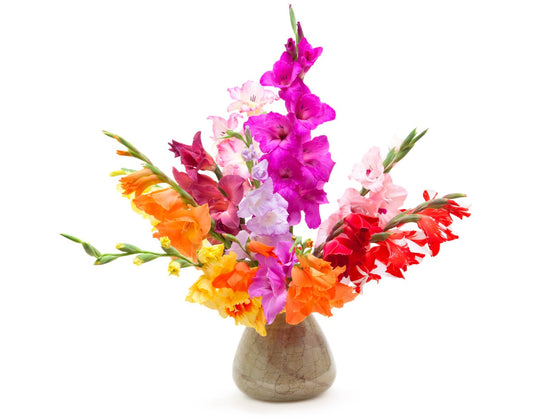
Gladioli
Grow gladioli from corms in Australia: planting depth and timing for six zones, staking, feeding, cutting, lifting and storing, pests and the wild weed species.
| Position | Full sun, sheltered from wind |
|---|---|
| Depth | 10 to 15 cm, flat side down |
| Spacing | 10 to 15 cm |
| First pick | 13 to 17 weeks from planting |
Hippeastrum
Grow hippeastrums in any Australian zone: when to plant bulbs, why the neck sits above the soil, pots, feeding, frost, pests, toxicity and state weed status.
| Position | Full sun or dappled shade |
|---|---|
| Depth | Top third above soil |
| Spacing | 10 to 30 cm |
| First pick | 5 to 8 weeks |