
How to Grow Red Currants in Australia
Red currant is a deciduous shrub for cold-winter gardens. Plant a dormant bare-root cane from June to August in rich, moist, well-drained soil, 1.2 to 1.8 m apart. It needs a long, cold winter and afternoon shade where summers are hot. Prune each winter, keeping the fruiting spurs on older branches. Net the bush as berries colour, and pick whole trusses in December or January.
| Sun | Sun, afternoon shade if hot |
|---|---|
| Water | Evenly moist; mulch over shallow roots |
| Soil | Rich, moist, well drained, pH 6.0 to 6.5 |
| Feed | Medium; spring feed, potash at flowering |
| Spacing | 1.2 to 1.8 m |
| Depth | At the old soil mark |
| Germination | Not from seed: plant dormant bare-root canes |
| Harvest | Light crop second summer |
| Container | At least 45 cm across, 40 L |
| Frost | Hardy when dormant; late frost harms flowers |
| Use | Jelly, desserts, sauces and fresh |
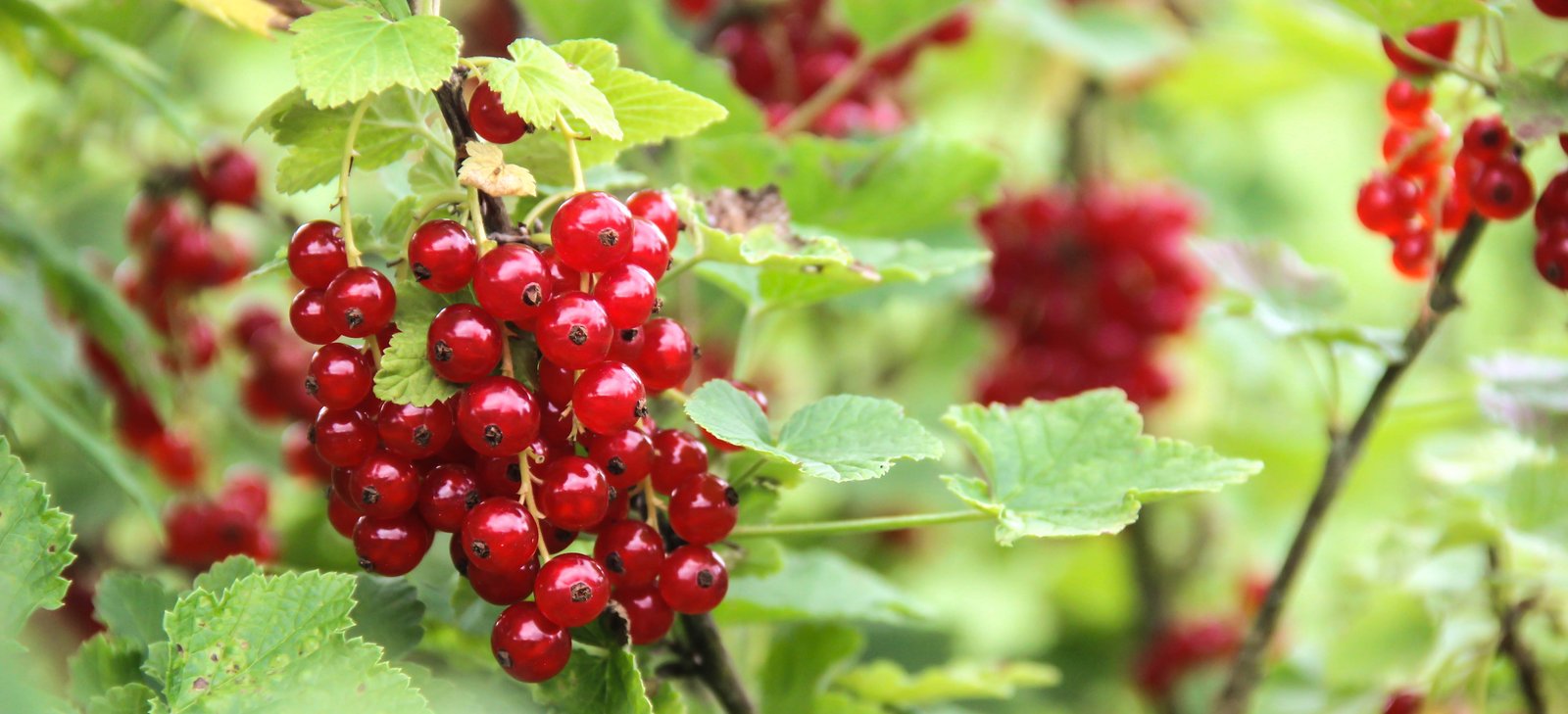
Red currant (Ribes rubrum) is a deciduous fruiting shrub in the gooseberry family, Grossulariaceae, grown for long trusses of glossy, tart red berries. In cold-winter gardens such as Hobart, Canberra and Ballarat, a bush can crop for many years and often ripens in time for Christmas. The one thing to get right is pruning, because it differs from black currant.
Three mistakes that matter
- Pruning it like a black currant. Black currant fruits best on last year's shoots and takes hard cutting. Red currant also fruits on short spurs (stubby fruiting shoots) along older branches. Cut those away and the crop goes with them. Follow Pruning and Training instead.
- Planting where winters are too mild. Red currant needs a long, cold winter to flower and fruit well, and hot afternoons scorch its leaves. On a warm coast the bush grows but crops poorly. Check your zone in When to plant before buying.
- Leaving ripening fruit uncovered. Birds find red berries fast and can strip a bush in days. Net the bush as the first trusses colour, using the wildlife-safe netting described under Care by growth stage.
When to plant
Plant dormant bare-root canes (sold leafless, with no soil on the roots) from June to August, the bare-root season, before the buds break. Red currant starts growing very early in spring, so the earlier in winter it goes in, the better it settles. It needs roughly 800 to 1,200 hours between 0 and 7°C each winter to flower and fruit well. There is no succession planting.
| Zone | Example cities | Plant | Harvest | Notes |
|---|---|---|---|---|
| Tropical | Darwin, Katherine NT; Cairns, Townsville QLD; Broome WA | Not recommended | Not recommended | Winters are far too warm for the chill red currants need, and the heat scorches their leaves. |
| Subtropical | Brisbane, Gold Coast, Sunshine Coast QLD; Coffs Harbour, Lismore NSW | Not recommended | Not recommended | Coastal winters give too little chill for fruit. Queensland growers look to Stanthorpe, in the cool zone. |
| Arid and semi-arid | Mildura VIC; Broken Hill, Dubbo NSW; Port Augusta SA; Kalgoorlie WA | Jun-Jul | Dec-Jan | Marginal: frosty nights give fair chill, but summer heat scorches. Plant in afternoon shade and mulch deeply. |
| Temperate | Sydney, Newcastle, Wollongong NSW; Melbourne, Geelong VIC | Jun-Aug | Dec-Jan | Melbourne's winters suit red currants; the Sydney coast is marginal for chill. Plant before buds break. |
| Mediterranean | Perth, Bunbury WA; Adelaide and the SA coast | Jun-Aug | Dec-Jan | Marginal: Adelaide gets fair chill, the Perth coast too little for reliable fruit. Give afternoon shade and steady summer water. |
| Cool and alpine | Hobart, Launceston TAS; Canberra ACT; Ballarat VIC; Stanthorpe QLD | Jun-Aug | Dec-Jan | The best red currant country, with ample chill. Plant before buds break; cover flowers against late frost. |
If a cane arrives before its bed is ready, heel it in. Lay the roots in a shallow trench of moist soil in a cool spot, then move it before the buds swell.
Site, soil and setup
| Get the bed right | What to do |
|---|---|
| Sun | Full sun in cool districts; in warmer ones, morning sun with shade from the hottest afternoon sun, and shelter from strong winds |
| Frost | Avoid frost hollows, because late frosts damage the early flowers |
| Soil | Rich, moisture-holding and well drained; on heavy clay, plant in a raised bed; on sand, dig in plenty of organic matter |
| pH | 6.0 to 6.5, though red currant tolerates a wide range, including alkaline soil; below 6.0, dig in dolomite lime at 100 to 200 g per square metre, 4 weeks ahead. See soil pH |
| Bed preparation | Clear perennial weeds, then dig in a 5 cm layer of compost and 5 to 10 cm of well-rotted cow or horse manure, 4 to 6 weeks before planting |
| Room | Bushes 1.2 to 1.8 m apart; cordons (single stems trained upright on a support) 30 to 45 cm apart |
Crop rotation does not apply to a shrub that stays put for years, so choose a spot you will not need to dig again. The roots are shallow and fibrous, and digging near the bush damages them.
Container growing
A red currant grows well in a large pot on a sunny patio, and a single cordon on a stake suits a pot especially well. Choose a pot at least 45 cm across, holding 40 L or more of premium potting mix, with drainage holes.
- Watering: keep the mix evenly moist through the growing season, and check daily in hot weather. See watering pots in summer.
- Feeding: fish and seaweed blend at 25 mL per 9 L, fortnightly from bud burst (when the buds open in spring). From first flowers to harvest, use liquid potash at the label rate, fortnightly.
- Position: move the pot into afternoon shade in hot weather.
- Repotting: move up to a larger pot every few years in early spring, or replace the top layer of mix.
Planting Canes
Red currant starts from a dormant bare-root cane planted straight into a prepared bed or pot, much as a raspberry cane is. One bush crops on its own, because red currant is generally self-fertile, though another red or white currant nearby can improve fruit size.
State rules for Ribes
Red currant belongs to the genus Ribes. Here is what each state's weed and plant biosecurity lists say about it.
| State or territory | What the lists say |
|---|---|
| Queensland | Not on the prohibited or restricted invasive plant lists |
| New South Wales | Not among the weeds in NSW WeedWise, which lists the state's priority weeds |
| Australian Capital Territory | Not in the territory's pest declaration |
| Victoria | Not on the declared noxious weeds list |
| South Australia | Not on the declared plants list |
| Northern Territory | Not on the A to Z list of weeds |
| Tasmania | Not a declared weed. The Plant Biosecurity Manual lets red currant plants in only under its general nursery stock import requirements |
| Western Australia | A plant may enter only if the Western Australian Organism List names it as permitted, and then only on the state's import conditions |
Bare-root preparation
Never let the roots dry out between the nursery and the hole. On arrival, stand the roots in a bucket of water with seaweed solution at 30 mL per 9 L while you prepare the hole. Trim off any broken or damaged roots, keeping the fine fibrous ones, which take up water. Plant the same day if you can.
Planting
- Dig a hole as deep as the roots and twice as wide, and form a small mound of soil in the centre.
- Spread the roots over the mound, with the cane's old soil mark at ground level or slightly below.
- Backfill, firm gently and water in well to settle soil around the roots.
- For a bush, cut the cane back to 15 to 25 cm above the soil to push out strong new shoots.
- For a cordon, tie the single stem to its cane and shorten its new growth by a quarter to a half. Cut other shoots to one bud.
- Mulch 5 to 8 cm deep with compost or straw, leaving a bare circle around the stem.
Pinch off any flowers in the first spring so the plant puts its energy into roots and shoots. Expect a light crop in the second summer and a fuller one from the third.
Care by growth stage
Steady moisture over shallow roots, and a cool root run under mulch, decide the crop. Red currant is a medium feeder, and heavy nitrogen makes soft, leafy growth.
| Stage | Water | Feed | Watch for |
|---|---|---|---|
| Planting and dormancy, June to August | Water in well, then keep the soil just moist, never soggy | Nothing until growth starts in spring; the bed preparation carries it | Waterlogged soil; buds swelling before the cane is planted |
| Bud burst and young shoots, September to October | Keep evenly moist; in dry spells give about 25 to 50 mm a week, by drip under mulch | Pelletised chicken manure at 100 g per square metre, scratched in; or a controlled release granular (NPK around 14-5-10) at the label rate | Currant lettuce aphid (Nasonovia ribisnigri) on new leaves; powdery mildew (Podosphaera mors-uvae) on young shoots |
| Flowering and fruit set, September to November | Steady; never let the soil dry out | Sulphate of potash at 30 to 50 g per square metre once, at first flowers; or a fruiting and flowering soluble (NPK around 15-4-26) at the label rate, fortnightly | Late frost on open flowers |
| Fruit colouring and picking, December to January | Keep watering steady right through picking; do not ease off before harvest | Fish and seaweed blend at 25 mL per 9 L, fortnightly; or a fruiting and flowering soluble (NPK around 15-4-26) at the label rate, fortnightly | Birds and possums; scorched leaves in heat above about 29°C |
As the first trusses colour, cover the bush with white netting stretched taut over a frame, with mesh too small to push a finger through. Birds can see white netting and, when it is taut, tend to bounce off it, while loose or black netting can trap them. After picking, water less and top up the mulch.
Pruning and Training
Prune every winter while the bush is dormant, before any growth shows. Fruit forms at the base of last year's shoots and on short spurs along older branches, so the aim is a steady supply of both.
- Second winter, a year after planting: build towards an open, goblet-shaped bush of eight to ten main branches. Shorten last year's growth on the first branches by half, then choose five or six more strong, outward-facing shoots and shorten them by half too.
- Established bush: shorten each branch's new growth by a quarter to a half. Cut side-shoots back to one or two buds to form fruiting spurs.
- Renewal: every year or two, remove one or two of the oldest, least fruitful branches, plus any that droop to the soil.
- Cordon: keep the stem tied to its cane, fixed to wires 40 to 60 cm apart. In midsummer, once side-shoots have seven or eight leaves, cut them back to five leaves. In winter, cut them to one or two buds and shorten the leader's new growth by a quarter.
- Fan: train five main branches flat against a wire-covered wall or fence, and prune their side-shoots as for a cordon.
Companion planting
Good neighbours for red currant bring in aphid predators and leave its shallow roots alone.
Grows well with
- Alyssum, whose flowers draw hoverflies, whose larvae eat aphids.
- Yarrow and dill, which also attract hoverflies and other aphid predators.
Keep apart
- Lettuce, chicory and endive, which share currant lettuce aphid with red currant.
- Mint, whose creeping runners compete with the currant's shallow roots.
Harvesting Fruit
Pick when the berries are richly coloured, glossy, firm and juicy, usually in December or January.
- Cut or snap off whole trusses (called strigs) rather than single berries, because the thin skins tear.
- Ripe berries hang on the bush for a while, so one or two pickings usually clear it.
- For fresh eating, leave the fruit two or three weeks after colouring to sweeten.
Store unwashed trusses covered in the fridge, where they usually keep for five to seven days. To freeze, spread dry berries in one layer on a tray, then bag them once frozen. The fruit is rich in pectin, so it sets well as redcurrant jelly, and it brightens desserts and summer pudding.
Common problems
Flowers open but few berries set. A late frost has damaged the flowers; cover the bush overnight with fleece when frost is forecast, and uncover it by day for the bees.
Brown, crisp leaf edges in summer. Heat and strong afternoon sun scorch the leaves; give afternoon shade, deep mulch and steady water.
A new cane never leafs up. Roots that dried out before planting rarely recover; keep them wet from arrival, as Bare-root preparation describes.
Crops shrink on an older bush. A crowded bush with too much old wood fruits less; renew it as Pruning and Training describes.
Pests and diseases
Before any spray, check that its label covers currants or berries, and keep to its withholding period.
Currant lettuce aphid (Nasonovia ribisnigri). These greenish to yellow-green aphids, about 2.5 mm long, use currants and gooseberries as their main host. In cold districts they lay eggs on the bushes to survive winter, and they prefer to feed on new leaves. Knock them off with a strong jet of water, or spray insecticidal soap under the leaves. Read more
Currant borer moth (Synanthedon tipuliformis). This introduced clearwing moth has been recorded in Tasmania, Victoria, New South Wales, the ACT and South Australia. Its larvae tunnel inside the stems, so shoots grow sickly in spring and repeated attacks can kill whole stems. In winter, cut out infested stems and bin them.
Powdery mildew (Podosphaera mors-uvae). A white powdery coating appears on leaves, shoot tips and berries, which can crack. The fungus survives winter on the twigs and thrives in humid, still air and on dry-stressed bushes. Prune for an open centre and, at the first spots, spray 1 part full-cream milk to 10 parts water. Read more
Prevention first
- Keep the centre of the bush open so air moves through and leaves dry quickly.
- Water at the base in the morning, never over the leaves.
- Rake up fallen leaves and prunings in winter, and bin any diseased material.
- Check shoot tips and leaf undersides weekly from bud burst, and act on the entries above.
Tips
- In frost-prone districts, plant on the south side of a fence or a south-facing slope. The winter shade delays flowering a little, which helps the flowers dodge late frosts.
- White currants are a pale form of the same species. Plant, feed and prune them exactly like red currants.
- To make more plants, take hardwood cuttings between late autumn and late winter. Choose 15 to 20 cm of young, healthy wood a little thicker than a pencil. Cut just below a bud, rub off the lower buds and push them into pots or the ground. Buds opening in spring show a cutting has taken.
- Take the netting off after the last picking, so birds can clean up spoiled fruit and hunt insects.
Due to quarantine restrictions and our shipping policy, we cannot send red currant canes to Western Australia or Tasmania.
Questions
Can I grow red currants in Brisbane or other warm areas?
Not reliably. Red currant needs roughly 800 to 1,200 hours between 0 and 7°C each winter to flower and fruit well. Coastal Queensland and the tropics fall far short, so the bush grows but crops poorly. Cool districts such as Stanthorpe, Canberra, Ballarat and Tasmania suit it best.
When do red currants ripen in Australia?
Usually in December or January, depending on the district and the season. Pick whole trusses once the berries are richly coloured, glossy and firm. Ripe fruit hangs on the bush for a while, and leaving it two or three weeks after colouring sweetens it for eating fresh.
How do you prune a red currant bush?
Prune in winter while the bush is dormant. Keep an open, goblet-shaped bush of eight to ten main branches. Shorten each branch's new growth by a quarter to a half, and cut side-shoots back to one or two buds. Every year or two, remove one or two of the oldest branches.
What is the difference between red currants and black currants?
They are different species that need different pruning. Black currant fruits best on last year's shoots, so it takes hard cutting. Red currant also fruits on short spurs along older branches, which must be kept. Red currant fruit is tart and bright red, and prized for jelly.
Can red currants grow in pots?
Yes. Use a pot at least 45 cm across, holding 40 L or more of premium potting mix. A single upright cordon on a stake suits a pot well. Keep the mix evenly moist, feed fortnightly from bud burst to harvest, and repot every few years.
Are white currants grown the same way as red currants?
Yes. White currants are a pale form of the same species, Ribes rubrum. Plant, feed, prune and net them exactly as you would red currants.
Grow it
Choose a size to add it to your cart. You stay on this page.
- Red Currant (Pack of 1 Cane)Out of stock

More edible produce to sow in September
All edible produce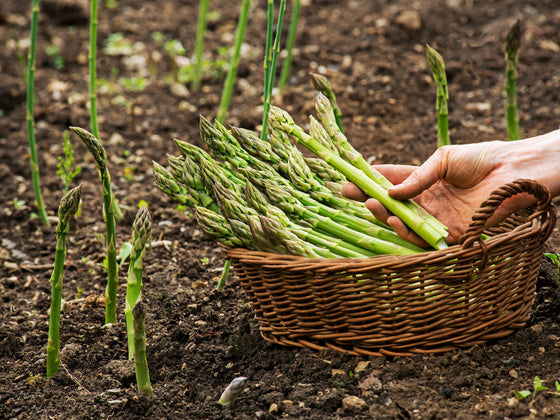
Asparagus
How to grow asparagus from seed in Australia: raising seedlings, planting crowns, a bed of its own, when to start picking spears and cutting back the fern.
| Position | Full sun |
|---|---|
| Depth | Seed 1 to 2 cm |
| Spacing | 30 to 40 cm |
| First pick | Third spring from sowing |
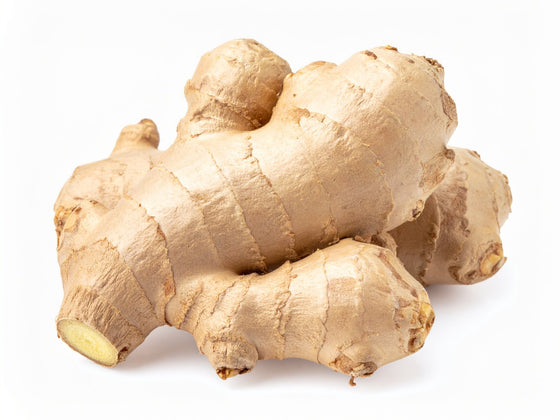
Ginger
Grow ginger in Australia from rhizomes: planting months for all six zones, pre-sprouting, pots for cool areas, feeding, soft rot, harvest and replanting.
| Position | Morning sun, afternoon shade |
|---|---|
| Depth | About 5 cm, buds up |
| Spacing | 20 to 30 cm apart |
| First pick | 22 to 43 weeks |
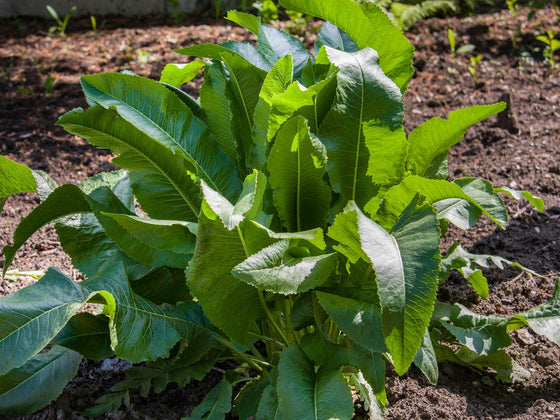
Horseradish
How to grow horseradish in Australia: planting crowns and root cuttings in all six climate zones, keeping it contained, light feeding and winter digging.
| Position | Full sun to light shade |
|---|---|
| Depth | About 3 cm, laid flat |
| Spacing | 30 to 50 cm |
| First pick | 30 weeks; mainly year two |
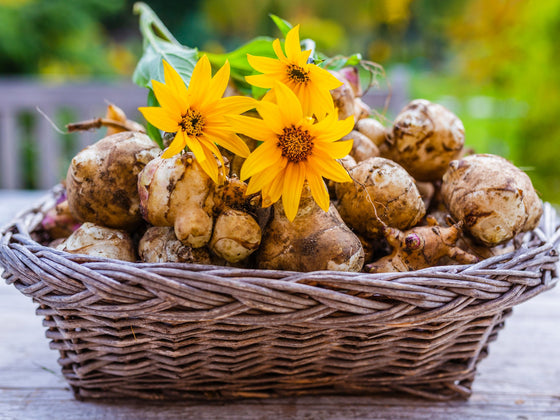
Artichoke Jerusalem
Grow Jerusalem artichokes in Australia: when to plant tubers in all six zones, spacing, feeding, keeping the patch contained, and when to dig and store them.
| Position | Full sun; tolerates part shade |
|---|---|
| Depth | Tubers 10 cm deep |
| Spacing | 25 to 30 cm |
| First pick | 20 to 30 weeks, usually at autumn dieback |