
How to Grow Salad Mix in Australia
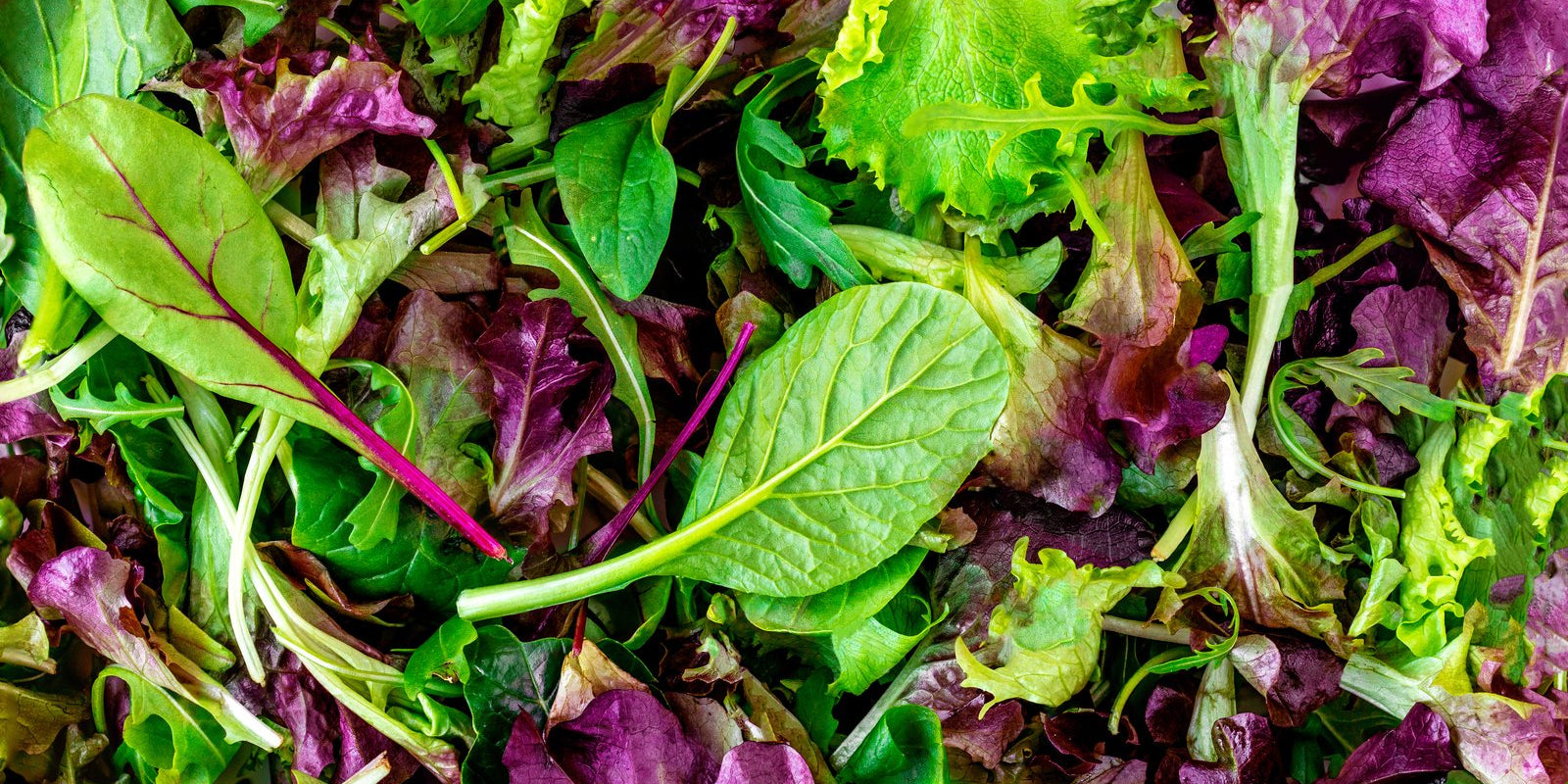
Salad Mix is a cut-and-come-again blend that may include lettuce, rocket, endive, chicory, kale, mizuna, mustard, spinach, silverbeet and beetroot greens. Sow it thinly, 5 to 8 mm deep, while the soil sits between 10°C and 25°C, mostly from autumn to spring. Keep it moist, thin to 2 to 3 cm, and cut leaves at 5 to 10 cm, just above the crowns, so the plants regrow.
| Sun | Full sun; summer afternoon shade |
|---|---|
| Water | Even moisture; shallow roots dry quickly |
| Soil | Humus rich, well drained, pH 6.0 to 7.0 |
| Feed | Light; fish and seaweed blend after cuts |
| Spacing | Thin to 2 to 3 cm |
| Depth | 5 to 8 mm |
| Germination | 5 to 21 days, soil 10 to 25°C |
| Harvest | First cut 4 to 6 weeks |
| Container | Yes, 30 cm pot, 10 to 15 L |
| Frost | Light frost; kale and rocket hardiest |
| Use | Raw baby leaf salads, sandwiches, wilted greens |
Salad Mix is a cut-and-come-again blend of young leaves, such as lettuce (Lactuca sativa) and rocket (Eruca sativa), from the daisy, cabbage and amaranth families. Sown together and cut young, it fills a bowl with mixed colours, textures and flavours from one small patch, and the plants regrow after cutting. The usual mistake is sowing into summer heat, when the seed sulks and the seedlings that do come up run quickly to seed.
Three mistakes that matter
- Sowing into hot soil. Lettuce seed stops germinating in hot soil (see When to plant), and the brassicas in the mix bolt (run to flower) in heat. Make autumn to spring the main season, and shade any warm-weather sowing.
- Burying the seed too deep. Lettuce seed needs some light to germinate, so a thick blanket of soil leaves gaps where the lettuce should be. Cover the seed with 5 to 8 mm of fine soil, keeping to the shallow end.
- Cutting into the crown. The crown is the growing point at the base of each plant, and a cut below it leaves nothing to regrow. Cut 2 to 3 cm above the soil, and the patch comes back for more.
When to plant
Soil temperature decides sowing: the mix germinates best between 10°C and 25°C, and the seed will not come up above 30°C. That makes the cool and mild months the window in most of Australia, with the hottest weeks left out. Sow a small patch every week or two, so a fresh patch is ready as the last one tires.
| Zone | Example cities | Sow | Harvest | Notes |
|---|---|---|---|---|
| Tropical | Darwin, Katherine NT; Cairns, Townsville QLD | Apr-Jun | May-Aug | A dry-season crop: sow once the wet eases, shade the afternoons, and finish before the build-up. |
| Subtropical | Brisbane, Bundaberg QLD; Coffs Harbour, Lismore NSW | Mar-Sep | Apr-Nov | Winter is the easiest season; shade March and September sowings through warm spells. |
| Arid and semi-arid | Alice Springs NT; Broken Hill NSW; Mildura VIC; Kalgoorlie WA | Mar-May and Aug-Oct | Apr-Jul and Sep-Dec | Frosty midwinter nights slow growth; March rows need shade and daily water while days stay hot. |
| Temperate | Sydney, Newcastle, Wollongong NSW; Melbourne, Geelong VIC | Mar-May and Aug-Nov | Apr-Jul and Sep-Jan | Autumn sowings crop longest; spring sowings bolt sooner as days lengthen, so cut them young. |
| Mediterranean | Perth, Bunbury WA; Adelaide and the SA coast | Mar-Oct | Apr-Dec | Mild, wet winters allow steady sowing; stop before the dry summer heat sends the mix to seed. |
| Cool and alpine | Canberra ACT; Ballarat VIC; Orange NSW; Stanthorpe QLD | Feb-Apr and Sep-Nov | Mar-Jun and Oct-Jan | Sow autumn patches by April so they size up before winter; cover spring sowings on frosty nights. |
At the hot edge of a window, sow into soil watered the evening before and keep the patch shaded through the middle of the day. At the cold edge, expect slower germination, and sow early enough for the plants to size up before the coldest weeks.
Site, soil and setup
Tender leaves come from fast, unchecked growth, so a small patch of good soil near the tap beats a big bed far away.
| Get the patch right | What to do |
|---|---|
| Size | A patch of 1 m by 1 m is enough to start; box it in so it sits slightly raised |
| Sun | Full sun from autumn to spring; morning sun and afternoon shade in summer |
| Soil | Well drained and rich in humus; dig in a 5 cm layer of compost or well-rotted manure |
| pH | 6.0 to 7.0; below that, garden lime or dolomite lime at 100 to 200 g per square metre, at least 6 weeks before sowing |
| Base feed | Pelletised chicken manure at 100 g per square metre, worked in about 2 weeks before sowing |
| Summer shade | A frame of 30% white shade cloth stretches production into the warm months |
Rotate by the members' pests. Sow the mix away from a bed that has just grown cabbage or broccoli. Keep lettuce out of a bed where downy mildew struck for 2 to 3 years.
Container growing
Because it is cut young, the whole mix suits pots, troughs and the recycled foam boxes many gardeners grow it in. Most edible plants need 10 to 15 L of mix, which a 30 cm pot holds. A trough of the same depth can be sown edge to edge. Make sure it has drainage holes, and fill it with premium potting mix, never garden soil.
- Water: check daily and water before the surface dries, because the shallow roots dry out fast and dry leaves turn bitter.
- Feed: worm casting liquid diluted to weak tea colour, every week or two from the first true leaves.
- Position: full sun in winter; move the pot to morning sun and afternoon shade once the weather warms.
Sowing Seeds
Sow the mix direct, where it will be cut, either scattered over a patch or in shallow rows.
Sowing direct
- Rake the soil to a fine, level surface and water it well the day before.
- For a patch, scatter the seed thinly over the surface; for rows, sprinkle it thinly along shallow drills 20 cm apart.
- Cover with 5 to 8 mm of fine soil or sieved compost, and firm it gently.
- Water with a fine spray, and keep the surface damp until the seedlings are up, usually in 5 to 21 days.
Sowing in a tray
A seedling tray or shallow box gives a quick crop on a verandah or balcony. The leaves are cut in the tray, never planted out.
- Fill the tray 3 to 4 cm deep with moist seed-raising or potting mix.
- Sprinkle the seed evenly, leaving a little space around each one, since crowding invites damping off (a soil disease that rots seedlings at soil level).
- Press the seed in and cover it with no more than 5 mm of mix, since lettuce needs light. Lay a clear lid on top until it sprouts.
Care by growth stage
The roots stay shallow, so steady water decides this crop: a patch that dries out once turns bitter and starts to flower. Weeks count from sowing, and the last stage repeats after every cut.
| Stage | Water | Feed | Watch for |
|---|---|---|---|
| Germination, weeks 0 to 2 | Keep the surface damp with a fine spray | None | Slow emergence, up to 3 weeks in cold soil; gaps in soil too hot for the seed (see When to plant); snails at night; birds scratching |
| Seedlings and thinning, weeks 2 to 4 | Water whenever the surface starts to dry | Seaweed solution at half strength, 15 mL per 9 L, fortnightly from the first true leaves | Seedlings collapsing at soil level in crowded trays; aphids on the soft tips |
| First cut, weeks 4 to 6 | Water daily in hot or windy weather | Fish and seaweed blend at 25 mL per 9 L, fortnightly | Green caterpillars on the rocket, kale, mizuna and mustard |
| Regrowth and repeat cuts, week 6 onwards | Keep moisture steady right up to each cut, and water again straight after | Fish and seaweed blend at 25 mL per 9 L straight after each cut, then fortnightly | Yellow angular patches on lettuce in cool, wet weather; any plant raising a flower stalk |
Go lightly on feed: soft, lush growth draws aphids and snails, and good bed preparation carries most of the crop. If growth stalls in poor soil, a light dose of all-purpose controlled release granular (NPK around 14-5-10), scratched in at the label rate, can help.
Mulch between rows with sugar cane, pea straw or lucerne straw once the seedlings are a few centimetres tall. Keep it back from a scattered patch, where the leaves themselves shade the soil.
Thinning
A mix sown thinly needs only a light thinning, and the thinnings are the first salad.
- Thin once the first true leaves show, so seedlings stand 2 to 3 cm apart.
- Snip unwanted seedlings at soil level, so the roots of the keepers stay undisturbed.
- Cut out any plant that raises a flower stalk, often the rocket, mizuna or mustard first in warm weather, and keep cutting the rest.
- To grow a few heads on, thin a corner so the plants stand about 25 cm apart.
The Lettuce, Silverbeet and Kale guides cover each of those plants grown to full size.
Companion planting
Good neighbours give summer shade, clear out quickly, or feed the insects that eat aphids.
Grows well with
- Sweet corn or climbing beans, with the salad patch on their east side, for afternoon shade in summer.
- Radish, quick from seed and pulled before the patch closes over.
- Alyssum and coriander left to flower, which feed the ladybirds, lacewings and hoverflies that eat aphids.
Keep apart
- Cabbage, broccoli and cauliflower, which share cabbage white caterpillars and aphids with the rocket, kale, mizuna and mustard in the mix.
- Pumpkin and zucchini, whose sprawling vines and large leaves smother a low patch.
Harvesting Leaves
Start cutting when most leaves are 5 to 10 cm long, usually 4 to 6 weeks after sowing.
- Cut early in the morning, before the sun is high, when the leaves are crisp.
- Shear a bunch with scissors just above the crowns, at the height given in Three mistakes.
- For a smaller picking, take the outside leaves by hand and leave the centres to grow.
- Cut a section at a time, so one part of the patch is regrowing while another is ready.
Put the leaves in a plastic bag in the fridge straight away, and use them as soon as you can, while they are crisp. Just before eating, swish them through cold water to float out aphids hidden in the rosettes, then drain them or pat them dry. A salad spinner can bruise baby leaves. Discard any leaves heavily soiled with bird droppings.
Toss the leaves raw in salads, or wilt the larger ones through a hot dish. Spinach, silverbeet and beetroot greens are high in oxalate, which people prone to kidney stones are advised to avoid, raw or cooked.
Common problems
No seedlings in summer. Lettuce seed held in hot soil stops germinating, and can stay dormant after it cools. The remedy is the timing and depth in Three mistakes.
Bitter leaves. Dry soil, heat and age all sharpen the flavour, and once a plant starts to flower its leaves turn progressively more bitter.
One member crowding the rest. Fast growers such as rocket and mizuna can overtop the slower lettuce and spinach. Cut regularly, so the quick members never shade out the slow ones.
A patch that thins out after cutting. Plants cut into the crown (see Three mistakes) or left dry after cutting often fail to regrow, so resow the gaps.
Seedlings collapsing in trays. Crowding and wet mix let damping off rot the stems at soil level. Read more
Pests and diseases
Snails, aphids and caterpillars do most of the damage, and the cool, wet weeks that suit the mix also suit downy mildew.
Common garden snail (Cornu aspersum) and slugs. Often the worst pests of lettuce and young salad leaves, they feed at night and after rain, chewing seedlings and soft leaves. Hunt them by torchlight, set beer traps, and keep mulch back from young seedlings. Read more
Currant lettuce aphid (Nasonovia ribisnigri) and other aphids. Small greenish aphids settle deep in the rosettes of lettuce, endive and chicory, and other aphids crowd the soft tips. Hose them off or spray insecticidal soap, and let ladybirds and lacewings do the rest. Read more
Cabbage white butterfly (Pieris rapae). Its velvety green caterpillars chew holes in the rocket, kale, mizuna and mustard. Squash the yellow eggs under the leaves, pick off caterpillars, and use a Bacillus thuringiensis (Bt) spray if numbers build, following the label withholding period. Diamondback moth (Plutella xylostella) caterpillars are smaller, about 10 mm, and wriggle off on a silk thread when touched; treat them the same way. Read more
Lettuce downy mildew (Bremia lactucae). Pale yellow, angular patches form on the upper leaf with a white growth beneath, on lettuce, endive and chicory. It needs leaves wet for 3 to 4 hours, so water at the base in the morning and bin affected leaves. Read more
Prevention first
- Check under the leaves and in the centre of each rosette daily.
- Water at the base early in the day, so the leaves dry quickly.
- Pull sowthistle and dandelion nearby, which carry lettuce downy mildew.
- Where birds scratch, cover fresh sowings with white, taut netting whose mesh is too small to poke a finger through.
Tips
- From Perth to Melbourne, Anzac Day is a fair reminder to sow an autumn patch that will crop through the winter.
- Through a hot summer, a tray of the mix on a shaded verandah keeps salad coming while the garden bed rests.
- Mesclun is a separate blend of salad leaves, with a guide of its own.
Due to quarantine restrictions and our shipping policy, we cannot send Salad Mix seeds to Tasmania.
Questions
What is in a salad mix seed packet?
A blend of salad leaves sown together and cut young. The mix may include chicory, leaf lettuces, beetroot greens, endive, rocket, kale, mizuna, mustard, silverbeet and spinach, so the proportions vary from packet to packet.
When should I plant salad mix in Australia?
Sow through the cool and mild months, when the soil sits between 10°C and 25°C. That is autumn to spring in most southern gardens, March to September in the subtropics and the dry season in the tropics. The seed will not germinate above 30°C.
How do you harvest salad mix so it grows back?
Cut the leaves with scissors when they are 5 to 10 cm long, 2 to 3 cm above the soil and just above the crowns. Water and feed straight after cutting, and the plants regrow for further pickings.
Why is my salad mix going to seed?
Heat, dry soil and lengthening days all push the plants to flower, and the brassicas in the mix often bolt first. Cut out plants with flower stalks, keep the soil moist, shade the patch in summer and sow a fresh patch every week or two.
Can you grow salad mix in a pot?
Yes. A pot about 30 cm across holds 10 to 15 L of premium potting mix, enough for a good patch. Foam boxes and troughs work too. Water before the mix dries, and feed worm casting liquid every week or two.
Grow it
Tap Add beside a size to put it in your cart. You stay on this page.
- Salad Mix seedsFrom $2.99

More vegetables to sow in October
All vegetables
Amaranth
How to grow leaf amaranth, or Chinese spinach, in Australia: sowing months for six climate zones, warm soil, thinning, picking, pests and cooking the leaves.
| Position | Full sun |
|---|---|
| Depth | 3 to 6 mm |
| Spacing | 15 cm apart |
| First pick | 4 to 8 weeks |

Artichoke
How to grow globe artichokes from seed in Australia: sowing, spacing, feeding, when to cut the buds, cutting back, cardoon, and sowing months for every zone.
| Position | Full sun |
|---|---|
| Depth | 10 mm |
| Spacing | 1 to 1.5 m apart |
| First pick | About 42 to 57 weeks |

Bean
How to grow beans in Australia: sowing months by climate zone, bush and climbing types, low-nitrogen feeding, watering, picking pods, plus bean fly and rust.
| Position | Full sun, at least six hours |
|---|---|
| Depth | 25 to 30 mm |
| Spacing | Bush 10 to 15, climbing 15 to 20 cm |
| First pick | 7 to 14 weeks |

Beetroot
How to grow beetroot in Australia: sowing months for all six climate zones, thinning the seed clusters, steady watering, harvest size and the pests that matter.
| Position | Full sun or part shade |
|---|---|
| Depth | 10 to 20 mm |
| Spacing | 10 cm apart after thinning |
| First pick | 7 to 12 weeks |