
How to Grow Red Cedar in Australia
Australian red cedar is a large deciduous rainforest tree for acreage, parks and big gardens, not a suburban block. Press fresh seed onto moist mix without covering it, and seedlings usually appear in 2 to 4 weeks at 18 to 30°C. Plant out young, among other trees, to reduce cedar tip moth damage. Trees usually flower and set seed from six to eight years old.
| Sun | Full sun; shade young trees |
|---|---|
| Water | Steady while young; deep soaks in dry spells |
| Soil | Deep, fertile, well drained, acid to neutral |
| Feed | Minimal: compost mulch, seaweed solution for seedlings |
| Spacing | 10 to 15 m canopy |
| Depth | Surface sow, do not bury |
| Germination | 2 to 4 weeks at 18 to 30°C |
| Harvest | From year 6 to 8 |
| Container | Young plants only; plant out within a year |
| Frost | Trees take light frost; protect seedlings |
| Use | Shade and feature tree for large gardens |
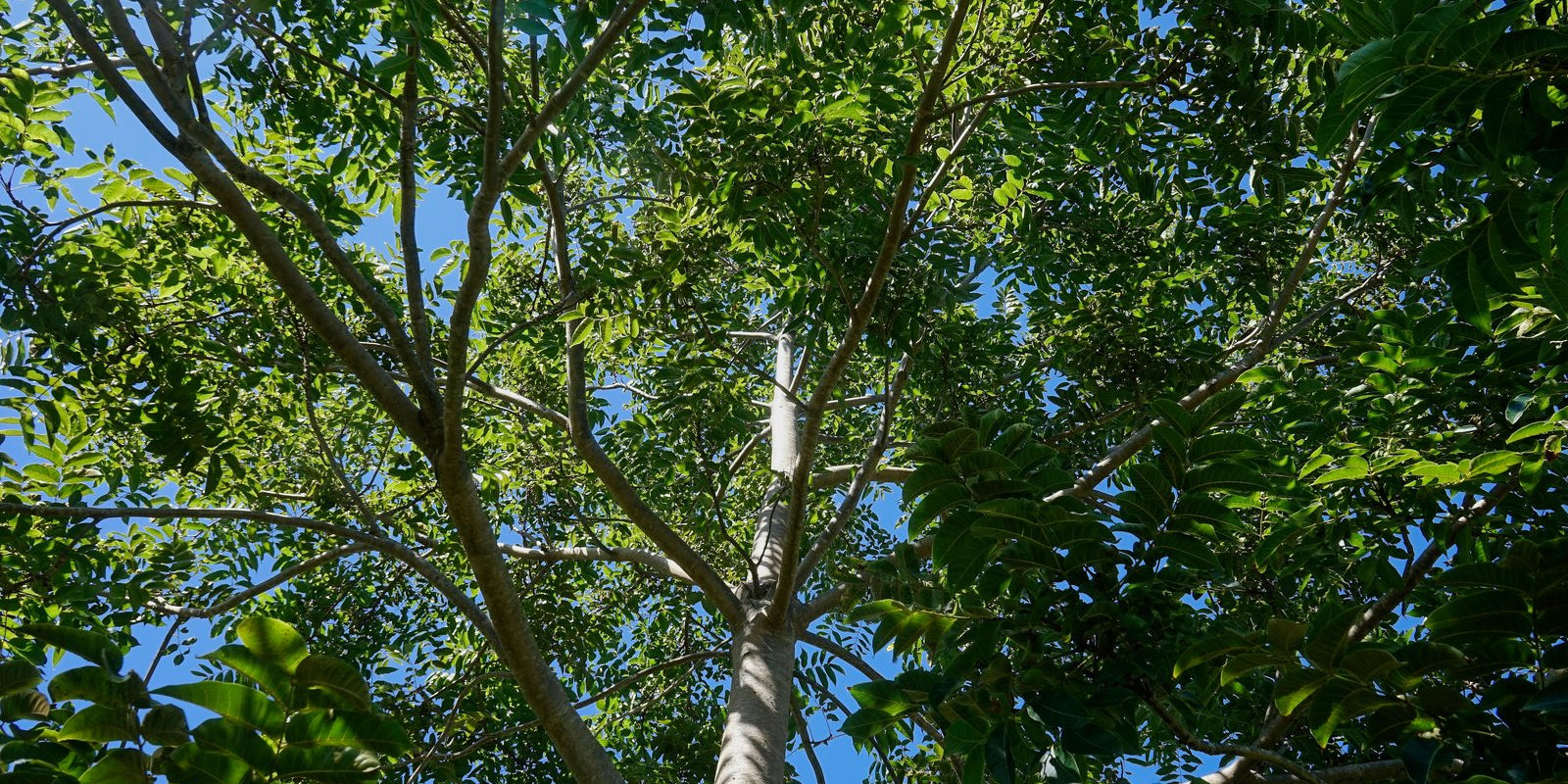
Australian red cedar (Toona ciliata) is a large deciduous rainforest tree in the mahogany family (Meliaceae), native to eastern Queensland and New South Wales. It is grown for summer shade, red new leaves each spring and its history as the prized timber of the cedar getters. It is not a true cedar (Cedrus, a conifer) and not western red cedar (Thuja plicata), a North American conifer. It can reach 40 m or more, so the mistake most gardeners make is planting it where it has no room.
Three mistakes that matter
- Planting it in a small garden. Red cedar grows tall and broad, with a buttressed (flared) base and spreading surface roots. Beside a house it outgrows the space, and its roots crowd paths and pipes. Plant it on acreage, in a park or a large garden, well clear of buildings.
- Burying old seed. The seed is sown on the surface, and it loses viability within about three months at room temperature. Sow it soon after it arrives, or keep the packet sealed in the fridge.
- Growing it alone in full sun. The cedar tip moth (Hypsipyla robusta) singles out young trees in the open and kills the leading shoot, leaving a bushy, many-stemmed tree. Plant among other trees with light shade, and train a new leader as described under Formative Pruning.
When to plant
Sow in spring or autumn, when the mix holds between 18 and 30°C. In frosty districts, sow in spring under cover, so seedlings have the warm months to grow before winter. One sowing is enough: a planted red cedar can live for 150 years or more.
| Zone | Example cities | Sow | Flowering | Notes |
|---|---|---|---|---|
| Tropical | Darwin NT; Cairns, Townsville QLD; Broome WA | Mar-Jun | Jan-Mar | Sow in the milder months; plant out as the wet season starts. Water deeply through the dry season. |
| Subtropical | Brisbane, Sunshine Coast, Bundaberg QLD; Coffs Harbour, Lismore NSW | Sep-Nov and Mar-Apr | Jan-Mar | Its home range. Shade young trees from afternoon sun and plant out in the summer wet season. |
| Arid and semi-arid | Alice Springs NT; Broken Hill NSW; Mildura VIC; Kalgoorlie WA | Not recommended | Not recommended | Too dry for a rainforest tree without constant irrigation; hot wind, frost and western sun scorch young trees. |
| Temperate | Sydney, Newcastle, Wollongong NSW; Melbourne, Geelong VIC | Sep-Nov and Mar | Feb-Mar | Native on the NSW coast. In Melbourne, sow in spring under cover and plant out after frost. |
| Mediterranean | Perth, Bunbury WA; Adelaide and the SA coast | Sep-Nov and Mar-Apr | Feb-Mar | Grows in Adelaide with summer water. Mulch deeply and protect the western side of the trunk from sun. |
| Cool and alpine | Hobart, Launceston TAS; Canberra ACT; Ballarat VIC; Orange NSW | Oct-Dec | Feb-Mar | Marginal. Sow under cover, keep young trees frost-free for two winters, then plant in a warm, sheltered spot. |
A seedling heat mat keeps an early spring tray in that range. In the tropics, avoid sowing in the build-up, when heat often runs above that range.
Site, soil and setup
Red cedar suits acreage, farms, parks and wide streets, where a broad crown has room to spread. In gardens and streets it usually stays smaller than in rainforest, often 10 to 15 m tall.
| Need | What to do |
|---|---|
| Space | Allow a canopy 10 to 15 m wide. Keep it well away from buildings, pipes, paving and vegetable beds. |
| Light | Full sun or light shade for trees. Seedlings and young trees do best with side shade from nearby trees. |
| Soil | Deep, fertile, well-drained loam or clay. Avoid deep sand that dries out far down, and ground that stays waterlogged. |
| pH | Acid to neutral suits best, and it tolerates alkaline soil. It rarely needs correcting. |
| Shelter | A warm spot out of strong wind and frost hollows. On exposed sites, the western side of the trunk can scorch. |
| Bed preparation | Dig a 5 cm layer of compost through a wide planting area, then keep a leaf litter or compost mulch over the root zone. |
A tree stays put for generations, so rotation does not apply. In its home range, red cedar regenerates readily near fruiting trees. If you plant beside rainforest bushland, ask your local bushcare group first, because revegetation work prefers seed from local trees.
Weed status by state
The Australian Plant Census records red cedar as native to Queensland and New South Wales, with a doubtful naturalised record on Norfolk Island. No state or territory declares it a weed, but Lord Howe Island, outside its range, removes it as an introduced plant.
| State or territory | What the weed lists say |
|---|---|
| Queensland | Native. Not on the state's prohibited or restricted invasive plant lists. |
| New South Wales | Native, on the coast and ranges north from Milton. Not among the weeds in NSW WeedWise. On Lord Howe Island, outside its range, the island's weed strategy lists it among introduced Australian plants targeted for removal. |
| Victoria | Not a declared noxious weed, and not on the state advisory list of environmental weeds. |
| Tasmania | Not on the declared weeds index. |
| South Australia | Not on the state's list of declared plants. |
| Western Australia | Permitted under section 11 on the Western Australian Organism List, so not a declared pest. |
| Northern Territory | Not on the list of declared weeds. |
| Australian Capital Territory | Not a declared pest, and not on the advisory list of naturalised alien plants. |
Overseas, red cedar has gone wild in southern and eastern Africa and on warm oceanic islands, where its winged seed spreads on the wind. Outside its home range, pull up stray seedlings rather than letting them grow on.
Container growing
A pot suits red cedar only for its first year or so, before it goes into the ground. Young plants establish best when planted out small, at 10 to 20 cm tall, not at 1 to 2 m tall. Pot each seedling into a 14 cm pot, about 1.5 L, of premium potting mix. If planting must wait, move it on to a pot at least 30 cm wide, about 15 L, for one more season.
- Watering. Water when the top 2 cm of mix is dry, and never let a young plant wilt. See watering pots through summer.
- Feeding. Give fish and seaweed blend at 25 mL per 9 L once a fortnight while it is in leaf.
- Position. Bright light with shade from hot afternoon sun, out of strong wind and frost.
- Planting out. Plant out once a firm main stem has formed, before roots circle the pot.
Sowing Seeds
Raise red cedar in trays or cells, then grow seedlings on in pots before they go into the ground.
Starting under cover
- Fill a tray or cell tray with fresh seed raising mix, firm it and water it first.
- Lay each winged seed flat on the surface and press it in. Do not cover it.
- Mist the surface, or water from below, and keep the tray in bright shade at the temperature under When to plant.
- Seedlings usually appear in 2 to 4 weeks, but germination can be patchy and some seed takes months, so keep a slow tray moist.
- Pot each seedling on once it has its first true leaves and can be handled by a leaf.
Sowing direct
Direct sowing is not advised. Seedlings are sensitive to drought and weed competition, and a tiny red cedar is easily lost in open ground.
Transplanting
First harden off each plant (a week or more of longer outdoor stays, so leaves toughen to sun and wind), as in hardening off seedlings. Plant it at the depth it grew in the pot, with a handful of worm castings in the hole. Water it in with seaweed solution at 30 mL per 9 L. In wet-summer districts, plant in the wet season so rain helps the roots settle.
Care by growth stage
Steady water decides how well a young red cedar grows. Feed very little: fertile soil and a mulch of leaf litter carry it once it is in the ground.
| Stage | Water | Feed | Watch for |
|---|---|---|---|
| Seedlings in trays, weeks 1 to 8 | Keep the surface just moist; mist or water from below | Nothing until the first true leaves, then seaweed solution at half strength, 15 mL per 9 L, every fortnight | Damping off (seedlings rotting at soil level); pale, bleached leaves in strong sun |
| Potted seedlings, weeks 8 to 26 | Water when the top 2 cm of mix is dry | Fish and seaweed blend at 25 mL per 9 L every fortnight while in leaf | Roots circling the pot; wilted shoot tips |
| Planting out, weeks 12 to 52 | Soak deeply at planting, then weekly in dry spells | Worm castings in the hole and seaweed solution at 30 mL per 9 L to water in; 5 cm compost mulch kept clear of the stem | Weeds crowding the stem; frost on cold nights |
| Young tree, years 2 to 5 | A deep soak every week or two in long dry spells | Top up the compost mulch to 5 cm each spring | Cedar tip moth on new shoots from about August to May; scorched bark on the west side |
| Established tree, from about year 6 to 8 | Keep watering steady in long dry spells, as it comes into flower and seed | None beyond its own fallen leaves left as mulch | Tip moth in flowers and young fruit |
Week ranges run from the sowing date, but plant out by size and season, not by the week. If growth stalls in very poor soil, a light dose of all-purpose controlled release granular (NPK around 14-5-10), scratched in once in spring, can help.
Formative Pruning
Prune in winter, while the tree is bare, to build one straight trunk.
- Keep the strongest, most upright new shoot as the leader and cut its rivals back to their base.
- Remove low side branches a few at a time, while they are still thin.
- Keep more than half of the crown on the tree at every pruning.
- Stop lifting the crown once the clear trunk reaches 3 to 4 m.
- Cut out root suckers and dead or damaged wood as you find them.
- If a young tree is badly misshapen, cut it off near ground level. It coppices well (regrows from the stump), and one new shoot can be trained as a fresh trunk.
Companion planting
Red cedar grows best as one tree among many, as in the mixed rainforest it comes from.
Grows well with
- Silky oak (Grevillea robusta), a fast, narrow-crowned shelter tree, in Queensland and northern New South Wales only, as it spreads elsewhere.
- Established eucalypts, whose light canopy gives young cedars side shade and straight growth.
- Rainforest trees and shrubs on the same site, which recreate the shaded setting in which tip moth attacks fewer trees.
Keep apart
- Vegetable beds, because its spreading surface roots compete with crops for water and food.
- Other red cedars in a close group or block, which draws the tip moth.
Flowering and Seed
Trees grown from seed usually start to flower and fruit at six to eight years old, with sprays of small, fragrant white flowers in spring.
- Watch for flowers from about September to January, the timing varying by district.
- Seed capsules ripen from about January to March and split into five parts, scattering winged seed.
- Pick capsules from the tree once the seeds inside turn green-brown, before the capsules split open.
- On a high tree, tie a gauze bag over unripe capsules on a low branch to catch the seed.
- Dry the capsules in a paper bag in an airy place until they open.
Fresh seed germinates best, and warm storage soon kills it (see Three mistakes that matter). Sealed in a plastic bag in the fridge, at 5 to 8°C, it can keep for about a year.
Common problems
Empty trays. Buried or stale seed is the usual cause (see Three mistakes that matter), or a tray that dried out. Some sound seed is simply slow to come up. Read more
Pale, bleached seedlings. Strong sun scorches young leaves, so move trays and pots into bright shade.
Bushy tree with several trunks. The leading shoot has died, most often from cedar tip moth, which leaves a tunnel and sawdust-like frass in the dead tip. Train a new leader as under Formative Pruning.
Peeling bark on the west side. Late-summer sun burns the trunk of trees in the open, most often in hot, dry districts. Shade it with nearby planting, or coat the sun-facing side of young trunks with water-based lime paint.
Poor growth in wet ground. Waterlogged soil stunts and rots the roots, so plant on a slope or a well-drained site. Read more
Bare branches in autumn. Leaf fall in autumn is normal: red cedar is one of the few deciduous Australian natives, and new red leaves follow from late winter.
Pests and diseases
Red cedar is generally healthy, apart from one serious native insect and seedling rot.
Cedar tip moth (Hypsipyla robusta). The caterpillar tunnels into the growing tip, which wilts and dies, and side buds then grow into a stunted, many-branched tree. Larvae are active from about August to May, and contact sprays cannot reach them inside the stem. A heavy attack can brown off a tree within weeks and occasionally kills it. In Victoria the moth is not known to be a problem. Cut out wilted tips with the larva inside and bin them, then train a new leader.
Damping off (Pythium species and Rhizoctonia solani). Seedlings rot at soil level and topple, worst in wet, cool mix. Read more
Prevention first
- Use new seed raising mix and scrubbed trays for every sowing, and water from below.
- Bin cut tips rather than composting them, because a larva inside can still finish its growth there.
- Check the leading shoot weekly from late winter to autumn, looking for wilting, sap droplets and sawdust-like frass.
- Keep young trees watered and mulched, because vigorous trees recover from attack better.
Tips
- Plant red cedar where you want summer shade and winter sun, such as beyond the north side of an outdoor area.
- Its flowers feed bees, so it earns a place in a pollinator planting on large blocks.
- Label each young tree in autumn, because a bare stick in winter is easily mown or pulled out.
Questions
Is Australian red cedar a real cedar?
No. Australian red cedar, Toona ciliata, is a deciduous rainforest tree in the mahogany family, Meliaceae. True cedars, Cedrus, are conifers, and western red cedar, Thuja plicata, is a North American conifer in the cypress family. The cedar name comes from its fragrant red timber.
How big does a red cedar tree get?
In rainforest it can reach 40 m or more, with a buttressed trunk. In gardens and streets it usually grows 10 to 15 m tall with a broad, spreading crown. Allow a canopy 10 to 15 m wide and plant it well away from buildings, pipes and paving.
How do you grow red cedar from seed?
Press the winged seed onto moist seed raising mix without covering it. Keep the tray in bright shade at 18 to 30°C. Seedlings usually appear in 2 to 4 weeks. Pot them on, then plant out once a firm main stem forms, ideally while still small.
What is eating the tips of my red cedar?
Most likely the cedar tip moth, Hypsipyla robusta. Its caterpillar tunnels into the growing tip, which wilts and dies, and the tree turns bushy. Cut out and bin wilted tips, train one new leader in winter, and grow young cedars among other trees, where attacks are fewer.
Is red cedar a weed anywhere in Australia?
No state or territory declares it a weed. It is native to Queensland and New South Wales. Lord Howe Island, outside its range, removes it as an introduced plant, and the national plant census gives a doubtful naturalised record on Norfolk Island. Pull up stray seedlings outside its home range.
Does red cedar lose its leaves in winter?
Yes. It is one of the few deciduous Australian native trees. Leaves fall in autumn, and red to coppery new growth appears from late winter into spring. A bare tree in winter is normal.
Grow it
Tap Add beside a size to put it in your cart. You stay on this page.
- Red Cedar Tree seedsFrom $2.63

More flowers to sow in October
All flowers
Ageratum
Grow ageratum from seed in Australia: surface sowing, months for six climate zones, spacing, pots, deadheading, weed and livestock cautions and pests to watch.
| Position | Full sun, 6 hours or more |
|---|---|
| Depth | Surface, 1 mm at most |
| Spacing | 30 cm; Red Flint 40 cm |
| First pick | 12 to 14 weeks from sowing |

Alyssum
Grow alyssum from seed in Australia: sowing months for six climate zones, surface sowing, spacing, pots, shearing for more flowers, and the pests to watch.
| Position | Full sun or part shade |
|---|---|
| Depth | Surface sow, press in |
| Spacing | 15 to 20 cm |
| First pick | 8 to 9 weeks from sowing |

Aster
Grow China asters in Australia: sowing months for six climate zones, spacing, pots, watering, Fusarium wilt and thrips, and cutting blooms for the vase.
| Position | Full sun, 6 hours minimum |
|---|---|
| Depth | 6 mm |
| Spacing | 30 to 40 cm |
| First pick | 13 to 16 weeks |
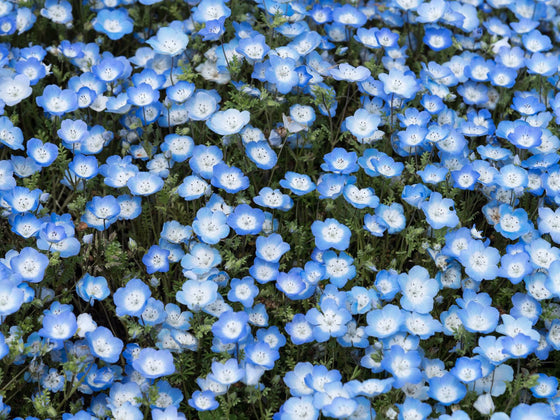
Baby Blue Eyes
Grow baby blue eyes from seed in Australia: autumn sowing months for six climate zones, depth, spacing, shade, pots, pests and saving seed for next year.
| Position | Full sun to part shade |
|---|---|
| Depth | 2 to 3 mm |
| Spacing | 15 to 20 cm |
| First pick | Flowers in 12 to 16 weeks |