
How to Grow Sprekelia in Australia
Plant Jacobean lily bulbs in spring once frost has passed and the soil has warmed. Set each bulb with its neck at or just above the soil surface, 20 to 30 cm apart, in full sun and free-draining soil. Water while the plant is in leaf, then keep the bulb dry through its winter rest. Scarlet flowers follow from late spring into summer.
| Sun | Full sun, warm spot |
|---|---|
| Water | Moist in growth; dry while dormant |
| Soil | Free-draining, neutral to alkaline |
| Feed | Compost before planting; liquid potash from first buds |
| Spacing | 20 to 30 cm apart |
| Depth | Neck at soil surface |
| Germination | Grown from bulbs, not seed; warm soil |
| Harvest | Late spring to summer |
| Container | Very good: 15 cm pot per bulb |
| Frost | Tender; keep dormant bulbs dry and frost-free |
| Use | Pots, warm borders and rock gardens |
Jacobean lily (Sprekelia formosissima) is a summer-growing bulb in the amaryllis family (Amaryllidaceae) from Mexico. It is grown for a single scarlet flower on each stem, shaped more like an orchid than a lily. Some botanists now place it in Zephyranthes, but bulbs are still sold as Sprekelia. It is happiest in warm, frost-free gardens and in pots. The usual mistake is leaving the resting bulb in cold, wet soil over winter.
Three mistakes that matter
- Wet soil while dormant. In its home range the bulb rests through a dry winter, and soggy soil rots it or stops it flowering. Plant in free-draining soil or a pot, and stop watering once the leaves die back.
- Digging and dividing too often. The bulb resents disturbance and can skip flowering for several years after it is lifted or split. Choose a permanent spot and let clumps crowd, lifting only when they stop flowering well.
- A cold, shady spot. Shade and cold soil give leaves with few or no flowers, and hard frost injures the bulb. Give it full sun against a warm wall, or grow it in a pot that moves under cover for winter.
When to plant
Plant dormant bulbs in spring, once the soil has warmed and the danger of frost has passed. Flowers usually follow several weeks after planting, from late spring into summer. Bulbs return each year, so this is a one-off planting rather than a crop to repeat.
| Zone | Example cities | Plant | Flowering | Notes |
|---|---|---|---|---|
| Tropical | Darwin NT; Cairns, Townsville QLD; Broome WA | Aug-Oct | Oct-Jan | The dry season suits its rest. Plant before the wet in raised beds or pots that drain fast. |
| Subtropical | Brisbane, Sunshine Coast, Bundaberg QLD; Coffs Harbour, Lismore NSW | Aug-Oct | Oct-Jan | Ideal country. Plant as the soil warms and leave clumps in the ground for years. |
| Arid and semi-arid | Alice Springs NT; Broken Hill, Dubbo NSW; Mildura VIC | Sep-Oct | Nov-Jan | Plant after the last frost. Water weekly in summer, and pot or lift bulbs where winter frosts bite. |
| Temperate | Sydney, Newcastle, Wollongong NSW; Melbourne, Geelong VIC | Sep-Nov | Nov-Feb | Suits the Sydney coast. Melbourne gardens need a warm, sheltered bed or a pot. |
| Mediterranean | Perth, Bunbury WA; Adelaide and the SA coast | Sep-Nov | Nov-Feb | Water through the dry summer. Keep dormant bulbs out of winter rain, in sandy beds or pots. |
| Cool and alpine | Hobart, Launceston TAS; Canberra ACT; Ballarat VIC; Orange NSW | Oct-Nov | Dec-Feb | Too frosty to leave in the ground. Grow in pots moved under cover, or lift bulbs each autumn. |
Where spring warms slowly, plant late rather than early, because a bulb sitting in cold, wet soil is the one most likely to rot.
Site, soil and setup
Each bulb makes a small clump of strap-shaped leaves up to about 50 cm long, with flower stems usually 15 to 35 cm tall. That suits the front of a sunny bed, a rock garden or a pot.
| Need | What to do |
|---|---|
| Light | Full sun. In hot inland gardens it tolerates part shade. |
| Shelter | A sheltered spot facing north or west, where a wall or paving holds warmth. |
| Soil | Free-draining loam or sandy soil with some organic matter. On heavy clay, use a raised bed or a pot. |
| pH | Neutral to alkaline. On acid soil, rake in garden lime at 100 to 200 g per square metre 4 weeks before planting. |
| Bed preparation | Dig in a 5 cm layer of compost before planting. The bulb asks for little feeding after that. |
A perennial bulb stays put, so crop rotation does not apply. See soil pH explained before liming, because a soil test tells you whether lime is needed at all.
Jacobean lily and the state weed lists
No state or territory declares Jacobean lily a weed.
| State or territory | What the weed lists say |
|---|---|
| Western Australia | Sprekelia formosissima is on the Western Australian Organism List as Permitted (section 11), so it is not a declared pest. |
| South Australia | Not on the list of declared plants. |
| Victoria | Not a declared noxious weed, and not on the advisory list of environmental weeds in Victoria. |
| Tasmania | Not on the declared weeds index. |
| New South Wales | Not among the NSW WeedWise weed profiles, and the Flora of NSW holds no entry for the genus. |
| Australian Capital Territory | Not a declared pest plant, and not on the ACT advisory list of naturalised alien plants. |
| Queensland | Not on the prohibited or restricted invasive plant lists. |
| Northern Territory | Not on the A to Z list of weeds in the NT. |
Seed usually sets only when pollen comes from a different plant, and new plants mostly arise as offsets beside the parent. Put unwanted bulbs in the general waste bin, and ask your local council about any plant near bushland.
Container growing
Pots suit Jacobean lily well, because they keep the bulb dry in winter and can move out of frost. Allow one bulb to a pot about 15 cm across, roughly 1.5 L. For three bulbs set 10 cm apart, use a pot at least 25 cm across, about 7 L. Fill with premium potting mix in a pot with drainage holes, and set each bulb with its neck just above the mix.
- Position. Full sun outdoors from spring to autumn, at least four hours of direct sun if kept indoors.
- Watering. Water when the top few centimetres of mix are dry, from the first shoots until the leaves begin to die back.
- Feeding. Give liquid potash at the label rate every fortnight from the first buds until the last flower fades, and nothing while dormant.
- Winter. Keep the resting pot dry, as Three mistakes that matter explains, under the eaves or in a frost-free shed.
- Repotting. Leave bulbs undisturbed for three to four years, then divide and repot while dormant.
Planting Bulbs
Jacobean lilies start from dormant bulbs, planted neck up into warm spring soil.
Planting in the ground
- Choose firm bulbs, up to about 5 cm across, and bin any that are soft or mouldy.
- Set each bulb pointed neck up, with the neck at or just above the soil surface.
- Space bulbs 20 to 30 cm apart, in groups of three or more for a fuller show.
- Water in once, then keep the soil only just moist until shoots appear.
- Mark the spot, because shoots can be slow to appear in cool soil.
Care by growth stage
Two things decide flowering: steady water while the plant is in leaf, and a dry, frost-free rest in winter. The leaves feed next year's flower bud, so let them die down on their own.
| Stage | Water | Feed | Watch for |
|---|---|---|---|
| Planting to first shoots, about weeks 0 to 4 | Water in once; then only enough to keep the soil just moist | None beyond the compost dug in before planting | Bulbs rotting in cold, wet soil |
| Leaves and flower bud, about weeks 4 to 8 | Water deeply once a week when rain fails | Liquid potash at the label rate every fortnight once the first buds show | Common garden snail (Cornu aspersum) and slugs on new leaves; mealybugs at the leaf bases |
| Flowering, late spring to summer | Keep watering steadily through flowering | Liquid potash every fortnight until the last flower fades | Red-brown leaf tips from leaf scorch after wet weather |
| Summer leaf growth | Water when the topsoil dries; the bulb copes with short dry spells | None | Mealybugs; long leaves flopping, which is normal |
| Autumn die-back and winter rest | Stop once the leaves yellow; none while dormant | None | Waterlogged soil and frost |
Count the weeks from planting day, and expect each stage later in cool districts. If growth is weak in poor soil, a light dose of all-purpose controlled release granular (NPK around 14-5-10) scratched in at planting can help.
Where frosts are hard or winters wet, lift the bulbs after the leaves wither. Dust off the soil and store them in dry peat or vermiculite somewhere frost-free, about 5 to 13°C, until spring.
Companion planting
The best neighbours are low, sun-loving plants that want little water in winter, so one routine suits the whole bed.
Grows well with
- Portulaca, which carpets hot, dry ground at the front without shading the bulbs.
- Pineapple lily (Eucomis), another summer bulb that wants water in growth and a dry winter rest.
- Low succulents in a rock garden, which ask for the same sharp drainage.
Keep apart
- Daffodils, hippeastrums and nerines showing red-brown leaf scorch, because the same fungus infects Jacobean lily.
- Thirsty winter annuals and lawn edges, whose winter watering keeps the dormant bulbs wet.
- Dense groundcovers and tall perennials that shade the leaves.
Harvesting Blooms
Each flower lasts only a few days, so most gardeners enjoy it on the plant and cut a stem only for a short vase display.
- Cut a stem near the base as the bud splits and shows red.
- Cut only the flower stem and never the leaves, for the reason given in Care by growth stage.
- Snap off spent stems unless you want seed, so the bulb puts no energy into pods.
A bulb can send up more than one stem in a season, one after another, so a clump can flower for several weeks.
Common problems
Leaves but no flowers. Recent lifting or dividing, shade and small bulbs are the usual causes, and even healthy bulbs do not flower every year.
Bulbs rotting. Cold, waterlogged soil during the winter rest is the cause, as described in Three mistakes that matter. Read more
Leaves flopping over. The leaves grow upright at first and then lie down as they lengthen, which is normal rather than a sign of thirst.
Scorched or collapsed leaves after a cold snap. Frost below about minus 4°C injures the plant, so mulch bulbs in the ground or move pots under cover.
Pests and diseases
Few pests trouble Jacobean lily, but these are the ones to watch for in Australian gardens.
Mealybugs (family Pseudococcidae). White, waxy, sap-sucking insects hide in the crevices where the leaves emerge from the bulb, leaving sticky honeydew and sooty mould. Dab small colonies with a cotton bud dipped in methylated spirits, or spray horticultural oil in cool weather. Read more
Leaf scorch (Didymella curtisii). This fungus turns leaf tips red-brown and spreads red spots down leaves and flower stems, mostly in wet weather. Pick off affected tips as soon as they appear, and put badly affected plants in the general waste bin rather than the compost.
Common garden snail (Cornu aspersum) and slugs. They rasp holes in new leaves as they emerge, feeding mostly at night and sheltering among strappy plants by day. Go out with a torch in the first two hours after sunset and drop them into soapy water. Read more
Prevention first
- Plant only firm, clean bulbs into free-draining soil.
- Check the leaf bases for mealybugs as new leaves emerge each spring.
- Water the soil rather than the leaves, which keeps leaf scorch in check.
- Clear away dead leaves in autumn, because good garden hygiene leaves pests and fungus fewer places to hide.
Tips
- Separate the small offset bulbs from a crowded clump while it is dormant and replant parent and offsets straight away.
- To raise plants from seed, cross two different plants and sow the flat black seed fresh. Keep seedlings growing without a winter rest for two years. Expect up to seven years to flowering.
- A terracotta pot dries out faster than plastic after rain, which helps in districts with wet winters.
- Royal Botanic Gardens Victoria has grown Jacobean lily in a garden bed in Melbourne. A warm, sheltered spot can carry it through a southern winter.
Due to quarantine restrictions and our shipping policy, we cannot send Jacobean lily bulbs to Western Australia or Tasmania.
Questions
Is the Jacobean lily poisonous?
Yes, if eaten. The bulb, leaves and stems contain amaryllis alkaloids, lycorine among them, which can cause vomiting, drooling, stomach pain and diarrhoea. Plant where dogs and children will not dig, and wash your hands after handling bulbs. For poisoning advice anywhere in Australia, call 13 11 26.
Why is my Jacobean lily not flowering?
Recent lifting or dividing is the most common cause, because the bulb can skip flowering for several years after disturbance. Shade, a wet winter and small bulbs also stop flowers. Even healthy bulbs do not flower every year, so give them full sun, a dry rest and time.
When do Jacobean lilies flower in Australia?
From late spring into summer, usually several weeks after the bulbs are planted or start growing again. Each flower lasts only a few days, but a bulb can send up more than one stem in turn.
Can you grow Jacobean lilies in pots?
Yes, and pots suit them well. Use a pot about 15 cm across for one bulb, with the neck just above the mix. Let the pot dry out in winter and move it out of frost and rain. Leave the bulbs undisturbed for three to four years.
Do I need to lift Sprekelia bulbs over winter?
Only where winters are frosty or wet. In warm, dry-winter districts, leave them in the ground. Elsewhere, lift them after the leaves wither and store them in dry peat or vermiculite at about 5 to 13°C until spring.
Is a Jacobean lily a true lily?
No. It belongs to the amaryllis family, Amaryllidaceae, alongside hippeastrum and daffodils, not to the lily family. Despite the common name, its single red flower looks more like an orchid than a lily.
More bulbs and tubers to sow in October
All bulbs and tubersCalla Lily
Grow coloured calla lilies from tubers: planting depth and timing for six zones, water and feeding, lifting and storing, pests, toxicity and the arum lily weed.
| Position | Full sun, hot-afternoon shade |
|---|---|
| Depth | 10 cm, rough side up |
| Spacing | 20 to 30 cm |
| First pick | 7 to 12 weeks from planting |
Canna Lily
Grow dwarf canna lilies from rhizomes: planting depth and timing for six zones, feeding for flowers, cutting back, dividing, pests, and the weed lists by state.
| Position | Full sun |
|---|---|
| Depth | 5 to 10 cm, eyes up |
| Spacing | 30 to 90 cm |
| First pick | 6 to 8 weeks from shooting |
Crinum
Grow crinum lilies in Australia: plant bulbs with the neck above the soil, where to site them, care through flowering, lily caterpillar control and toxicity.
| Position | Full sun to part shade |
|---|---|
| Depth | Neck just above soil |
| Spacing | 40 to 60 cm |
| First pick | Nov to Apr flowers |
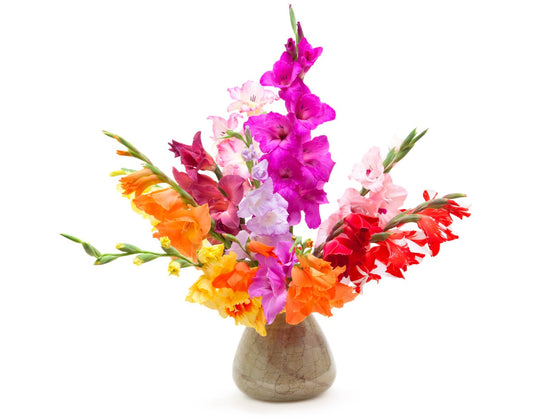
Gladioli
Grow gladioli from corms in Australia: planting depth and timing for six zones, staking, feeding, cutting, lifting and storing, pests and the wild weed species.
| Position | Full sun, sheltered from wind |
|---|---|
| Depth | 10 to 15 cm, flat side down |
| Spacing | 10 to 15 cm |
| First pick | 13 to 17 weeks from planting |