
How to Grow Spring Star Flowers in Australia
Plant spring star bulbs in autumn, about 5 cm deep and 5 to 7 cm apart, in sun or part shade and free-draining soil. Keep the soil lightly moist while the leaves grow, then let the bulbs rest dry over summer. Pale blue or white stars open from late winter. Never cut green leaves, snip spent flowers before seed forms, and never eat any part.
| Sun | Full sun to part shade |
|---|---|
| Water | Moist in winter growth; dry summer rest |
| Soil | Free-draining sand, loam or clay; any pH |
| Feed | Bone meal at planting; potash from first flowers |
| Spacing | 5 to 7 cm apart |
| Depth | About 5 cm deep |
| Germination | Grown from bulbs; leaves appear in autumn |
| Harvest | Flowers Jul to Nov, by zone |
| Container | Yes; a pot at least 20 cm wide |
| Frost | Frost hardy |
| Use | Path edges, drifts under trees, pots, posies |
Spring star (Ipheion uniflorum) is a small bulb from Argentina and Uruguay and a relative of onions in the family Amaryllidaceae. It is grown for starry, sweetly scented flowers in late winter and spring. Some botanists place it in a neighbouring genus as Tristagma uniflorum, so labels vary. It shrugs off frost and dry summers and spreads into clumps under trees and along paths. That same vigour has let it escape into bushland in parts of southern Australia.
Three mistakes that matter
- Cutting the leaves while they are green. The grassy leaves feed the bulb for next year, so mowing or tidying them early leaves weaker bulbs and fewer flowers. Wait until the leaves turn yellow and collapse before you clear them.
- Planting in soil that stays wet. Bulbs sitting in soggy ground, above all over summer while they rest, can rot. Choose a spot that drains freely, use a raised bed or a pot on heavy clay, and leave summer irrigation off the patch.
- Letting it seed beyond the garden. Spring star has gone wild near Perth, Sydney and Dubbo, and in two South Australian reserves. Snip spent flowers before the seed pods ripen, bin spare bulbs and old potting mix, and keep plantings away from bushland.
When to plant
Plant dormant bulbs in autumn, from March to May, once the summer heat has broken and nights are cooling. In most southern gardens Anzac Day falls inside the window. Leaves appear in autumn and the flowers follow from late winter, so one planting is enough: the bulbs stay in the ground for years.
| Zone | Example cities | Plant | Flowering | Notes |
|---|---|---|---|---|
| Tropical | Darwin NT; Cairns, Townsville QLD; Broome WA | Not recommended | Not recommended | No cool season for the leaves to grow, and wet-season heat and rain rot the resting bulbs. |
| Subtropical | Brisbane, Gold Coast, Sunshine Coast QLD; Coffs Harbour, Lismore NSW | Apr-May | Jul-Sep | Chill bulbs 6 to 8 weeks first, and plant where summer storms drain away quickly. |
| Arid and semi-arid | Alice Springs NT; Broken Hill, Dubbo NSW; Mildura VIC | Apr-May | Aug-Sep | Water through dry winters. It has naturalised around Dubbo, so snip spent flowers. |
| Temperate | Sydney, Newcastle, Wollongong NSW; Melbourne, Geelong VIC | Mar-May | Aug-Oct | Anzac Day sits in the window. Naturalised around Sydney, so keep it away from bushland. |
| Mediterranean | Perth, Bunbury WA; Adelaide and the SA coast | Mar-May | Aug-Nov | Dry summers suit the resting bulbs. Naturalised near Perth and Busselton, so deadhead before seed. |
| Cool and alpine | Hobart, Launceston TAS; Canberra ACT; Ballarat VIC; Orange NSW | Mar-Apr | Sep-Nov | Frost hardy. Plant early so roots form before the ground turns cold. |
Bulbs that arrive during a late hot spell can wait a week or two, stored as under Harvesting Blooms. Subtropical gardeners chill them first, as under Planting Bulbs.
Site, soil and setup
Spring star is unfussy about soil type, provided water does not sit around the bulbs.
| Need | What to do |
|---|---|
| Light | Full sun to part shade. The space under deciduous trees suits it, because the branches are bare while the leaves grow. |
| Soil | Sand, loam or clay, as long as it drains well. |
| pH | Acid, neutral or alkaline all suit it, so no lime or sulphur is needed. |
| Bed preparation | Fork a 5 cm layer of compost into the top of the bed, then rake in bone meal at 100 g per square metre as you plant. Leave out fresh chook manure, which can burn bulbs. |
| Drainage | Where puddles sit for hours after rain, build a raised bed or grow it in pots. |
| Rotation | None: a clump stays put for years. After bulb rot, replant firm bulbs in a drier spot, not the bed that failed. |
Weed status, state by state
Spring star is declared a weed in no state or territory. It is regarded as an emerging environmental weed in Victoria and Western Australia, and it spreads by seed, offsets, water and moved soil.
| State or territory | What the weed lists say |
|---|---|
| Western Australia | Permitted (section 11) on the Western Australian Organism List, and recorded as present. The state herbarium lists it as naturalised around Perth, Rockingham, Busselton, Kojonup and Kent. |
| South Australia | Not on the List of Declared Plants. It has been recorded in Innes National Park and Kyeema Conservation Park. |
| Victoria | Not a declared noxious weed, and not on the state's advisory list of environmental weeds. The state flora records it as naturalised, though it calls the early records doubtful. |
| New South Wales | Not listed in NSW WeedWise. The state flora records it as naturalised in the Sydney, Dubbo, Mudgee and Nyngan districts. |
| Queensland | Not a prohibited or restricted invasive plant. |
| Tasmania | Not on the declared weeds index. |
| Northern Territory | Not on the list of weeds in the NT. |
| Australian Capital Territory | Not a declared pest plant, though it has escaped from gardens around Canberra. |
Never tip old potting mix or garden prunings into bushland or a creek line.
Container growing
Spring star suits shallow pots and troughs, and in wet-summer districts a pot lets you move the resting bulbs out of the rain. Choose a pot at least 20 cm across with drainage holes, holding about 4 L or more. Fill it with premium potting mix with a few handfuls of coarse grit through it. Plant at the same depth and spacing as in the ground.
The store sells two forms, both about 15 to 20 cm tall: 'Light Blue', with pale violet-blue stars, and 'Moonlights', with pure white ones. They grow the same way, so the choice is colour.
- Watering. Soak the mix after planting, then water whenever the surface feels dry while the leaves are green. Let the pot dry out once the leaves yellow.
- Feeding. Give seaweed solution at 30 mL per 9 L fortnightly through leaf growth. From the first flowers until the leaves fade, switch to liquid potash at its label rate, also fortnightly.
- Position. Sun or light shade from autumn to spring, then a dry corner, such as under the eaves, for summer.
Planting Bulbs
Spring star starts from small dormant bulbs.
Chilling
Spring star is far less demanding than tulips, and it naturalises unaided around Sydney. In subtropical gardens, though, a spell of cold before planting can bring the flowers on sooner. Put the bulbs in a paper bag in the crisper of the fridge for 6 to 8 weeks, then plant them in April or May. Gardeners in cooler zones can skip this step.
Planting in the ground
- Ready the bed with compost and bone meal, as the table under Site, soil and setup sets out.
- Sort the bulbs, setting aside any that are soft, mouldy or shrivelled.
- Set each bulb pointed end up, about 5 cm deep.
- Space them 5 to 7 cm apart, in groups of 10 to 15 or more for a drift.
- Water in well, then keep the soil lightly moist as the leaves appear.
- Mark the spot, since the bed looks empty all summer and is easy to dig into by mistake.
Dividing clumps
Each bulb builds a cluster of offsets (small bulbs that form beside the parent), so clumps thicken readily. When flowering thins out from crowding, lift the clump once the leaves have died down. Separate the bulbs and replant them straight away at the same depth.
Care by growth stage
Flowers depend on moisture while the leaves are green, sun, and a dry summer rest. Feed lightly.
| Stage | Water | Feed | Watch for |
|---|---|---|---|
| Planted, roots forming, autumn | Soak once, then keep just moist | Bone meal at 100 g per square metre raked in at planting | Puddles over the planting after heavy rain |
| Leaves growing, late autumn to winter | Water moderately in dry spells so the soil stays lightly moist | Seaweed solution at 30 mL per 9 L every fortnight | Snails and slugs on damp nights |
| Flowering, late winter to spring | Keep watering steadily through flowering and picking | Liquid potash at the label rate every fortnight from the first flowers | Spent flowers to snip before seed pods ripen |
| Leaves yellowing, late spring | Taper off as the leaves yellow, then stop | Liquid potash fortnightly until the leaves fade | Mowers and tidy-ups cutting green leaves |
| Dormant, summer | None needed; the bulbs cope with dry soil | None | Irrigation overspray or summer storms soaking the bed |
Each autumn, spread a 5 cm layer of compost over established clumps before the leaves emerge. If growth stalls in poor soil, a light dose of all-purpose controlled release granular (NPK around 14-5-10) scratched into the surface in autumn can help.
Companion planting
Good neighbours flower at the same time, want the same dry summer, or hide the fading leaves.
Grows well with
- Daffodils and jonquils, spring bulbs that rest through the same dry summer.
- Anemones, which flower alongside and add stronger colour to a pale drift.
- Scilla, another small blue bulb that suits the same edging and pots.
- Violas, low cool-season bedding that fills the gaps between clumps.
Keep apart
- Onions, chives and garlic, whose grassy leaves and smell are easy to mix up with spring star.
- Dahlias and other thirsty summer growers, whose watering soaks the resting bulbs.
- Boundaries with bushland, a creek line or a paddock, which seed and loose bulbs can reach.
Harvesting Blooms
Pick stems whose flowers have just opened, while the clump is in full bloom.
- Pick in the morning, while it is cool and the stems are full of water.
- Snip with clean, sharp scissors or secateurs and stand the stems in water straight away.
- Take the flower stems only, and leave every leaf on the plant.
Spare or newly bought bulbs keep best dry, in a paper bag in a cool, airy cupboard, until autumn planting. A handful of stems makes a small posy for an egg cup or bud vase.
Common problems
Leaves but few flowers. Crowded clumps, deep shade or leaves cut while green can leave bulbs too weak to bloom; divide as under Planting Bulbs.
The plants vanished in summer. This is normal dormancy, and the bulbs are resting below ground until the autumn shoots appear.
Stray plants beyond the bed. Seed or moved soil is the cause. Dig out each stray, bulb and all, while its leaves still show, and put it in the rubbish.
Pests and diseases
Spring star has no significant pest problems, and most trouble comes from wet soil or damp nights.
Garden snail (Cornu aspersum). Widespread in Australian gardens, snails may graze the tender leaves and flowers on damp nights. Hand-pick them by torchlight. Read more
Grey field slug (Deroceras reticulatum). A pest across the wetter south, it feeds at night and may rasp holes in new leaves after rain. Lay a tile or flowerpot base on damp soil as a trap, and clear the slugs sheltering under it each morning. Where traps are not enough, scatter an iron-based slug bait at the label rate as the leaves emerge. Read more
Bulb rot (soil fungi such as Fusarium). Bulbs kept wet turn soft and fail to shoot in autumn. Discard soft bulbs and replant firm ones where the soil drains.
Prevention first
- Plant only firm, plump bulbs, and throw out any soft ones found at lifting.
- Leave ground beetles, spiders and earwigs be, since they help keep slug numbers down.
- Check for snails and slugs on damp evenings while the leaves are young.
- Rake away dead leaves once the clump goes dormant, removing daytime shelter for slugs.
Tips
- Plant a pot by the front door, where the scent and the starry flowers can be seen up close.
- The flowers close at night, so put drifts where you pass during the day.
- Edge a lawn with spring star only where mowing can wait until the leaves have yellowed.
Due to quarantine restrictions and our shipping policy, we cannot send spring star bulbs to Western Australia or Tasmania.
Questions
When do you plant spring star bulbs in Australia?
In autumn, once the summer heat breaks. Most gardens plant from March to May, Brisbane and inland gardens in April or May, and cool districts such as Canberra in March or April. Leaves appear in autumn and the starry flowers follow from late winter into spring.
Is spring star a weed in Australia?
It is not a declared weed in any state or territory. It has naturalised around Perth, Sydney and Dubbo and in two South Australian reserves. It is seen as an emerging environmental weed in Victoria and Western Australia. Snip spent flowers before seed forms, and never dump bulbs or old potting mix.
Is spring star an onion, and can you eat it?
No. It is a relative of onions and the leaves smell of onion when crushed, but it is an ornamental bulb, not food. Do not eat any part, wear gloves when handling bulbs, and plant it well away from the vegie patch. For a suspected poisoning, call the Poisons Information Centre on 13 11 26.
How deep do you plant spring star bulbs?
About 5 cm deep, pointed end up, and 5 to 7 cm apart. Plant groups of 10 to 15 or more for a drift, in soil that drains freely, and water in well after planting.
Do spring star bulbs need chilling before planting?
Only in warm districts. Spring star is much less demanding than tulips. In subtropical gardens, though, 6 to 8 weeks in a paper bag in the fridge crisper can bring the flowers on sooner. Gardeners in cooler zones plant straight from the pack.
Why is my spring star not flowering?
Usually the clump is crowded, the spot is too shady, or the leaves were cut while still green. Lift and divide crowded clumps once the leaves die down, give the bulbs more sun, and leave the leaves until they yellow.
More bulbs and tubers to sow in October
All bulbs and tubersCalla Lily
Grow coloured calla lilies from tubers: planting depth and timing for six zones, water and feeding, lifting and storing, pests, toxicity and the arum lily weed.
| Position | Full sun, hot-afternoon shade |
|---|---|
| Depth | 10 cm, rough side up |
| Spacing | 20 to 30 cm |
| First pick | 7 to 12 weeks from planting |
Canna Lily
Grow dwarf canna lilies from rhizomes: planting depth and timing for six zones, feeding for flowers, cutting back, dividing, pests, and the weed lists by state.
| Position | Full sun |
|---|---|
| Depth | 5 to 10 cm, eyes up |
| Spacing | 50 to 70 cm |
| First pick | 6 to 8 weeks from shooting |
Crinum
Grow crinum lilies in Australia: plant bulbs with the neck above the soil, where to site them, care through flowering, lily caterpillar control and toxicity.
| Position | Full sun to part shade |
|---|---|
| Depth | Neck just above soil |
| Spacing | 40 to 60 cm |
| First pick | Nov to Apr flowers |
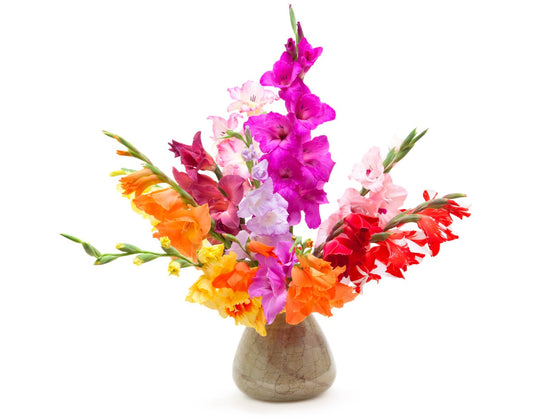
Gladioli
Grow gladioli from corms in Australia: planting depth and timing for six zones, staking, feeding, cutting, lifting and storing, pests and the wild weed species.
| Position | Full sun, sheltered from wind |
|---|---|
| Depth | 10 to 15 cm, flat side down |
| Spacing | 10 to 15 cm |
| First pick | 13 to 17 weeks from planting |