
How to Grow Tulsi in Australia
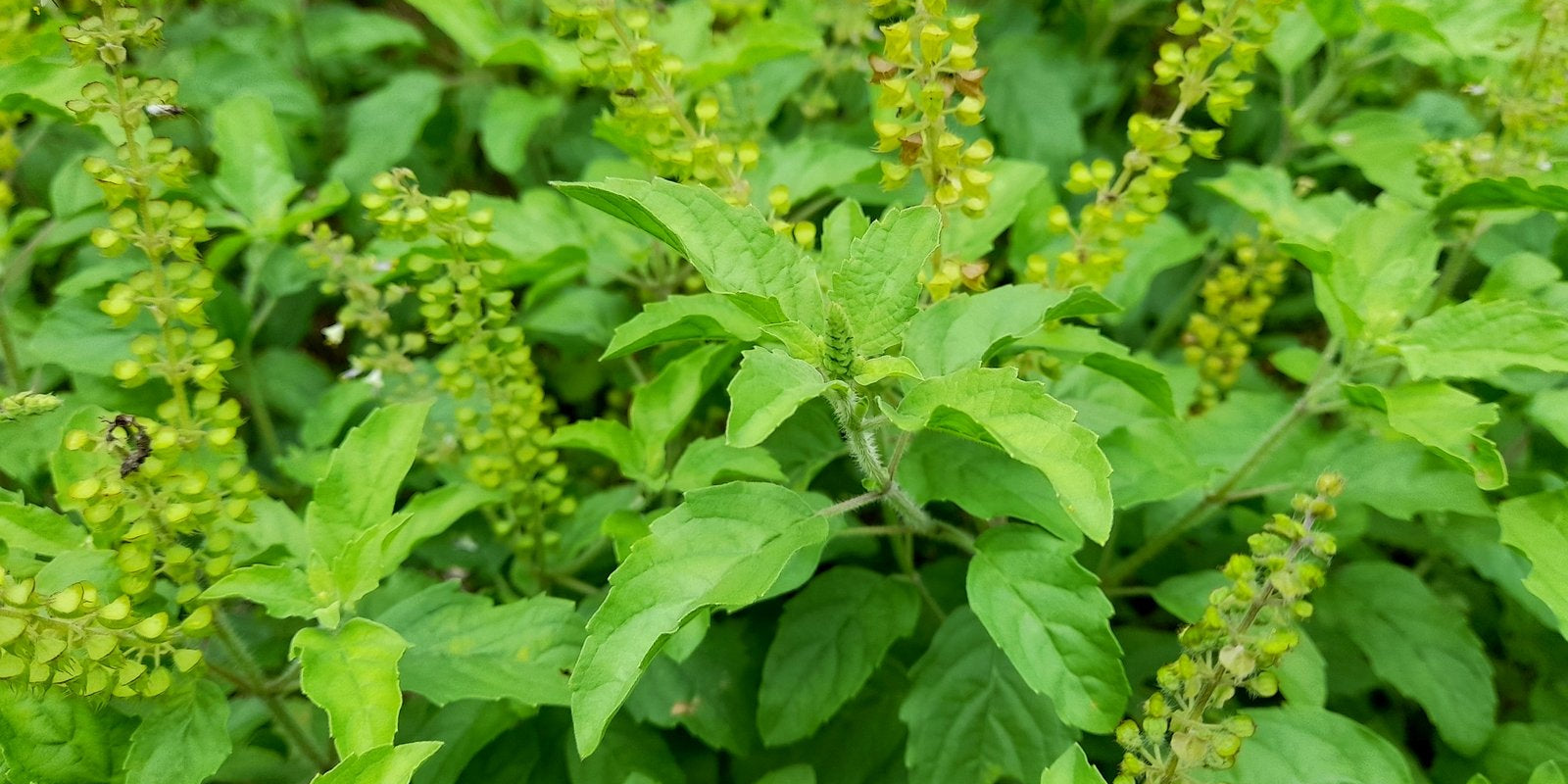
Tulsi, or holy basil, is a clove-scented, frost-tender herb grown for its leaves and flower spikes. Press the fine seed onto damp mix without covering it and keep it at 20°C to 25°C in bright light. Seedlings appear in 5 to 21 days. Plant out 25 to 30 cm apart once nights stay above 15°C, and pinch often. Pick the Temperate type from about six weeks, the others later.
| Sun | Full sun |
|---|---|
| Water | Evenly moist, never waterlogged |
| Soil | Well-drained, with compost; tolerates most pH |
| Feed | Light; half-strength liquid feeds, fortnightly |
| Spacing | 25 to 30 cm apart |
| Depth | Surface sown, pressed in |
| Germination | 5 to 21 days at 20 to 25°C |
| Harvest | Leaves from 6 weeks (Temperate); later for others |
| Container | Yes, 30 cm pot, 10 to 15 L |
| Frost | Tender; plant out once nights stay above 15°C |
| Use | Herb garden, fragrant leaves, bees, Hindu household worship |
Tulsi, or holy basil (Ocimum tenuiflorum), is a clove-scented herb of the mint family, Lamiaceae, grown for its leaves and purple or green flower spikes. A tender perennial from tropical Asia, it grows on as a shrub in frost-free northern gardens and as a summer annual further south. Sowing is the hard part: the fine seed needs light and steady warmth, so buried or cold seed often never comes up.
Three mistakes that matter
- Burying the seed. Tulsi seed needs light to germinate, so seed covered like other basils often fails to sprout. Press it onto the surface of damp mix and leave it uncovered, as Germinating the seed explains.
- Sowing into cold soil. The seed wants the warmth given in When to plant, and southern garden soil stays cooler than that well into spring. Seed sown outside too early comes up slowly or not at all, so start it indoors and plant out as When to plant sets out.
- Letting it run to flower. A plant left to flower unchecked slows its leaf growth, and its stems turn woody with age. Pinch the tips from early on and cut back before the flowers open, as Pinching and Harvesting sets out.
When to plant
Sow when you can keep the seed at 20°C to 25°C in bright light, and plant out only after frost, once nights stay above 15°C. In the tropics that is most of the year; in the south it means starting seed indoors in spring. Cool gardens seldom have nights that warm, even in summer. Grow tulsi there in a pot in the warmest sunny spot, under cover on cold nights.
| Zone | Example cities | Sow | Harvest | Notes |
|---|---|---|---|---|
| Tropical | Darwin, Katherine NT; Cairns, Townsville QLD; Broome WA | Jan-Dec | Jan-Dec | Grows year round as a perennial. Sow wet season batches in covered trays, because heavy rain washes seed away. |
| Subtropical | Brisbane, Bundaberg QLD; Coffs Harbour, Lismore NSW | Aug-Feb | Oct-May | Start August sowings in trays under cover; sow direct from late spring once nights stay above 15°C. |
| Arid and semi-arid | Alice Springs NT; Broken Hill NSW; Mildura VIC; Kalgoorlie WA | Sep-Jan | Nov-Apr | Start early sowings under cover; mulch and water steadily through summer heat, and pot a plant up before frost. |
| Temperate | Sydney, Newcastle, Wollongong NSW; Melbourne, Geelong VIC | Sep-Dec | Nov-Apr | Sow indoors in September and October; plant out once nights stay above 15°C, later in Melbourne. |
| Mediterranean | Perth, Bunbury WA; Adelaide and the SA coast | Sep-Dec | Nov-Apr | Sow indoors in spring, plant out after frost; mulch well and water steadily through the long dry summer. |
| Cool and alpine | Hobart, Launceston TAS; Canberra ACT; Ballarat VIC; Orange NSW | Oct-Dec | Dec-Mar | Sow indoors on a heat mat. Nights seldom stay above 15°C: pot it and shelter it on cold nights. |
At the cool edge of a window, raise seedlings on a seedling heat mat in a bright window or under a grow light. Late sowings in the south leave plants little warm weather before autumn nights stall their growth.
Site, soil and setup
Tulsi usually grows 30 to 60 cm tall in a season. A plant that escapes frost can grow on into a woody shrub up to about 1 m.
| Factor | Setup |
|---|---|
| Light | Full sun, at least 6 hours a day; light afternoon shade is fine in hot inland summers |
| Soil | Moist, well-drained soil with plenty of organic matter; it does poorly in waterlogged ground |
| pH | Tolerates acid to alkaline soil, so most gardens need no correction |
| Bed preparation | Dig in a 5 cm layer of compost before planting, and add a handful of worm castings to each planting hole |
| Drainage | On heavy clay, grow it in a raised bed or a pot |
| Rotation | Move seedlings to a fresh bed if earlier sowings collapsed there, because the organisms behind damping off (a rot of seed and seedlings) live on in soil and water |
Which tulsi to grow
The store sells Krishna, Rama, Temperate or Kapoor and a heirloom mix. They differ most in how much warmth they want.
| Type | Look | What it changes |
|---|---|---|
| Krishna, also called Shyam | Leaves open green and turn mottled purple; stems mainly purple | A tropical type that wants the most warmth; slower to establish in cool southern gardens |
| Rama | Green, clove-scented leaves; purple-tinged stems | The type most grown in India; grows vigorously in warmth, so start it under cover in the south |
| Temperate or Kapoor | Compact to medium plant, green leaves, purple flower spikes | Copes with cooler nights than the tropical types; flowers quickly and can self-seed |
| Heirloom mix | Green and purple plants, compact to medium and bushy | Plants vary, so label each seedling and grow it as its type suggests |
Temperate or Kapoor tulsi is sold as Ocimum tenuiflorum, but its identity is not settled. One American herb seed grower once sold its temperate tulsi as Kapoor. It reports that a genetic test identified that plant as Ocimum africanum, a hybrid of sweet basil and American basil.
Container growing
A pot lets a southern gardener move tulsi to shelter on cold nights and before winter. Use a pot at least 30 cm across that holds 10 to 15 L, with drainage holes, filled with premium potting mix. The compact Temperate or Kapoor type suits a pot best, though all four grow well in one.
- Water: when the top few centimetres of mix feel dry, until water runs from the holes; never leave the pot standing in water. See watering pots in summer.
- Feed: fish and seaweed blend at half strength, about 12 mL per 9 L, fortnightly through the growing season.
- Position: full sun, sheltered from strong wind.
- Winter: where frost falls, move the pot indoors to a bright window before nights drop below about 10°C.
- Handling mix: potting mix can carry Legionella bacteria, so dampen it first, wear gloves and a P2 mask, and wash your hands afterwards.
Germinating the seed
Tulsi seed has no hard coat to break and needs no soaking, chilling or scratching. It needs light and warmth instead: seed buried deeper than a dusting may lie dormant, and cool mix slows it or stops it altogether.
Germination is fair rather than high. The store rates its Rama seed at about 60 to 65 per cent. A Thai study tested four commercial holy basil seed lots at 25°C in light. Within 15 days, 57 to 78 per cent of seed given only a water soak came up, taking six to seven days on average. Sow two or three seeds for each plant you want, then keep the strongest.
| Treatment | How | How long | Temperature | What success looks like |
|---|---|---|---|---|
| None needed: surface sowing in warmth and light | Press seed onto damp seed-raising mix, leave it uncovered or under the finest dusting, cover the tray with a clear lid and set it in bright light | Usually 5 to 21 days, fastest in warm mix | 20 to 25°C at the seed | Pairs of small, rounded seed leaves, then the first true leaves |
| Extra warmth and light, for cool rooms | Stand the tray on a seedling heat mat in a bright window, or under a grow light, which gives light and some warmth. A mat needs a thermostat with its probe in the mix, or at least a soil thermometer in the tray to check it | As above; slower on a cold windowsill | 20 to 25°C at the seed | Seedlings coming up evenly across the tray, short and sturdy rather than pale and stretched |
For which seeds need help and which do not, see soaking, scarification and cold stratification.
When nothing comes up
- Buried too deep. Sow again on the surface, pressed in, with no more than a dusting of mix.
- Too cold. Seed kept below the warmth given in When to plant comes up slowly or fails. Move the tray to a heat mat or a warmer room.
- Dried out. A surface sowing can dry in hours. Keep a clear lid on and water from below until seedlings show.
- Washed away. Rain or a hard spray moves fine seed. Press it in firmly and mist rather than pour.
- Rotted, or came up and fell over. Damping off can rot seed before it shows as well as fell seedlings. Resow in fresh mix and water less; see Pests and diseases.
- Given up too soon. In warm mix, wait three weeks before sowing again.
Sowing Seeds
Start tulsi in trays under cover in most zones, and sow direct only where the soil is already warm.
Starting under cover
- Sow four to six weeks before planting-out time, as When to plant sets out.
- Fill cells or a tray with fresh seed-raising mix and sow two or three seeds per cell, as Germinating the seed describes.
- Once seedlings show, take the lid off and give them the brightest light you have, so they grow short and sturdy.
- Thin each cell to its strongest seedling with scissors once true leaves appear.
- Plant out when seedlings carry three or four pairs of true leaves.
Sowing direct
Direct sowing suits the tropics, subtropical gardens from late spring, and the Temperate or Kapoor type anywhere once the soil is warm. Scatter seed thinly on raked, damp soil, press it in firmly and keep the surface moist. Thin seedlings in stages to 25 to 30 cm apart.
Planting out
Harden seedlings off first (get them used to outdoor sun and wind a little more each day) for about a week. See hardening off seedlings. Plant them 25 to 30 cm apart once nights are warm enough, as When to plant sets out. Water them in with seaweed solution at half strength, about 15 mL per 9 L.
Care by growth stage
Warmth and steady moisture decide how well tulsi grows: it does not tolerate drought, yet it does poorly in waterlogged soil.
| Stage | Water | Feed | Watch for |
|---|---|---|---|
| Germination, weeks 1 to 3 | Keep the surface damp, never soggy; water from below | No feed before true leaves appear | Seedlings collapsing at soil level |
| Seedlings, weeks 3 to 6 | Water from below when the surface dries | Seaweed solution at half strength, about 15 mL per 9 L, fortnightly | Seedlings stretching toward the light; aphids on the tips |
| Establishing, from planting out at about week 6 | Water deeply when the top few centimetres of soil are dry; mulch once the soil is warm | Worm casting liquid, diluted to weak tea colour, fortnightly | Snails on young plants after rain |
| Picking, from about week 6 for the Temperate type, later for Krishna and Rama | Keep watering steady through hot weather; a pot may need water daily | Fish and seaweed blend at half strength, about 12 mL per 9 L, fortnightly | Flower spikes; mites and whitefly under the leaves in hot, dry spells |
| Late summer and autumn | Keep watering steady while you pick; water less as growth slows in cool weather | No feed once nights turn cold | The first cold nights: pot a plant up or take a last harvest before frost |
Over-feeding reduces the essential oils that give tulsi its clove scent, so no liquid feed goes above half strength. If growth stalls in poor, sandy soil, a light application of all-purpose controlled release granular (NPK around 14-5-10) scratched into the soil can help.
Pinching and Harvesting
Pinching makes tulsi branch into a bushy plant with more leaf, and cutting back before it flowers keeps it leafy for longer.
- Pinch out the growing tip once a young plant has settled in after planting out.
- Keep pinching each new shoot back to just above a pair of leaves as it grows.
- Nip off flower spikes as they appear if you want leaf, or leave a few for the bees.
- Before a plant flowers heavily, cut the whole plant back to 10 to 15 cm above the ground for a second flush of growth.
Companion planting
Tulsi wants the same warmth, sun and steady water as the summer vegetable patch, and its flowers draw bees.
Grows well with
- Tomatoes, frost tender like tulsi and planted out at the same time, with the same need for sun and even moisture.
- Sweet basil, a different species with the same sowing time and care.
Keep apart
- Mint, whose runners take over a bed and crowd a slower plant.
- Rosemary, which wants its soil left to dry between waterings, the opposite of what tulsi needs.
Harvesting Leaves and Flowers
Start picking once a plant is bushy and well rooted. For the Temperate type that is usually about six weeks after sowing, and later for Krishna and Rama.
- Pick in the early morning, once the dew has dried.
- Take the top few centimetres of each shoot, just above a pair of leaves, so it branches again.
- Handle the leaves gently, because they bruise easily.
- For drying, cut stems when the flower buds are just about to open.
- Before the first frost, cut the whole plant.
Keep fresh stems in a jar of water on the bench rather than in the fridge, because the leaves are damaged below 10°C. To dry them, hang small bunches inside a paper bag with holes cut in it, in a warm, dark, airy place. Tulsi leaves hold plenty of moisture and can go mouldy if they dry slowly, so give them good air.
Leaves are dry when they crumble easily between the fingers. Store them in an airtight jar in a cool, dark, dry cupboard, where they keep well for up to a year.
Traditional use and history
Tulsi, or tulasi, is the name the plant carries in India, and holy basil is its English name. Kew records its native range as tropical and subtropical Asia to the western Pacific. In Australia it is known with certainty only from the northern Torres Strait islands.
| Tradition | Name | Part | What the tradition recorded |
|---|---|---|---|
| Hindu worship | Tulsi, tulasi | The living plant | Revered as a manifestation of the goddess Lakshmi, consort of Vishnu, and especially sacred to devotees of Vishnu |
| Hindu households | Rama and Shyam, or Krishna, tulsi | The living plant | Grown in many Hindu homes, often in the courtyard in a four-sided stand, and worshipped morning and evening |
| Devotional practice | Tulsi mala | Woody stems | Stems of plants that have died are made into beads for japa mala, strings of prayer beads |
| Ayurveda and folk use | Tulsi | Leaves | Counted in Ayurvedic scriptures among the main pillars of that tradition, and widely used in folk practice |
| Thai cooking | Kaphrao | Leaves | A kitchen herb of stir-fries such as phat kaphrao, in a red and a white kind |
The festival of Tulsi Vivah marks the start of the Hindu wedding season, when homes and temples ceremonially wed the plant to Vishnu. Tradition holds that Krishna, an avatar of Vishnu, wears a garland of its leaves and flowers. Hindu families who keep the plant revere it as a goddess and see it as a sign of luck and good fortune.
The plant has travelled with migrating families. A study of South Asian households in the United Kingdom found tulsi seed shared among family, friends and religious institutions. It also found that some plants grown there as Rama tulsi were African basil (Ocimum gratissimum), a different species.
Safety
Happy Valley Seeds sells tulsi as seed for growing. Nothing here is advice to eat or take any part of the plant. Anyone considering using a plant should first seek advice from a qualified health practitioner.
| Topic | What the sources say |
|---|---|
| Toxicity | Clinical information is limited, and clinical studies record few adverse reactions. In rodents, large amounts of plant extract reduced sperm counts, an effect that reversed. The essential oil contains eugenol, which harmed the liver of mice low in glutathione, a protective compound. LiverTox, the United States liver injury database, has no entry of its own for holy basil. |
| Pregnancy and breastfeeding | A clinical reference advises avoiding it in pregnancy and while breastfeeding, because safety information is lacking and animal data conflict. |
| Interactions with medicines | No case reports. In rats, it deepened the sedation from barbiturates and slowed the uptake of the epilepsy medicine levetiracetam, and a clinical reference advises caution with paracetamol. Anyone taking medicines should ask their doctor or pharmacist. |
| Allergy and skin | The same reference counts sensitivity to any part of the plant as a reason to avoid it. The sources are silent on skin reactions from handling the plant. |
| Pets and livestock | The sources are silent on holy basil. The ASPCA lists sweet basil, a different species, as non-toxic to dogs and cats. Call your vet if an animal eats a large amount. |
| Legal status | Not on the declared or prohibited weed lists of New South Wales, Victoria, Queensland, South Australia, Tasmania, the Northern Territory or the ACT, and no basil (Ocimum) species appears on any of them. The Western Australian Organism List gives it as permitted. The store has no shipping restriction on this seed. |
| Look-alikes | Several basils pass as tulsi: African basil has been found grown as Rama tulsi, and Temperate or Kapoor tulsi may be Ocimum africanum. |
Tulsi self-seeds readily and is treated as a weed in some places outside its native range, so cut spent flower spikes near bushland. If someone collapses, stops breathing, has a seizure or a severe allergic reaction, call triple zero (000). For any suspected poisoning, call the Poisons Information Line on 13 11 26.
Common problems
Tall, thin seedlings. Seedlings that stretch and flop are reaching for light, most often on a dim windowsill. Read more
Early flowers and few leaves. Age, heat and the Temperate type's quick habit all bring flower spikes on, so pinch and cut back as Pinching and Harvesting describes.
Wilting in wet soil. Roots sitting in waterlogged soil fail, so move the plant to a raised bed or a pot of free-draining mix. Read more
Plants fading in autumn. Tulsi is frost tender and stops growing as nights turn cold, so pot one up for a bright window or sow again in spring.
Seedlings where plants flowered. Dropped seed, especially from the Temperate type, comes up the next summer, so pull unwanted seedlings while they are small.
Pests and diseases
Sap-sucking insects, mites and caterpillars cause most damage on grown plants, while snails and damping off take seedlings.
Green peach aphid (Myzus persicae). Small, soft insects cluster on shoot tips and under leaves, distorting new growth. Hose them off, or spray an insecticidal soap labelled for herbs, following its rate and withholding period. Read more
Silverleaf whitefly (Bemisia tabaci). Tiny white insects fly up from the leaf undersides when a plant is brushed. Spray the undersides with insecticidal soap and pick off the worst leaves. Read more
Two-spotted mite (Tetranychus urticae). Fine pale speckling, then bronzed, dry leaves, show mites feeding underneath, most often in hot, dry weather. Hose the undersides every few mornings and keep plants well watered. Read more
Garden snail (Cornu aspersum). Snails chew seedlings and young leaves at night, leaving ragged holes and slime trails. Hunt them by torchlight after rain, or set shallow beer traps. Read more
Looper caterpillars (Chrysodeixis species). Green caterpillars that move with a looping action chew large, ragged holes in the leaves; striped heliothis caterpillars (Helicoverpa species) do the same. Pick them off, or spray a Bt (Bacillus thuringiensis) product labelled for herbs while they are small.
Damping off (Pythium species and Rhizoctonia solani). Seedlings rot at the base and collapse, most often in overwatered, crowded trays. Use fresh mix, water less often and thin seedlings so air moves between them. Read more
Prevention first
- Sow into fresh seed-raising mix in clean trays.
- Turn a few leaves over each week to catch aphids, whitefly and mites early.
- Avoid broad-spectrum sprays, so ladybirds, lacewings and hoverflies stay to eat aphids.
- Keep spare pots and thick mulch away from seedlings, because snails shelter in both.
Tips
- If you save seed, grow only one tulsi type, because Krishna and Rama cross freely and their seedlings may not come true. Keep Temperate or Kapoor plants away from flowering sweet basil too, because if they are Ocimum africanum they cross with it.
- Label every pot and seedling tray with its type, since young tulsis look alike and several basils are sold under the name.
- Before sowing direct, check the bed with a soil thermometer and wait until it holds the warmth given in When to plant.
Questions
Why are my tulsi seeds not germinating?
The seed was probably buried or kept too cool. Tulsi seed needs light, so press it onto the surface of damp mix without covering it. Keep it at 20°C to 25°C in bright light, and wait up to three weeks before sowing again.
Can I grow tulsi in Melbourne, Hobart or Canberra?
Yes, as a summer annual. Sow indoors in spring on a heat mat or under a grow light. Nights there seldom stay above 15°C even in summer. After the last frost, grow it in a pot in the warmest sunny spot and move it under cover on cold nights. The Temperate or Kapoor type copes best.
What is the difference between Krishna, Rama and Kapoor tulsi?
Krishna has leaves that turn mottled purple and wants the most warmth. Rama has green leaves and is the type most grown in India. Temperate or Kapoor is compact, flowers quickly and copes with cooler nights, though its botanical identity is disputed.
Is holy basil the same as sweet basil?
No. Holy basil is Ocimum tenuiflorum, with much smaller flowers, and the store's types are clove-scented. Sweet basil is Ocimum basilicum, a different species with its own guide. Both are frost tender and share a sowing season.
Will tulsi survive winter in Australia?
Only where it is frost free. In the tropics and warm subtropics it grows on as a short-lived shrub. Elsewhere it dies with the first frost, so move a potted plant to a bright window before nights fall below about 10°C.
Is tulsi a declared weed in any Australian state?
No state or territory lists it as a declared weed, and Western Australia rates it permitted. It self-seeds readily, so cut spent flower spikes if you garden near bushland.
Grow it
Choose a size to add it to your cart. You stay on this page.
- Tulsi - Krishna (Holy Basil) seedsFrom $2.99
- Tulsi - Rama (Green Holy Basil) seedsFrom $2.99
- Tulsi - Heirloom Mix seedsFrom $2.99


More herbs to sow in September
All herbs
Agrimony
How to grow agrimony in Australia from seed: chilling the burrs, sowing months for six climate zones, sun and soil, cutting back, harvest, history and safety.
| Position | Full sun, light shade tolerated |
|---|---|
| Depth | 5 mm |
| Spacing | 30 cm apart |
| First pick | Summer; 12 to 18 weeks from spring sowing |

Angelica
How to grow angelica in Australia from seed: fresh or chilled seed sown on the surface, part shade, months for six climate zones, stems, history and safety.
| Position | Part shade, morning sun |
|---|---|
| Depth | Surface; press in, uncovered |
| Spacing | 50 to 90 cm |
| First pick | Stems at about 18 months |
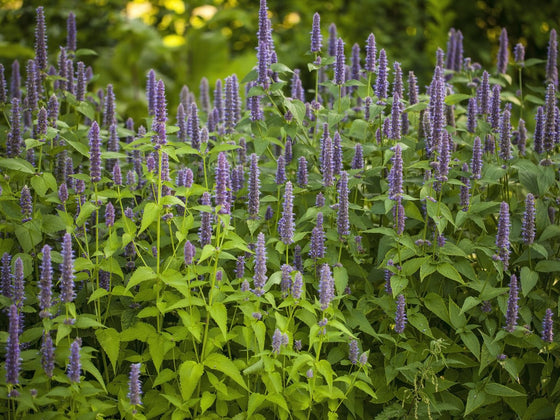
Anise Hyssop
How to grow anise hyssop in Australia from seed: surface sowing, free-draining soil, sowing months for six zones, cutting back, and picking leaves and flowers.
| Position | Full sun or light shade |
|---|---|
| Depth | Surface, or 1 mm |
| Spacing | 30 to 40 cm apart |
| First pick | Leaves from about 10 weeks |
Anise
How to grow anise in Australia: when to sow in all six climate zones, sowing where it grows, spacing and watering, then harvesting and drying seed and leaves.
| Position | Full sun, sheltered from wind |
|---|---|
| Depth | 6 to 10 mm |
| Spacing | 25 to 30 cm apart |
| First pick | Seed 17 to 20 weeks from sowing |